Most Cushioned Running Shoes: Which Ones Actually Suit You
Most cushioned running shoes vary by more than foam thickness. Compare top road, trail and walking picks, then use the fit guide to choose yours.
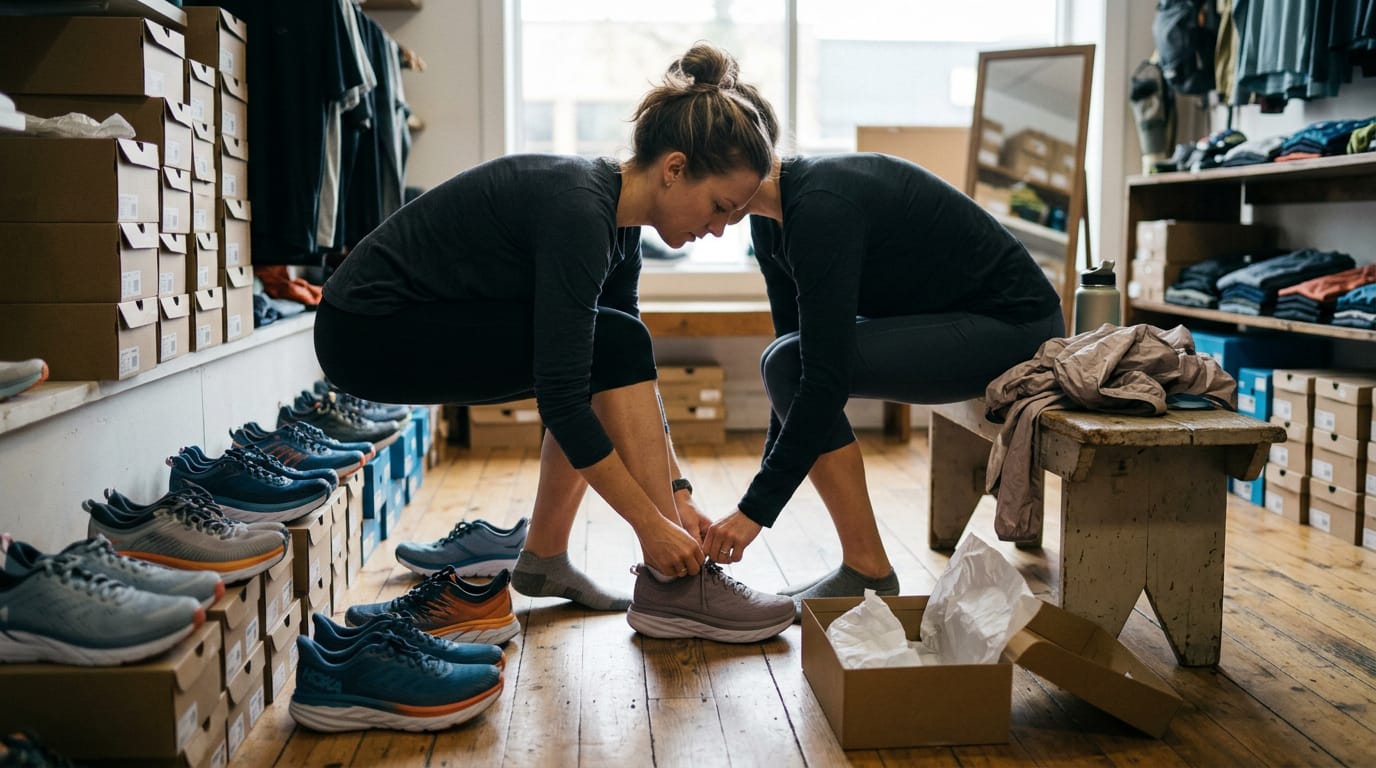
Ever slipped on a pair of running shoes that felt like walking on clouds, then felt your knees complain by mile three? That gap between the store aisle and the open road is why cushion matters so much.
In running, most cushioned describes shoes built with the thickest, softest midsole foam, the layer between your foot and the ground.
Thicker isn’t automatically better, though. The right amount depends on your body, your weekly mileage and the surface under you.
In this post, we’ll explain what ‘most cushioned’ really means, rank the top max-cushion road, trail and walking picks, and give you a practical fit guide so you can buy the cushion that actually suits how you move.
Measuring What Makes Running Shoes Most Cushioned
Here’s the short answer: ‘most cushioned’ isn’t one number. Stack height, heel-to-toe offset, foam feel and weight all shape how a shoe handles your miles.
Why cushioned doesn’t mean soft or comfortable
Cushioned isn’t necessarily soft, and cushioning isn’t the same as comfort. Padding is the soft lining around your ankle and heel, while underfoot foam is the midsole doing the cushioning. Padding shapes the feel, but midsole foam controls impact.
Consider a parent who buys the plushest pair on the rack for weekend 5K training, then notices their heels pounding by the third run. The soft feel was real. The cushion wasn’t.
Firm but thick shoes exist too, so a stiff ride isn’t always thin.
How stack height and drop shape cushion
Stack height is the foam between your foot and the ground. A podiatrist’s guide to maximalist shoes says maximalist shoes often measure 35-45 mm at the heel.
A study on heel height and ankle dynamics says 30 mm or more is often used as a benchmark for a highly cushioned shoe, and some reach a drop (heel-to-toe offset) as high as 12 mm.
Some max-cushion shoes go above 40 mm, and a study in Sports Medicine - Open notes that World Athletics capped competition road midsoles at 40 mm in 2022, a limit it says seems arbitrary.
Zero-drop shoes have no heel-toe offset, so the heel and forefoot sit level. Zero-drop high-stack options combine thick foam with that setup, so test one on a short run first.
Testing foam softness and shock absorption
A durometer is a hardness gauge, and softer foams read lower on it. Shock absorption scores offer a rough ranking, not a verdict on your stride. Many shoes get sorted into soft, balanced and firm categories, with balanced sitting between the other two.
A study on environmental temperature and running shoes found that midsole foam can firm up in the cold, so a plush summer shoe may feel stiffer on a frosty morning.
Which foams feel bouncy and return energy
Energy return is how much of the force you put into foam comes back as push-off. Brands often quote it as a percentage, a useful starting point rather than the final word.
You’ll see supercritical foams and PEBA (short for polyether block amide) on spec sheets, plus brand foams like ZoomX and Fresh Foam. Check the ride, not just the name.
A bouncy shoe rebounds with each stride, while a static one feels planted. Bouncy isn’t automatically better than steady: it depends on whether you want rebound or calm, planted miles.
Does more cushion mean more weight?
Not always. Outside’s review of the Adidas Hyperboost Edge notes that midsoles are lighter than ever, which lets engineers add stack while keeping weight manageable.
Heavier builds still exist, and the trade-off is real: more foam means more to carry on every stride. Consider a weekend runner who skips the heaviest pair for one that still feels cushioned.
They’ll actually wear it, which beats a heavier pair gathering dust by the door.
Picking the Right Cushion for Your Body
Max cushion isn’t one-size-fits-all. Your weight, injuries and weekly mileage all shape which shoe works for you.
What heavier runners should look for
If you’re over 200 pounds, cushion is about load as well as comfort. Reviews from lighter testers can make a shoe sound firmer than it will feel to you. Avoid overly plush foam, which can squish out from under you on a long run.
Look for a wide, stable platform, the broad base that resists tipping side to side. Think of a heavier weekend runner who skips the pillowiest pair for a moderately firm, wide-based shoe and keeps her long runs steady.
Cushion choices for injuries and foot pain
If you’re returning from an injury, cushion can support recovery, but it won’t fix the problem alone. Ask a physical therapist or doctor which level fits your plan.
Pain location matters too: heel and ball-of-foot pain sit in different zones of the shoe, so compare cushioning in each zone instead of judging by overall softness.
For tendinitis (inflammation of a tendon) or sesamoid pain (irritation of the small bones under your big toe), get a professional diagnosis first.
A rocker (a curved sole that rolls you from heel to toe) has trade-offs:
- Pros: a smoother roll and possible forefoot relief.
- Cons: an unfamiliar feel at first, and a poor fit for some unstable strides.
Matching cushion to how far you run
Easy days, recovery runs and long runs are where extra cushion earns its keep. Ultramarathons, the races beyond the marathon distance, don’t automatically need the most cushion. If you run only a few miles a week, a moderate level often covers you.
Here’s the catch: more cushion isn’t always better. Very soft shoes can feel mushy, sluggish at faster paces and less secure on uneven trail, so keep a firmer pair for tempo runs.
Why a curved rocker sole can help
According to a 2026 scoping review of rocker geometry by Khusal in the Journal of Foot and Ankle Research, rocker designs can promote a smoother heel-to-toe roll and may compensate for a stiff forefoot.
For Achilles or forefoot pain, that roll is worth testing. Rockers aren’t for everyone. If your gait (how your foot strikes and rolls through each step) is unstable, the curve may feel less predictable.
Smooth isn’t the same as stable. Test it before you trust it.
Which Max Cushion Running Shoes Are Best?
Looking for the best max cushion running shoes in 2026? Max cushion means a thick midsole that soaks up impact. Here’s how the picks break down by job.
Recovery and everyday max-cushion picks
Think of a weekend runner squeezing in an easy three-miler after a long shift, with heavy legs. A recovery shoe keeps those easy days soft, so you save your energy for the runs that count. Start with these:
- Nike Vomero Plus
- Brooks Ghost Max / Glycerin Max
- New Balance Fresh Foam More v6
- HOKA Bondi 9
- Topo Atmos and On Cloudsurfer Max
Daily trainers that handle most runs
Most weekly miles belong here, so these are the shoes to check first:
- Nike Vomero 18
- New Balance Ellipse
- Saucony Hurricane 25
- Asics Superblast 2
Is HOKA or Asics better? Neither wins by default. Here, the HOKA Bondi 9 is a recovery pick and the Asics Superblast 2 is a daily trainer, so match the shoe to your week, not the logo. Fit beats brand.
Super trainers for tempo and race days
Tempo runs and race days ask more of your legs. Picture a club runner with Thursday intervals and a Saturday 10K who wants one shoe that doesn’t feel flat by the last lap. The options:
- Adidas Prime X3 Strung
- Mizuno Neo Vista 2
- Adios Pro 4 and SC Elite
- Rebel V5 and Endorphin Speed 4
Stable picks for runners who overpronate
Runners who overpronate, meaning their feet roll inward more than typical, need stability over softness. Look at these:
- Hurricane 25 CenterPath
- Brooks Glycerin GTS 22
- New Balance 860v14 plate
- Wide-platform stability. Want more steadiness? Look for a wider base.
Here’s a quick pick table by need:
| Need | Picks from this list |
|---|---|
| Easy and recovery days | Nike Vomero Plus, Brooks Ghost Max / Glycerin Max, New Balance Fresh Foam More v6, HOKA Bondi 9 |
| Everyday miles | Nike Vomero 18, New Balance Ellipse, Saucony Hurricane 25, Asics Superblast 2 |
| Tempo and race days | Adidas Prime X3 Strung, Mizuno Neo Vista 2, Adios Pro 4, Rebel V5 |
| Overpronation | Hurricane 25 CenterPath, Brooks Glycerin GTS 22, New Balance 860v14 plate |
How the Upper Affects Fit and Comfort
The upper wraps your foot, and it decides whether all that cushioning stays put. Get its fit right first.
Finding the right toebox, width and size
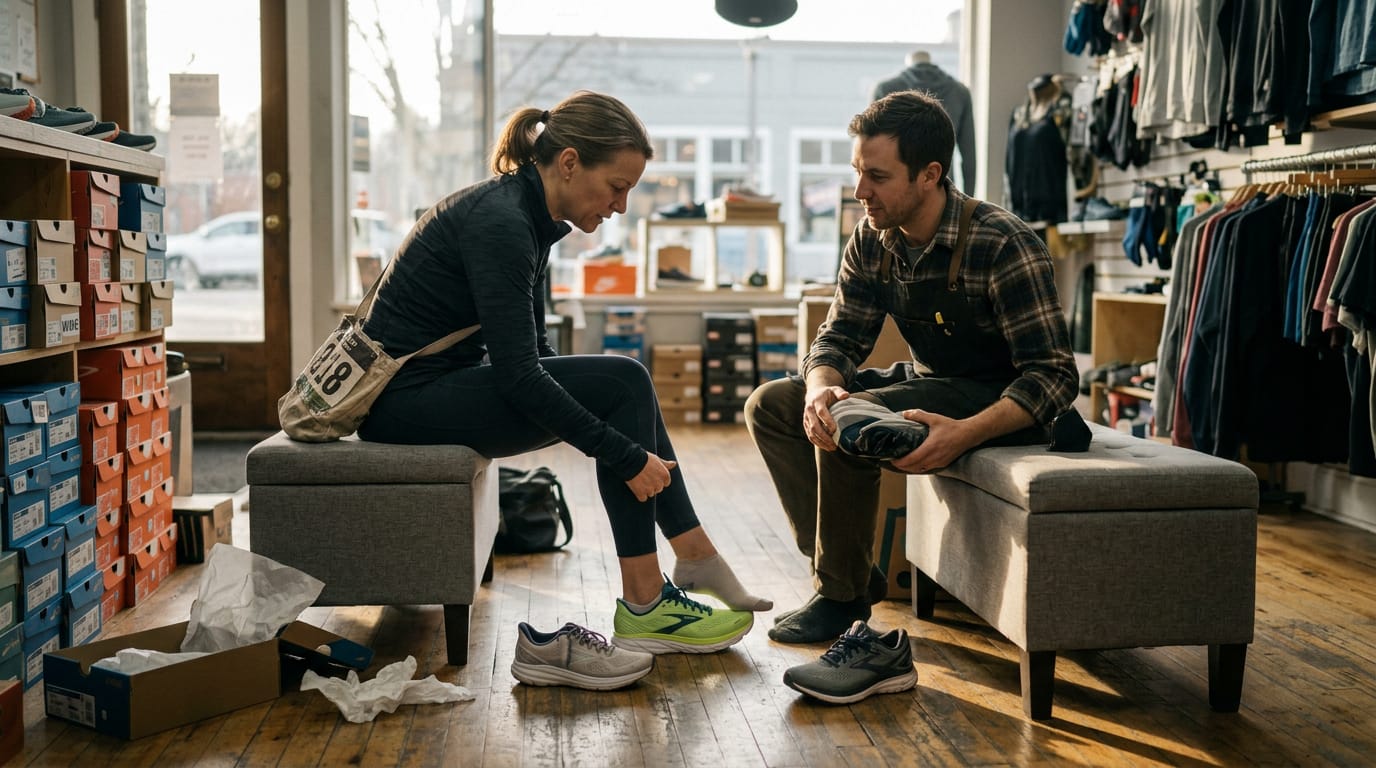
Your toes need room to spread when you push off, so look for a roomy toebox that doesn’t pinch the big toe. Many models offer a wide version, so check before giving up on a favorite.
Sizing up adds room, but narrow feet can swim in it, so sizing down or lacing snug may help.
A 10K runner with a wide forefoot who buys standard width ends up with numb toes by mile four. The wide version keeps the cushioning working for her.
Try them on late in the day, when feet are largest.
Keeping your foot locked in tall shoes
A tall stack can make your foot feel like it’s floating. If your heel lifts each stride, skip it, however plush it feels.
Two things keep your heel in place:
- Lacing. Snug lacing near the ankle keeps the heel from sliding.
- Tongue. A tongue that stays centered keeps the fit even across the top of your foot.
Test lateral stability (resistance to side-to-side rolling) by shifting your weight outward. If the foot tips over the midsole’s edge, pass.
Stability comes from the base, not the height. A wider footprint keeps a tall shoe steadier.
Keeping your feet cool in thick shoes
Thick foam and dense uppers can trap heat, so a shoe that feels great in the store may run warm on a long run.
For a quick smoke test of airflow, hold the upper up to a window. Light that passes through the mesh usually means air can too.
You want a shoe that’s airy where it counts, not one that’s padded so heavily it holds heat.
Wet-road grip and what you’ll pay
Cushioning won’t save you on a wet crosswalk. Check the outsole tread, since it decides the grip.
Vibram outsoles show up on many models, but the brand name alone won’t tell you how a shoe grips, so compare the tread yourself.
Prices climb with each update, and newer isn’t always better. Value picks are often last season’s model at a lower price. A walker logging daily neighborhood loops could grab last year’s pair and skip features she won’t use.
Cushioned Trail Shoes for Off-road Runs
Trails are harder on shoes than pavement, so grip and fit matter as much as cushion.
Our favorite cushioned trail shoes
These five are our top picks. If you’re hiking too, start here: the fit and grip checks below matter just as much on a long day on foot.
- Hoka Speedgoat 7: Plenty of cushion for rugged singletrack.
- Hoka Tecton X 4: The racing pick for faster efforts.
- Altra Olympus 7: A zero-drop shoe (heel and forefoot at the same height) for a natural stance.
- Norda 005: A recovery pick for easy off days.
- Mount to Coast M1/H1: Worth a look if none of the above fits.
Moderate or maximal cushion on the trail
Moderate cushion keeps you close to the trail, while maximal cushion puts more padding underfoot. Picture a weekend runner feeling every stone on her rocky Saturday loop. A maximal shoe saves her legs there. A moderate one suits her flatter Tuesday run.
- Nike ACG Pegasus Trail: A balanced pick for mixed trail and dirt road.
- Brooks Cascadia 20: A moderate ride for varied ground.
- Nike Zegama Trail: A bigger cushion choice for long, rough runs.
- La Sportiva Akasha II: A maximal-leaning option for long miles.
When road-style trail shoes fall short
Road-style trail shoes handle smooth ground well, but loose surfaces expose their limits. Watch for these cases:
- Adidas Terrex Agravic Ultra: Compare it with a road-style pick on your usual surface.
- Nike Ultrafly comparison: Set it beside the trail picks above on your own routes.
- Avoid technical terrain: Steep, rocky or rooty ground needs sure footing, so skip road-style shoes there.
- Gravel and hybrid shoes: A hybrid, which blends road and trail features, suits packed gravel but may struggle on rough singletrack.
Trail shoe parts that affect your run
These four parts matter most:
- Lugs and outsole grip: Lugs are the raised rubber bumps that bite into loose dirt and wet rock.
- Rock plates: A rock plate is a firm layer under the midsole that shields your foot from sharp stones.
- Midsole and toebox: The midsole is the cushioning foam, and the toebox needs room so your toes don’t jam forward.
- Lockdown on uneven ground: Lockdown is how well the upper holds your heel and midfoot in place. On uneven ground, it matters more than softness.
Shoe Life and When to Replace Them
Cushioning fades quietly, so learn the signs before your legs tell you.
How many miles cushioning really lasts
The median lifespan is about 400 to 450 miles. A pedobarographic study cites 500 miles as the recommended time for changing running shoes, though cushioning wears differently from shoe to shoe.
A study on shock absorption found shoes kept about 75% of their initial shock absorption after 50 miles of simulated running and about 67% after 100 to 150 miles. Cushion loss comes gradually, so it sneaks up on you.
Foam rebounds between runs, so a shoe can feel springy after a day off. That bounce can fool you.
Heavier runners wear through cushioning faster, and a study on body mass notes that runner weight is one factor in how quickly shoes wear.
Consider a weekend 5K runner logging 15 miles a week. A pair near 450 miles is due in about seven months, so plan the next pair before race season.
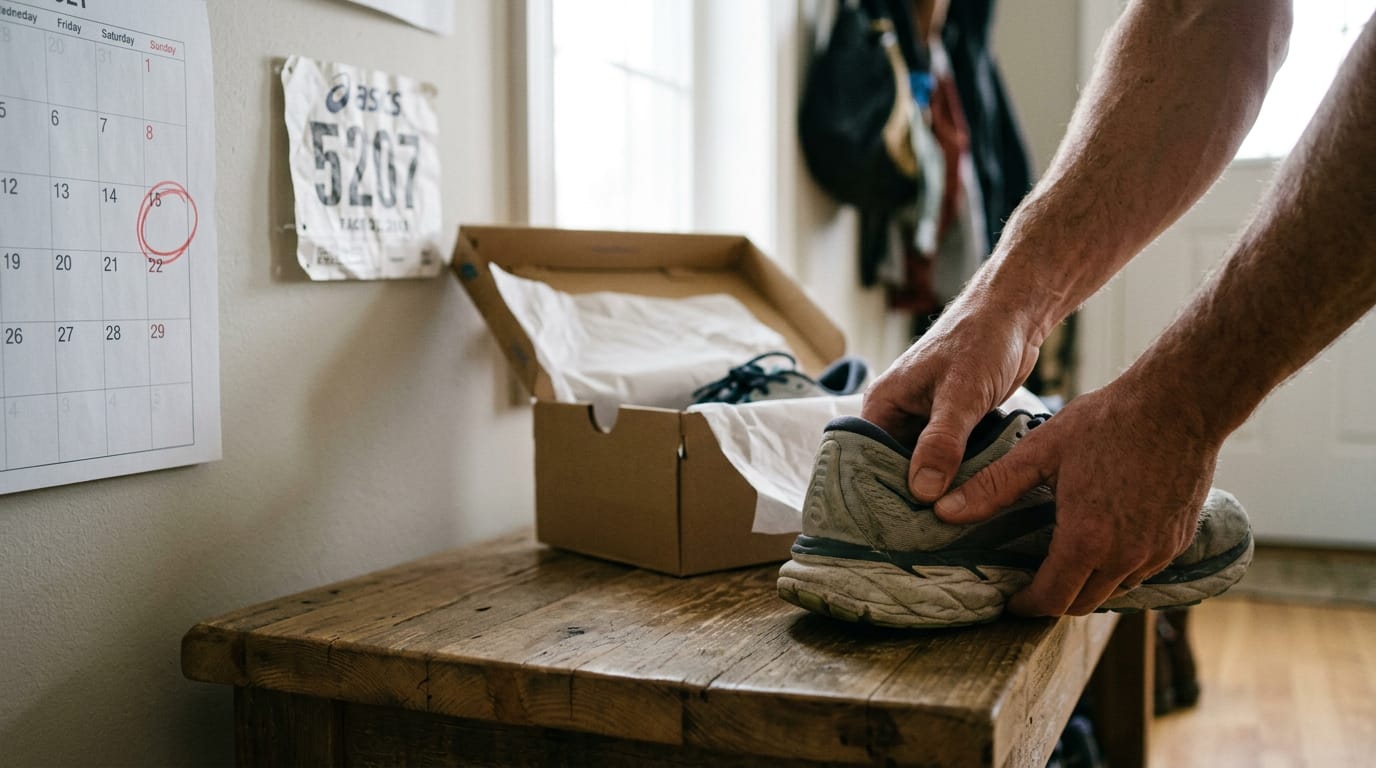
Spotting wear and rotating your pairs
Mileage is only half the story. What counts is how far a shoe has traveled, not how old it is.
Watch for these signs:
- Dead, flat feel. The midsole stops springing back, so every step feels harder.
- New discomfort or pain. Fresh aches in your shins, knees or heels are a cue to check your shoes.
- Outsole durability. Flip the shoe over and check the rubber at the heel. Heavy wear there shows how much ground it’s covered.
Rotate two pairs. Alternating gives each pair a day off, so foam can rebound and wear spreads across both.
Log mileage per pair. A note on your phone keeps each pair honest, so you’re not guessing when to retire it.
Cushioned Shoes for Walking All Day
Walking all day is hard on your feet, so the right cushion is about how it holds up, not just how it feels in the aisle.
Our best pick for each walking need
- Best overall: Bondi 9
- Best stability: Hurricane 25
- Best affordable: Winflo 12
- Best lightweight: Cloudtilt
- Best breathable: Glycerin GTS 22
Who should pick more or less stack
Stack means the foam under your foot.
- Long hours on hard surfaces call for more stack, like a nurse on hospital tile all shift who still wants springy cushion by the end.
- Heel and forefoot pain often eases with more stack.
- Fat pad atrophy can reduce the natural cushioning beneath your heel or forefoot. According to an early clinical study on foot fat pad restoration, it’s the loss of fatty padding under the skin in the sole of the foot.
- Gait instability prefers less. A lower stack keeps you closer to the ground. Pick the stack your body needs, not the tallest one on the shelf.
How long do walking shoes last? There’s no set number, since miles and surfaces matter. If the midsole feels flat underfoot, it’s time for a new pair.
What helps flat feet and plantar fasciitis
- Flat feet and overpronation. Overpronation means your feet roll inward too far, and extra cushion alone won’t fix that. Try a stability pick like the Hurricane 25.
- Plantar fasciitis options. Plantar fasciitis is irritation of the tissue along the bottom of the foot. If heel pain lingers, a podiatrist can help you weigh your options.
- Cushion alone can’t fix it. A soft shoe that doesn’t guide how your foot moves can still leave your arches sore.
- Orthotic-friendly shoes. Look for a removable insole so you can slide in an orthotic.
Fit beats brand.
How We Test and Keep It Honest
Here’s how we pick, test, and update the shoes on this list, so you know what each ranking rests on.
How we picked the shoes on this list
We start with stack height, the foam between your foot and the ground, and measure it with calipers rather than trusting the number on the box. Lab numbers only tell part of the story, though.
We also wear-test every pair across road, trail, and walking routes. Think of a weekend runner who splits her week between pavement and a rocky trail loop.
She needs cushion that holds up on the descent, not just on flat sidewalk, and our testing is built around that.
We buy every pair at retail, the same way you’d buy it. Reviewer impressions of comfort help round out the picture, but we label them as opinion and keep them separate from what we measure. Impressions never pass as data.
Updating the list with reader feedback
This list isn’t a one-time snapshot. We revisit it as new models launch and older ones get discontinued, so the rankings stay useful over time.
Spot an error or want a shoe considered? Tell us. We check the claim or the shoe, and we update the list when the facts support the change.
Some links on this page are affiliate links, which means we may earn a commission if you buy through them, at no extra cost to you. Our rankings come from the testing above, not from which links pay.
Cushion is only as good as the fit underneath it. Know what ‘most cushioned’ actually means, match the shoe to your body and mileage, and check the upper and the wear on your current pair before you check out.
Get those pieces right and you’ll stop chasing the biggest midsole on the shelf and start choosing the pair that carries you comfortably through every run. The best cushioning is the kind you forget about once you’re moving.
References
- The Effect of Midsole Thickness on Running Economy, Spatiotemporal Values and Perceptions of Comfort and Exertion in Well-trained Runners: A Randomized, Cross-over Trial | Sports Medicine - Open — link.springer.com (2025)
- Effects of shoe heel height on ankle dynamics in running — pmc.ncbi.nlm.nih.gov (2024)
- Rocker Geometry in Running Footwear: A Scoping Review of Definitions, Commercial Descriptors and Outcome Measures - Khusal - 2026 - Journal of Foot and Ankle Research — onlinelibrary.wiley.com (2026)
- Are old running shoes detrimental to your feet? A pedobarographic study — pmc.ncbi.nlm.nih.gov (2011)
- Early Clinical Experience with the Use of a New Allograft Adipose Matrix for Foot Fat Pad Restoration — pubmed.ncbi.nlm.nih.gov (2023)
- The Effect of Environmental Temperature on the Properties of Running Shoes — doi.org (1996)
- Shock absorption characteristics of running shoes — pubmed.ncbi.nlm.nih.gov (1985)
- The Effect of Body Mass on the Shoe-Athlete Interaction — pmc.ncbi.nlm.nih.gov (2017)
- Maximalist vs Minimalist Shoes: Podiatrist 2026 — michiganfootdoctors.com (2026)
- Adidas Hyperboost Edge: Tested and Reviewed — run.outsideonline.com (2026)
Questions
What are the best max cushion running shoes in 2026?
Strong max-cushion picks in 2026 include the Nike Vomero Plus, Brooks Ghost Max or Glycerin Max, New Balance Fresh Foam More v6, and HOKA Bondi 9 for recovery and easy runs. For everyday miles, consider the Nike Vomero 18, New Balance Ellipse, Saucony Hurricane 25, or ASICS Superblast 2. Choose by fit, stability, and the kind of runs you do, since the softest or tallest shoe is not automatically best.
What are the best trail running shoes for hiking?
For cushioned trail running that can also suit hiking, consider the HOKA Speedgoat 7 for rugged singletrack, the Altra Olympus 7 for a zero-drop fit, or the Nike Zegama Trail for more cushion on long, rough outings. The Brooks Cascadia 20 offers a more moderate ride for varied ground. For hiking, prioritize secure heel and midfoot lockdown, suitable lug grip, and a fit that leaves room for your toes.
How long do walking shoes last?
Walking shoes have no fixed replacement interval because mileage, surfaces, and wear vary. Replace them when the midsole feels flat or you notice new discomfort; also check for heavy outsole wear. The condition of the shoe matters more than its age.
Is HOKA or Asics better?
Neither HOKA nor ASICS is better for everyone; the right choice depends on fit and intended use. The HOKA Bondi 9 is a recovery-focused option, while the ASICS Superblast 2 is a daily trainer. Try both and choose the one that feels secure and comfortable for your typical runs.
Sources
- Effects of shoe heel height on ankle dynamics in running, pmc.ncbi.nlm.nih.gov,
- Maximalist vs Minimalist Shoes: Podiatrist 2026 | DPM, michiganfootdoctors.com,
- The Effect of Midsole Thickness on Running Economy, Spatiotemporal Values and Perceptions of Comfort and Exertion in Well-trained Runners: A Randomized, link.springer.com,
- The Effect of Environmental Temperature on the Properties of Running Shoes, doi.org,
- Early Clinical Experience with the Use of a New Allograft Adipose Matrix for Foot Fat Pad Restoration, pubmed.ncbi.nlm.nih.gov,
- Rocker Geometry in Running Footwear: A Scoping Review of Definitions, Commercial Descriptors and Outcome Measures - Khusal - 2026 - Journal of Foot and Ankle, onlinelibrary.wiley.com,
- Shock absorption characteristics of running shoes - PubMed, pubmed.ncbi.nlm.nih.gov,
- Are old running shoes detrimental to your feet? A pedobarographic study - PMC, pmc.ncbi.nlm.nih.gov,
- The Effect of Body Mass on the Shoe-Athlete Interaction, pmc.ncbi.nlm.nih.gov,
- Adidas Hyperboost Edge: Tested and Reviewed, run.outsideonline.com,
Find your level
The Counter