How to Fit Running Shoes: A Complete Guide
How to fit running shoes: check toe room, heel hold, and width, then account for socks, time of day, and your running style before you buy in store.

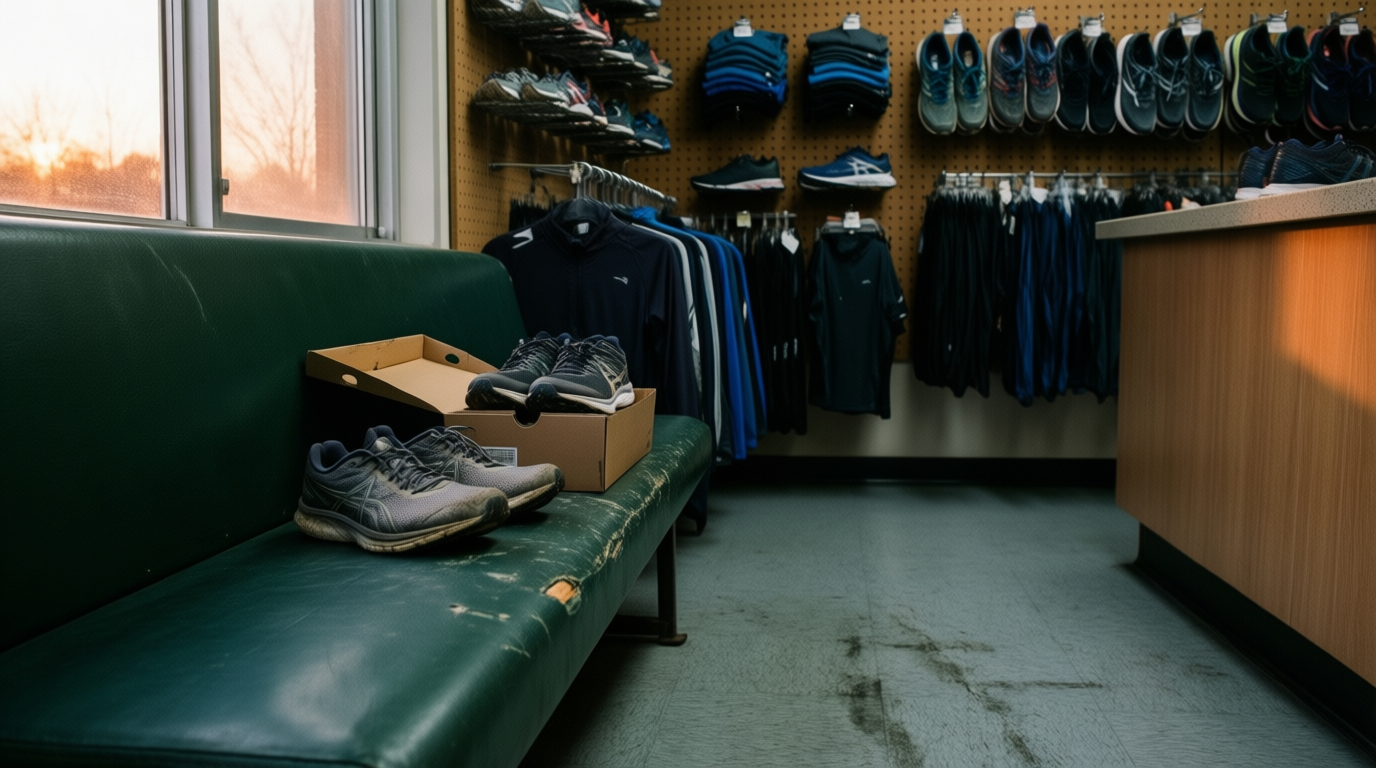
You’re in a shoe aisle, and the pair in your hands feels great for about ten seconds. Picking running shoes is a lot like booking a hotel from its photos: the real test comes after you check in.
A proper fit comes down to three checks: a thumb’s width of room at the toe, a heel that locks in without slipping, and a width that lets your foot settle without pinching.
In this post, we’ll cover each check, plus how time of day, socks, and run type change the picture.
Running Shoes Listed with No Fit Guidance
Most running shoe listings give you a name, a color and a price, then stop. Here’s the fit guidance they skip.
Women’s road running shoes and sale prices
The Vomero Plus and Vomero 18 women’s road shoes appear with a name, a photo and a price. Picture a weekend runner who grabs a marked-down pair, skips the try-on and finds her toes pinched by mile three.
A sale changes what you pay, not how the shoe fits. Fit beats the markdown.
Should you size up or down? Usually up, since your feet swell on a run and you’ll want room past the longest toe. Is it okay for running shoes to be a little tight? A snug midfoot can work, but a cramped toe box leads to blisters and black toenails.
Check your heel lock too, and make sure the width suits the ball of your foot. Race-day and long-run pairs can differ, since distance changes how much your feet swell.
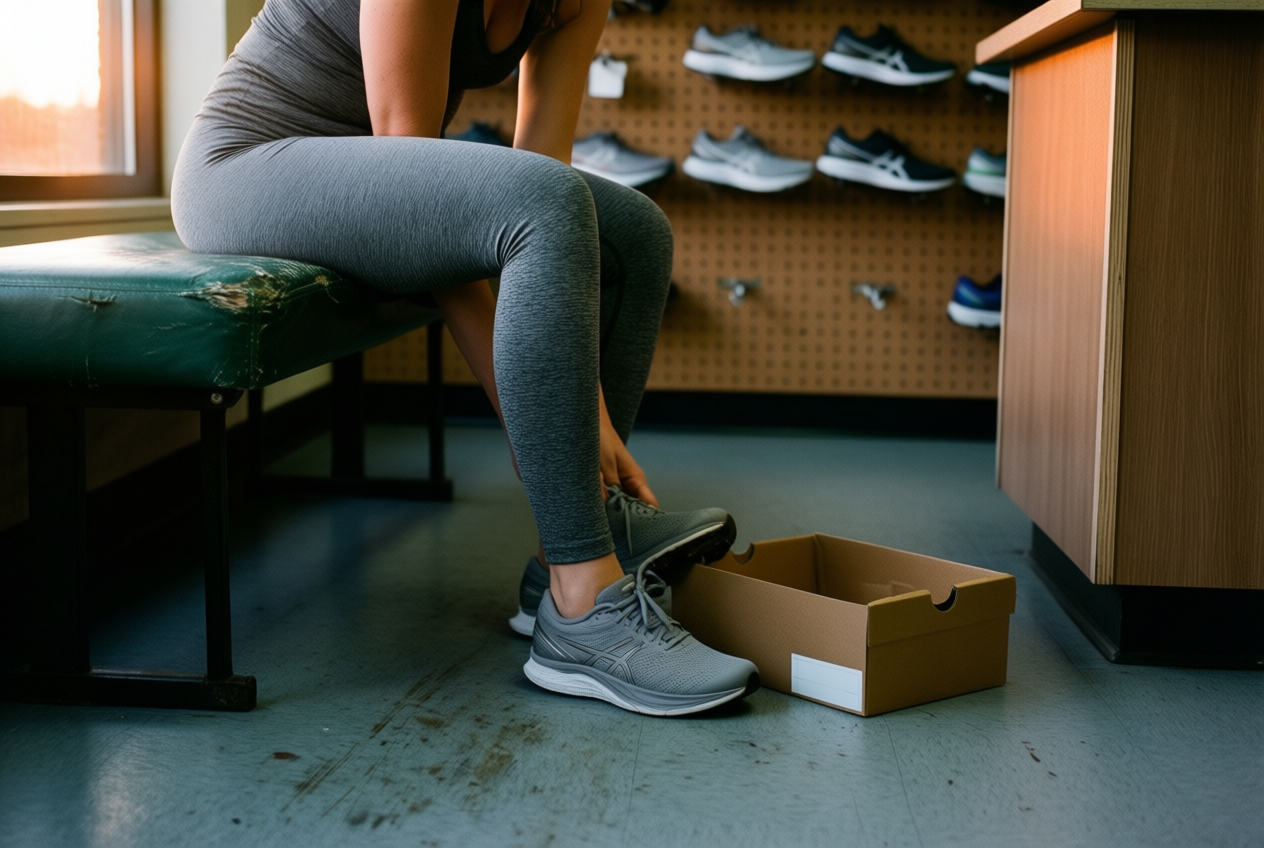
Other apparel and shoes in the lineup
Socks, fleece jackets and joggers sit beside running shoes on these pages, but socks are the only one that changes your fit.
Jordan, Air Max and basketball shoes, plus the Free Metcon 7 training shoe, are built for different movement, so one fit doesn’t carry over. Check fit with the socks you’ll run in:
- Try them on late in the day, when your feet are fuller.
- Stand and look for a thumb’s width past your longest toe.
- Confirm the heel locks down and the width feels right.
- Jog a few steps, and stop if anything rubs.
That’s the 3 shoe rule, a common rotation idea: keep three pairs and wear them in turn.
Deals and Perks for Members
Membership comes with a few extras, and they’re worth knowing about. Just don’t let any of them pull you toward shoes that don’t fit.
New arrivals, gift cards, and member shipping
Members get three practical perks that make buying running shoes a little easier:
- New arrivals. Our new arrivals page shows what’s just landed without making you hunt through the whole catalog. Newer doesn’t always mean a better match for your stride, so run the fit checks from this guide before you add anything to your cart.
- Gift cards. Think of a parent shopping for a teen who just joined the cross-country team. A gift card lets the runner try on shoes and choose the pair that fits their own feet, instead of a size guess made from across the house.
- Member free shipping over $50. Members ship free on orders over $50. Consider a weekend runner who wants a second pair for rotating training days: one order with both pairs can clear the threshold and skip the shipping charge.
Choose the shoe that fits over the one that just hits the free-shipping mark. Perks are nice. Fit is what keeps you running.
Manage Your Cookie and Privacy Choices
Before you check out, a site may ask what you’re willing to share. Here’s what each cookie type does and where you can change your mind later.
What each cookie type is used for
Cookies are small files a site saves on your device. Each type has a different job:
- Strictly necessary cookies. These keep the site working, such as holding your cart while you browse.
- Performance and analytics. These show the site owner how pages perform, like where visitors get stuck.
- Personalized experiences. These remember preferences like your shoe size.
- Personalized and profile-based advertising. These track your browsing to show ads based on your interests.
The smart move isn’t accepting everything or refusing everything. It’s choosing what you’re comfortable with.
Consider a weekend runner who browsed trail shoes on her phone, then returned on her laptop a week later. The personalized experiences cookies let the site remember her size and skip the pairs she already ruled out.
Turn them off and she starts over. That’s the trade-off.
Where to change your privacy settings
You can revisit these choices anytime. Look in three places:
- Privacy settings in account. If you have an account, adjust your preferences there.
- Cookie settings link in footer. Scroll to the bottom of any page to find it.
- Privacy and cookie policy link. It explains in plain language what the site collects and why.
Two minutes here beats clicking through pop-ups all season.
Good running shoes disappear once you’re moving. Your stride stays smooth and your toes stay comfortable. That’s the whole point of fitting them right.
Start with the thumb’s width at the toe, check the heel, and jog a few steps in the store before you commit. Then match the shoe to the run in front of you, whether that’s an easy weeknight loop or a long Sunday effort.
Get the fit right first, and every mile after that gets a little easier.
Questions
What is the 3 shoe rule?
The 3 shoe rule is the idea of keeping three pairs of running shoes and rotating between them. This lets you alternate pairs across training days.
Is it better to size up or down with running shoes?
It’s usually better to size up rather than down, since feet can swell while running. Choose a size that leaves about a thumb’s width of space beyond your longest toe, while keeping the heel secure.
Is it okay for running shoes to be a little tight?
A snug fit around the midfoot can be okay, but running shoes shouldn’t feel cramped. Tightness in the toe box can cause rubbing, blisters, or black toenails.
Find your level
The Counter