Max Cushion Trail Running Shoes: A Complete Guide
Max cushion trail running shoes soften rocky descents. Compare picks by foot type and terrain, and learn when thick foam helps most or hurts.
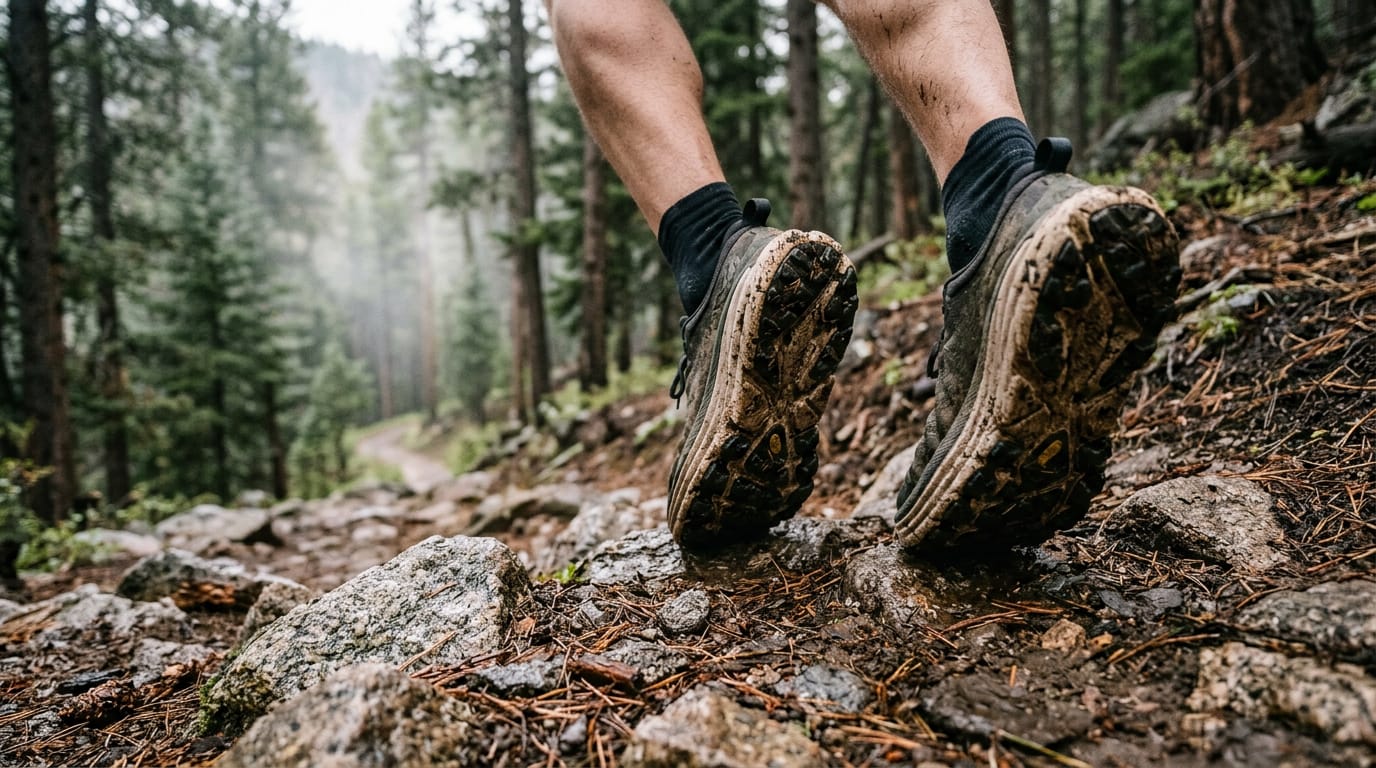
Picture a long trail run where every rocky descent jars your knees by mile six. Max cushion trail running shoes are built to soften that pounding with a thick midsole, the layer of foam between your foot and the ground.
They’re not right for every runner, but for many they make rough miles far more comfortable. Here’s what max cushion really means, who benefits most, and which picks suit different terrain and foot types.
We’ll finish with a shop-counter check on when to buy, when to skip, and when to replace.
The Best Max Cushion Trail Running Shoes
Max cushion shoes come in a few groups, and each suits a different kind of run or hike. We’ll sort them by distance and terrain, so start with the group that fits the outing you have in mind.
Versatile picks that hikers also love
Consider a weekend runner who also hikes with her kids on Sundays. One pair covers both days, so you’re not packing two sets of shoes. Pick these when you want one pair, not the perfect pair for every trail:
- HOKA Speedgoat 7: cushioned for long miles, with grip for mixed trails
- Salomon Ultra Glide 4: a steady, cushioned pick for runners who also hike
- Topo Athletic Vista: a comfortable all-rounder for varied terrain
- La Sportiva Prodigio Max: a bouncy max-cushion option
- Mammut Aenergy Trail Endurance Ultra: cushioned for longer days out
- Vibram Megagrip outsoles: sticky rubber that holds on wet rock and loose dirt, worth checking on any pick here
Plush, tall shoes for ultra distances
Ultra distances (runs longer than a marathon) reward plusher builds, like the HOKA Mafate X and 5, Saucony Xodus Ultra 4, Topo Ultraventure 4 and New Balance Hierro v9. Two features define them:
- Big stack heights: thick foam between your foot and the ground that soaks up pounding over hours, though you get less feel for uneven ground
- Carbon or TPU plates: a stiff insert in the midsole that adds rigidity and helps you roll forward. Plates come in carbon fiber or TPU (thermoplastic polyurethane, a durable, flexible plastic), so the feel varies.
Cushioned shoes with zero heel drop
Heel drop is the height difference between your heel and forefoot, and zero drop means they sit level. The Altra Olympus 6, Altra Timp 6 and Altra Lone Peak 9 are zero-drop picks with a wide toe box, the roomy front section that lets your toes spread.
Zero drop isn’t for everyone. Think of a parent who jumps into a long Saturday trail loop after years in raised heels, then spends the week with sore calves. Ease in with short runs first. Your calves will thank you.
Cushioned road-to-trail crossover options
Crossovers suit road runners who want to try dirt paths, including the HOKA Challenger 8, Nike Pegasus Trail 5, Brooks Ghost Trail and Altra Experience Wild 2. Consider a road runner trying a packed gravel loop after work, where the switch feels easy.
They’re weak on technical terrain, meaning steep, rocky or muddy ground that needs aggressive grip. They’re built for smooth trails, so save them for groomed paths.
Durable, premium picks that stay cushioned
Premium picks cost more, but they’re built to keep their cushioning longer. The Norda 001a and 000 sit in this group, and it comes with three things to weigh:
- Long-lasting midsoles: foam that holds its bounce over more miles
- Prodigio Pro supercritical foam: La Sportiva’s Prodigio Pro uses a lightweight, springy foam made with a specialized process
- High prices: the premium makes sense when you log serious miles all season
Pay for longevity, not just softness.
Cushioned hiking shoes with real support
Hikers carrying a pack over rocky ground need more protection than a running shoe offers. The Brooks Cascadia 19/20 has a rock plate, a protective layer under the foot that shields you from sharp stones. The LOWA Fortux and Skyterra bring structure too.
Think of a parent on rocky switchbacks with a kid and a daypack, where a steady ankle matters more than saving weight.
The real question is the support versus weight tradeoff: more support usually means more weight, so match the shoe to the route, not the other way around.
How to Pick Trail Running Shoes
Start with the ground you cover and how far you run. Max cushion means a thick midsole for long, rough miles.
Match your shoe to terrain and distance
Picture a weekend runner on rocky trails. Cushion keeps her legs fresh up the last climb.
- Smooth trails suit lighter shoes
- Rocky ground rewards cushion
- Muddy ground needs deeper tread
- Long runs reward max cushion
- Hot or cold weather changes the upper you want
Who needs it? Runners logging long miles on rough ground. Skip it for short, smooth loops.
Try them on late in the day, in your running socks, since feet swell.
Features worth checking before you buy
- Stability and traction. Stability features guide your foot, while outsole tread grips wet rock.
- Stack height and drop. Stack height is the foam under your foot, and drop is the heel-to-toe height gap. More stack adds cushion but feels less planted.
- Rock plates and protection. A firm rock plate shields your foot from sharp stones.
- Breathability and waterproofing. Mesh sheds heat, while waterproof membranes keep water out but hold heat in.
- Comfort and heel slippage. Run a few steps on a slope and check your heel doesn’t slip.
- Arch support. It should hold your arch up without digging in.
Fit beats hype. Judge by how it feels, not what the box says.
What each part of the shoe does
- Midsole and outsole. Midsole foam carries the cushion; the outsole tread handles grip.
- Upper and toe box. The upper wraps your foot, and the toe box gives toes room downhill.
- Heel cup and last. The heel cup holds your heel, and the last sets the shape.
- Tongue and insole. The tongue keeps laces off your instep, and the insole is the removable footbed.
Cushion Versus Stability and the Trade-offs
Max-cushion shoes trade a lot of foam for comfort, and that trade has costs.
Why do shoes have so much cushion?
Brands stack extra foam under the foot to soften long, rocky miles. Line up a few trail shoes and the thickest midsole stands out first. That height, called stack height, is a rough stand-in for cushion.
Softer foam feels plush right away, while firmer responsive foam springs back with each stride. It’s how the foam feels, not just how much there is.
Where high stacks fall short
Extra foam puts more distance between you and the ground, so you feel fewer roots and stones. That’s comfortable on smooth paths but dulls your feel for the trail.
According to a Runner’s World article, high-stack trail running shoes can increase the risk of ankle rolling on uneven terrain. Runners in stacks of 50mm and up showed more outward foot rolling and reduced hip stability while moving.
Soft, tall platforms make small wobbles harder to catch.
A weekend trail runner rolls an ankle on a loose stone in a tall, squishy shoe, then spends the last mile walking.
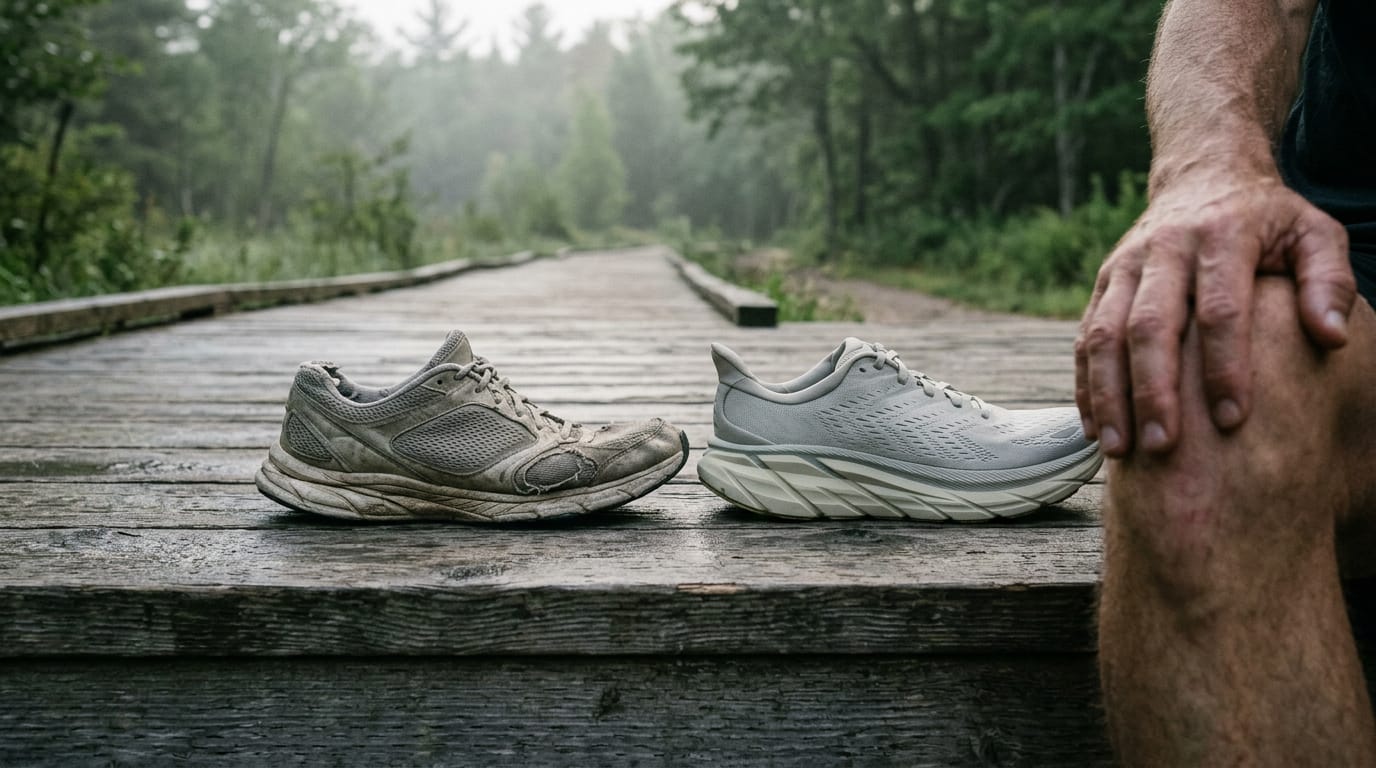
Plush isn’t the same as protected. You want enough cushion to absorb the pounding without losing control. Midsole foam wears out too, so check for creases and a flat feel.
How weight, support, and drop compare
- Weight per shoe. More foam adds grams, so choose the lightest shoe that still protects you.
- Support rankings. Rank them by how well they hold your foot, not how plush they feel.
- Heel-to-toe drop. That’s the height gap between heel and forefoot. A lower drop asks more of your calves.
- Weight-to-support balance. Aim for light enough for your pace and supportive enough for your terrain.
Shoe Picks by Fit and Conditions
Max-cushion trail shoes pay off only when they fit your foot and suit your terrain. Start with fit, then match the outsole (the sole that meets the trail) to the ground you run.
Finding the right fit and width
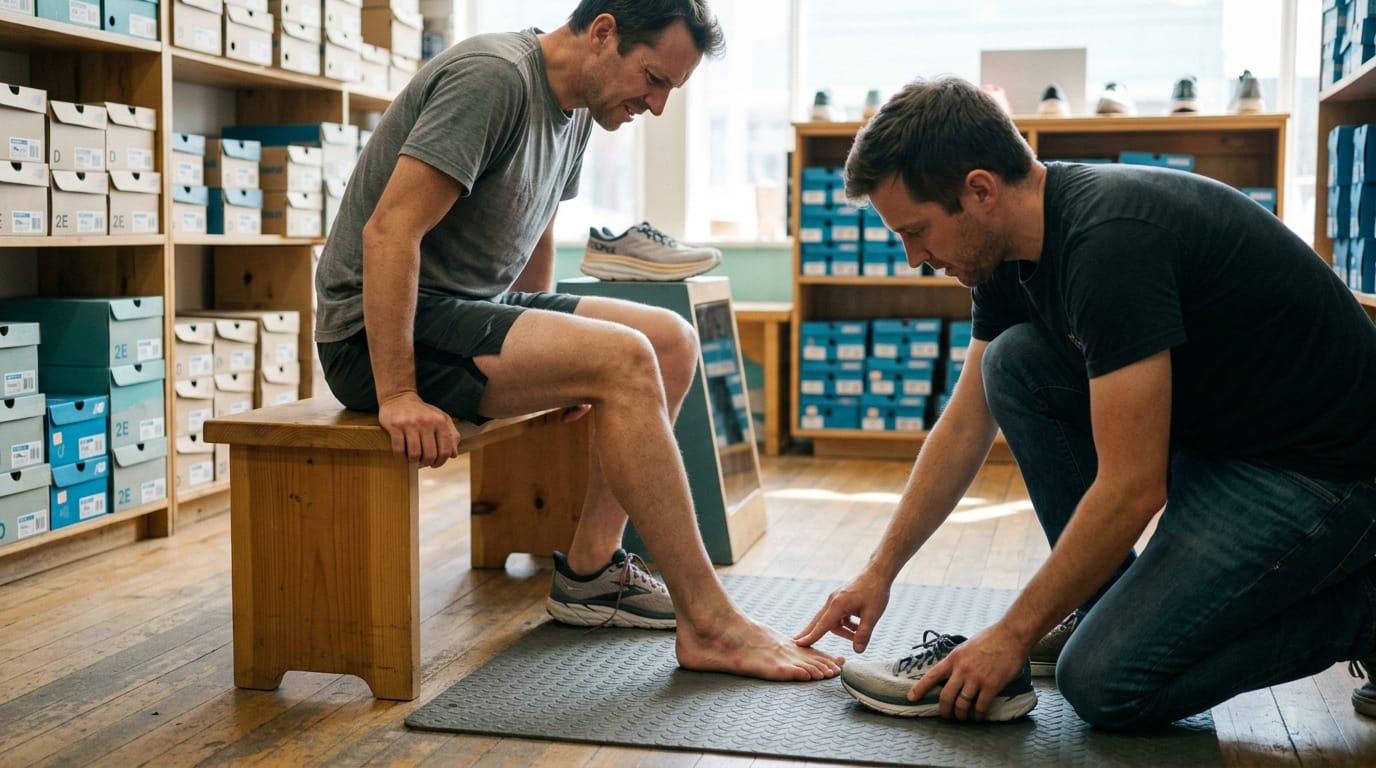
Cushioning can’t rescue a shoe that squeezes your foot. Think of a weekend runner with a wide forefoot who laces up a standard-width pair, feels pinched by mile three, and limps home with sore toes.
Wide feet need a wide-width model, while narrow feet need a snugger heel and midfoot so the shoe doesn’t slip.
Pick a roomy toe box (the front section where your toes sit) if you run a lot of downhill, since your toes slide forward on descents. For La Sportiva, size up from your usual running size so you still have room up front.
Grip for mud, rock, and technical ground
Your outsole decides how the shoe grips, and lugs (the raised knobs on the sole) do much of that work. Aggressive lugs dig into soft ground, so mud rewards bite.
Slick rock and wet roots reward stick, which is why sticky rubber matters more than deep knobs there.
The Salomon Speedcross 6 is built for muddy, loose ground. For rocky, technical routes, look at the La Sportiva Mutant and Bushido.
Consider a club runner who logs most miles on muddy singletrack: for that runner, the lug pattern matters more than any brand name.
Budget-friendly picks for beginners
New to trails and don’t want to overspend? The Salomon Genesis 2 is a budget-friendly place to start. Look for a higher drop (the height difference between heel and forefoot), which eases the switch from a road shoe.
Its Matryx upper (the fabric wrapped around your foot) is durable enough for rough trail miles.
Waterproof shoes for winter running
Winter brings slush, puddles, and cold. The La Sportiva Cyklon Cross GTX is a waterproof option, and GTX is short for GORE-TEX (a waterproof, breathable membrane).
Waterproof comes with a trade-off: it keeps water out but also keeps heat and sweat in, so feet can run warm and damp on milder days. Standard trail runners soak through on slush and snowmelt, so winter routes call for a GORE-TEX pair.
Minimalist shoes for a closer trail feel
The Notace Yama T1 and Altra Lone Peak give you a closer trail feel, since thin cushioning lets you sense the ground. That feel has a catch.
Using minimalist shoes without enough foot strength (the capacity of your feet and lower legs to handle load) can increase injury risk, and a systematic review and meta-analysis of runners found a moderate increase in injury risk tied to the switch to minimalist footwear.
Earn the feel first.
Using Trail Running Shoes for Hiking
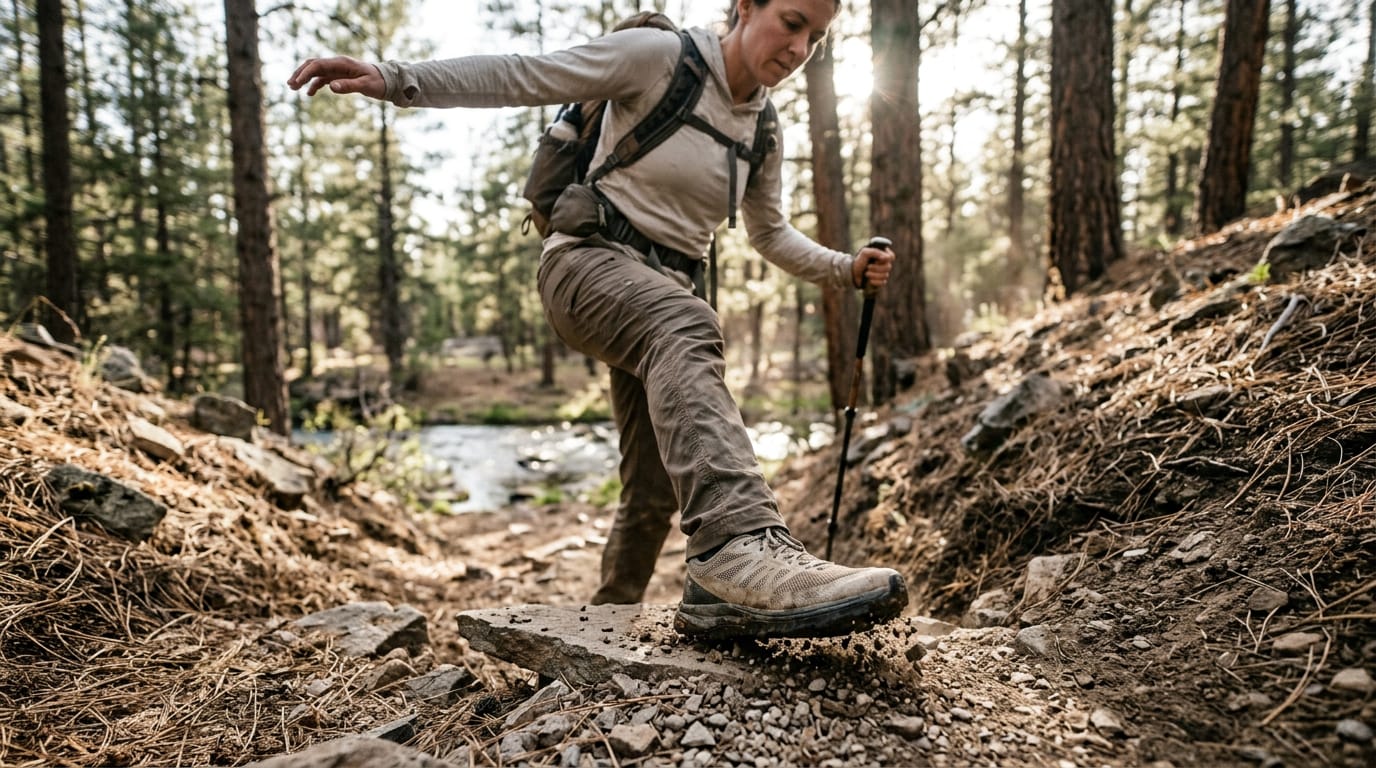
Trail runners can handle plenty of hiking, but they’re not a straight swap for hiking shoes. The right call depends on terrain, load and how you move.
Trail runners versus hiking shoes
They trade some protection for lightness:
- Lighter and faster drying. They weigh less and dry quickly after a creek crossing.
- Less support and durability. Thinner uppers and midsoles wear out sooner on rocky ground.
- Possible injury risk. With less ankle support, a rolled ankle is more likely on uneven ground, especially under a heavy pack.
- Weak winter protection. Breathable uppers let cold air and slush in.
- No longer much cheaper. The price gap with hiking shoes is small, so cost alone won’t settle it.
Consider a weekend runner on a loop with a light daypack. The shoes feel nimble on the climbs and dry fast after a stream crossing. Add a heavier pack and a loose, rocky descent, and that thin support starts to matter. Light works until the load does.
Who gets the most from them
The real question is less about what you wear and more about where you’re headed.
- Thru-hikers. Trail runners can ease fatigue over many miles, but you’ll likely replace them more often.
- Fastpackers and day hikers. Moving fast with a light pack suits trail runners well.
- Ultralight backpackers. Light shoes pair naturally with light gear, as long as ankles and load stay manageable.
- Casual easy-trail hikers. On smooth, well-kept paths, a parent on a Saturday forest loop gets comfortable, versatile shoes.
- Others prefer boots. Heavy loads, rough terrain, snow, or a need for ankle support still point to hiking boots.
How We Tested and Who Did It
Cushion claims are easy to make and hard to check, so here’s how we ran each shoe and who wore them. Same trail, same miles, no free passes.
How we put each shoe through testing
We ran back-to-back comparisons, wearing models one after another on the same trail loops. That’s how small differences in landing feel show up.
Testers also kept weekly mileage logs, tying comments about soreness and heel slip to real totals instead of memory.
Testing ran across multiple seasons, because how a shoe holds up matters more than what it feels like on day one.
Finally, we ran side-by-side foot tests, comparing how each model fit different foot shapes, since a shoe that works for one runner may pinch another.
Who tested them and our affiliate links
Our thru-hiker testers, who walk long trails end to end with a loaded pack, notice how a cushioned midsole (the foam layer under your foot) feels after hours on rocky tread.
That’s the heart of our hiker-focused testing: long descents, uneven ground and tired legs at the end of the day.
Consider a weekend runner with a rocky loop near home who wants to know whether a shoe that feels plush in the store will still feel right near the end of the run. That’s the question we test on the trail, not on the sales floor.
Some links here are affiliate links. If you buy through one, we may earn a commission at no extra cost to you.
Retailer shop links take you to where each shoe is sold, so you can check sizes before you check out.
Common Questions and Shoe Care
Most questions here come down to fit, wear and how you use the shoe. In a footwear guide from Advanced Foot Care, podiatrists recommend:
-
arch support
-
cushioning that isn’t overly soft
-
a firm heel for stability
-
a roomy toe box
-
shock absorption
-
a proper fit
-
Road use. Pavement wears trail tread down faster, so a weekend runner who uses one pair for both keeps losing grip on dirt. Keep a second pair for roads.
-
Sizing up for swelling. Feet often swell on long runs, so try shoes on later in the day and leave a little extra toe room.
-
Hiking and backpacking. Trail shoes handle light hikes well, but with a loaded pack on rough ground, check that your heel stays put.
-
Snow and gaiters. Gaiters, the fabric cuffs that wrap over the shoe and ankle, keep snow and grit out.
-
Socks and lacing. Pick a moisture-wicking sock over thick cotton, and lace snugly enough to hold your heel without pinching your toes.
How often should you replace running shoes?
The calendar doesn’t decide. A study on running shoe end-of-life advises checking high-use areas and replacing trail shoes once their cushioning or traction has deteriorated. Wear is the signal.
- Replace when worn, not by mileage. Judge the pair by wear, not by a mileage log.
- Checking high-wear areas. Look at the bottom and sides where you land and push off most, plus the midsole, the foam layer that does the cushioning.
- Cleaning and air drying. Pull out the insoles, rinse off mud, and air dry away from direct heat, which breaks down foam.
- Rotate pairs. Alternating two pairs gives the midsole time to recover, so it lasts longer.
Max cushion trail running shoes work best when they match your terrain, your feet, and the way you actually run. Thick, soft foam can make long rocky miles far more comfortable, but fit still matters more than the thickest midsole on the shelf.
Run through the shop-counter check on buying, skipping, and replacing, and you’ll put your money into a pair that works.
Get the fit right, and the miles feel like the reward they’re supposed to be.
References
- Injury risk associated with the transition to minimalist footwear in runners: A systematic review and meta-analysis — doi.org (2026)
- Full article: End-of-life of running shoes: does cushioning matter? — tandfonline.com (2025)
- How your most cushioned running shoes might be doing you more harm than good — runnersworld.com (2025)
- Choosing the Best Footwear to Support Your Foot Health — advancedfootcareil.com (2026)
Questions
How often should you replace running shoes?
Replace running shoes when the cushioning or traction has deteriorated, rather than following a fixed calendar or mileage limit. Check the outsole and midsole, especially in the areas where you land and push off most.
Why is there so much cushion in running shoes?
Running shoes use cushioning, usually midsole foam, to soften impact and make long or rough miles more comfortable. Thicker cushioning adds protection but can reduce your feel for uneven ground and make the shoe feel less stable.
Is there a difference between trail shoes and hiking shoes?
Yes. Trail running shoes are lighter and dry faster, which suits running and hiking with a light pack, but they generally offer less support and durability than hiking shoes. Hiking shoes are usually a better choice for heavy loads, rough terrain, or when you need more protection and stability.
Which running shoes do podiatrists recommend?
Podiatrists generally recommend shoes with a proper fit, a roomy toe box, arch support, shock absorption, cushioning that is not overly soft, and a firm heel for stability. The best choice depends on your foot and the terrain, so comfort and fit matter more than a particular brand.
Sources
- How your most cushioned running shoes might be doing you more harm than good, runnersworld.com,
- Injury risk associated with the transition to minimalist footwear in runners: A systematic review and meta-analysis, doi.org,
- Choosing the Best Footwear to Support Your Foot Health, advancedfootcareil.com,
- Full article: End-of-life of running shoes: does cushioning matter?, tandfonline.com,
Find your level
The Counter