Home Gym Cost: What to Expect at Every Budget Level
Home gym cost adds up fast; compare starter-to-full setups with membership fees, then use a calculator to budget purchases in the right order.

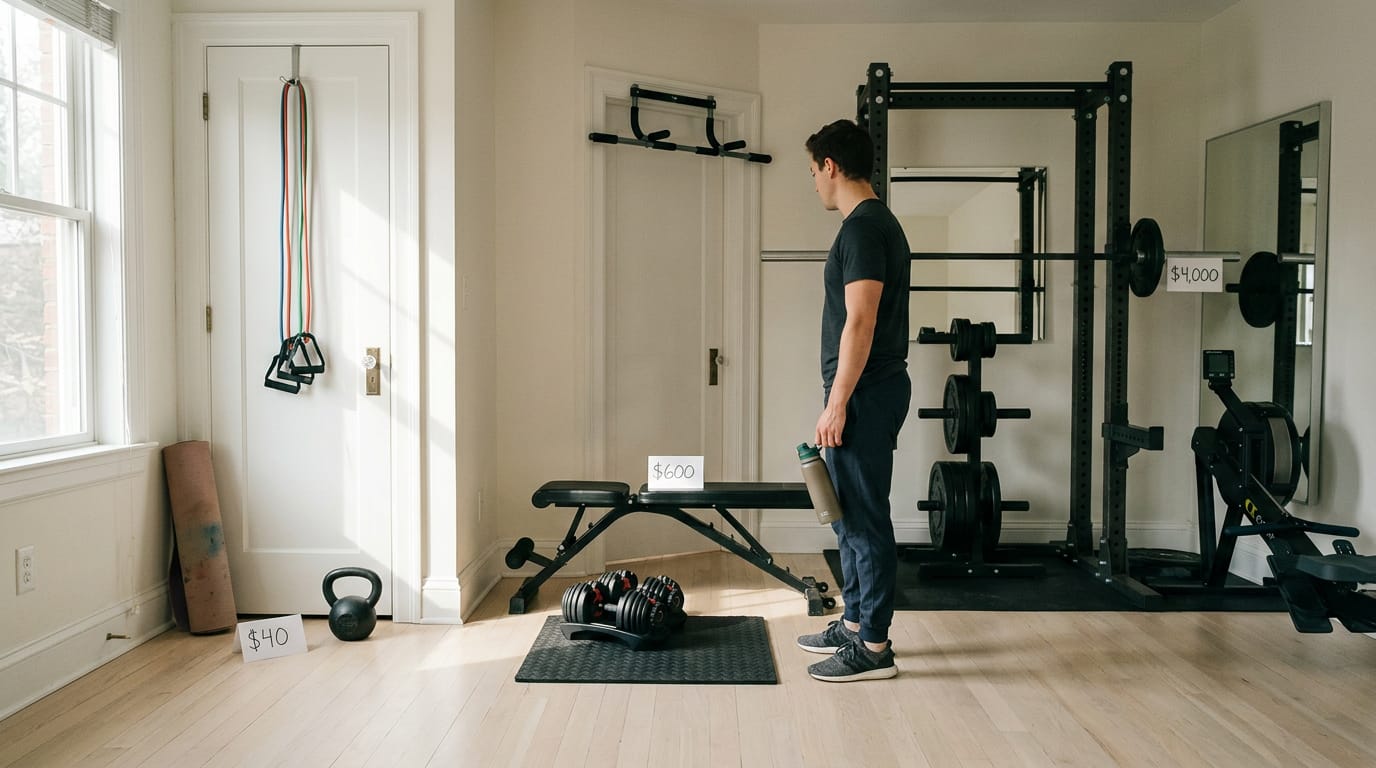
Picture a spare room slowly turning into a gym. A pair of dumbbells shows up one weekend, a bench the next, and suddenly the total is higher than you expected. Every piece looks affordable on its own, which is exactly how the bill sneaks up.
A home gym cost is the full amount you’ll spend to set up exercise equipment at home, from a basic starter kit to a complete strength and cardio space.
In this post, we’ll show what each budget level really costs, compare it with a gym membership, and map out what to buy first. You’ll also see what holds its value.
Home Gym Cost at Every Budget Level
Short answer: you can start for $100-300, and most people land at $1,000-$2,000 for a complete setup. Your space and training style set the real number.
What most people spend overall
How much does it cost to set up a gym? According to Home Gym Foundry’s 2026 tier breakdown, most people spend $1,000-$2,000 on a complete setup they use for years.
Prices run in tiers from $100 to $5,000+, from a core tier strength setup up to premium builds.
Space and training style move that number. A bedroom setup costs far less than a garage with a rack and plates, so picture where the gear will live.
Cheapest ways to start training at home
Training at home can start at $100-300. A weekend soccer player with only a spare bedroom can still train full-body between Saturday games, using gear that fits in one corner.
- Used adjustable dumbbells. Buying used covers a wide range of weights for less.
- Bands, mat, pull-up bar. Compact gear that handles bodyweight and band work.
- Full-body but not heavy. Moderate loads build the habit first, since consistency beats max weight at this stage.
Buy by training level. You don’t need a full rack yet, so match each purchase to where you are now. Add a barbell, plates and a rack later, once you know which lifts you’ll keep doing. Spend in stages.
A simple formula for budgeting
Here’s a simple way to plan. Start with about $1,500 for equipment, then add a 20-30% buffer for flooring and accessories. That lands your lifetime setup at roughly $1,800-2,000. Budget for the whole setup, not just the first purchase.
Comparing a Home Gym and Membership Costs
There are two routes: buy equipment for your garage or pay a monthly fee to train somewhere else.
Is $40 a month a lot for a gym?
Compare a $1,500 home gym with a $40 monthly membership and the membership looks cheaper at first. The break-even point lands around 3 years, when your membership fees match the price of the equipment.
By five years, the membership totals $2,400 while the home gym stays at $1,500. Past that point, the home gym is the cheaper route.
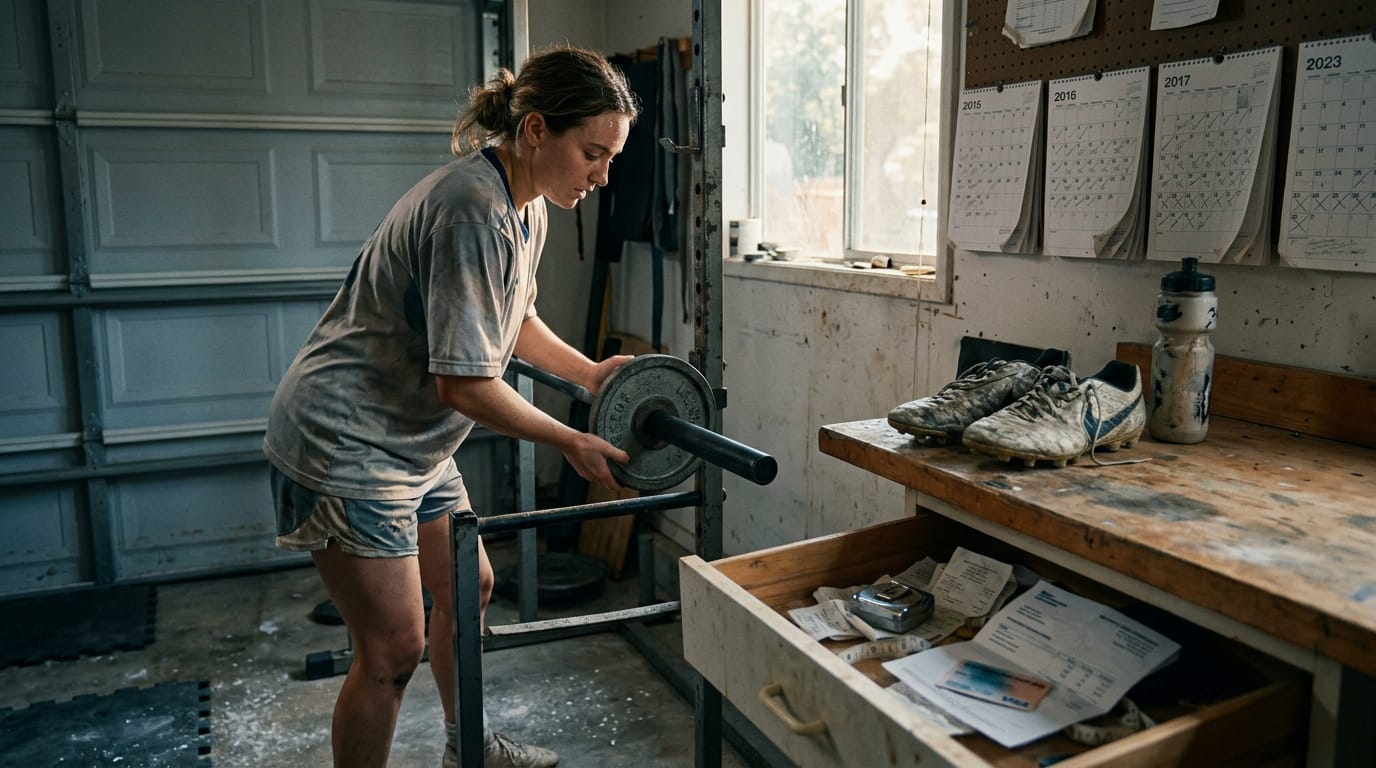
Consider a weekend soccer player who lifts twice a week before Saturday matches. If she trains for five years, the home setup wins. If she’s only committed to one season, the membership is the smarter buy.
So is $40 a month a lot? Over a few months, no. Over five years, it’s the bigger bill. The real question is how long you’ll keep paying it.
Perks that go beyond money
The price tag is only part of the story, so we’ll look at three perks that sit outside the spreadsheet:
- Commute time saved. No drive there and back means your workout starts the moment you walk into the garage.
- Convenience. Your schedule is the only booking system you need, whether that’s a session before work or a quick set after the kids are in bed.
- Cheaper from day one. A $40 membership asks for far less cash up front than $1,500 in equipment, so you aren’t front-loading a big purchase before you know how often you’ll go.
The best deal is the one you actually use. Pick the setup that fits how you’ll really train, not how you wish you trained.
Plan Your Purchases in the Right Order
Buy in the right order and your money goes further. Here’s what to get first, what to check and where people overspend.
What to buy first
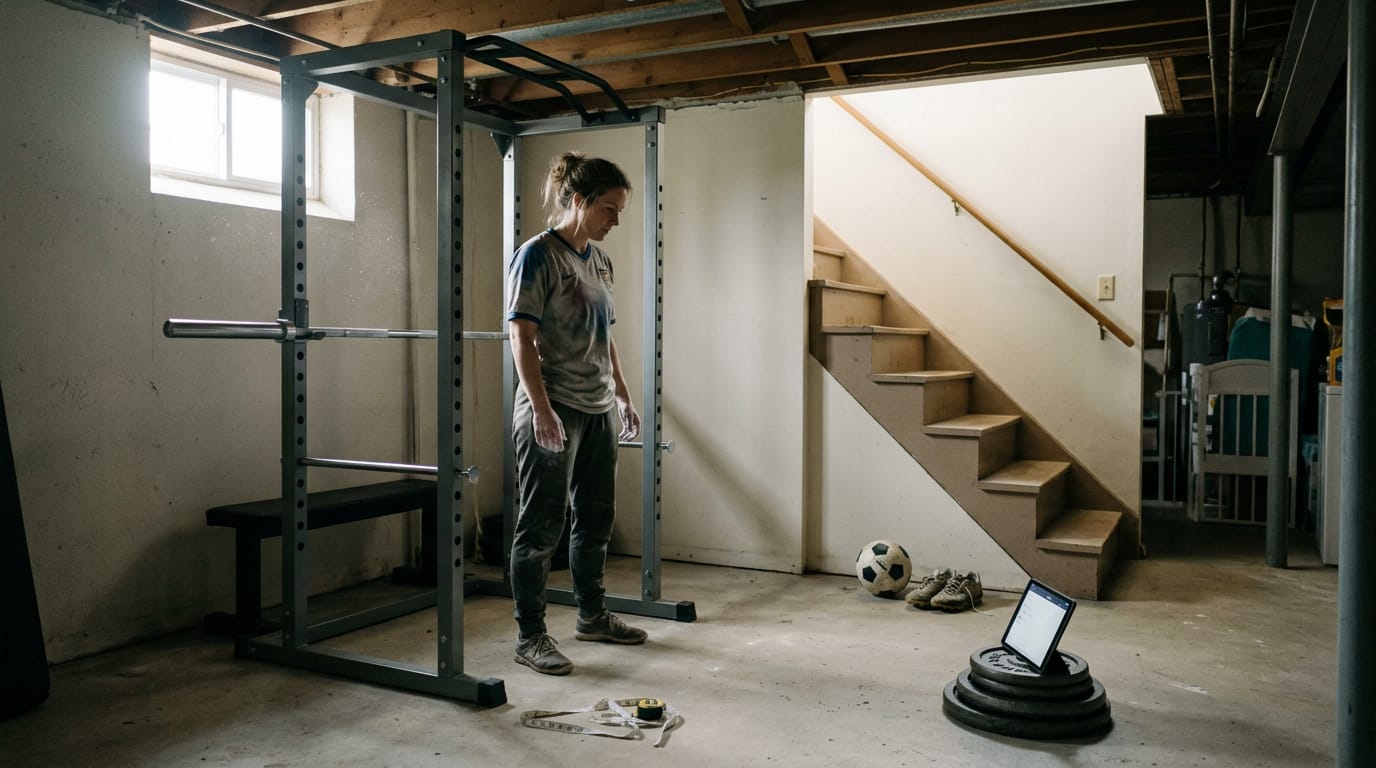
Your build order matters more than your total budget. Consider a club soccer parent setting up a basement for her 15-year-old’s off-season strength work. She starts with dumbbells, a bench and a mat, so he trains all winter.
Priority order by budget:
- At $500: adjustable dumbbells, a flat bench and a mat.
- At $1,000: add a squat stand and resistance bands.
- At $2,000: a full rack and extra plates.
Buy for the training you do now, not the training you hope for.
Check these before you buy anything
- Space and flooring: Leave clearance around each piece and protect the floor with rubber mats.
- Equipment decisions: Pick gear for the sport you actually play, not the one you watch on TV.
- Safety considerations: Anchor tall racks to a wall stud and keep a clear zone around the bench.
Watch for hidden costs too: delivery fees, paid assembly and replacement mats. The sticker price isn’t the final price.
Expensive mistakes and how to dodge them
A few predictable errors cause most regrets.
- Buying for the space you wish you had. Oversized gear that won’t fit gets returned.
- Skipping the floor. Dropped weights damage concrete and finished floors.
- Spending it all on day one. Then there’s no budget left for the upgrade you’ll need.
- Chasing features. Multi-function machines look impressive but rarely replace a simple bench.
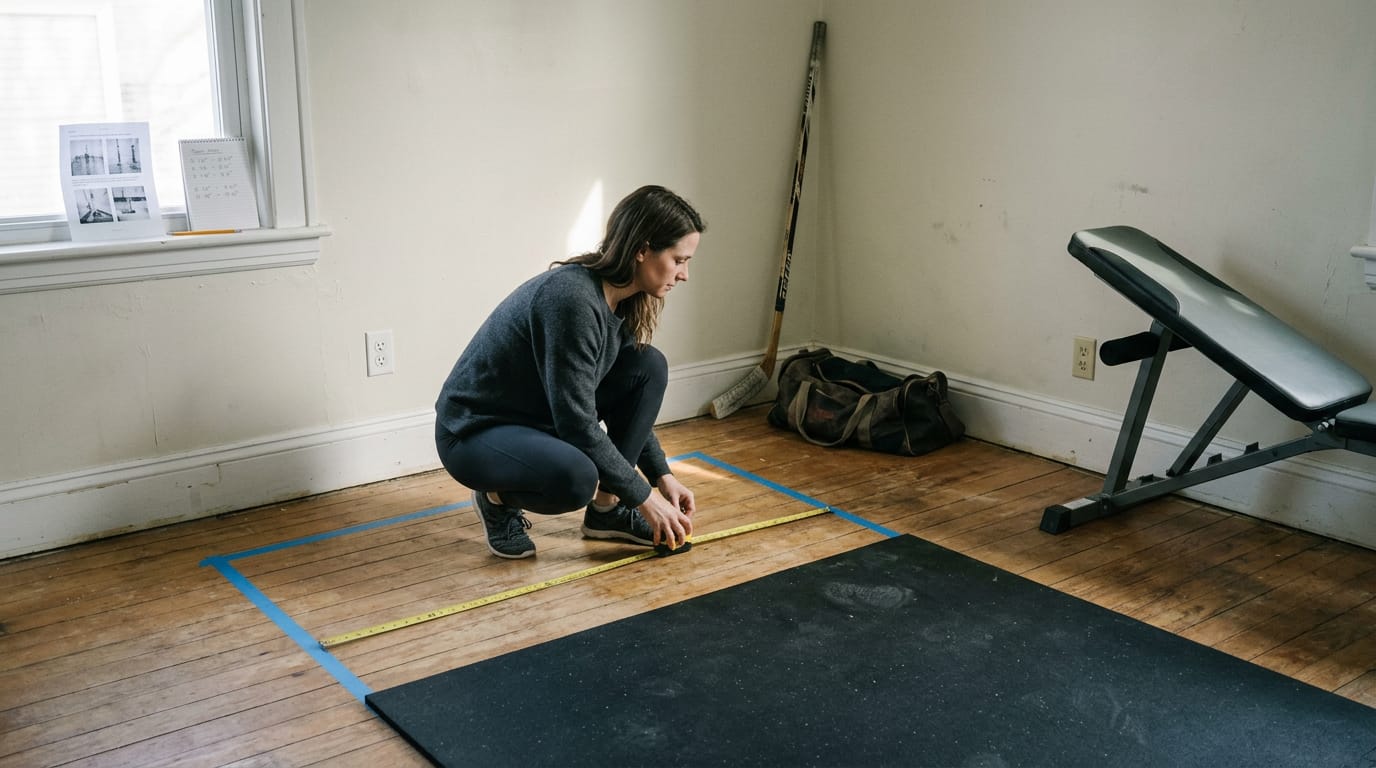
To skip them, measure the room, buy in your build order and read the return policy before checkout. Think of a weekend hockey player who did exactly that and added a rack only after she knew she’d use it. Measure first. Buy second.
Affordable Ways to Build Your Gym
You don’t need a big budget, just the right pieces in the right order. Here’s how we’d sequence a home gym, from ready-made packages to scrappy do-it-yourself setups.
Five complete builds with brand picks
Pick the build that fits how you actually train, not how you hope to train next year:
- Bodyweight start: pull-up bar, resistance bands, sturdy mat.
- Dumbbell basics: adjustable dumbbells, a bench, a few kettlebells.
- Strength core: squat rack, barbell, plates.
- Cardio add-on: jump rope, rowing or cycling machine, floor space.
- Full home gym: rack, barbell, bench and dumbbells in one footprint.
A weekend runner who wants strength work without a membership can set up the dumbbell basics build in one corner of the garage and put it away between sessions.
Compare specs rather than the logo: we’d check weight ratings and frame sturdiness first.
A barbell build from a retailer like Amazon can be a staged build: bar and plates first, bench and rack later. Buy for the lifts you keep doing, not the ones you plan to do.
Skip bundles padded with gear you’ll never use, and racks bought before you’ve measured your space.
Ways to save on used and DIY gear
DIY equipment, like sandbags or a plywood bench, suits lighter training. Check every joint before you load it.
Used plates and dumbbells can be a good buy. Inspect them for cracks, loose sleeves and bent bar ends.
A bare-bones gym is five items:
- pull-up bar
- resistance bands
- bench
- adjustable dumbbells
- jump rope
A parent training after bedtime can use all five in the living room.
Think about resale before you buy used. Clear model names, stated weight ratings and no visible damage are easier to resell.
Spend more on the rack and bar, since you load them every single session, and save on the accessories you only use now and then. Cheap gear that bends under load is no bargain.
Estimate Your Build with Our Calculator
Not sure what a home gym will really cost? Our calculator turns a few quick answers into a realistic build, so you see the total before you add anything to your cart.
How the calculator picks your gear
The calculator starts with three inputs: your space, your budget and your goal. Those answers do most of the work, so give them some thought:
- Space: the floor and ceiling height you can actually spare, not the corner you hope to clear someday.
- Budget: the most you’re willing to spend on this build.
- Goal: what you’re training for right now.
Your goal steers the picks:
- Strength: a rack, a barbell and plates.
- Hypertrophy (building muscle size): an adjustable bench and a range of weights for varied sets.
- Cardio: a bike, rower or treadmill that fits your space.
Once it has those answers, the calculator looks for the best equipment combination. The right mix covers your goal inside your budget and your space, rather than stacking up the priciest pieces.
Think of a weekend soccer player who wants to get stronger for the second half of the season, has a corner of a basement and a set budget.
Enter those answers and the calculator skips the cardio machine she’d never touch and builds around a rack, barbell and bench that fit the corner. The result is a build she can afford and will actually use. Less clutter, more training.
Every pick links to our buying guides, so you can check fit and durability before you buy. Change one answer and watch the total move. That’s the quickest way to find your sweet spot.
Reviews of Smart, Cardio, and Related Gear
Smart machines and cardio gear add real cost, so it pays to know which features earn their price.
Smart equipment for a home setup
Digital resistance machines swap weight stacks for a motor that adjusts load with a tap. A parent training after bedtime can change weight between sets without fuss, but you’ll pay for that convenience, so ask how often you’d really use it.
Artificial intelligence (AI) coaching and interactive features track your reps and offer guided sessions. A weekend player who mostly streams workouts gets less value than the price suggests.
Suited to small spaces is where smart gear earns its spot. Consider a runner in a studio apartment who fits a rower and a bench into one corner. Buy for the room you have, not the one you wish you had.
Portable no-frills options like resistance bands and a jump rope cost far less than connected gear and still build real strength, but they don’t track anything for you. Simple still works.
Cardio machines and hybrid training shoes
Treadmill upgrade for cardio matters most if you run several times a week or train on inclines. A weekend jogger covering a couple of miles may need only a midrange model. Pay for the upgrade when your miles demand it.
Hybrid training shoes are built for variety rather than specialization. Picture a club soccer player who lifts twice a week and sprints on Tuesdays: one hybrid pair covers both. For long runs, a dedicated running shoe still feels better.
Once you’ve picked a category, the next step is comparing specific models on fit, durability and value. That’s where the product reviews come in.
A home gym only pays off if you use it. Set your budget by level, check the membership break-even, and buy in the order that fits how you actually train. That’s how you avoid the surprise bill and the gear that gathers dust.
Keep the goal simple: buy for the player you are now, choose pieces that hold up through a season or two, and favor gear that keeps its value.
Good gear disappears once you start training, and that’s the whole point of building it right the first time.
References
- How Much Does a Home Gym Cost? (Full 2026 Breakdown by Tier) — homegymfoundry.com (2026)
Questions
What is the 3-3-3 rule in the gym?
The 3-3-3 rule is a general gym guideline, not a standardized training rule. One common version recommends three days of strength training, three days of cardio, and three rest or recovery days across a week, though schedules should be adjusted to your fitness level and goals.
How much does it cost to set up a gym?
A home gym can cost $100-$300 for a basic starter setup, while a complete setup commonly costs $1,000-$2,000. A larger premium build can cost $5,000 or more; budget extra for flooring, accessories, delivery, and other setup costs.
Is 2 months gym enough?
Two months can be enough to build a routine and begin noticing improvements, but results depend on your starting point, training plan, nutrition, and consistency. If you mean whether a two-month gym membership is worthwhile, it can be a good low-commitment way to see how regularly you’ll use the gym.
Is $40 a month a lot for a gym?
A $40 monthly gym membership is not unusually expensive, but whether it is a good value depends on how long you keep paying and how often you go. It costs $480 per year, or $2,400 over five years, compared with roughly $1,500 for a home gym setup.
Sources
- How Much Does a Home Gym Cost? (Full 2026 Breakdown by Tier) | Home Gym Foundry, homegymfoundry.com,
Find your level
The Counter