E-bike definition explained, from motors to legal classes
E-bike definition: see how pedal assist and throttles work, compare the three classes, and check local rules that shape where you can ride.

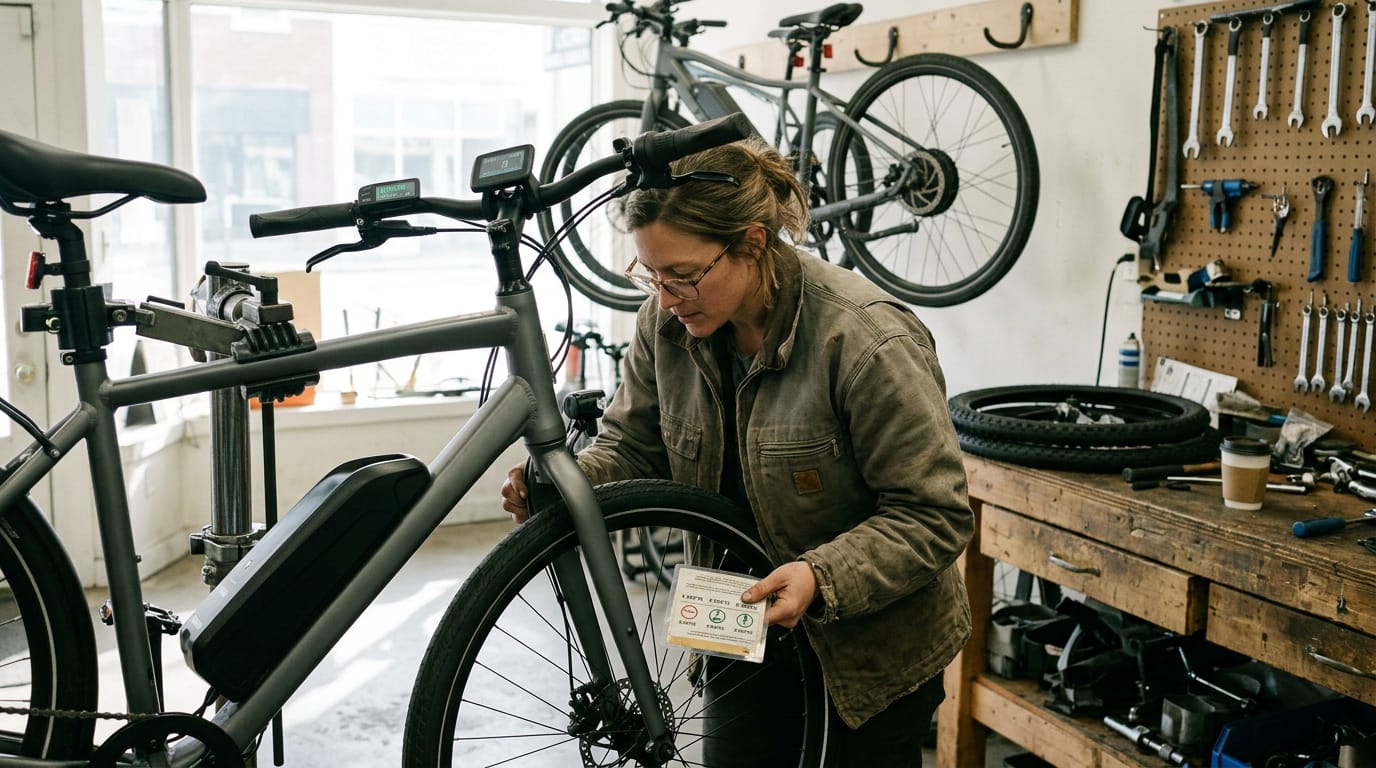
Think about the last time a friend’s bike made a steep hill feel like a gentle slope. That’s the basic idea behind an e-bike: a regular bicycle with a small electric motor that helps you pedal.
Simple on the surface, but the terms, parts, classes and local rules can get tangled fast.
Here’s the short answer: an e-bike adds motor power to your pedaling, through pedal assist, a throttle or both. We’ll cover the terms, how the parts work, the classes, the legal picture and how to shop for one that fits how you actually ride.
What the E-bike Definition Covers
Before you shop, here’s what an e-bike is, why the names get mixed up, and how it compares to the bike you already ride.
A bicycle with a motor
An e-bike, also called an electric bicycle, is a bicycle with an electric motor that either assists your pedaling or powers it. Think of it as the modern cousin of the regular bike.
Picture a weekend rider who keeps up with her club on flat roads but dreads the long climb at the end of every ride. An e-bike gives her a lift right where she needs it.
Why the two names get swapped
You’ll see “e-bike” and “electric bike” used interchangeably, and for everyday talk that’s fine.
Strictly speaking, e-bike is the broad category covering any bicycle with electric help, while “electric bike” tends to describe motor-reliant models that can carry you along with little pedaling. The labels overlap, so don’t let the tag decide for you.
Ask what the bike does, not what it’s called.
How it compares to a regular bike
Good news: an e-bike shares much of the hardware you already know.
- Same handlebars, pedals, and seat, so the setup feels familiar.
- An electric part that augments your human power instead of replacing it.
- Handles like a regular bike, so there’s no new skill to learn.
- Eases hills and headwinds, taking some of the load off your legs.
Set it next to a moped or e-motorcycle and the gap is clear: those are built more like small motorbikes, while an e-bike is still a bicycle at heart. Your legs still do real work.
What’s Inside and How It Works
An e-bike is a regular bike with electric parts added on, and here’s how those parts work together.
The main electric parts
Six parts do the work:
- Motor: Supplies the extra push.
- Battery: Stores the energy the motor uses.
- Controller: The small computer that sets how much help you get.
- Sensor: Reads your pedaling and reports it to the controller.
- Display: Shows your assist level and remaining charge.
- Wiring: Connects the parts so they can communicate.
Hub and mid-drive motors compared
Hub motors sit in the center of a wheel and drive it directly. Mid-drive motors sit at the pedals and feed power through your existing gears.
Weight and efficiency set them apart. A mid-drive’s weight sits low in the frame, while a hub motor’s sits in the wheel. Because a mid-drive uses your gears, it can stay efficient on steep climbs.
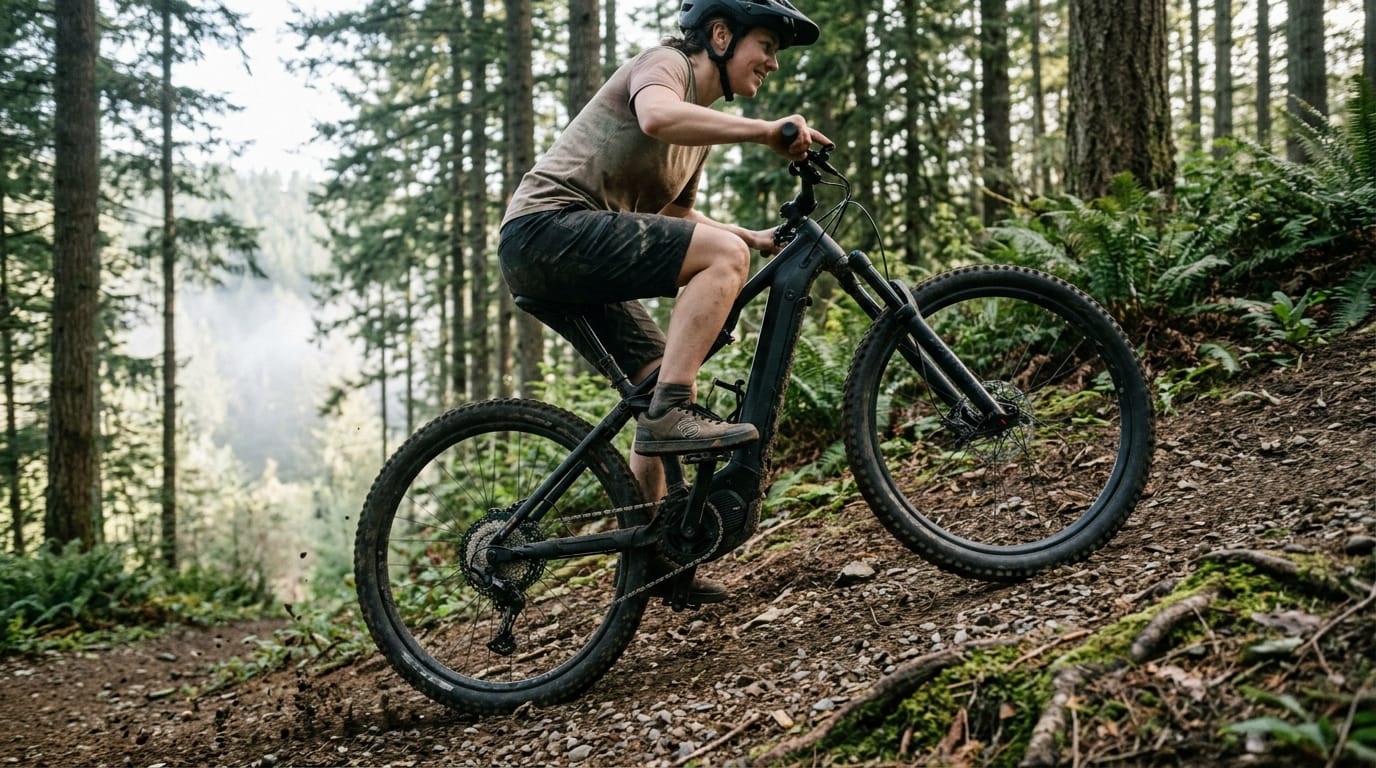
Power and torque vary by model. Torque is the twisting force that gets you moving up a hill. Think of a weekend mountain biker who climbs the same steep trail every Saturday. Strong torque gets her up the first pitch with legs to spare.
How far one charge will take you
Range starts with the battery. According to A dedicated battery for an electric bike, e-bikes commonly use lithium-ion batteries, and larger batteries add weight. Lithium-ion cells pack a lot of energy into a small space.
Expect roughly 20 to 60 miles per charge, depending on how much help you use.
Look for a UL certified battery. UL, short for Underwriters Laboratories, is an independent safety tester, so the label means it’s been checked against safety standards.
How sensors and gears respond to pedaling
Torque sensors measure how hard you push on the pedals. Cadence sensors only detect how fast the pedals turn.
With pedal assist, the motor stops when you stop pedaling. No pedaling, no push.
Most models keep familiar gear shifters, and lower gears help the motor work lighter, which extends battery life.
Do electric bikes charge when pedaling? Usually not. The wall charger refills the battery, while your pedaling just helps you go farther.
Classes and Riding Modes, Explained
Your class and mode shape how a ride feels, not just how fast it goes. Here’s how to read yours and choose a mode.
How do I know if my e-bike is class 1, 2 or 3?
Electric bikes come in three main classes:
- Class 1: pedal-assist only, helping while you pedal.
- Class 2: throttle-assisted, so the motor can move you without pedaling.
- Class 3: pedal-assist with a higher speed limit.
According to AAA’s explainer on Class 1, 2 and 3 e-bikes, Class 1 and 2 top out at 20 miles per hour, while Class 3 pedal assistance runs up to 28.
To identify yours, check for a throttle first. If there’s one, it’s Class 2. If not, 20 miles per hour means Class 1 and 28 means Class 3. Confirm with the shop before you buy.
Pick the mode that fits your ride
The right mode depends on whether you want to work out or to cruise.
- Bicycle mode: the motor is off, so you’re just pedaling.
- Pedal-assist levels: the motor adds help as you pedal, and you choose how much.
- Throttle-only mode: the motor moves you with no pedaling.
- Pedal-assist plus throttle: pedal along, and reach for the throttle for a boost.
What each ride feels like
- Active workout: pedal-assist helps you climb, so a club cyclist can push hard Saturday and still have legs for Sunday’s group ride.
- Relaxed cruising: the throttle lets a dad ease along the bike path with his teenager, no pedaling needed.
- Riding farther and faster: Class 3’s 28 miles per hour limit gives you more speed on long rides.
- Carrying heavier loads: a weekend player hauling a cooler and gear to the park gets extra help.
The bike shares the work. You still set the pace.

Practical Pros and Things to Weigh
Every e-bike comes with trade-offs, so the right one depends on how and where you ride.
How heavy e-bikes are to handle
E-bikes are heavier than traditional bikes, usually in the 40 to 80 lb range. You feel that weight when you lift one onto a car rack or carry it up stairs. Lighter models are available, so compare weights if you’ll be handling the bike often.
Do I really need an e-bike?
The answer depends on your trips, but for many riders it’s a yes. Here’s where an e-bike earns its place:
- Car replacement for short trips. A randomised controlled trial on the substitution effect of e-bikes found that the group given e-bikes cycled one extra trip and 6.5 km more per person each day, a 25% increase in total cycling.
- Commuting and recreation. One bike can cover the weekday commute and the weekend ride.
- Fun and accessible cycling. E-bikes make riding easier to get into, so more people stay on two wheels.
- Zero emissions. A comparative study of 12 electrically assisted bicycles found no direct tailpipe emissions while an e-bike is being ridden.
- Lower cost than cars. An e-bike costs less than a car, which makes it a practical swap for errands.
The real question isn’t whether an e-bike is better than a car. It’s whether it can replace the trips you already make.
What you’ll pay and why it varies
E-bikes cost more than traditional bicycles, and the price depends on the brand and the battery. Quality also affects longevity, and a well-built bike lasts longer.
It’s less about what you pay upfront and more about how long the bike keeps working for you. Price is the first number you see. Longevity is the one you live with.
Riding in rain and still getting fit
E-bikes are rideable in rain, so a drizzle doesn’t have to cancel your ride. Look for sealed electrical components, the parts you most want protected when the weather turns. You still do the pedaling, so an e-bike still provides exercise.
Think of a weekend runner who switches to cycling for a wet spring and keeps the training going without losing a week.
What the Law Says About E-bikes
Before you ride, you need to know which rules apply, and they shift more than most shoppers expect. Here’s how the law sorts e-bikes and where you can ride.
How the law classifies e-bikes
Lawmakers decide which rules apply by checking whether a vehicle fits the legal definition of a motor vehicle. Most e-bikes don’t, so they’re generally treated as bicycles. Class 3 models may face stricter rules, so check which class you’re buying.
Are e-bikes illegal in every state? No, they aren’t banned across the board. But the rules change from one state, county or city to the next, and that patchwork is why a ride that’s fine in one town can break a rule in the next.
Whether you need a license or insurance
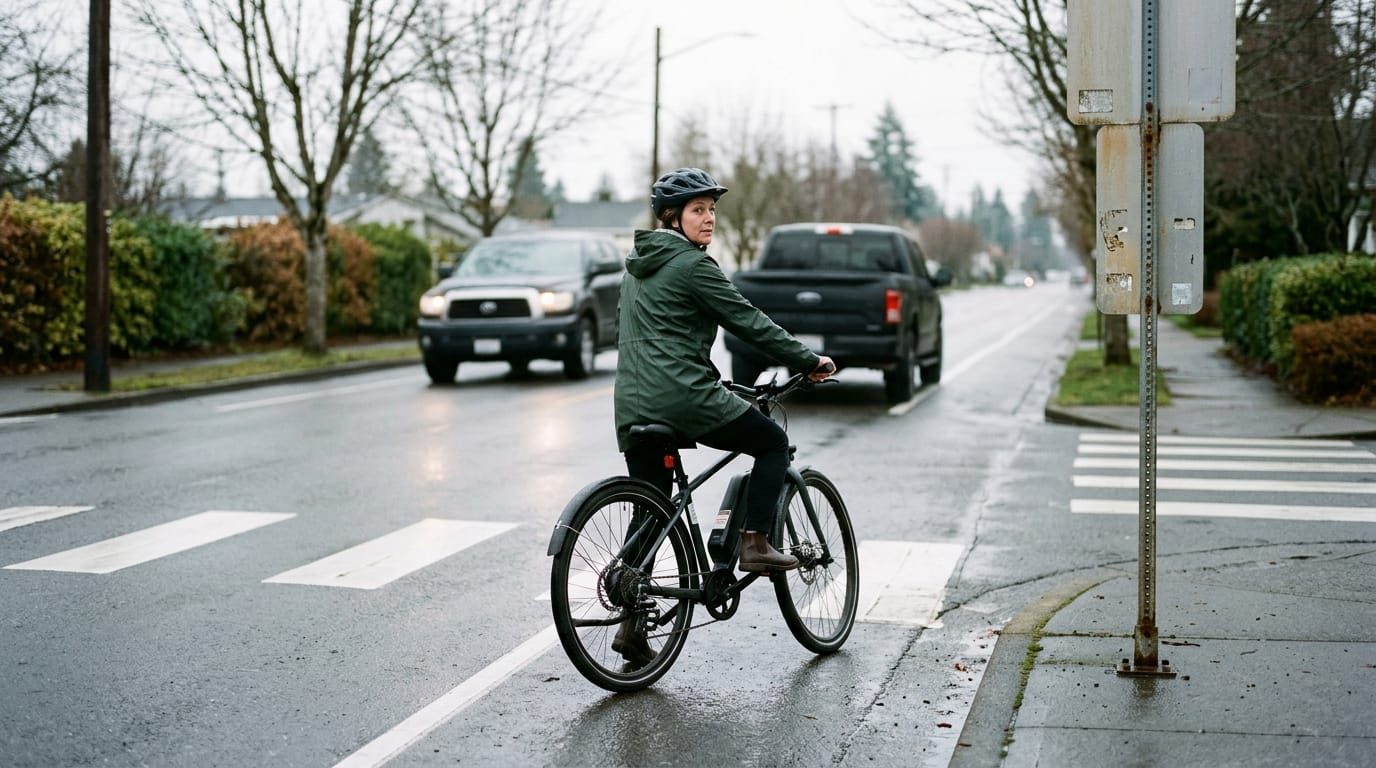
Usually you won’t need a driver’s license to ride an e-bike, and insurance generally isn’t required. Whether that holds for you depends on your bike’s class system, so identify your class before you assume anything.
Local laws can add their own requirements, so check them too.
Where you can ride, age, and speed rules
Take a weekend cyclist who bought a Class 3 e-bike to keep pace with her club on hill climbs. Before she takes it onto a shared trail, she checks local rules, because a bike that’s welcome on the road may not be welcome there.
That quick check keeps her Saturday loop on track.
Bike lanes and trails can carry their own restrictions. Age requirements vary by place too, so check the minimum age where you live before a kid rides alone. Speed limits follow the same pattern. It’s about where you ride as much as what you ride.
Rules differ between the US and Europe, and they vary from region to region within each one. Check before you ride.
Buying an E-bike and Keeping It Serviced
Not every e-bike on the shelf or in a browser tab is worth your money. Knowing what to skip matters as much as knowing what you want.
What e-bikes should you stay away from?
Think of a weekend rider who finds a bargain online, has it shipped to the door, and opens the box to find loose bolts and a bent wheel. No local shop will touch a bike they didn’t sell, so it ends up gathering dust in the garage.
- Online purchase risks. Skip listings that don’t name the motor, battery, or warranty terms. If you can’t get straight answers before you pay, you won’t get them after.
- Shipping damage concerns. Big boxes take rough handling. Inspect the bike and photograph any damage before you sign for it.
- Local shop setup and test rides. Look for a shop that assembles and adjusts the bike, then lets you test ride it before you pay. That’s where you learn whether it’s a good fit or just a good deal.
- Warranty, repair, and service. Ask who handles repairs, how long the warranty runs, and whether they stock parts for that brand.
- Match e-bike type to riding. Buy for how you ride, not how you wish you rode. A paved-commute model can feel wrong on dirt trails, and a trail model is overkill for a short ride to the office.
So which e-bikes should you avoid? We’d skip any model with no clear class label, no named battery or motor, a seller who can’t say where service happens, or a price that seems too good to be true. Walk away. There’s always another bike.
Once you know the terms, the parts, the classes and the rules, an e-bike stops being a mystery. You’re choosing a bike that fits your terrain, your commute and your comfort level, not just the flashiest spec sheet.
Check the class label, ask how the motor engages, and find out who will service it. A good fit at a fair price beats a bigger motor you’ll never need.
The right e-bike doesn’t just get you up the hill. It gets you out the door more often, and that’s the whole point.
References
- A dedicated battery for an electric bike — doi.org (2019)
- A Comparative Study of 12 Electrically Assisted Bicycles — doi.org (2009)
- What is the substitution effect of e-bikes? A randomised controlled trial — doi.org (2020)
- What Is an E-Bike? Understanding Class 1, Class 2 and Class 3 Electric Bikes — acg.aaa.com (2026)
Questions
How do I know if my ebike is class 1, 2 or 3?
Check the bike’s class label or ask the seller or shop to confirm it. In the common three-class system, Class 1 provides pedal assist up to 20 mph, Class 2 has a throttle and tops out at 20 mph, and Class 3 provides pedal assist up to 28 mph.
Is an e-bike electric?
Yes. An e-bike is a bicycle with an electric motor that assists your pedaling or, on some models, can power the bike without pedaling.
What e-bikes to stay away from?
Avoid bikes with no clear class label, unnamed motor or battery, unclear warranty or repair support, or a seller who cannot tell you where the bike can be serviced. Be cautious of prices that seem too good to be true, and try to buy from a shop that assembles and lets you test-ride the bike.
Are e-bikes illegal in every state?
No. E-bikes are not banned across the United States, but rules vary by state and can also differ by county or city. Check local requirements for the bike’s class, where you can ride, and any age or speed limits.
Do I really need an e-bike?
You may benefit from an e-bike if it can make your commute, errands, or recreational rides easier or replace some car trips. Whether you need one depends on your trips, budget, and riding preferences; a regular bike may be enough if you do not need motor assistance.
What electric bikes are there?
The three main classes are Class 1, with pedal assist up to 20 mph; Class 2, with a throttle and a 20 mph limit; and Class 3, with pedal assist up to 28 mph. E-bikes also vary by motor type, such as hub or mid-drive, and by whether they use pedal assist, a throttle, or both.
Do electric bikes charge when pedaling?
Usually not. Pedaling helps you travel farther by reducing how much power the motor uses, but a wall charger refills the battery. Some e-bikes have regenerative charging, but it is not typical.
Sources
Find your level
The Counter