Small Home Gym Ideas That Work in Tight Spaces
Small home gym ideas help you turn spare-room clutter into a workable workout space with compact gear, floor protection, tidy storage, and budget swaps.
Picture a spare bedroom slowly turning into a laundry pile with a rowing machine in the corner. You want to train at home, but every piece of gear seems to need more room than you’ve got.
The good news is that a small home gym works when you plan it, not when you cram it. Pick the right spot, choose compact equipment that earns its floor space, and keep everything stored and easy to reach.
We’ll cover each piece, plus the fit and level advice a good sports shop gives you before you buy.
Where to Put a Small Home Gym
Decide where your gear will live before you buy it. A good spot keeps you showing up.
Repurposing spare rooms for workouts
A spare bedroom is the easiest pick since it has a door and fits a mat, a bench, and adjustable dumbbells. A home office works if the gear folds away, and an unused dining room offers open floor.
Consider a club runner who moves his pull-up bar into a spare room so midweek strength sessions don’t get skipped. A bathroom is a last resort: it’s too small and humid for gear.
Using a garage, basement or attic
A garage cubby or stall works if you can spare a few feet along one wall. Aim for access rather than storage, since a bench behind the car is a bench you’ll skip.
Basements can hold several zones, like a treadmill in one corner and a stretch mat in another. An attic conversion depends on ceiling height and a safe way up, and attics run hot and cold.
Flooring and insulation matter everywhere: a thick rubber mat protects the floor and quiets jumping, and damp garages or basements need a moisture check first.
Making a corner work as a gym
A living room corner works when the gear is compact, like a folding bench and bands in a basket. Any corner gives you two walls for shelves and hooks.
A corner becomes a gym when it’s defined rather than leftover: a rug or strip of tape marks a defined workout zone and tells your brain it’s time to train.
A door-hung gym adds pull-ups or suspension straps to a sturdy doorway. Check the frame and follow the mounting directions, because a door that gives way isn’t a workout.
Outdoor and detached gym options
A covered porch or patio gives you fresh air, but weather sets your schedule, so pick gear that handles sun and damp. A detached gym keeps noise out of the house and gives you the most room, but winter trips out there mean planning for power and heat.
A glass partition splits a larger room without blocking light. Glass gives you separation without isolation, so the family can still see you work out.
Measure the spot you have and buy for it. Fit beats fantasy.
Equipment That Saves Floor Space
Floor space is the real limit in a small home gym, so every piece has to earn its spot. Each option below comes with the goal or level it suits best.
Adjustable dumbbells that save space
Adjustable dumbbells replace a full rack of fixed pairs with one compact set that dials through weights, saving floor space and usually money. Match the range to your level.
A new runner adding strength work needs light, easy steps between weights, while a serious amateur needs a higher ceiling so the set doesn’t feel outgrown by spring. Level beats the top number.
Folding benches and add-on attachments
A foldable bench stands upright against a wall, and one that doubles as seating earns its keep twice. A parent training in the basement can use it for dumbbell presses, then for lacing up shoes, so the corner never needs a second spot.
A compact bench suits rooms where a full-size model would block a doorway, and some benches take a leg extension attachment for thigh work. Measure the folded footprint, not the open one, because that’s the space you’ll live with.
Wall racks and compact cable setups
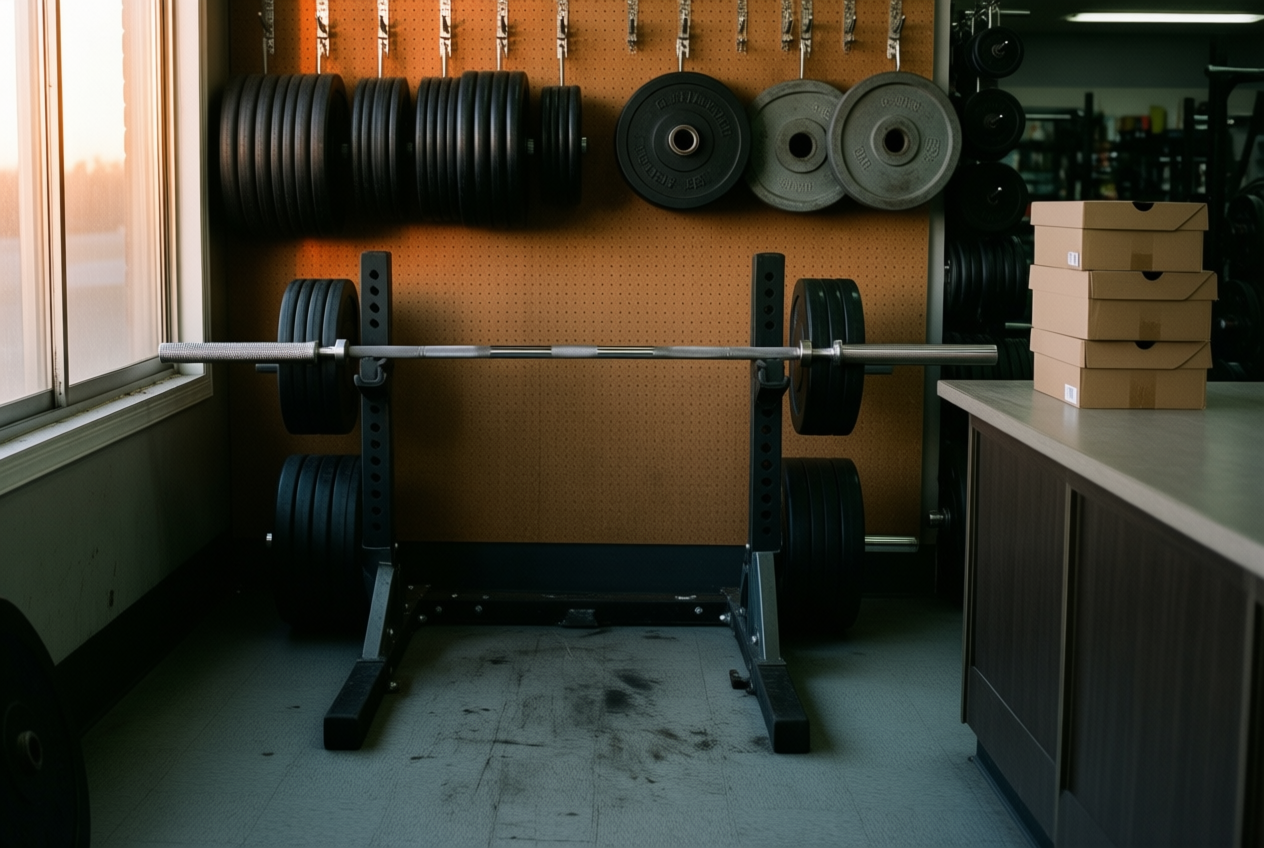
A wall-mounted rack keeps bars and plates off the floor, so the room stays walkable.
Low-profile cable attachments clip onto a cable setup you already own without adding much height, and an all-in-one trainer combines a weight stack, a pulley, and a bench in one frame.
Cable accessory packages bundle handles and straps so you can start with a single purchase. A parent squeezing in a workout before the kids wake up gets rows and presses without a second machine taking over the living room.
Portable tools like bands and sliders
Resistance bands are among the lowest-cost options here and fold into a drawer. A doorway pull-up bar works, but check the frame and the stated weight limit before you hang your full weight from it.
A suspension trainer, often called a TRX after the popular brand, uses your body weight for rows and presses. A jump rope takes almost no floor but is loud on wood, so set it on a mat.
The best portable tool is the one you’ll reach for, not the one that lives in a closet.
Choosing a barbell and plates
A single barbell with plates covers squats, presses, and rows, which replaces more than most fixed machines. Bumper plates cut noise and protect floors but take more room on the rack, while thin or urethane-coated plates save storage space.
Budget iron plates cost less but are loud on hard floors. Check durability before buying:
- Coating: It shouldn’t flake or chip with regular use.
- Collars: Lock collars should be included and grip firmly.
- Stated limits: Compare the listed weight capacity with your plans.
Buy for the lifts you do now, not the ones you hope to add someday.
Low-impact cardio machines for small rooms
Cardio machines eat space fast, so favor options that fit a corner:
- Foldable walking pad. Folds upright or slides under a couch when you’re done.
- Stair climber. Builds legs in a narrow footprint.
- Ski-row erg. A vertical machine that works the whole body in a narrow footprint.
- Elliptical. Low-impact on the joints, but wider, so measure first.
- Stationary bike. Builds endurance with little impact.
A weekend hockey player keeps her legs moving on rest days with a stationary bike, without pounding her joints. Choose the machine you’ll use on a tired Tuesday, not the one that looks best in the room.
Matching gear to how you train
Start with your training goal, since a half-marathon runner needs different kit than a lifter chasing strength. A yoga mat is the most space-efficient piece you’ll own, so look for enough cushion and a grip that holds when you sweat.
A full Pilates reformer takes up a lot of room, so a Pilates student working in a spare bedroom can get much of the same core work from a mat and loop band.
A landmine attachment anchors one end of a barbell in a corner, so you can press and row with the free end. Skip the gear for training you only hope to start.
Protecting Floors and Keeping Noise Down
Once the weights come out, your floor and the people below start taking notice. Here’s how to protect one and quiet the other.
Mats and rugs that protect floors
Start with exercise mats, the simplest fix. A thick mat gives you a stable surface for push-ups and stretching, and it catches a dropped kettlebell before it chips the floor.
Picture a parent training after the kids are asleep, with one mat turning a carpeted basement corner into a workout zone that packs away by morning.
Padded rugs suit lighter work like yoga, bands, and bodyweight circuits. They feel softer underfoot but aren’t built for heavy drops, so skip them under a barbell.
For a bigger footprint, rubber tiles lock together like puzzle pieces and are easy to rearrange when a small room has to do double duty.
The goal is to protect the floor, not just cover it.
Cutting down noise and floor impact
Impact noise is the thud that travels through the building, so we’ll start there.
If you’re lifting, look first at low-bounce bumper plates, which are designed to bounce less when dropped. A calmer landing means less jarring and less noise for everyone at home.
Put rubber tiles or a thick mat under the rack to absorb impact before it reaches the structure beneath. The padding takes the hit so the floor doesn’t have to.
Wood paneling is an acoustics tool, not an impact fix. Bare walls bounce sound back at you, so a few panels can soften echo in a small room. It won’t stop thumps traveling through the floor or ceiling, so pair it with floor protection.
Quiet is a feature, not a luxury.
Keeping Equipment Stored and Tidy
Gear that’s easy to put away gets used more often. Here’s how to clear the floor, one storage zone at a time.
Storing gear up on the walls
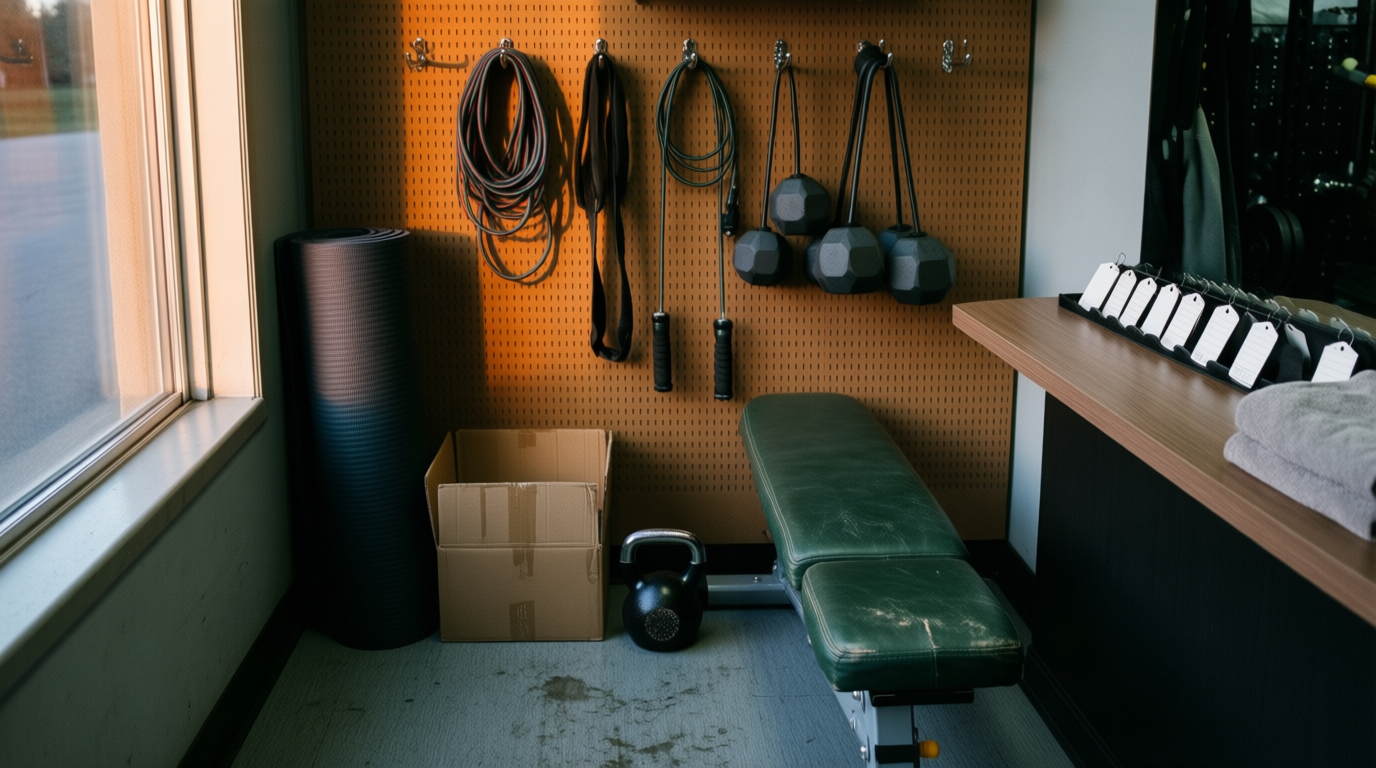
Going up frees floor space that bulky equipment would otherwise eat. A wall-mounted rack holds a barbell or plates off the ground, while a pegboard keeps straps, jump ropes and small accessories in sight.
Single hooks handle lighter gear, and over-the-door hooks need no drilling, so they’re handy for renters. Consider a parent sharing a one-car garage with a teen’s off-season training.
A dedicated plate and barbell rack on the back wall keeps the floor clear for the car, and nobody trips over a stray plate on the way out.
Rolling carts for dumbbells and gear
A dumbbell storage cart keeps a full set together, while an adjustable dumbbell stand holds one adjustable pair upright. Wheeled hooks or towers give bands and small gear a home that rolls with you.
A portable contained gym packs a full setup into one unit you can wheel out for a session and tuck away after. Rolling storage lets you move the gear to the workout instead of the other way around.
Hiding gear in bins, benches and shelves
Anything that doesn’t need to be on display can disappear into a closet, bench or bin. Here’s where each option fits:
- Baskets and bins corral balls, tape and straps on a shelf or the floor.
- Storage bench doubles as a seat for lacing up while hiding mats and bands underneath.
- Shelving keeps small items off the floor and within reach.
- Closet storage works well if you can spare one corner of a closet.
- Lockers give each person a labeled spot, so the family stops hunting for shoes.
- Bar cart rolls up with water bottles and a towel, then tucks into a living room corner.
Out of sight, never out of reach.
Arranging and Caring for Your Gym
A small gym rewards a little planning. Get the layout right, then keep the room in shape so your gear lasts.
Measuring space and placing equipment well
Start by measuring your space before you buy anything. Note the length, width, and ceiling height, then plan around the room you have, not the one you wish you had.
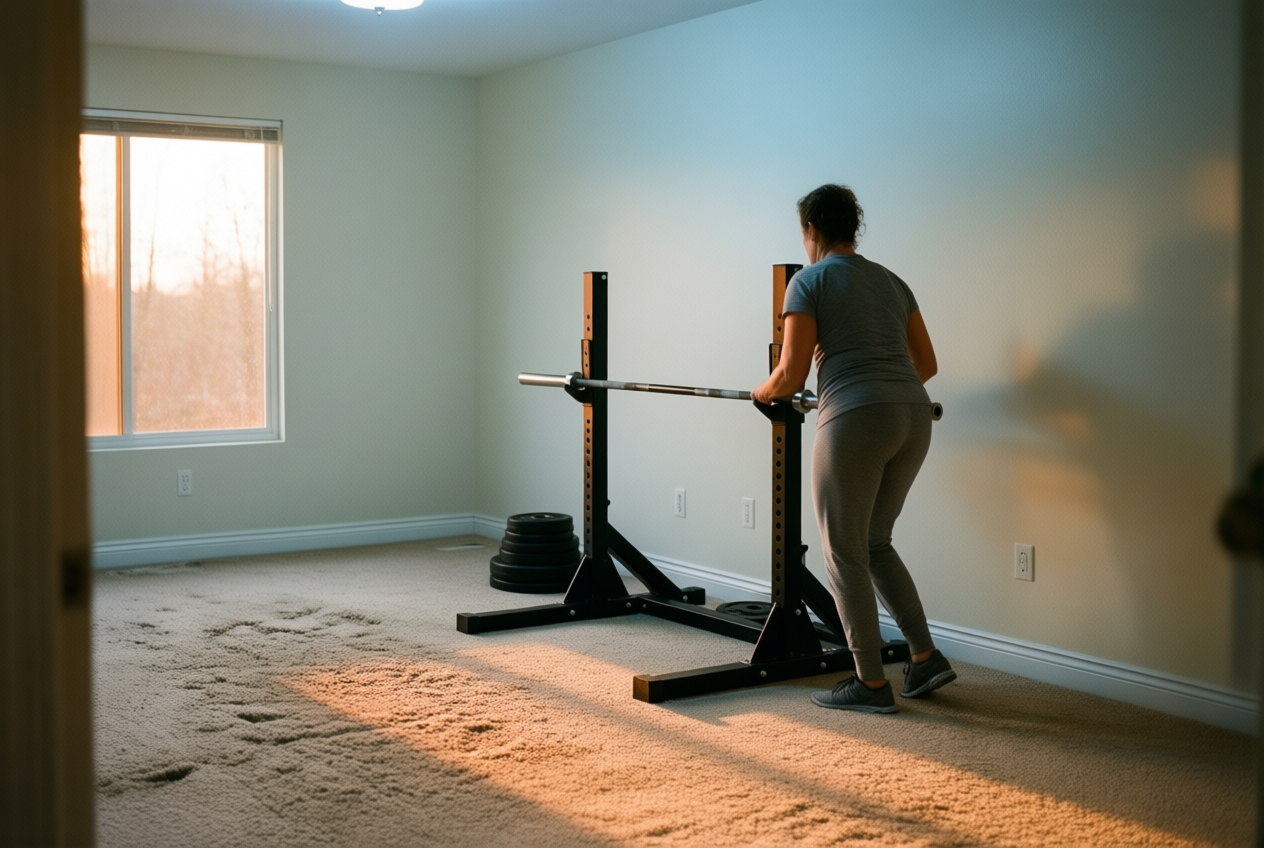
Keep pathways clear and scale equipment to the room. Think of a weekend lifter squeezing a squat rack into a spare bedroom. She pushes it against the wall so she can load plates and still walk around it.
Place cardio where you’ll use it. A bike tucked in a dead corner gets ignored, while one by your usual door gets used.
Test ceiling height for presses by standing where the bar will sit and raising your arms overhead. If your hands hit the ceiling or a light fixture, pick a different spot.
Leave clearance around the bench and rack too, so you can get in, get out, and bail from a lift safely.
Keeping your gym in good shape
Good ventilation and a comfortable temperature keep a small room from feeling like a sauna. Run a fan or crack a window when you can, because airflow helps you train longer, not just cooler.
Basements and garages often trap damp air that rusts bare steel and mildews padding. A dehumidifier keeps moisture in check. Moisture is quiet, but it adds up.
Wipe down benches, grips, and handles after each session. Sweat left sitting wears on padding, so a quick wipe keeps your gear feeling new.
Sweep or vacuum weekly to clear dust and chalk. Grit under the weights wears down flooring faster than you’d expect, and clean floors make spills easy to spot before someone slips.
Styling the Room to Feel Inviting
A small gym can feel cramped fast, but a few smart choices fix that. Mirrors, light, color, and personal touches make the room feel open and inviting, so you actually want to train in it.
Using mirrors to open up the room
Mirrors are the quickest way to open up a tight room. A mirror extends your sightlines, so the room feels bigger without actually getting bigger. It also bounces light into corners a ceiling fixture misses, and it lets you check form.
Consider a weekend tennis player who watches her knees in a long mirror during each set, instead of guessing whether they’re caving in. Mirrors earn their wall space.
Choosing light and colors for the room
Lighting and color do more heavy lifting than you’d expect. Put your main equipment near windows if you can, since natural light feels airy and costs nothing.
Add adjustable lighting for evenings, so you can go bright for hard intervals and soft for stretching. Light colors feel larger, and bold accent walls add personality, but pick one, not four.
Decor touches that keep you motivated
Small touches make the space feel like yours, so keep them purposeful:
- Wall art and quotes. Pick one or two pieces, like a race photo or a quote, that remind you why you train.
- Plants and greenery. A plant by the window softens a room full of metal and rubber.
- Focal wall. Give the room one spot your eye lands on first, so it looks designed instead of crowded.
- Scents. Pick one light fragrance, since heavy smells get overwhelming mid-session.
- Matching equipment aesthetic. Matching finishes keep the room from looking cluttered, even with secondhand gear.
Extras that make the space comfortable
A beverage station can be as simple as a shelf with water bottles and a towel hook, saving a trip to the kitchen between sets. A TV or lounge chair works if you have room, but keep it off to one side so the equipment stays the star.
A yoga or mindfulness corner needs only a rolled mat on a clear patch of floor. A runner might stretch there on rest days, so recovery doesn’t get skipped. Skip anything that just collects dust.
Budget Options and Household Swaps
Look around the house before you buy anything. Plenty of small-space training needs only furniture, a towel and a few cans, so test your household swaps before you spend a dollar.
Using what you already have at home
Think of a weekend soccer dad who wants to keep his legs and core strong in the off-season. He uses a sturdy chair for step-ups, the countertop for push-ups and the couch for stretching, and he skips buying a bench until he knows he’ll stick with it.
Test that the chair stays put before each set.
- Water bottles as weights. Two full bottles can stand in for light dumbbells on curls and overhead presses. They’re a starting point, so move up once a set feels easy.
- Towel or blanket mat. A folded towel cushions knees and wrists on hard floors, but it won’t grip, so skip fast jumps.
- Soup cans. They work for curls and lateral raises. Grip them by the body and skip any that are dented or leaking.
Setting up a gym without overspending
Buy for the training you do, not the training you imagine, and add gear only after a few weeks of real use. Skip the shopping spree.
Budget plates save money when you buy only the weights you’ll actually lift. For used gear, inspect it in person: check for cracks, heavy rust, loose handles and a center hole that fits your bar.
Plenty of useful pieces, like resistance bands, a jump rope and a basic mat, fall under $50. Consider a club volleyball parent paying a monthly gym fee but only going twice a month.
Compare a year of that membership to a few pieces at home, and if home wins, that money covers a solid starter setup.
A small home gym doesn’t need a big room. It needs a clear plan: the right spot, equipment that earns its floor space, flooring and storage that keep things quiet and tidy, and a budget you can stick to.
Buy for how you actually train, not how you wish you trained, and the space you give up will feel worth it.
When the setup fits your routine, you stop noticing the square footage and start noticing your progress. The best small gym is the one you actually use, and you can start building yours this weekend.
Find your level
The Counter