Leg Press Alternative at Home: Moves That Work
Leg press alternative at home: compare bodyweight moves and squat racks, then choose options that fit your space, strength level, and joints.
Picture the leg press at your gym as a comfortable ride: the seat supports your back, the sled moves on a fixed path, and you push without worrying about balance. Your living room can’t fit that machine, but it can still train the same muscles.
A leg press alternative is any movement that works your quads, glutes, and hamstrings without the machine. Some need nothing but your body, while others add a dumbbell, a barbell, or a squat rack.
Finding the right one is a lot like buying a bike: match it to your level and your space.
Finding a Leg Press Alternative at Home
Skipping the leg press doesn’t mean skipping leg day. Here’s why people skip it, how the movement works, and what to train instead.
Why people skip the machine
Most of the time it comes down to logistics:
- Busy gym at peak times. Waiting for a free machine after work can eat your whole session.
- Machine too large for home. A full leg press unit takes more room than most spare rooms have.
- Dislike of machine. Some lifters just don’t enjoy the setup, and dreaded workouts get skipped.
- No time to get to gym. The drive, the change, and the wait add up fast.
Think of a club player who trains before work: skipping the commute and the line means a full session fits in before the day gets away from her.
How the leg press movement works
You sit at roughly a 45° angle, place your feet on the foot plate, and push it away with your legs. It’s a compound movement, so several joints and muscle groups work together instead of one muscle doing all the work.
So any home alternative must be compound too.
The hack squat is the closest relative, but you stand with your back against a pad instead of sitting. Its main benefit is loading the whole leg in one seated, compound movement.
Which leg muscles to train instead
Your home alternative should work the same muscles. Focus on these four:
- Quadriceps. The front of the thigh, which takes the lead when you push.
- Hamstrings. The back of the thigh, which works alongside the quads.
- Glutes. The hip and rear muscles that drive the push.
- Calves. The lower leg, which completes the chain.
Hit all four, and you’ve covered the leg.
Bodyweight Moves That Work Well
The leg press trains your thighs and hips with your back supported. These moves cover much of the same ground at home, from gentle to demanding.
Squats come closest to the press
Squats are the closest match to the press, working the same hips, thighs and knees. They put less pressure on your lower back than a loaded bar does, and they need no equipment. Follow these steps:
- Stand with your feet shoulder-width apart and toes slightly out.
- Sit your hips back and down, as if reaching for a chair.
- Keep your chest up and your knees over your toes.
- Push through your whole foot to stand.
Aim for 8 to 12 reps. How deep you go matters more than how fast you go.
How do you do a leg press with dumbbells? You can’t reproduce the machine with dumbbells, but a goblet squat gets close. Hold one dumbbell upright at your chest and squat using the steps above.
Broad jumps for explosive power
A broad jump is a standing long jump for distance, and it builds explosive power. It’s high-impact, though, so the landing jars your joints. Save it for days when your knees feel good. No equipment is needed.
- Swing your arms back, then drive them forward and up as you jump.
- Bend your knees and hips, then jump as far forward as you can.
- Land softly on the balls of your feet and pause before you stand.
A recreational volleyball player who wants a quicker first step at the net can add broad jumps to her warm-up before Saturday’s match.
Low-impact lunges that spare your back
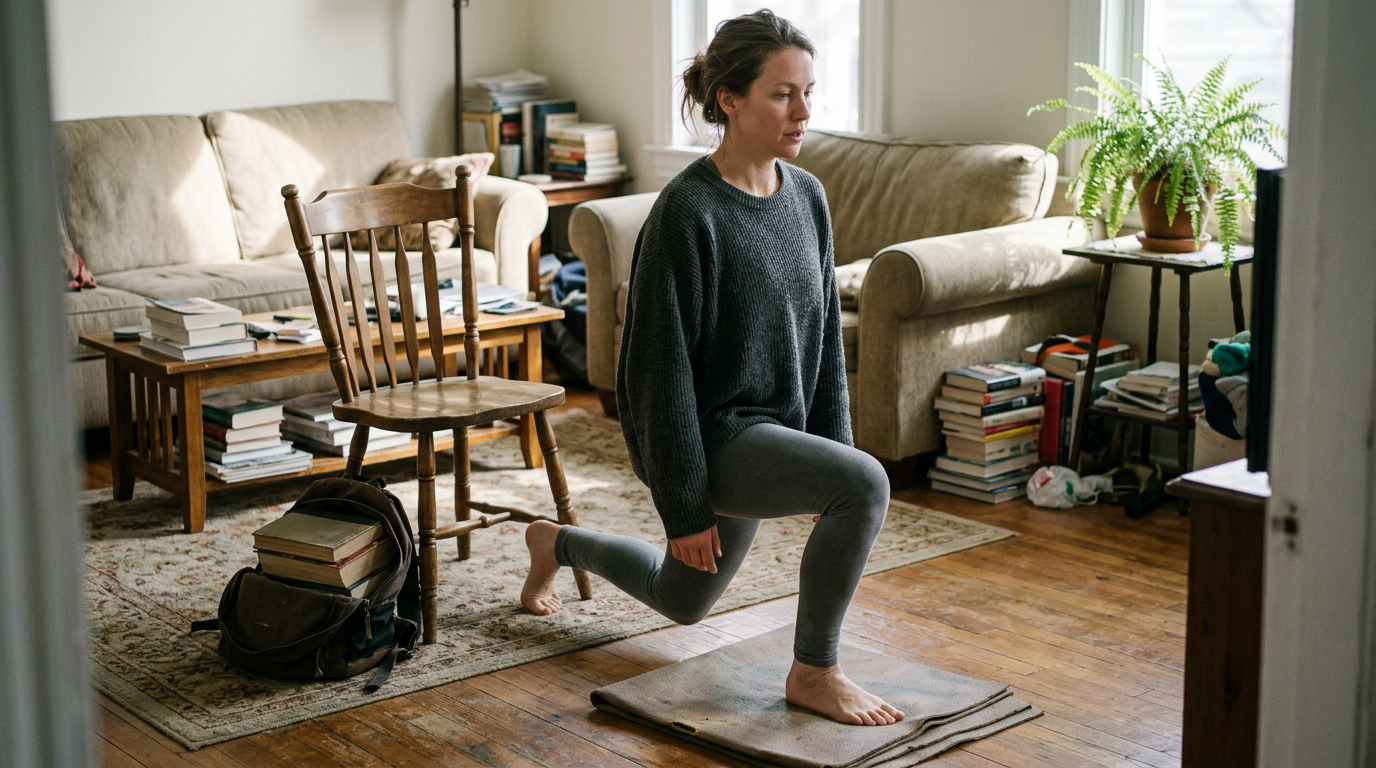
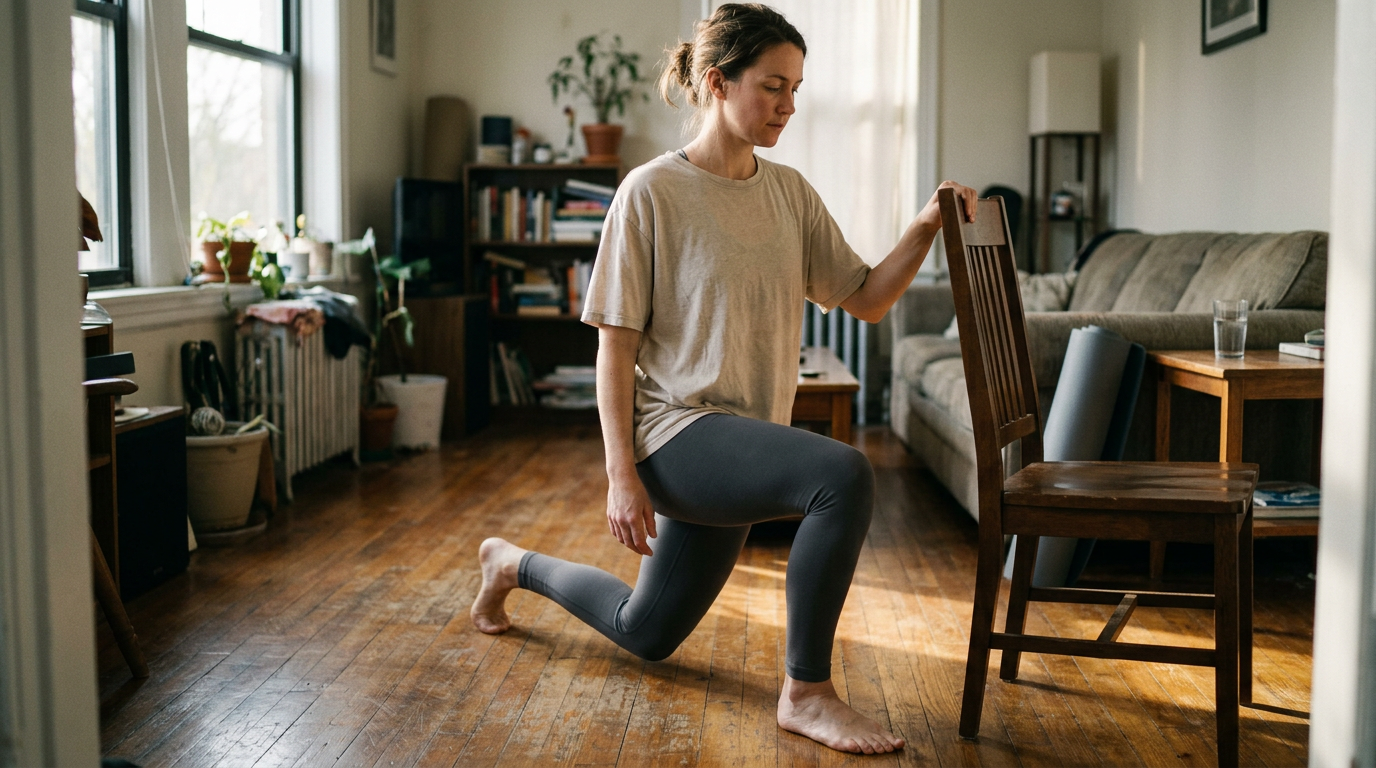
Lunges are a low-impact option because you step, lower and rise without jumping. Staying upright keeps stress off your lower back, and each leg works on its own, so you can check both sides. No equipment is needed.
When lunges feel easy, try harder versions. A single-leg step-up uses a stair or sturdy bench, and a Bulgarian split squat (your back foot rests on a chair) builds on the same movement. Control wins over speed here.
Bridges that target glutes and hamstrings
A glute bridge targets your glutes and hamstrings, and your core works to hold your body in one straight line. Only a mat is needed.
Lie on your back with your knees bent, press through your heels, and lift your hips until your shoulders, hips and knees form a line. Hold for 2 to 3 seconds, then lower slowly.
Mixing It up as You Get Stronger
Once bodyweight moves feel easy, your legs need a new challenge.
Squat variations that fix imbalances
A sumo squat, with your feet wide and toes turned out, targets your inner thighs.
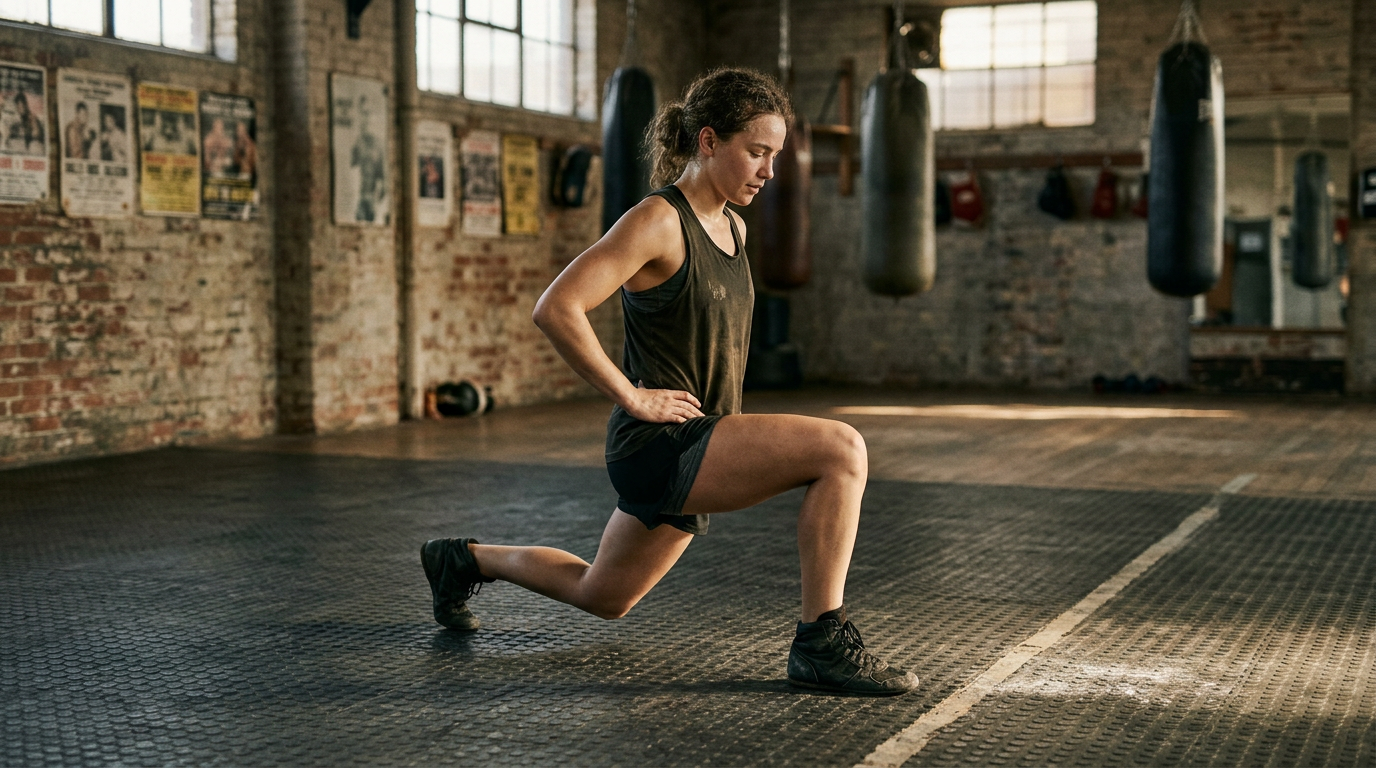
For single-leg work, try a split squat: keep one foot forward and lower your back knee toward the floor.
Two-legged moves let your stronger side do more of the work, while single-leg moves make each side carry its own load.
According to a Frontiers study on boxers, split squats have been shown to reduce lower-limb strength imbalances and improve single-leg stability in athletes.
Adding weight to keep progressing
Picture a club soccer player who’s outgrown bodyweight lunges. Holding a dumbbell in each hand adds load without wrecking form.
A barbell squat is optional. A rack and space help, but dumbbells work fine.
For a glute bridge, rest a dumbbell or kettlebell over your hips and press up through your heels.
How many reps should you do? There’s no magic number. Pick a weight where the last rep is hard but your form stays clean. When every set feels solid at the top of your range, add a rep or two, then go heavier.
You don’t need a full gym to add load. Resistance bands, one kettlebell, or adjustable dumbbells are enough, and a parent squeezing in leg work after bedtime can store all of it in a closet.
Yes, four exercises can be enough when each does a different job. Try this sample plan:
- Sumo squat: 3 sets of 10
- Dumbbell split squat: 3 sets of 8 per leg
- Glute bridge with weight over hips: 3 sets of 12
- Dumbbell lunge: 2 sets of 10 per leg
Protecting Your Back and Joints
At home, nothing is holding your back or knees in position for you, so the moves you pick matter as much as the weight. Here’s how to choose options that build strength without aggravating what’s already sore.
Easing back pain and joint strain
Squats can ease back pain. The Low Back Pain Clinical Care Standard notes that functional exercises such as squats, lunges and step-ups can be introduced to encourage activation of large muscle groups.
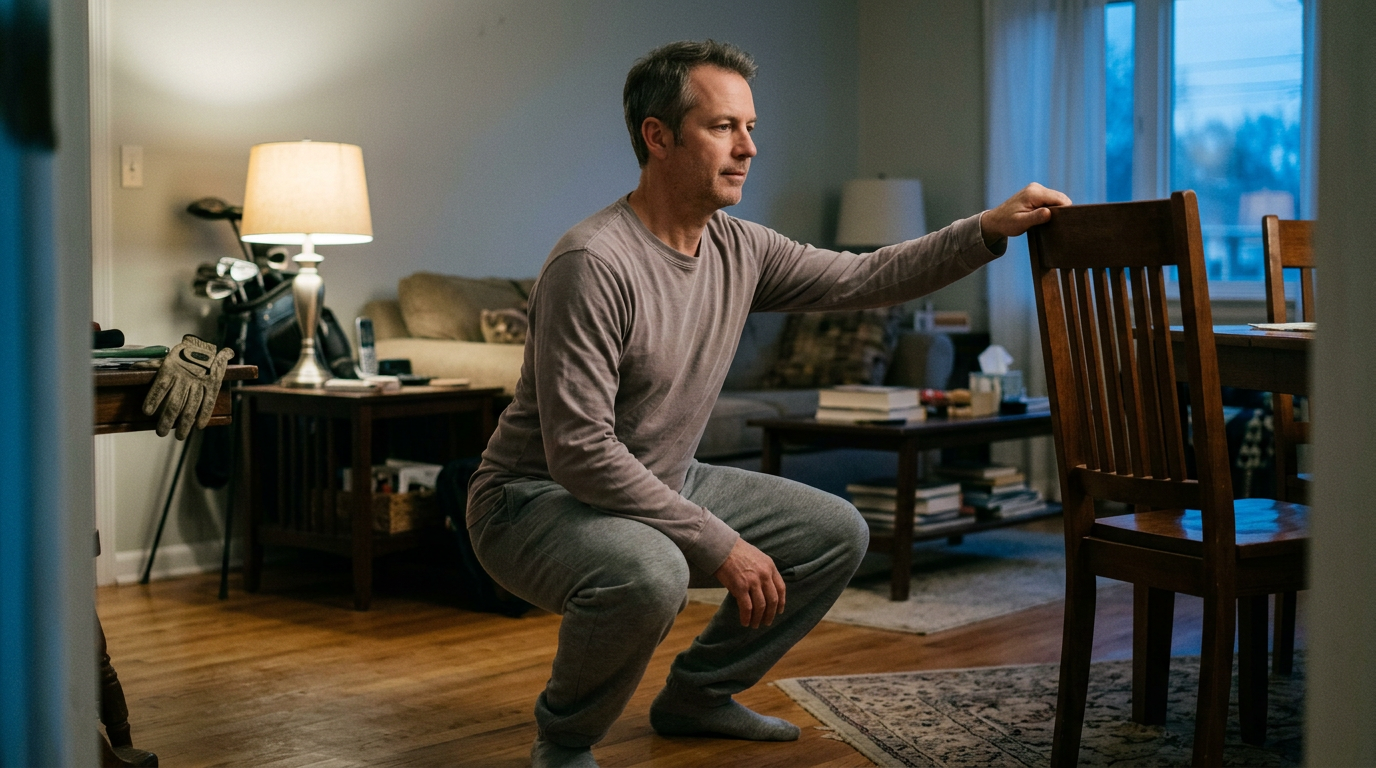
Think of a weekend golfer whose lower back tightens after a round. Ten slow squats to a sturdy chair before bed keep his legs working without asking his back to lift anything heavy.
Lunges spare your lower back, so they’re a smart next step when squats feel like too much. Consider a club soccer player easing back from a tight lower back. Alternating lunges let her rebuild leg strength for the season.
It’s less about how heavy the work is and more about how your back feels the next morning.
Skip jumps if your knees or hips already bother you. Save them until those joints feel fully healthy again.
When you do land from any move, keep your joints loose:
- Soft knees. Bend them as your feet touch down.
- Loose hips. Let them absorb the drop instead of locking up.
- Quiet landings. If you hear a thud, you’re landing too stiffly.
Soft landings keep your knees in the game.
Choosing Squat Racks for Your Home Gym
Your rack anchors the whole home gym, so choose it with your space in mind.
The main squat rack types to know
- Squat stands. Simple uprights for light work, with little protection if a lift goes wrong.
- Half racks with spotter arms. A partial cage whose catch bars stop the bar if you fail a rep.
- Power racks with full cage. Four posts and adjustable safety bars. They take the most room but are the sturdiest.
- Folding wall-mounted racks. They fold flat against the wall, but must be bolted into solid framing.
How squat racks and power racks differ
The key split is open structure versus enclosed structure. An open rack leaves a side exposed, so a stuck bar depends on spotter arms or a partner. The enclosed frame of a power rack gives the bar somewhere to land and resists sway.
That shifts the question from how much you can lift to where the bar goes when you can’t finish a rep.
Power racks are the safer solo choice. Picture a weekend lifter training alone with the safety bars set just below her squat. A missed rep lands on the bars, not on her. Safety bars earn their keep when nobody’s around.
Picking a rack that fits your space
Match the rack to your space and budget. Power racks need clearance on all sides to load plates, while folding racks flatten into a corner.
- Training goals. Heavy squats and bench call for sturdy safety pins. Light fitness work may need only a squat stand.
- All-in-one systems. A rack paired with a guided bar on fixed rails (a Smith machine) and often a cable stack. Convenient, but bulkier and pricier.
Consider a parent sharing a single-car garage with a teenager. A folding rack keeps the floor clear, so the car still fits.
Exercises a rack lets you do
- Squats and lunges. The bar sits at a safe height to unrack, and the rack steadies you on lunges.
- Bench and overhead press. Set the bar at chest or shoulder height, with pins just below the bottom position.
- Pull-ups and rows. Many racks have a pull-up bar across the top, and some add row attachments.
- Cable lat pulldowns. These need a cable stack, found on all-in-one systems rather than basic racks.
The best home option isn’t the one with the most equipment. It’s the one you’ll actually use, whether that’s split squats in the living room or a loaded barbell in a rack you measured twice.
Match the move to the muscles you want to train, your current strength, and the space you have, and you’ll get much of what the machine offered.
Start simple, progress on purpose, and let your legs do the rest.
References
- Low Back Pain Clinical Care Standard — safetyandquality.gov.au (2026)
- Frontiers | Unilateral and bilateral load-velocity relationships in athletes: evidence from a study in boxers — frontiersin.org (2025)
Questions
What is the difference between hack squat and leg press?
A leg press is performed seated, with your back supported as you push a sled along a fixed path. A hack squat is performed standing with your back against a pad; both are compound exercises that train the legs, but the hack squat requires you to stand.
What is the 3-3-3 rule in the gym?
There is no single widely accepted gym-specific “3-3-3 rule”; the phrase can refer to different workout or training guidelines. If you mean a particular version, its meaning depends on the program or coach using it.
What are the benefits of leg press?
Leg presses train the quadriceps, hamstrings, and glutes together in one compound movement. The supported seat and fixed path reduce the need to balance, making it easier to focus on pushing with your legs.
How many reps should I do for leg workouts?
There is no magic number of reps for leg workouts. Choose a weight that makes the last rep challenging while you maintain good form, and add reps or weight gradually when your sets feel solid.
How to do a leg press with dumbbells?
You cannot exactly recreate a machine leg press with dumbbells, but a goblet squat is a close alternative. Hold one dumbbell upright against your chest, sit your hips back and down with your chest up, then push through your whole foot to stand.
What can I do if I don't have a leg press machine?
Try compound alternatives such as squats, lunges, split squats, step-ups, or glute bridges. You can start with bodyweight and add dumbbells, a kettlebell, or resistance bands as you get stronger.
Is it OK to skip leg day?
Skipping an occasional leg workout is fine, but routinely neglecting your legs can leave your training unbalanced. If you skip the leg press because of time, equipment, or preference, exercises like squats and lunges can train many of the same muscles.
Are 4 exercises enough for leg day?
Yes, four exercises can be enough if they train different parts of your legs and you perform them with good form and suitable effort. A balanced session might include a squat variation, a single-leg exercise, a glute bridge, and a lunge.
Sources
- Low Back Pain Clinical Care Standard, safetyandquality.gov.au,
- Frontiers | Unilateral and bilateral load-velocity relationships in athletes: evidence from a study in boxers, frontiersin.org,
Find your level
The Counter