Garage Gym Ideas: Layout, Flooring, Lighting and More
Garage gym ideas help you turn a cluttered garage into a usable training space, with practical advice on layout, flooring, gear, climate, and costs.

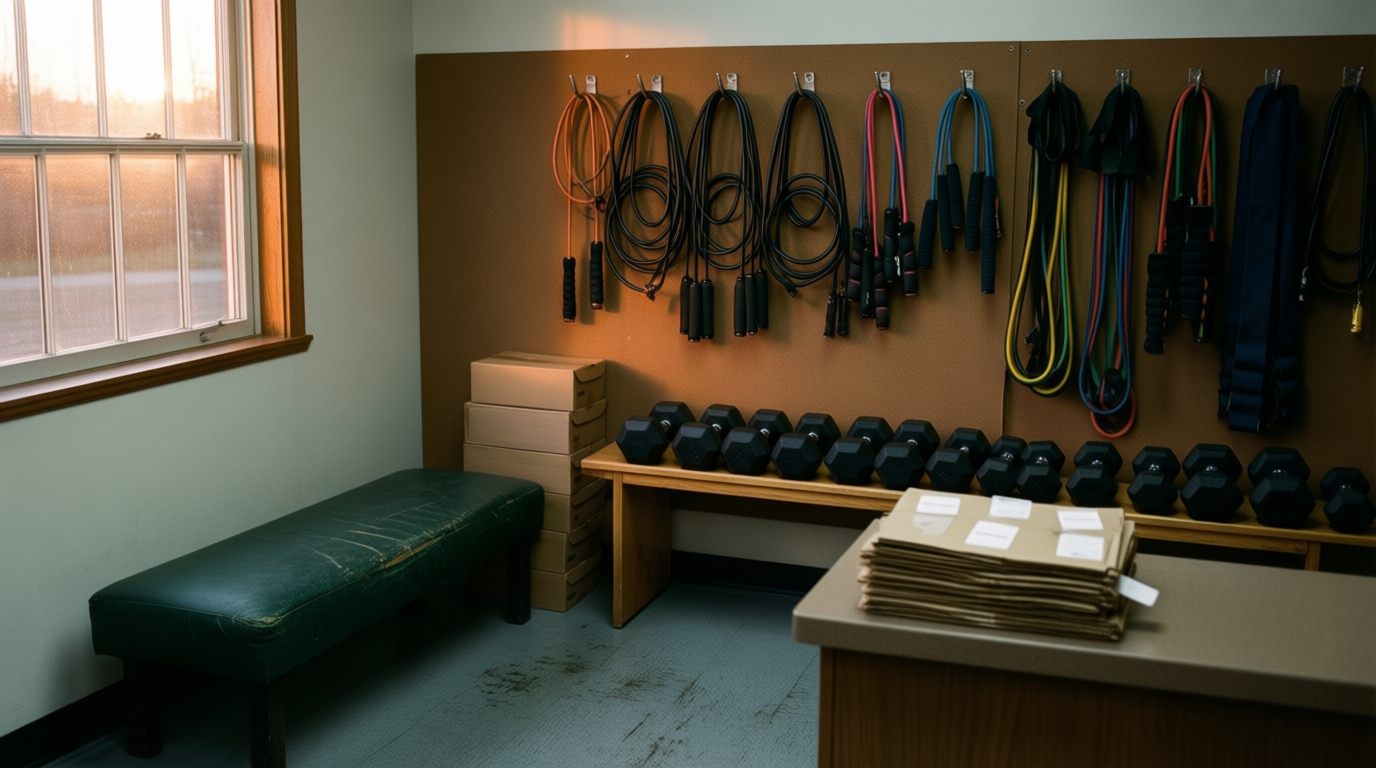
Your garage already holds the bike, the mower, and that box you swore you’d sort out last spring. Think of it like turning a spare room into an office: the walls and door are already there, you just need a plan.
A garage gym is a dedicated training space built inside your garage, with equipment picked for your goals and level and sized to fit the room you actually have.
This guide covers the whole build in one place: layout, flooring, lighting, storage, climate, equipment, sound, and costs. We’ll also share sports-shop advice on matching gear to how you train, so you buy what you’ll actually use.
Why Garage Gym Ideas Are Worth Trying
A garage gym may be the better fit if you’re weighing another membership against training at home. Here’s why it’s worth a look.
Save on fees and travel over time
Membership fees add up over a year. Picture a club volleyball player who lifts three mornings a week and loses part of each session to the drive. A garage gym starts at the back door.
- Saves membership fees. The monthly charge stops once your gear is set up.
- No commute or travel. Training fits into gaps in your day.
- Pays back over time. Gear costs more up front but keeps paying off.
Train in private, away from daily life
Some people simply train better when nobody’s watching. It’s less about who sees you lift and more about how well you lift. Privacy keeps you focused.
- Separate from home life. Your session has its own space, even when the house is busy.
- No judgmental gym looks. Drop the weight and repeat the set without a crowd sizing you up.
- Minimal noise disruption. Schedule loud work around household routines.
Why your garage already suits training
Garages usually offer a floor built for heavy loads, room to move, and space you can rearrange. Consider a weekend powerlifter who once stored old boxes there. Now that floor holds a squat rack and a loaded barbell.
- Sturdy floor takes weight. A solid base handles racks and heavy plates.
- Right size for equipment. There’s usually room for a rack and bench.
- Turns clutter zone into gym. The space you avoided becomes somewhere you want to be.
Make it yours and share it
A garage gym is the one gym where you write every rule. Want to train before sunrise on a Saturday? That’s your call. A dad who coaches a youth team can lift alongside his teenage son in the off-season, and both get stronger without a trip across town.
- Your gym, your rules. Set the layout, schedule and atmosphere.
- Family workouts. Share sessions with a partner or kids.
- Invite gym buddies. Training partners can drop by without a membership card.
Planning Your Layout and Floor Space
Before you buy a single bench, decide where everything will live. A few minutes with a tape measure can save you from returning gear that doesn’t fit.
Set up zones for different workouts
Divide the floor into workout zones so each activity has its own spot. Several workout areas let more than one person train at once without tripping over each other, and multi-use stations cover several movements in the footprint of one piece of kit.
Consider a dad who coaches his teenage soccer player on weekends while he lifts in the same garage. A rack and bench go in one corner, and the agility ladder and cones get the open floor by the door. Plan for space per user, not just space for equipment.
Sharing your garage with other uses
Most garages still have a day job. A half-garage gym keeps one side for the car or bikes and the other for training, which works if you still need to park.
If there’s a utility room attached, combine it with part of the garage so the washer and storage stay clear of the weights. Then decide how far to go.
A partial conversion adds gear to one corner, while a full conversion hands the whole space to training, which may mean the car lives outside. Think about how you’ll really use the room, not just what fits in it.
Clear clutter and measure before buying
Clear out clutter first. Boxes, old paint cans, and that bike you keep meaning to fix all eat floor space you’ll need for training. Once the floor is open, measure the length and width.
Then measure to the lowest point of the ceiling, including door tracks, light fixtures and beams, and picture the movements you’ll do. A barbell pressed overhead or a pull-up needs room above your head, not just on the floor.
Leave room to walk around each piece, step back from a bench and load plates without hitting a wall. Gyms feel cramped fast without it. Measure first, buy second.
How much space you need, and alternatives
A useful starting point is around 2x2m per machine, and you’ll want more than that once you add room to move. A single-car garage is tight, so pick the two or three pieces that match your training goals and let them drive the layout.
If the garage can’t handle it, look at a spare room, a basement or an outbuilding. Each trades access, ceiling height and climate in different ways, so check those before you commit.
Choosing the Right Equipment
Your training goal should decide what you buy first, and your level should set how much you buy at once.
The strength basics you really need
Think of a club volleyball player who wants more jump height. An adjustable bench, a pair of dumbbells and a set of resistance bands cover most of her week, and none of it takes over the garage.
- Adjustable bench. One footprint handles flat, incline and seated work.
- Dumbbells or barbell. Dumbbells are easier to store, and a barbell handles heavier loads later.
- Power or squat rack. Your safety net for heavy squats, especially when you train alone.
- Resistance bands. Light, easy to store and handy for warm-ups.
- Match kit to your level. A beginner who buys a heavy barbell setup on day one often ends up with gear that sits in the corner. Buy for where you are, not where you hope to be.
Cardio machines worth adding
Cardio machines take up the most room, so pick the one you’ll use most, not the one with the most screens.
- Treadmill. The obvious pick for runners, but it needs a long, clear strip of floor.
- Rowing machine. Full-body work in a fairly compact footprint.
- Exercise bike. Quiet and low-impact.
- Cross-trainer. A gentler alternative to running.
Gear that folds or fits tight spaces
If the car, bikes and lawnmower share your garage, these multi-use options earn their spot:
- Folding half rack. Stands against a wall between sessions.
- Foldable cardio machines. Some fold flat or roll into a corner.
- Adjustable dumbbells. One set replaces a whole rack of fixed weights.
- Combined rack and cable machine. Pulling and pressing in one footprint.
- Check weight rating and fit. Make sure the rating covers your heaviest lift, and measure the footprint plus the room you need to move around it.
Buy for the space you have, not the one you wish you had.

Ways to buy gear on a budget
Picture a parent outfitting a teenage soccer player’s corner of the garage. A used bench and one pair of dumbbells cover the basics for less.
- Buy secondhand. Used benches and weights often sell for less, especially from local listings.
- Buy in stages. Start with the bench and dumbbells, and add the rack once you know what you’re lifting.
- Inspect used kit quality. Wobble under load, rust on the bar, or cracked plastic are reasons to walk away.
- Household item workouts. A sturdy chair works for step-ups, and a loaded backpack can stand in for a weight when you’re in a pinch.
Build a durable, well-rounded setup
Aim for kit that lasts and covers more than one job.
- Buy durable equipment. Look for solid steel frames, thick padding and clear warranties.
- Cardio, resistance, free weights, mobility. Cover all four so no area gets neglected.
- Rig and playground kit. A pull-up rig or outdoor-style bars add bodyweight training in almost no floor space.
Fit beats brand every time.
Picking the Right Floor
Your floor is the foundation of the whole garage gym, so get it right before your first heavy set. Here’s how to balance cushioning with durability.
Mats that cushion and protect concrete
Bare concrete is hard on dropped weights, your joints and the slab itself. Picture a weekend powerlifter loading a barbell for deadlifts: a slipped plate can chip bare concrete, but on a thick mat it bounces and the floor stays intact.
Choose from a few common types:
- Rubber mats or tiles: Shock-absorbent rubber protects your concrete and equipment, especially under racks and platforms.
- Interlocking mats: These snap together, so you can cover just the lifting zone and rearrange sections as needed.
- Easy to clean: Most rubber surfaces wipe down quickly, so sweat and dust don’t build up.
Long-lasting floors that look good
Good-looking floors earn their place, but the best ones are less about looks and more about staying power. Consider a dad who trains in the garage after work and hosts his son’s team for weekend drills.
He needs a surface that handles both without showing every scuff.
- Resin or vinyl options: These tough surfaces stand up to heavy use and stay looking fresh longer than bare concrete.
- Sealed concrete for damp: If your garage tends to get damp, a sealed slab keeps moisture from soaking in.
- Colorful flooring choices: Bright colors or patterns can make the space feel like somewhere you actually want to train.
- Darker colors hide scuffs: Chalk marks and rubber scuffs show less on darker tones, so the floor looks cleaner between cleanings.
Scuffs happen. Pick a floor that makes them easy to live with.
Keeping the Garage Comfortable Year-round
Winter chill and summer heat can shut your garage gym down, so here’s how we keep it comfortable and dry.
Insulate and heat for winter comfort
Start with insulation on the walls, floor, and ceiling, since warmth leaks through any bare surface. For heat, compare portable and wall-mounted options, and pick one sized for your room, not the biggest one on the shelf.
Think of a cyclist with a trainer in the garage. Insulated walls and a small heater take the chill off, so she can spin on a cold night instead of skipping the session.
Year-round comfort means planning for the coldest month, not the mildest one.
Keep air moving and the garage dry
Damp air is the real enemy here. An extractor fan or vented door keeps stale air moving out. A dehumidifier handles the moisture, because the goal is dry air, not just warm air.
Left damp, a garage invites mould on walls and gear, and bare metal rusts. Lift gear off the floor and fix leaks fast.
Picture a parent whose son stores hockey pads and a bike in the garage. Good airflow keeps the pads fresh and the chain from rusting, so everything’s ready for opening day.
Stay cool during summer training
Strong fans set up for a cross-breeze are the simplest first step. A window air conditioning unit cools small spaces, but check your window and wiring before you buy.
Open the garage door for cooler morning or evening sessions. It won’t do much at the afternoon peak, so plan around it.
Consider a weekend runner who lifts in the garage through July. Two fans and the door rolled up keep her from overheating before her last set.
Making the Space Bright and Inviting
Light, color, and a few well-placed touches decide whether your garage gym feels like somewhere you want to train. Here’s how to get each piece right.
Chase away gloom with good lighting
Consider a weekend hockey player who lifts three mornings a week in a dim two-car garage with one bare bulb. He squints at his bar path and guesses at his knee position, which makes every rep harder than it needs to be.
- LED panel or overhead lighting: Ceiling fixtures spread light across the whole floor.
- Sliding doors or glass roof: Daylight does much of the work when it’s available.
- Layered accent lighting: A task lamp by the rack keeps the detail areas lit, too.
Good lighting covers the whole room, not just the spot you’re standing in. Shadows hide mistakes.
Choose light walls that open space
Dark walls swallow light and make a small garage feel even smaller. All-white paint or panels bounce light back into the room, and light colors open space in a way darker tones can’t.
If pure white feels clinical, try natural, timeless colors like warm gray or sand. They’re easy on the eyes and won’t look dated in a few years.
Mirrors that add space and check form
A mirror reflects light and the space behind you, which creates the illusion of more room. Mount a full-length one on a wall you can see from the side, and you can check your lifting form as you go.
Take a masters tennis player who lifts between matches in the same garage. She spots her hips rising before her chest on a deadlift, fixes it right away, and catches the problem before her back gets sore.
A mirror is for checking your form, not admiring it.
Add decor that keeps you motivated
Decor isn’t just decoration. Motivational quotes and posters give you something to look at between sets, while a feature wall or whiteboard gives you a place to track progress.
- Motivational quotes and posters: Pick one or two that speak to your goal.
- Feature wall or whiteboard: Log weights and reps on the wall instead of in a notebook you forgot at home.
- Artwork, plants, and murals: Personal touches make the room feel like yours, not a storage unit.
Decor should inspire you more than impress visitors.
Keeping Gear Stored and Organized
Gear piles up fast, and a garage gym only works if you can find things in seconds. Here’s how to get it off the floor and onto the walls.
Store gear high on the walls
Wall space is often the most underused storage in a garage. Wall-mounted shelves hold bins and small accessories, while slat wall panels let you move hooks around as your kit changes.
A pull-up bar can hold resistance bands or a jump rope, and an over-door hook keeps bags or light gear off the floor without any drilling.
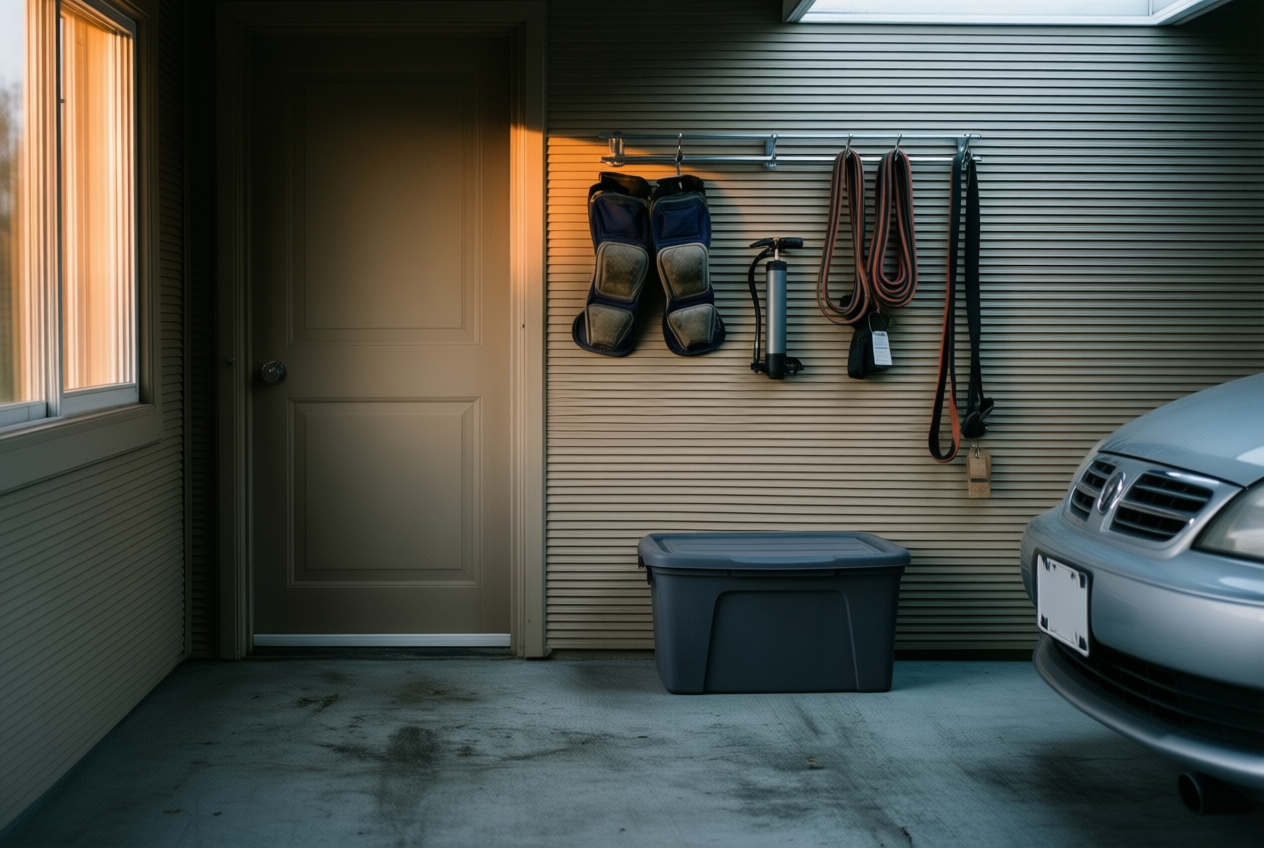
Consider a volleyball coach who trains in her garage during the off-season. Her knee pads and ball pump used to land on the floor by the car. Now they hang on a slat wall by the door, so she grabs everything on the way out.
Store up, not out, and the floor stays open for actual training.
Store weights safely and keep floor clear
Your floor is for lifting, so anything parked there shrinks your workout space. Three options handle most of the clutter:
- Locker cabinets with lockable doors keep small gear together and away from curious kids.
- Multi-tier dumbbell racks hold each pair by weight so you’re not digging through a pile.
- Stackable boxes corral bands, collars, and other small pieces.
Safe weight storage is about where heavy items sit. Keep the heaviest plates and dumbbells low on a flat, level surface, and avoid stacking them high where one bump can tip the whole unit. Anchor tall racks to the wall so they stay put.
Heavy stays low.
Music, Sound, and Small Comforts
Sound and small comforts shape how long you stick with a home gym.
Play music that keeps you moving
A weekend rower who starts with the same upbeat playlist warms up faster, because she isn’t hunting for a song.
Speakers for playlists are the simplest start: a compact Bluetooth speaker works for most garages.
A small music system adds volume and cleaner sound, but it’s only worth the extra cost if you train often.
For motivating background music, pick steady tracks for working sets and slower songs for cooldowns. Choose music that lifts your effort, not music that distracts from it.
Cut noise and protect shared walls
Sound carries through walls, so a few fixes go a long way. Picture a dad lifting at 5:30 a.m. while his partner sleeps next door.
- Acoustic panels on the shared wall soak up echo, so the clang of plates is duller.
- A soundproofed door with sealed edges keeps noise from slipping into the rest of the house.
- Early or late training can fit around household routines, so pick the hours when the house is quietest.
- Position heavy kit away from shared walls. Set your power rack and loaded barbell on the far side, since dropped weights carry the most.
The goal is less noise, not no noise.
Drinks and snacks within easy reach
Nothing breaks your flow like walking inside for a drink every few sets.
A mini fridge keeps water and sports drinks cold within arm’s reach. A cyclist training on hot afternoons, for example, grabs a cold bottle between intervals instead of heading indoors. Less walking means more training.
Stock shelf-stable snacks like nut bars, and add electrolytes (minerals that replace what you lose in sweat) for longer sessions.
Costs, Rules, and Doing It Yourself
Your budget and the paperwork decide how far your garage gym gets, so we’d settle both before you buy.
Budgeting for conversion and equipment
Costs depend more on what goes inside than on square footage. A partial conversion adds a rack, bench and mat to one corner, while a full conversion adds insulation, lighting, flooring and storage throughout.
Equipment prices vary widely, so total each item in a simple cost calculator.
A club rugby player skipping gym memberships might start with the basic tier and add pieces as the season goes on:
- Basic: a sturdy rack, an adjustable bench, plates and a pair of dumbbells.
- Mid: adds a barbell, bumper plates, rubber flooring and wall storage.
- Full: adds a second rack, proper lighting, insulation and heavier flooring.
Set your budget around the tier you’ll use this season. Upgrades can wait.
Electrical and building rules to check
Check the rules before you run a single cable. Part P is the part of the building regulations that covers electrical work in homes, so confirm whether your wiring needs sign-off.
Building regulations approval is a separate check, often needed for structural changes. Ask your local council whether planning permission applies to your plans.
Choose what to DIY or hire out
The question isn’t whether you can do a job, but whether a mistake would be expensive to fix. A weekend cyclist might paint and build her own shelving, then hire an electrician for the sockets and lighting.
That saves money on the easy jobs and avoids a redo on the risky ones.
- DIY: mats, shelving and painting.
- Hire a pro: electrics and insulation.
- Coordinate trades: electrical work usually comes before insulation and flooring, so schedule in that order.
Prefab garage options and how to pay
A prefab garage is built off-site and assembled on your property, while a portable garage is a freestanding shelter you can move. Modular garage prices vary widely by size, materials and finish, so compare several quotes line by line.
You don’t have to pay for a garage in one lump sum. Savings, a personal loan or a payment plan from the seller are common routes. Know the full number before you sign.
Cleaning and Caring for Your Gym
A garage collects dust, sweat and the occasional spill faster than you’d expect. A simple cleaning routine keeps your gear working and your space pleasant to train in.
Wipe down gear and deep clean floors
Start with the equipment. After each session, run a damp microfiber cloth over the grip areas, bars and benches so sweat doesn’t dry into a sticky film. Wipe, don’t soak: moisture sitting on steel is what invites rust.
Think of a weekend lifter who trains three nights a week in a two-car garage. A quick wipe after each session means she never starts Saturday with a crusted bar, and her bench stays grippy enough to trust on heavy sets.
Follow the manufacturer’s manual for cleaning, too. Approved cleaners are listed there, and a harsh degreaser can dull a finish or cloud a rower’s display. The manual is the cheapest insurance you own.
Sweeping tends to stir dust back into the air. A leaf blower on a low setting works better, lifting it off rafters, shelving and rack tops. Work from the back of the garage toward the open door so the dust leaves instead of settling again.
Finally, deep clean the floor every so often. Move the equipment out, sweep up loose grit, scrub with a floor-safe cleaner and let it dry fully before anything goes back.
Take a dad who shares his garage with his teenager: clean mats mean less grit grinding under every deadlift.
A garage gym comes down to smart choices: a layout that fits your floor space, equipment that matches your goals and level, and planning for light, climate, and storage. Get those right and the space works for you every session.
Don’t chase features you’ll never touch. Buy for the training you’re doing now and let the space grow with you. Good gear disappears once you’re using it, and that’s exactly what a well-built garage gym should do.
Find your level
The Counter