Cruiser Skateboards for Beginners, Explained
Cruiser skateboards for beginners ease your first rides. Compare board sizes, components, and prices, then learn what to buy first and upgrade later.
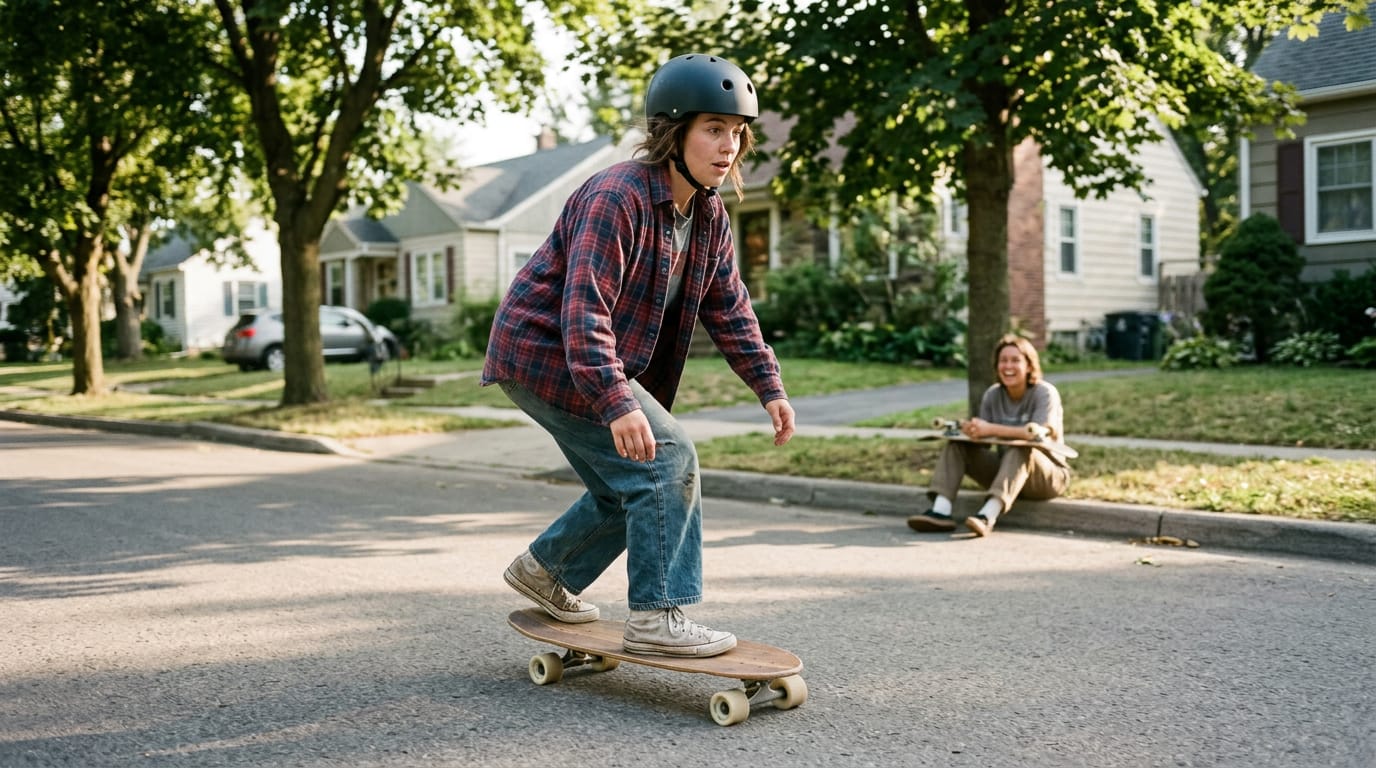
Think of a cruiser as the sedan of the skateboard world: a bit longer, a bit wider, and far more forgiving while you’re still learning where your balance lives.
If you’re wondering whether one is the right first board, the short answer is yes for most new riders, especially if you plan to cruise sidewalks, paths and the trail to the park.
Below, we’ll cover how to choose a cruiser by size, components and price, then get into shop-counter advice on fit, protective gear and what to buy first versus what to upgrade later. Let’s get you rolling without overspending.
Cruiser Skateboards Explained and How They Compare
Not sure a cruiser fits? Here’s how we break down its build and how it compares.
Features that define a cruiser
A cruiser is a longboard-skateboard hybrid: longer than a skateboard for steadier rolling, but shorter than a longboard. Its key traits:
- Kicktail and nose. The upturned ends help you lift the board over cracks and curbs.
- Larger soft wheels. They roll over pebbles and seams with less rattle.
- Traditional kingpin trucks. The kingpin is the central bolt that lets these classic trucks turn.
Consider a parent buying a first board for a kid who rolls to the park. The soft wheels and steady deck mean fewer wobbly falls and an easy carry.
Setting cruisers against other boards
Here’s how they compare:
| Board | Deck | Best for |
|---|---|---|
| Skateboard | Short and light | Tricks |
| Longboard | Long and stable | Distance and downhill |
| Cruiser | Mid-length hybrid | Everyday rolling |
A surfskate has a pivoting front truck for a surf-like carve, so it’s built for carving over rolling.
A mini cruiser is shorter and lighter, easier to carry but less steady at speed. A college student riding a few blocks to class can carry one up the stairs. Someone riding several miles a day wants a full-length commuter.
Penny boards and their plastic alternatives
A penny board is a small plastic cruiser. Plastic decks trade pop for flex: they bend over bumps, but give you less snap when you push off.
Genuine pennies and lookalikes can look nearly identical on the shelf, so check the wheels and trucks before you buy. Penny boards come in several sizes: shorter ones are easier to carry, longer ones feel steadier. Pick by where you’ll ride.
If genuine pennies are out of reach, other plastic cruisers give a similar ride.
Picking the Right Cruiser for You
A cruiser is usually the right first board if you want to roll around town, down the sidewalk, or along a path without tricks in mind. Here’s how to pick one by size, parts and price, so you aren’t stuck with a board that feels wrong by the second week.
Getting the length and width right
Look for a deck of at least 28 inches long, with a width of about 8 inches for most riders. Pay attention to the wheelbase, the distance between the two axles, because it shapes how stable the board feels and how easily it turns.
A study on skateboard geometry lists deck length and wheelbase as separate variables, so compare both rather than trusting length alone. The best check is to try the board if you can.
Match the deck width to your shoe size too: a board that’s too narrow for your feet will feel cramped on every push.

Which parts are worth paying for
Quality trucks (the metal axles that hold the wheels), wheels and bearings all affect the ride, but wheels matter most for cruising. Look for wheels 60mm or larger, since bigger wheels roll over cracks and pebbles more easily.
Bearings matter less than wheels, so don’t overspend there. A Cal Poly write-up on a custom electric skateboard notes that softer wheels absorb more vibration from rough surfaces, which is why soft wheels are commonly recommended for cruising.
What to spend on a first board
Boards under $100 are mostly low-quality, and boards over $150 are often overpriced for a beginner. The mid-range is where you’ll usually find the best value. Think of a parent buying a first board for a 12-year-old who wants to cruise the neighborhood.
A mid-range complete board lasts the season, and the kid doesn’t need a custom build yet. A used board can also work if its trucks and wheels are in good shape. Start with a solid first board now, then upgrade parts later once you know what you like.
Understanding trucks, decks and bushings
Most cruisers use one of three truck styles:
- RKP (reverse kingpin)
- TKP (traditional kingpin)
- DKP (double kingpin)
Each one changes how the board turns, so ask the shop which style the board uses. The deck is the board you stand on, and its construction and materials affect how stiff or flexible it feels.
Bushings are the rubber cushions inside the trucks that control turning, and riser pads sit between the deck and trucks to keep wheels from hitting the deck. A complete board comes ready to ride, which is the simplest choice for beginners.
A custom build lets you pick each part, but it’s more work than most first-timers need.
Top Cruisers Worth a Look
Plenty of boards can carry you down the block, so narrowing the field is the smart first move. Here’s where to start.
Crowd favorites from trusted brands
Think of a college student rolling to class each morning. A familiar board they feel steady on beats a flashy one they’re nervous to ride. These are the names to start with:
- Landyachtz Dinghy and Tugboat: two models from one brand, so you can compare them side by side.
- Arbor Pilsner: a solid pick from a brand we’ll revisit below.
- Fireball Artist Series: a design-forward line for riders who want the artwork to stand out.
- Stoked Ride Shop blank: a plain, unprinted deck if you’d rather make your own design.
- Loaded Coyote, Ballona, and Omakase: three cruiser models from Loaded, a brand covered further down.
Pick the one you’ll actually ride, not the one that looks best in a photo.
Cheap boards that often disappoint
Budget cruisers have their place, but the Magneto cruiser and White Wave cruiser can let you down once you’re rolling. The usual weak spot is the hardware: low-quality trucks, the metal axles that hold the wheels, plus cheap wheels.
Check those before you fall for a pretty deck.
If money is tight, a budget board still gets you rolling. Just know its weak spots and plan to upgrade the trucks and wheels first. Hardware first, graphics later.
Portable boards and unusual builds
Consider a commuter who needs to carry a board onto a bus or into an office. A compact pick makes that easy.
- Eggboard: carry-on size, so it rides along wherever your day goes.
- Lander La: boards built from recycled nets, for riders who want recycled gear.
- Vintage 1960s setup: a retro build for riders who love old-school looks.
- Polarizer builds: unusual setups for riders who want something different.
Treat these as specialty picks unless the build fits how you’ll actually ride.

Trusted brands and where to buy them
Sector 9, Santa Cruz, and Arbor are trusted names, so they make a safe starting point. Underrated brands can offer good value, so widen your search past the familiar names. Loaded’s history with cruisers is worth reading before you commit to a model.
Free shipping and no sales tax can change the math, so compare final checkout totals, not sticker prices.
What Is the Easiest Skateboard for Beginners?
For most beginners, the easiest board is a bigger, wider cruiser, the longer, steadier board built for rolling around town. Here’s why, plus how to size one and where to practise.
Why mini cruisers are harder to learn
Mini cruisers feel reactive and twitchy, so a small shift in your weight can send the board somewhere you didn’t plan. That steeper learning curve is why wider decks are easier to balance on, and a bigger cruiser is the easiest to learn.
Aim for one that feels steady rather than twitchy.
Tricks and slides on a cruiser
A cruiser has a kicktail, the upturned tail at the back, so you can practise a basic ollie (popping the tail to lift the board). For real tricks, though, a proper skateboard is the better tool.
A powerslide, where the board turns sideways under you, needs a dedicated setup, so don’t expect a cruiser to do it well. Once you can turn and stop with confidence, work through a powerslide beginner guide.
Fitting a cruiser to young riders
Consider a parent buying a first board for a nine-year-old who’s never stood on one. A board sized for the child now, not one they’ll grow into, lets them push, balance and keep trying instead of quitting after the first wobble.
Budget boards are fine for kids just starting, as long as the deck feels solid. Have the rider stand on it: if their toes or heels hang over the edges, it’s too narrow for their feet. Small feet suit small boards, so a shorter deck is easier to control.
Stopping, avoiding wobbles and pushing mongo
To stop, step one foot off the back and drag it gently until the board slows. Falls are part of learning, so wear a helmet and pads while you practise.
A speed wobble is when the board starts shaking at speed, so stay relaxed, keep your knees bent and don’t lean hard into it. Pushing mongo means kicking off with the front foot instead of the back foot, so try both and use whichever feels more natural.
Practise on a smooth, flat surface with little traffic and no gravel or slopes. Flat and quiet wins.
Where Cruisers Shine and Where They Don’t
A cruiser is a great fit for some riding and a poor one for others. Knowing which is which keeps you from buying a board that gathers dust. Here’s where it shines and where you’ll wish for something else.
Trips that suit a cruiser best
A cruiser is less about distance and more about ease. It works well for:
- Short skates under 3 miles: Enough to get somewhere without getting winded.
- Short commuting: Rolling to the coffee shop, the bus stop or the office.
- Casual cruising and carving: Easy laps with gentle turns and no rush.
- Portable around town: Light enough to tuck under one arm when you hop off.
Consider a soccer parent riding three blocks to the field with a folding chair in one hand. The cruiser gets them there without the car, and it’s easy to carry back up the stairs. Short and easy wins.

Downsides you’ll notice on longer rides
The trade-offs show up once the ride stretches out. Here’s what to expect:
- Long-distance skating tires you: Those comfortable miles add up faster than you’d think.
- Small wheels lose speed: They carry less momentum, so every rough patch of pavement slows you down.
- Constant balancing fatigues ankles: Your feet work to stay steady the whole way.
- Need push to maintain speed: You’ll be kicking off again and again.
Picture a club player skating across town to practice instead of driving. Halfway there, their calves are burning and their ankles ache, and they’re pushing every few strides just to keep pace. They arrive worn out before warm-ups even start.
The board didn’t fail them. The trip just asked for more than a cruiser is built to give.
Care, Fixes and Useful Extras
Cruisers need little upkeep, but a little attention keeps them rolling smoothly. Here’s how to fix the usual problems and make simple swaps yourself.
Common issues, from squeaks to getting wet
Creaking and squeaking usually mean loose hardware or worn bushings (the rubber cushions inside the trucks, the metal axles holding your wheels). Fix it with tightening, not replacing.
Think of a teen riding to school who silences a squeak with a quick wrench check instead of shopping for a new board.
A slow board usually comes down to dirty or dry bearings (the small metal rings inside each wheel), worn wheels, or grit packed into the trucks. Clean the bearings and check the wheels for flat spots.
Wheelbite happens when a wheel rubs the deck on a hard turn. Riser pads (thin spacers between the trucks and the deck) usually fix it.
Wet weather is hard on cruisers. Many have wood decks that can warp when soaked, and wet bearings rust. Dry the board fully before you ride again.
Keeping it clean and upgrading parts
Keep grip tape (the sandpaper-like strip on top of the deck) clean with a stiff brush, and replace it only once it’s worn smooth.
Skate hardware (the bolts and nuts that hold the trucks to the deck) has to match your board. Bolts that run too long can rub against the wheels, and short ones won’t hold firmly.
Three accessories earn a spot in your bag:
- Skate tool: loosens and tightens nuts.
- Bearing lube: keeps wheels spinning freely.
- Spare hardware: a matching set, in case a bolt goes missing.
Swapping trucks is simpler than it sounds. Loosen the nuts, keep the bolts in order, and tighten the new set in a crisscross pattern. Snug is enough.
A cruiser makes sense when it matches how you actually ride: short trips, steady pushing and enough stability to build confidence. Get the size right, choose components that suit your terrain, and skip features you won’t use yet.
Start with a board that fits your body and your routes, then upgrade wheels, bearings or trucks once you know what you’re missing. Gear that fits well stops being something you think about, so you can focus on rolling.
The best first board is the one that makes you want to head out again tomorrow.
References
- Maximizing Ollie Height by Optimizing Control Strategy and Skateboard Geometry Using Direct Collocation — doi.org (2023)
- Flexible Custom Electric Skateboard — digitalcommons.calpoly.edu (2017)
Questions
What is the easiest type of skateboard for beginners?
For most beginners, a bigger, wider cruiser is easiest because it feels steadier and is easier to balance on. Choose a board that fits your feet and feels stable rather than twitchy.
Are cruiser skateboards good for beginners?
Yes. Cruisers are a good choice for beginners who want to ride sidewalks, paths, or short trips around town, thanks to their stable decks and soft wheels. A full-size cruiser is generally easier to learn on than a mini cruiser, which can feel twitchier.
What kind of skateboard should I get for cruising?
For everyday cruising, choose a mid-length cruiser with a deck at least 28 inches long and about 8 inches wide for most riders. Wheels 60 mm or larger, especially softer wheels, roll more comfortably over cracks and pebbles.
Sources
- Maximizing Ollie Height by Optimizing Control Strategy and Skateboard Geometry Using Direct Collocation, doi.org,
- Flexible Custom Electric Skateboard, digitalcommons.calpoly.edu,
Find your level
The Counter