Basement Gym Ideas Explained, From Layout to Lighting
Basement gym ideas start with fit, not shopping: match your layout, flooring, equipment, airflow, and storage to ceiling height, training goals, and budget.

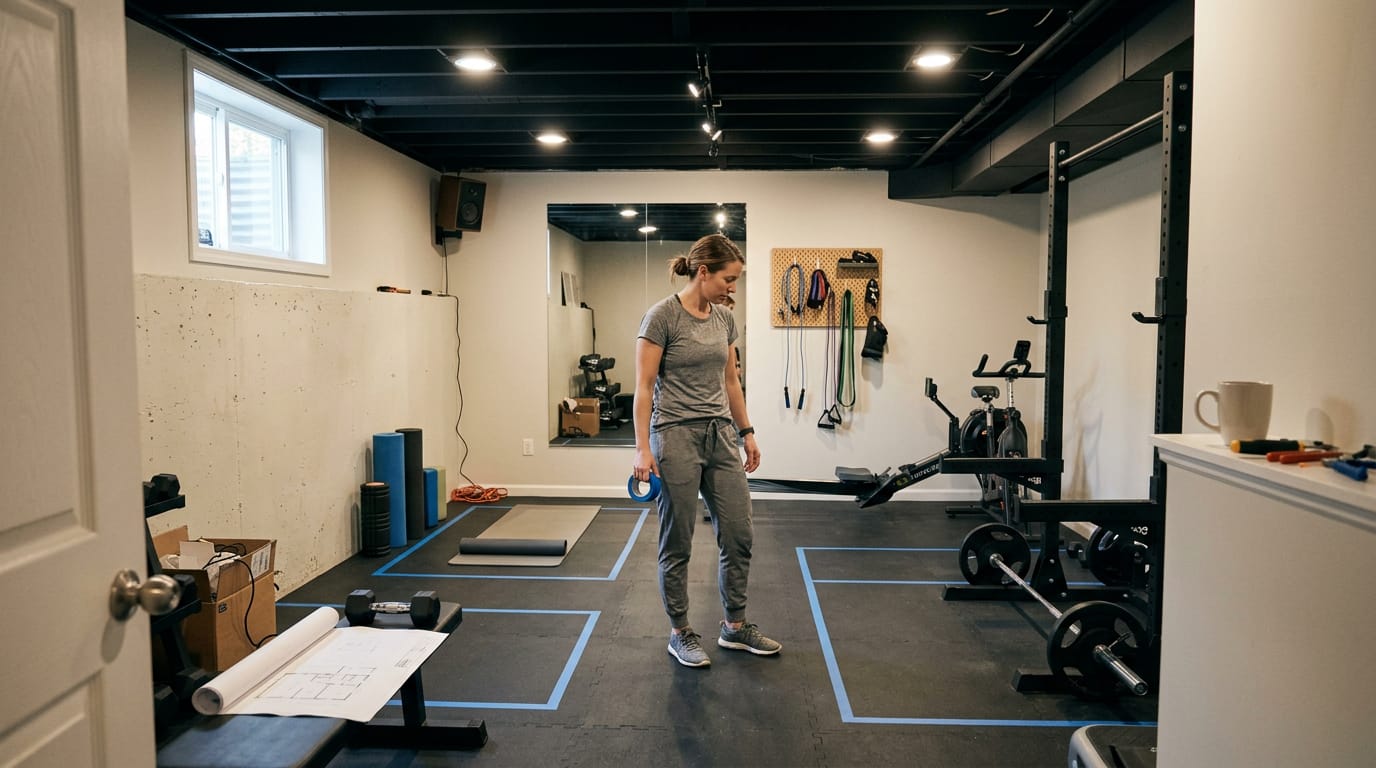
Think about the last time you cleared out a spare room and realized it could hold so much more than boxes. A basement can do the same for your training.
The right layout, floor, and gear turn an unused space into somewhere you’ll actually want to work out.
The short answer is that the best basement gyms start with fit, not shopping. Your ceiling height, how you train, and what you can spend should shape every choice.
Here, we’ll cover space, flooring, moisture, equipment, lighting, storage, and finishing touches, plus what to buy for your setup.
Planning Basement Gym Ideas Around Your Goals
Before you buy a bench, decide what the room must do for you. The best layout fits your space and how you actually train.
Checking whether your basement suits a gym
Start with how usable the room is, not how big. Is your basement unfinished or finished? Unfinished space needs groundwork, while finished space mostly needs protecting.
To build a gym in an unfinished basement, work in order. Check for moisture first, then add insulation, lighting, ventilation, and flooring before any heavy gear arrives.
A multipurpose space needs gear that folds away. Be honest about whether it’s the right spot, since steep stairs and damp air mean you’ll skip workouts. Small windows and awkward angles limit light and airflow, so map them first.
Ceiling height matters most, since overhead presses and pull-up bars need clearance.
Deciding which workouts your gym should support
The room should follow how you train, not just what equipment you already own. Cardio needs an open wall, CrossFit needs open floor and clearance, boxing needs a solid anchor, and yoga needs a quiet corner.
Relaxation and meditation preferences count too, so a calm corner may matter as much as heavy gear. Your personal health motivation, whether that’s a sore back or a race season, should set the priorities.
Clear out clutter and set up zones
Clear out clutter first, since old boxes and paint cans eat floor you need. Empty floor is training space. Then split the room into zones:
- cardio along the open wall
- strength in the middle
- stretching in the quietest corner
Corners are often wasted, so tuck a storage rack or stretch mat there. The goal is an organized room, not a crowded one.
Working with pros on design and budget
A remodeling team can catch moisture and wiring problems before you buy gear. The design process runs in order:
- a site visit
- a rough layout
- a budget check
Budget control starts with a set total and ranks needs above wants. Choose from these tiers:
- Starter: a few versatile pieces in one open corner.
- Mid: a dedicated zone for each style, plus a real rack.
- Full build: finished walls, zoned flooring, and permanent storage.
A couple who starts with the starter tier and adds a rack only after a season skips gear they never touch.
Choosing the Right Gym Flooring
Before a single dumbbell hits the floor, decide what’s going under it.
Cushioned floor materials worth considering
Choose for how you train, not for the price on the sticker. Here are the main options:
- Rubber flooring: Built for heavy loads and dropped weights, it’s the top pick for serious lifting.
- Foam tiles: Quick to lay down, but better for light cardio and stretching than heavy lifts.
- Vinyl flooring: Easy to clean, but less forgiving than rubber, so add a mat under heavy work.
- Yoga mat as a temporary option: Good for bodyweight work while you test a space, but only a stopgap.
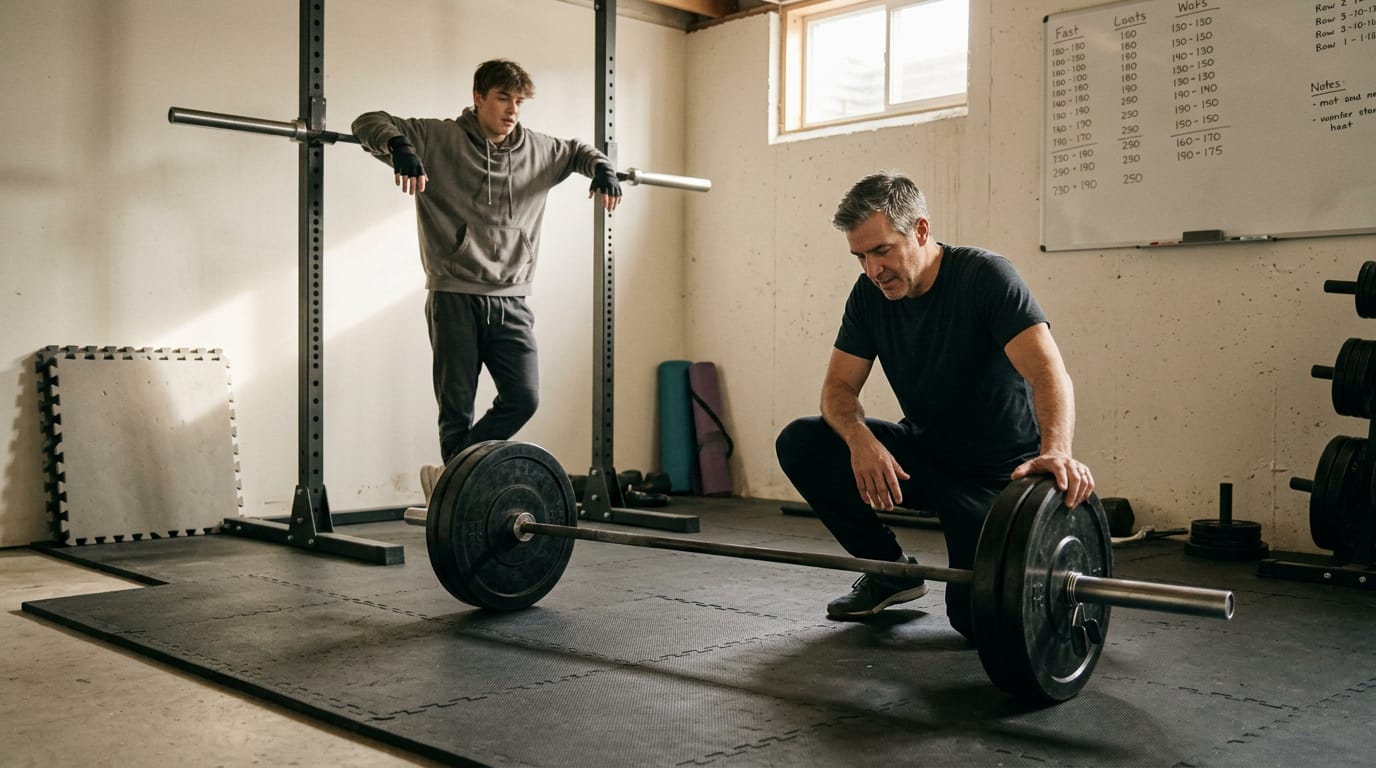
Think of a dad setting up a basement for his son’s off-season lifts. A dropped barbell on rubber makes little noise and leaves the floor intact, so his son keeps training.
Why flooring protects joints and cuts noise
Every jump, lunge and dropped kettlebell sends a jolt through your knees, hips and ankles. Cushioning absorbs some of that shock, which matters most if your joints already complain.
It also muffles thuds that would otherwise carry upstairs, and most cushioned surfaces wipe clean after a sweaty session. In many basements, the subfloor is bare concrete, the base layer under any finished surface. Concrete gives you nothing back.
Sealing and finishing bare concrete floors
Not ready for new flooring? You can work with the concrete you already have. Painting or coating the slab adds a protective layer that’s easier to keep clean and gives the room a finished look.
Then ask for a non-slip finish so sweaty hands and sneakers keep their grip. Grip matters more than shine.
Equipment Worth Buying for Your Gym
The right gear turns a spare basement into a room you’ll actually use, so buy for the training you do now, not the training you hope to do someday. Here’s what we’d prioritize across strength, cardio, add-ons and recovery.
Strength gear and protecting your floor
Start with a power cage or squat rack if your ceiling height allows it. Think of a weekend hockey player lifting alone before the season: adjustable safety bars let him train heavy without a spotter.
Adjustable dumbbells cover most upper-body and leg work in one footprint, and kettlebells add a cheap option for swings and carries. A dumbbell rack keeps everything off the floor, and a foldable bench press tucks away when you’re done.
Check your floor load, meaning how much weight the floor can handle. Then add weight drop protection like rubber mats under the rack and bench.
Match the gear to your training level:
- Beginners: adjustable dumbbells and a jump rope.
- Intermediate lifters: add the cage.
- Serious amateurs: prioritize weight capacity and a sturdy bench.
Cardio options that fit small rooms
A treadmill or bike is the usual anchor, but floor space decides. Think of a runner who shares a basement with the laundry. A compact bike she actually rides beats a full-size treadmill she’s using as a clothes rack.
Foldable options tuck against a wall when the room doubles as a playroom. A jump rope is budget cardio that takes almost no room.
Check treadmill and bike fit before you order by measuring floor length and the ceiling clearance above the handlebars.
Pull-up bars, bands and other add-ons
A pull-up bar mounts in a doorway frame, while a TRX-style suspension trainer or climbing rope needs a solid overhead anchor and enough ceiling clearance. A mini climbing wall needs wall space and overhead room too, so measure first.
Resistance bands are the easiest add-on to fit. They store in a drawer and handle warm-ups or assisted pull-ups.
Setting up a yoga and recovery corner
A yoga corner needs only a mat and blocks, set on clear floor away from the rack. A foam roller and massage balls handle soft-tissue work after hard sessions, and a heating pad eases stiff muscles.
Save the cold plunge for last. It’s the bigger finishing touch, and it only makes sense once you have the power and floor space to support it. Start small.
Lighting, Airflow and Clean Air
A basement gym feels great when you can see your form, breathe easy and keep the gear from rusting.
Lighting ideas for a dim basement
Basements rarely get much daylight, so build your light from scratch:
- LED lights are a practical default for long sessions.
- Diffused, adjustable fixtures spread light evenly and aim at the squat rack instead of your eyes.
- Wall sconces and overheads keep corners from going shadowy.
- LED strips and mood lighting work as a backdrop, not your main source.
- Compensating for little natural light means lighting the spots where you actually move.
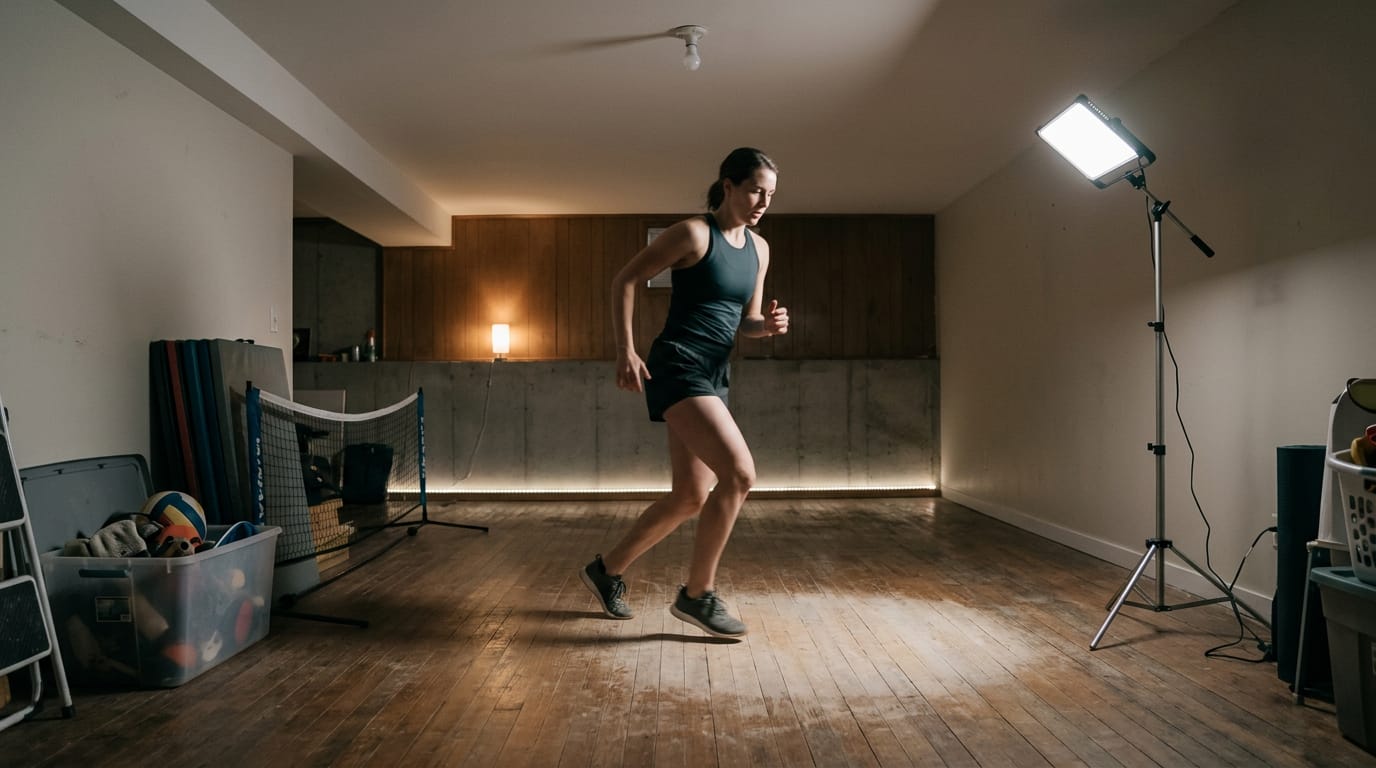
Consider a weekend volleyball player stuck with one bare bulb who keeps missing footwork in the dark corner. A couple of adjustable fixtures aimed at that spot fix it, and she finally sees every step.
Pick fixtures that help you see your form, not just look good in photos.
Keeping fresh air moving through the room
A ceiling or tower fan keeps air moving between sets.
Proper ventilation matters for your health because hard breathing pulls a lot of air through the room. Airflow is about moving stale air out, not just stirring it around. If you add a sauna, give it its own ventilation plan.
Controlling damp air and keeping mold away
Basements tend to run damp, and that’s where mold and mildew take hold:
- Dehumidifier pulls moisture out of the air, especially after sweaty sessions.
- Air purifier or cleaner keeps dust and stray particles down between workouts.
- Prevent mold and mildew by wiping mats and benches after use and keeping damp towels off the floor.
- Protect gear from damp rust by drying steel bars and dumbbells and storing them off the concrete.
Testing for radon before remodeling starts
Before any renovation begins, test for radon, a gas that can build up in a home’s lower levels.
According to the Centers for Disease Control and Prevention (CDC), homeowners should test for radon before remodeling a basement, especially when converting unfinished space into living area.
- Test before remodeling so you know what the room needs before you spend on finishes.
- Radon-resistant techniques can go into the renovation if your results call for them, so the fix happens during the work instead of after it.
Test first. Finish second.
Storage That Keeps Gear Organized
A cluttered basement quietly drains your motivation. Put gear on walls and shelves, where you can see it and grab it fast.
Using walls for smart storage
Walls are often the most underused space in a basement gym. Hang your gear on them:
- Wall racks for weights. A rack holds plates and dumbbells upright, so they’re not rolling under the bench.
- Pegboards and floating shelves. A pegboard holds straps, clips, and tape, while floating shelves keep chalk and bands within reach.
- Hooks for ropes and mats. A row of hooks keeps jump ropes and yoga mats off the floor, where they get kicked and tripped over.
- Free up floor space. Every item moved to a wall is room for a deadlift or a stretch.
Consider a dad who trains three mornings a week while his teenager uses the same basement for off-season workouts. Before, plates sat in a pile and jump ropes vanished under the couch.
Now the plates live on a wall rack, his straps hang on a pegboard, and both their ropes sit on hooks by the door. Nobody digs for gear before a session, and they can train side by side without tripping over each other. Less digging, more training.
Shelves and a fridge for small extras
Small items add up fast, so give each one a home:
- Towel shelf. Keep clean towels in one spot so nobody grabs last session’s sweaty one.
- Mini fridge for water. A small fridge keeps water cold, so you’re not running upstairs mid-workout.
- Shelves for bottles and supplies. Give spare bottles, wipes, and protein powder their own shelf so they stop piling up on the bench.
Making the Room Feel Like Yours
A basement gym can feel like a storage room with weights in it, but a few deliberate choices change that fast.
Picking colors and wall finishes
Color sets the mood before you lift a thing. Energizing colors like bold red can give a tired weeknight a jolt, while calming colors like soft blue suit slower sessions. Paint one accent wall rather than the whole room.
Murals and posters add personality, and a big sport print gives your eyes something to rest on between sets.
Chalkboard, whiteboard and corkboard panels keep training organized:
- a whiteboard for the weekly plan
- a chalkboard for rotating drills
- a corkboard for schedules
A neon sign adds a bar-scene glow, but it’s an accent, not your main light.
Wood tones on a bench or shelf warm up bare concrete, and a plant wall adds life if you choose hardy plants that handle a cool, dim basement.
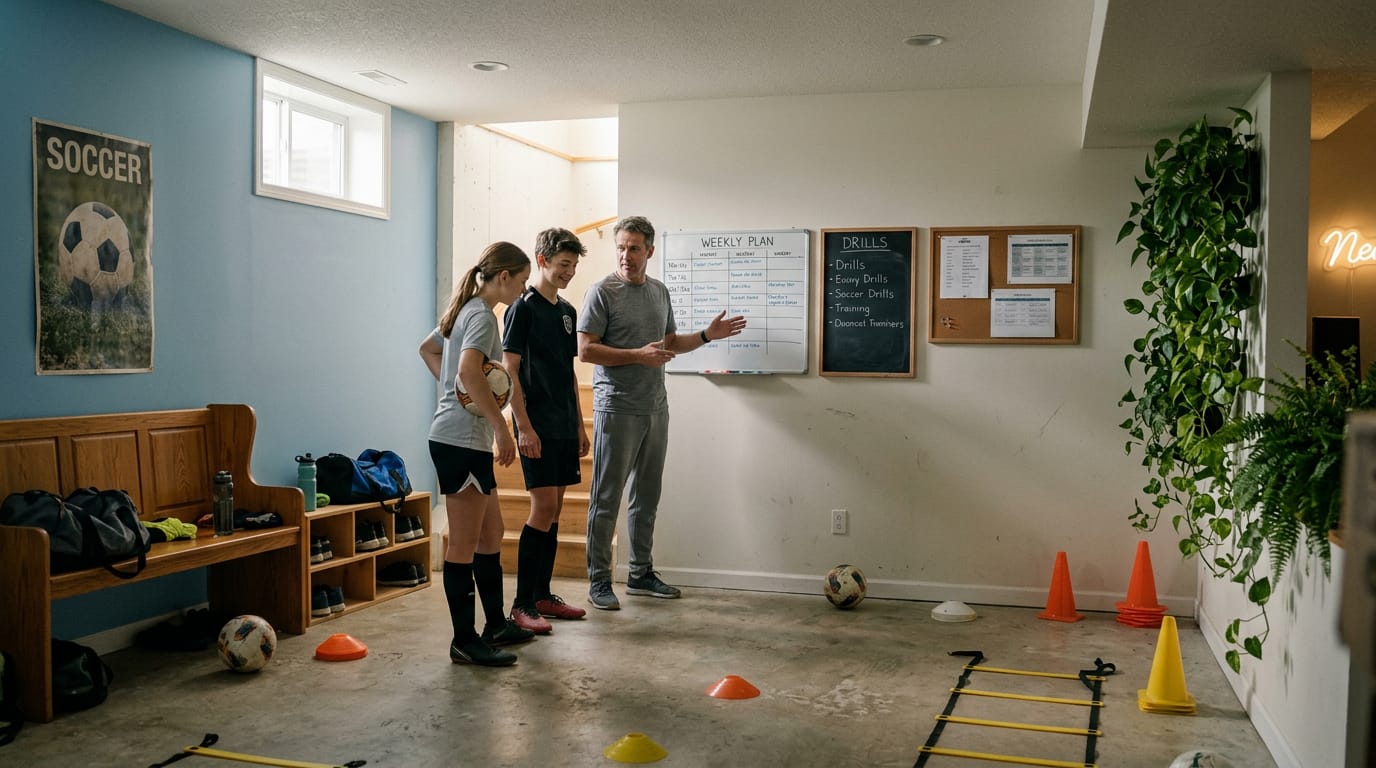
Consider a soccer coach who turns his basement into a training room for his two teens. Posting the week’s drills on the wall means the kids stop asking what’s next.
Using mirrors to check form and space
Mirrors earn their wall space for more than looks. A full-length mirror lets you check form and prevent injury by watching your squat depth, knee tracking and elbow position as you move.
A mirror on a long wall makes a cramped basement feel larger. Hang one across from a light fixture or window so it bounces light around the room.
A framed accent mirror looks finished, but a plain panel is the safer pick where weights might clip it.
Adding music, a TV and solid WiFi
A sound system or simple speaker keeps your playlist running through warm-ups.
A mounted TV lets you follow training videos or review game film without cluttering the floor.
Streaming and fitness apps both need a steady connection, and basements can be weak spots for signal. A WiFi extender (a device that repeats your signal) or a router moved closer to the gym keeps things solid.
Plants, art and quotes that motivate you
Plants and artwork soften a hard-edged room. Pick art that motivates you, not just decorates.
Motivational quotes work best when they’re short enough to read mid-set. Place one where your eyes land while you rest.
Photographs of past races, team wins or training milestones remind you how far you’ve come, so rotate them every few months.
Doors, cabinets and a built-in bar
A barn door adds character at the entrance and slides out of the way when you’re hauling equipment.
Sliding doors save swing room in a tight hallway, where a door that opens inward can clip a bench.
Cabinetry keeps bands, collars and chalk off the floor, and a small built-in bar gives you a spot for water bottles and towels. Measure your walkway first, since built-ins are permanent. Clutter kills the mood fast.
Do Wellness Upgrades Add Home Value?
Wellness touches can turn a basement gym into a place you actually want to be, and some of them pay off at resale. Here’s what to know before you build.
Sauna materials, heating and airflow
Cedar or hemlock are the usual sauna woods, so start there when you compare builds. The heater has to suit the room, and the space needs ventilation, meaning fresh air moving in and out so it doesn’t feel stuffy.
Skip the guesswork and ask any installer how they’ll handle both.
Martirena weighs in on resale in a Realtor.com guide to home saunas: “A good sauna adds value; a questionable one adds doubt.” The difference is how it’s built, not just whether you install one.
So how much value does a gym add to a house? Research from UK Property Development suggests a dedicated home gym could add more than £24,500 to an average new-build property. That’s a UK figure, so treat it as a rough guide for your own market.
Calm retreat with a post-workout smoothie bar
A basement can be the quietest room in the house if you plan it that way. Keep the TV, the laundry pile and the phone charger out of sight, and keep the lighting soft so the room feels like a break, not a chore.
Pair the sauna with a stretch mat and you get a wellness retreat feel, a recovery space rather than a storage room with a bench in the corner.
Consider a weekend runner who finishes a long run, steps into the sauna to loosen up, then grabs a smoothie instead of driving to a juice bar, so the cooldown actually happens.
A post-workout smoothie bar needs little more than a blender, a small fridge and a counter. Simple beats fancy.
A great basement gym comes together in layers. Start with the space and goals you have today, choose a floor that can handle dropped weights, and tackle moisture early.
Then match equipment to your training level and budget, and add storage and a few personal touches so the room feels like yours.
Plan for the training you’re doing now, and your basement will keep paying you back every time you head down the stairs.
References
- Testing Your Home for Radon | Radon — cdc.gov
- Are Home Saunas Worth It in 2026? Experts Weigh In — realtor.com (2026)
- Home gym could add £24,500 to a new-build home — propertysoup.co.uk (2026)
Questions
How to build a gym in an unfinished basement?
Start by checking for moisture, testing for radon, and measuring ceiling height, floor space, and load capacity. Then plan the layout around your workouts, add insulation, lighting, ventilation, and suitable flooring before bringing in equipment. Choose floor protection such as rubber mats for heavy lifting, and buy only gear that fits your training, budget, and available space.
How much value does a gym add to a house?
A dedicated home gym may add value, but the amount depends on the property and local market. One UK estimate suggests it could add more than £24,500 to an average new-build home; treat that as a rough guide, not a guaranteed increase elsewhere.
Sources
- Are Home Saunas Worth It in 2026? Experts Weigh In, realtor.com,
- Home gym could add £24,500 to a new-build home - Property Soup, propertysoup.co.uk,
- Testing Your Home for Radon | Radon | CDC, cdc.gov
Find your level
The Counter