Indoor Bike Trainer vs Exercise Bike: Which to Buy
Trainer or exercise bike for riding at home? We compare fit, who else will ride, space, noise, floors and app costs, and say plainly who each one suits.

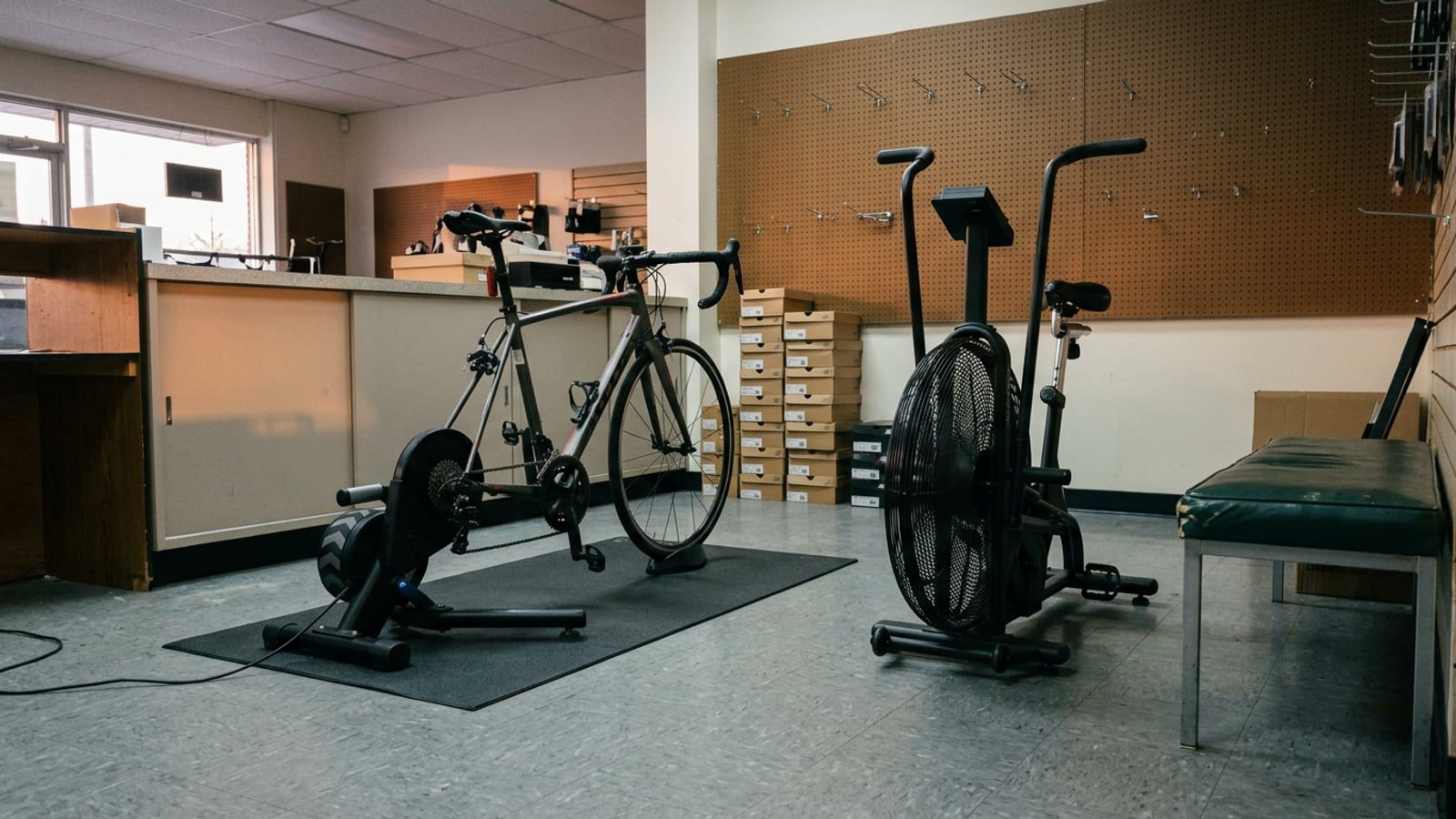
If you already ride a bike that fits you and want your winter miles to carry over to the road, buy a trainer, and a direct-drive one if the budget stretches. If more than one person will ride it, nobody in the house owns a bike that fits, or you want to step on without any set-up, buy an exercise bike. Everything else (space, noise, floors and what the apps cost) helps you pick the model once you know which side you are on.
What each one is
Four kinds of machine get lumped together as “indoor bikes.” They work differently, and the difference decides who can use them.
- Wheel-on trainer. Your bike’s rear wheel stays on and its tire presses against a roller. The cheapest way in and the quickest to set up, but the tire wears faster (many riders keep a trainer-specific tire for it), and the roller makes more noise.
- Direct-drive trainer. You take the rear wheel off and fit the bike’s frame to a cassette on the trainer. Quieter, steadier, and the smart versions measure your power and change the resistance for you. The KICKR CORE 2 on our Gear page is one: Wahoo lists it at $549.99 with an 11-speed cassette, and it takes quick-release and thru-axle bikes with the adapters in the box.
- Exercise bike. A complete machine with its own seat, bars and pedals. Spin bikes, upright bikes and air bikes all sit here. You adjust it to each rider rather than bringing your own bike.
- Smart bike. An exercise bike with a smart trainer’s electronics built in: adjustable for several riders, controllable by the training apps, and the most expensive route of the four.
Side by side
| What decides it | Trainer (your bike on it) | Exercise bike |
|---|---|---|
| You need | A bike that fits you and suits the trainer | Nothing else |
| Fit | Your bike’s fit, exactly as you ride outside | Adjusted seat and bars; close, rarely identical |
| Riders | One at a time, each on a bike that fits | Anyone the seat and bars adjust to |
| Set-up each ride | Mount the bike, pair the app | Step on |
| Space | Folds away; the bike goes back to the hall | Stays where it is |
| Noise | Direct-drive: mostly drivetrain. Wheel-on: louder tire hum | Spin bikes quiet; air bikes loud at effort |
| Apps | Smart trainers are built around them | Most work without one; some connect |
Our comparison of three real machines, by their makers’ own figures, covers one of each kind most homes choose between: a smart trainer, an air-resistance exercise bike and an air bike.
If you already ride a bike that fits
This is where a trainer earns its place. Indoors you sit on the same saddle, at the same height, reaching the same bars as you do outside, so the position you have trained in all summer carries through the winter and back again. An exercise bike can be set close to that, but rarely to the millimeter.
Two checks before you buy:
- Is the fit right to begin with? A trainer magnifies a bad fit, because you sit still in one position for an hour. If you are not sure, start with how to check what size bike you need and fix the saddle and bars first.
- Will the bike and trainer go together? Look up your rear axle (quick-release or thru-axle, and its width) and how many gears your bike has, then compare them with the trainer maker’s compatibility list. Wahoo, for instance, notes that the cassette sold with the KICKR CORE 2 does not suit Shimano’s CUES and LinkGlide drivetrains.
If your bike is an e-bike, check before you assume a trainer will do: Canyon’s rules for using its bikes on a trainer exclude all of its e-bikes, and allow only direct-drive trainers on its thru-axle models.
If more than one person will use it
An exercise bike is usually the right answer for a household. The seat and bars move from one rider to the next in moments, and nobody needs a bike of their own. Concept2’s BikeErg lets you move the handlebars up, down, fore and aft and even swap in your own saddle and pedals, which brings it close to a road position for the cyclist in the house while still fitting everyone else. On an air bike like the Rogue Echo the seat adjusts but the handles are welded to its arms, which matters less because it is built for short, hard efforts rather than long rides.
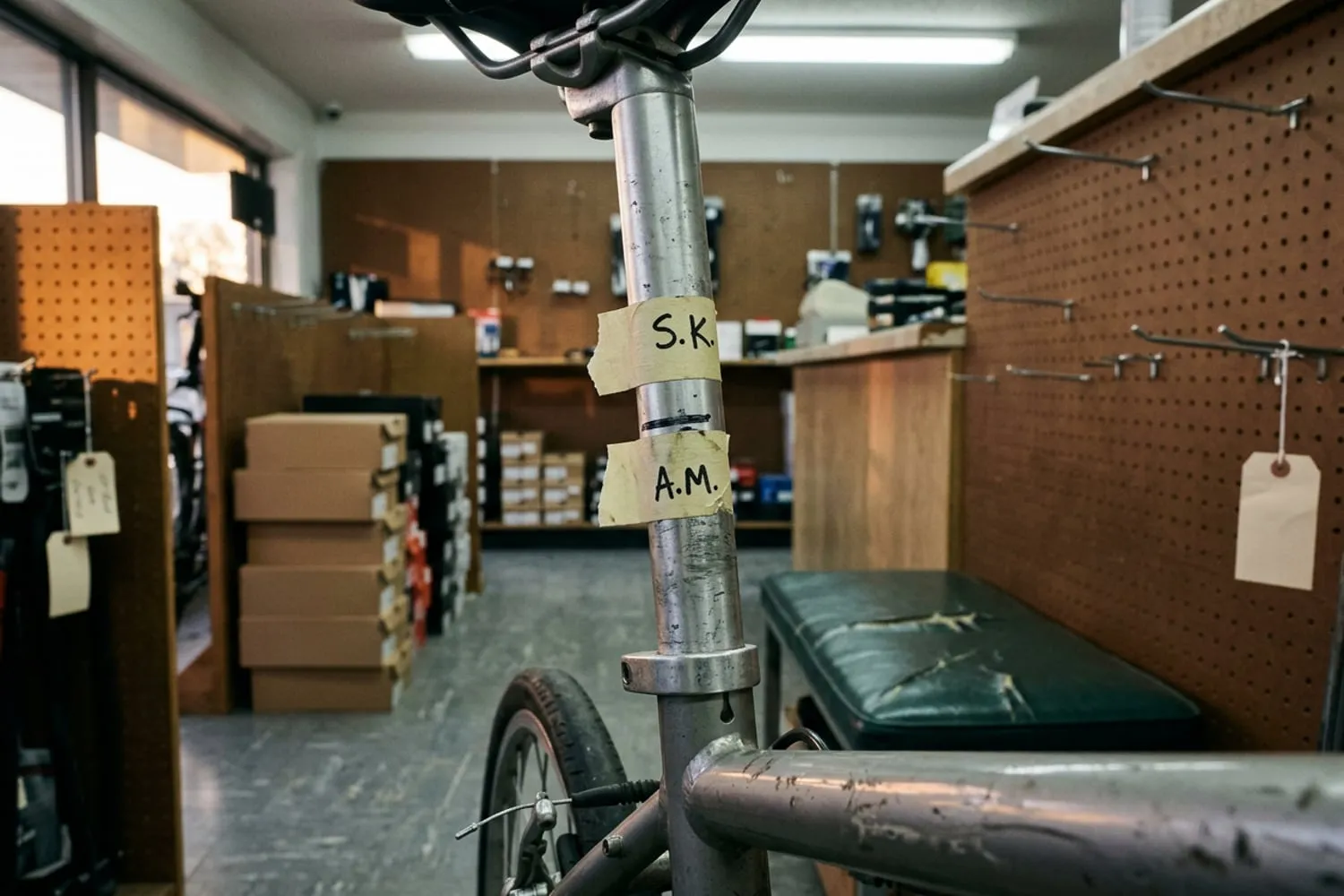
A trainer can be shared too, with more fuss: each rider swaps their own bike on, or everyone shares one bike with saddle heights marked on the seatpost. Children and much shorter or taller adults rarely fit the same bike.
Space, noise and floors
Space
A trainer folds down and goes in a closet, and the bike goes back to wherever it lived. An exercise bike stays put. Measure before you order: Rogue gives the Echo Bike a 44.5 by 23.75 inch footprint, and Concept2 recommends 60 by 48 inches of clear space around a BikeErg in use. Check the doorways and stairs on the way to the room as well, since a 123 lb air bike is not something you carry up alone.
Noise
Direct-drive trainers are the quietest way to ride your own bike indoors; what you mostly hear is the chain. Wheel-on trainers add the hum of the tire on the roller. On exercise bikes the noise depends on the resistance: magnetic spin bikes are quiet, while air bikes and fan-resisted bikes get louder the harder you pedal, and they blow air at you, which some riders count as a feature.
Floors
Put a rubber mat under any of them. It catches sweat, protects the floor and takes the edge off vibration. Upstairs rooms and apartments carry vibration through the joists to the rooms below more than a ground floor or concrete basement does, so if you have neighbors underneath, a direct-drive trainer or a magnetic bike on a thick mat is the considerate choice.
Tip: sweat kills bikes faster than trainers do. Drape a towel over the bars, or fit a sweat guard, and wipe the headset and bolts down after each ride.
Apps and subscriptions
A smart trainer is built to be ridden with an app, and the app is a yearly bill. Zwift lists its US membership at $19.99 a month or $199.99 a year in its own guide to what Zwift costs. ROUVY’s pricing page has plans for one rider, for groups of up to five, and a Duo plan for two riders, which suits a shared trainer; when we checked, the page showed the Duo plan at 29.99 a month or 249.99 a year in euros, so look up the price in your own currency. Both were checked in October 2026, and they change, so look again before you subscribe. Wahoo’s own app handles the trainer’s settings and workouts, if all you want is to ride.
Most exercise bikes need no subscription at all: the BikeErg and the Echo Bike each come with a monitor that shows your effort and logs the session, and the BikeErg’s also connects to apps such as Zwift. Smart bikes vary, and some lean hard on their maker’s own subscription, so add it to the price before you compare.
You do not need a smart trainer to ride Zwift. A classic trainer Zwift supports, with a wheel speed sensor, or a bike with a power meter, will do; Zwift estimates your power from the classic trainer rather than measuring it, and you change gears yourself on the hills instead of the trainer changing the resistance for you.
What to buy at each level
These follow the lists on The Counter’s home gym section and the cycling list beside it, where an indoor trainer sits at the serious level and a cardio machine is worth buying only if you will use it more than a clothes rail.
- Starting: neither, yet. Ride outside, and spend the money on a bike that fits, a helmet and lights. If winter would stop you riding altogether, borrow a trainer or buy a used one to find out whether you will ride indoors before spending more; check first that it suits your bike’s axle, because many thru-axle bikes, Canyon’s among them, are approved only for direct-drive trainers.
- Regular: still optional. If you ride most weeks and winter is the gap, a direct-drive trainer and a mat keep your fitness through it; if the household wants a machine everyone can use, a used spin bike checked for a smooth flywheel is the cheap way to find out whether it gets ridden.
- Serious: for one rider training to a plan, a direct-drive smart trainer with good power accuracy, a mat, a fan and one app subscription; Wahoo states plus or minus 2% for the KICKR CORE 2, our current pick on the Gear page. For a household where several people train hard, an adjustable air-resistance bike or a smart bike, which nobody has to mount a bike on.
For more on kitting out a spare room, see the Fitness & Gym section; for the bike itself, start with the Cycling section.
Three ways to ride indoors, by the makers’ specifications
| Pick | Type | Listed price | Weight | Max rider weight | Who can ride it | Where to buy |
|---|---|---|---|---|---|---|
| Wahoo KICKR CORE 2 | Direct-drive smart trainer | $549.99, with an 11-speed cassette | 30 lb (without the bike) | 250 lb | Anyone with a compatible bike that fits them | See the Wahoo specs |
| Concept2 BikeErg | Air-resistance exercise bike | $1,100 | 68 lb | 350 lb | Most adults: seat and handlebars adjust | See the Concept2 specs |
| Rogue Echo Bike | Air bike: fan, arms and legs | $945 | 123 lb | 330 lb | Most adults: seat adjusts, handles do not | See the Rogue specs |
Questions
Is a smart trainer better than an exercise bike?
Neither is better in general; they suit different homes. A smart trainer makes the most sense for someone who already rides a bike that fits and wants indoor riding to feel like their outdoor riding. An exercise bike suits households where several people ride, or where nobody owns a road bike.
Do I need a smart trainer to use Zwift?
No. Zwift can estimate your power from a supported classic (wheel-on) trainer with a speed sensor, which it calls zPower, or read it from a power meter on your bike. The estimate is rougher than a measurement. A smart trainer adds resistance that changes with the hills and workouts, and measures power directly. Some exercise bikes, the Concept2 BikeErg among them, also connect to Zwift.
Will an indoor trainer damage my bike?
A trainer fitted the way the trainer maker and the frame maker say is unlikely to harm a modern frame, but rules differ by brand, so read your frame maker’s manual or warranty first. Canyon, for example, approves only direct-drive trainers for its thru-axle bikes and excludes e-bikes. Sweat dripping onto the headset and bolts does more damage than most trainers, so use a towel or a sweat guard.
Can two people share one smart trainer?
Yes. Either each rider swaps their own bike on, or you share one bike and mark each rider’s saddle height. If the two bikes have different numbers of gears, the trainer’s cassette will only suit one of them, so check with the trainer maker or a shop. Each rider usually needs their own app account, though some apps sell plans for two or more riders.
Sources
- KICKR CORE 2 Smart Trainer, Wahoo Fitness
- BikeErg, Concept2
- Information on the use of roller trainers and direct-drive trainers, Canyon
- How Much Does Zwift Cost and What’s Included?, Zwift,
Find your level
The Counter