Are New Balances True to Size? A Complete Fit Guide
Are New Balances true to size? Compare model-specific fit, see how foot width and shape affect comfort, and measure your feet to choose the right size.
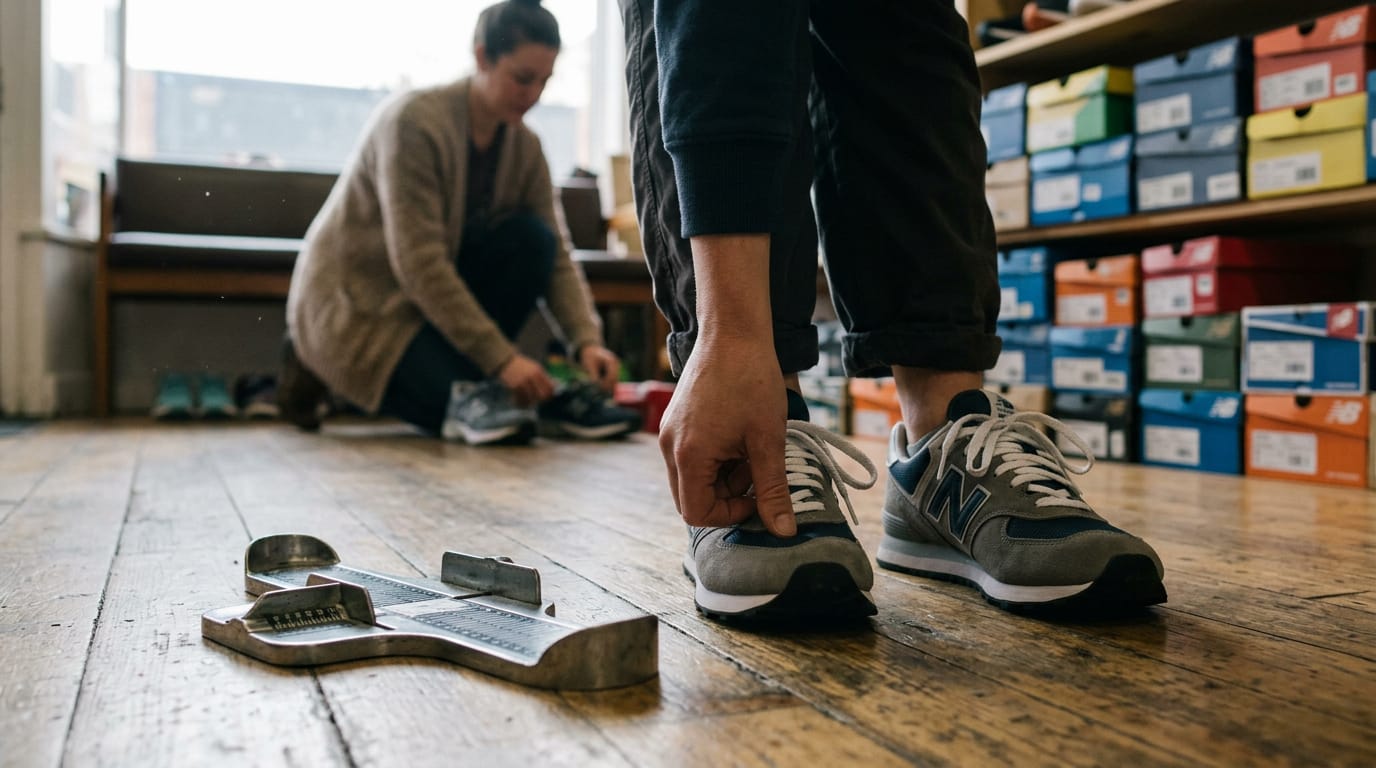
Ordering jeans from a catalog is a gamble. The size on the tag looks right, but the cut decides whether they fit. Athletic shoes work the same way, and that’s why a single number rarely tells the whole story.
So, are New Balances true to size? It depends on the model and the width you choose, so one number won’t cover the whole line.
We’ll cover how width and foot shape change the fit, the details for each model, how to measure your foot, and sizing tips for kids so their pair fits now and still lasts.
Are New Balances True to Size?
New Balance runs close to true to size, though the answer shifts a little by model and width.
Your usual size usually works
New Balance is generally true to size, so the number on the box usually matches your foot. Think of a weekend runner who wears a 9 everywhere.
She starts with her usual 9 in New Balance, checks on a few strides that her toes have room and her heel stays put, and spends her Saturday focused on the run instead of her shoes. The fit should feel balanced, neither tight nor loose.
Differences come from the model and its materials more than the brand as a whole.
How New Balance compares to other brands
Compared with Nike, New Balance feels roomier and more natural through the foot, so if your Nike size fits well, it’s usually a good start. Sizes still vary between brands, though. Before you buy, do two things:
- Check the chart. Match your measured foot to New Balance’s own size chart.
- Try it on. If your heel slides, try a different model before you assume it’s the wrong size.
As for Adidas, there’s no single rule that says New Balance runs bigger or smaller, because the gap depends on the model. Line up both charts against your measured foot and go with the size that matches.
How its running roots shape the fit
New Balance’s running heritage shows up in how its shoes are built. The comfort-focused design means many pairs feel settled right away. Soft cushioning and a wider toebox (the front section that houses your toes) give them room on a long run.
The arch-hugging shape keeps the midfoot secure without squeezing it. How a shoe is shaped often matters more than what the label says. Fit beats the number.
How Foot Width and Shape Change Fit
Length gets the attention, but width and foot shape decide whether a pair feels right.
Which width fits your foot best
Widths run from narrow to extra-wide. Start with your usual size, then pick the width that suits your foot. If the shoe feels tight across the ball or your toes press the front, try a wider width. If your heel slips, try a narrower one.
The right width also helps prevent foot problems like blisters.
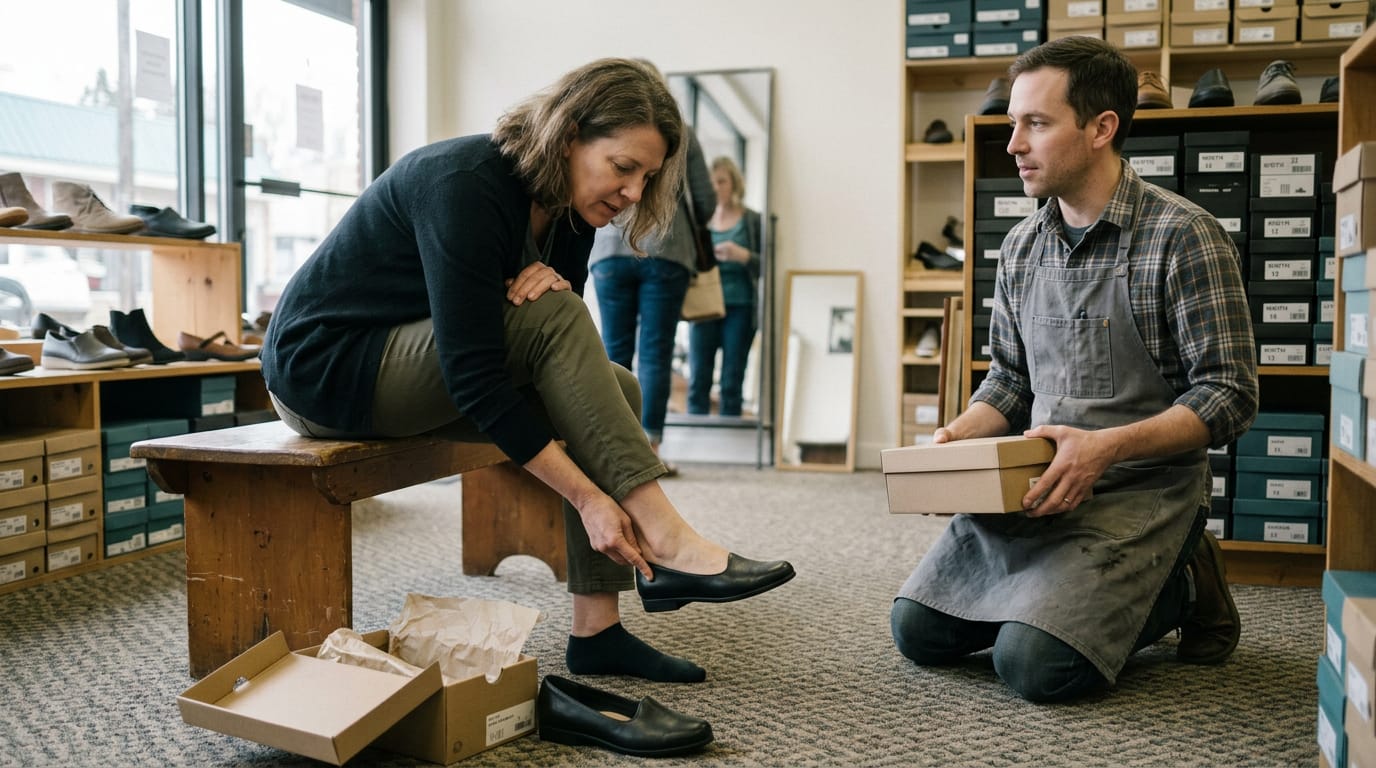
What counts as wide for a woman? Generally, a foot is wide when a standard width feels snug across the ball or the sides bulge past the insole. If that’s you, try the wide options first.
Adjusting size for narrow or wide feet
Narrow feet rarely need a smaller size; a narrower width in your usual size usually does the job. Normal feet can stick with their usual size. Wide feet may need to go up a half size if the wide version still feels snug at the toes.
Think of a weekend runner whose toes jam by mile three in standard-width shoes. The wide version of the same size gives her toes room and keeps the length she knows, so her last miles stay comfortable. That’s the whole fix.
Match your foot shape and activity
Your forefoot (the front of the foot, across the ball and toes), heel, arch, and volume (how much room the shoe has over your foot) all shape how a shoe sits. Two feet of the same length can need very different shoes.
Match the support to what you actually do in the shoe, not what you wish you did. Running shoes handle repeated impact over distance, walking shoes suit steady strides, and casual pairs favor comfort on short trips.
Fit Details for Each Model
Fit shifts from model to model, so one size can feel different across the line. Here’s how each group runs.
Fit notes for retro lifestyle models
The 530 runs slightly narrow through the forefoot (the front of the foot), so if your toes need room, try it on first. The 550 may feel snug, and the 1906R has snug forefoot support, so try both on.
The 2002R fits normally, making your usual size a reasonable start. We haven’t confirmed a sizing verdict for the 373, so don’t assume it fits like the 530 or 550.
For the 997, we don’t have verified sizing guidance yet, so check the current size chart before you order.
How premium and running models really fit
The 99X series runs wider and is built around premium comfort. Running models lock the heel so your foot stays put when the miles pile up.
Think of a weekend player training for her first long run who buys her usual size, then feels her toes pinched by mile six, once her feet have swelled. That’s a rough discovery mid-run.
Swelling feet may need a larger size, so sizing up for long distances would have fixed it. We haven’t verified whether the 990v6 runs narrow, so check its width on the size chart first.
Why design and materials change the fit
Pick by the model, not just the size. Here’s what drives the difference:
- Different models fit differently. Two shoes in the same size can feel nothing alike.
- Consider design and materials. How a model is built and what it’s made from changes how it wraps your foot.
- Different lasts suit different foot shapes. A last is the foot-shaped form a shoe is built on, so what fits a friend may still pinch you.
Measure Your Foot and Read Size Charts
Before you trust a size label, measure your foot, then read the chart. We’ll show you how.
How to trace and measure your foot
You’ll need paper, a pen, and a ruler.
- Stand on the paper with your heel against a wall and trace your foot.
- Mark the tip of your longest toe, which often isn’t the big one.
- Measure the distance from the wall to that mark. That’s your foot length.
- Repeat for both feet and keep the larger measurement, since feet often differ slightly.
Consider a parent buying spring cleats for a nine-year-old. The larger foot sets the size, so nothing pinches at the first practice.
Reading the New Balance size chart
Start with the official New Balance size chart, then focus on the centimeter (cm) column. It’s the most reliable measure because it matches your traced length. Match length in centimeters, not the size number you usually wear.
- Size and width. Check width alongside length.
- Men’s and women’s charts. Use the one that matches the shoe you’re buying.
Making sense of US, EU, and UK sizes
Sizes don’t translate one-to-one. US (United States), EU (European), and UK (United Kingdom) each run their own scale, so the same number can mean a different fit.
UK conversion can confuse, since a UK number may look like your US size without matching it.
Skip mental math and use a global conversion chart, checking it against your centimeter measurement.
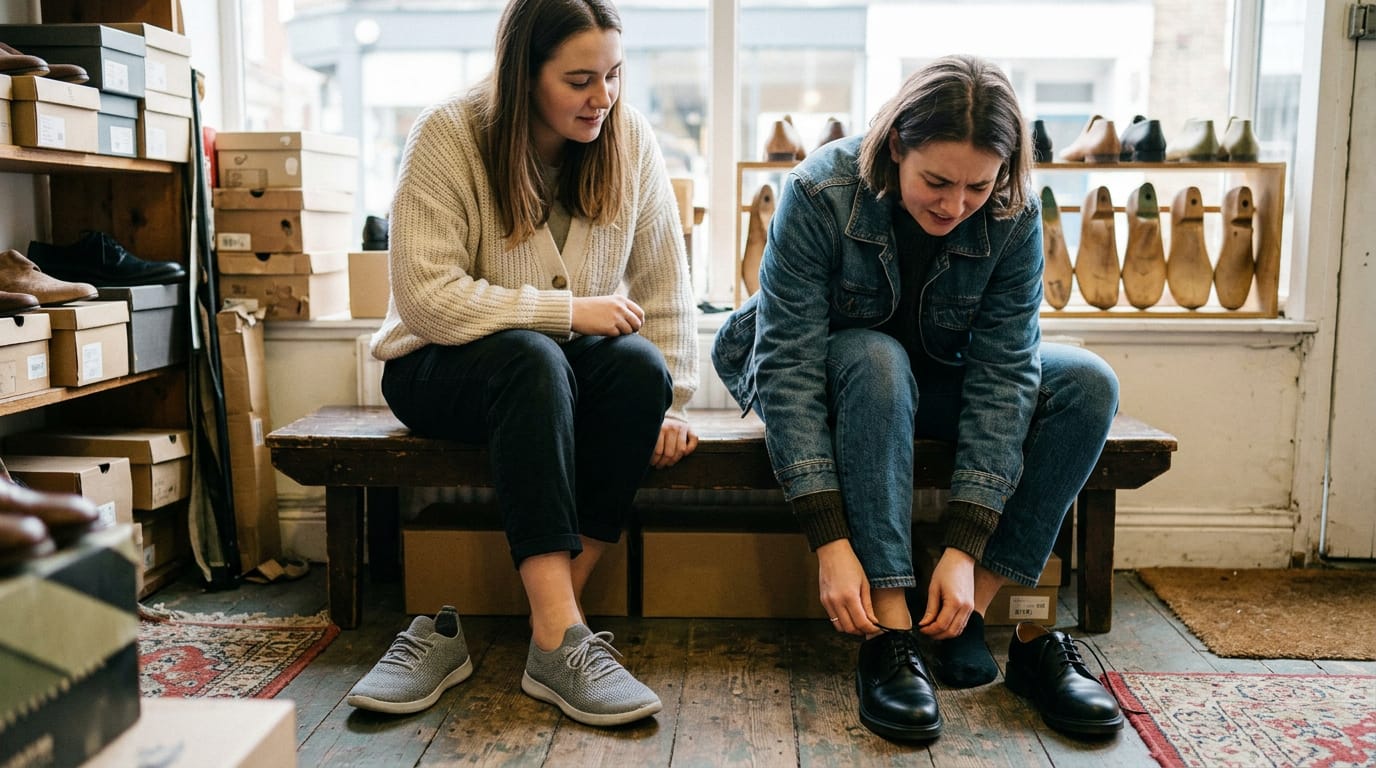
Ask a staffer at a running or sporting goods shop to measure both feet if the numbers still don’t add up, since professional measurement takes the guesswork out. Trust the measurement, not the label.
Practical Tips for Getting the Fit Right
Wrong timing or socks can skew the fit. These checks help you get it right.
How snug should running shoes feel?
Running shoes should feel snug, not tight, with your heel staying put and your toes keeping room to move. Snug is the goal. Squeezed is the warning sign.
Run these checks in the store:
- Shop later in the day. Feet tend to swell as the day goes on, so afternoon or evening works best.
- Wear your intended socks. Bring the pair you’ll actually run in.
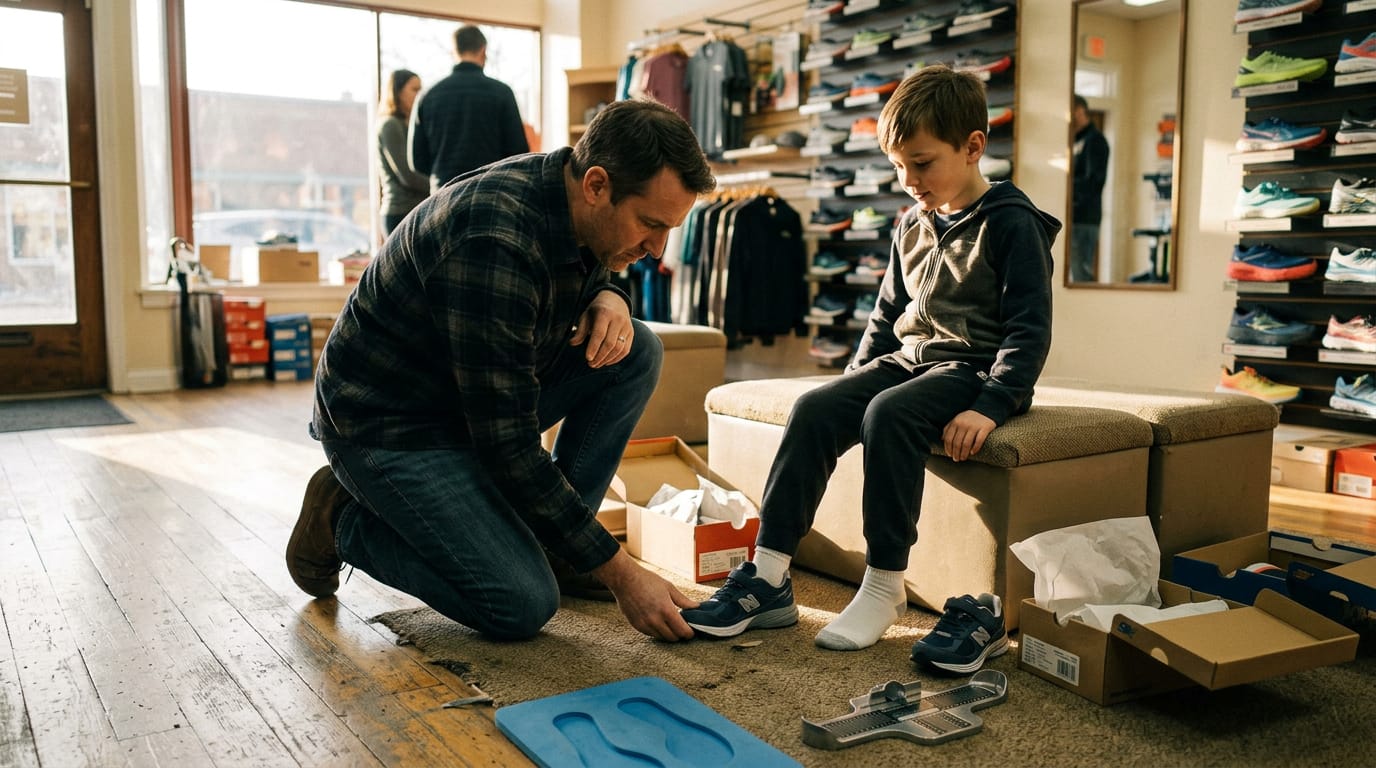
- Check the thumb’s width at the toe. Leave a thumb’s width between your longest toe and the front.
- Look for a snug heel. It should hold with little slipping as you walk or jog.
- Walk around to test. A few minutes on the store floor beats a quick sit.
For kids, that thumb’s width is growth room. A parent buying a fast-growing nine-year-old’s running shoes should leave it up front, so the pair lasts the season.
What to do between two sizes
- Choose the larger size. Go up when you’re between sizes.
- Size up for thick socks. Heavy socks need the extra room.
- Roomier forefoot if swelling. If your feet swell on long runs, go for a roomier forefoot.
- Prefer snug? Look at certain lifestyle models.
Before you check out, confirm the return and exchange policy, since a first run is the real test.
Adjust insoles and laces, or get fitted
- Insoles for support. A supportive insole changes how your foot sits, so try the shoe with it in.
- Adjust laces for wrap. Tighten near the ankle to hold your heel, and ease off over the top if it pinches.
- Get a professional fitting. Ask a fitter at a New Balance store to compare sizes and widths.
Why a Proper Fit Matters so Much
Most people only think about shoe fit when something starts to hurt. A proper fit keeps that trouble from starting in the first place, whether you’re headed to a game or just logging miles.
How the right fit keeps feet healthy
Good fit pays off in three ways:
- Prevents blisters and bunions. A properly fitting shoe can help prevent these problems. Farmington Podiatry’s guide to finding the right shoe fit notes that wearing the wrong size regularly may contribute to blisters, corns, and painful foot problems.
- Avoids general discomfort. Rubbing, pinching, and pressure spots can turn an easy workout into a grind.
- Supports stability and performance. When the shoe holds your foot steady instead of letting it slide, you can push off and change direction with more confidence. Fit beats brand.
Consider a weekend runner who logs a 10K every Sunday in shoes that pinch across the top of her foot. By the last kilometer, she’s thinking about her feet instead of her pace.
Swap in a pair that matches her width, and that same route starts to feel like a different run. It’s less about how a shoe looks on the shelf and more about how it feels once you’re moving.
Fit matters more than the number on the box. Check the model, match the width, and measure your foot before you check out, and you’ll skip most of the guesswork.
For kids, leave a little room to grow, but not so much that the shoe slides around and stops doing its job. Get that balance right and the pair lasts the season.
When the fit is right, you stop thinking about your shoes and start thinking about the game.
References
- Finding the Right Shoe Fit for Healthy Feet — farmingtonpodiatry.com
Questions
What is considered a wide foot for a woman?
A woman’s foot is generally considered wide if standard-width shoes feel snug across the ball of the foot or the sides of the foot bulge past the insole. Try a wide width before changing shoe length.
What is the sizing of the New Balance 997 shoes?
There is no verified sizing verdict for the New Balance 997. Check the current New Balance size chart and match your foot’s measured length and width; if possible, try the shoes on before buying.
How do I convert EU shoe sizes to US sizes?
EU and US shoe sizes use different scales, so there is no exact one-to-one conversion. Use a conversion chart for the shoe’s intended sizing system and compare the result with your foot length in centimeters, which is a more reliable basis for choosing a size.
How tight should running shoes be?
Running shoes should feel snug, not tight, with your heel held securely and room for your toes to move. Leave about a thumb’s width in front of your longest toe, and test the fit while walking or jogging in your running socks.
Is New Balance big in size?
New Balance generally runs close to true to size, but fit varies by model and width. Start with your usual size, then check the model’s fit and choose a width that suits your foot.
Does New Balance run big or small compared to Adidas?
There is no consistent rule that New Balance runs bigger or smaller than Adidas; the difference depends on the models being compared. Measure your foot and compare both brands’ size charts rather than relying on the same size label.
Are New Balance 373 true to size?
There is no verified sizing guidance for the New Balance 373, so it cannot be confidently described as true to size. Check the current size chart and try the shoe on if you can.
Does 990v6 run narrow?
It has not been verified whether the New Balance 990v6 runs narrow. Check its width information and try it on, especially if you need extra room across the forefoot.
Sources
- Finding the Right Shoe Fit for Healthy Feet, farmingtonpodiatry.com
Find your level
The Counter