How to clean golf clubs without damaging the finish
How to clean golf clubs without damaging their finish: clear grooves, care for grips and shafts, spot rust early, and choose safe products for each club type.

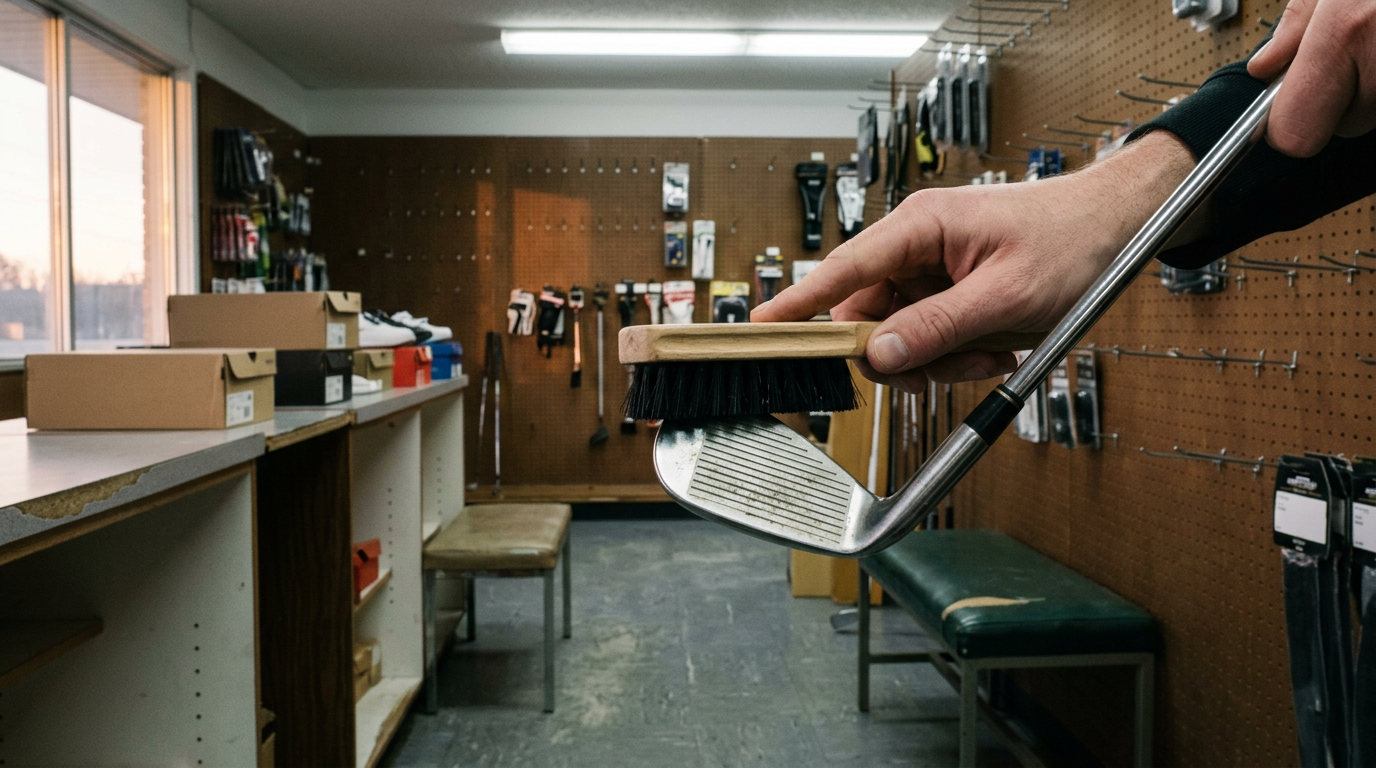
Think about your car after a muddy month of weekend road trips. Dirt builds up in the corners, the finish dulls, and eventually it’s time for a real wash. Golf clubs need the same attention, just with grass, sand and sweat instead of mud.
Cleaning them means clearing debris from the grooves and clubhead, caring for the grip and shaft, and checking for rust before it spreads.
In this post, we’ll walk through each step, show which products are safe on which finishes, and point out when a club needs regripping or replacing instead of another scrub.
Why It Matters to Clean Golf Clubs
Cleaning your clubs can feel like a chore after a long round. Here’s why those few minutes are worth it.
How clean clubs improve your shots
Dirt affects accuracy and distance. Picture a weekend golfer who pulls a 7-iron from a muddy bag after a rainy week and watches the ball skip off the face instead of biting. The shot comes out shorter and less predictable than it should.
Clean grooves do two jobs. According to the Metropolitan Golf Association, they help the clubface grip the ball and shed water and debris, working “like the tread on tires.” That’s why a packed face costs you control out of wet rough.
Put it together and you get cleaner contact and fewer surprises. It’s less about how the set looks and more about how it performs.
Keeping clubs looking new and lasting
A clean set looks sharp, but appearance is the easy part. Regular cleaning protects the finish so your clubs stay reliable season after season. Small effort. Long payoff.
- Keeps clubs looking new. A quick wipe after each round keeps the heads bright.
- Reduces wear and tear. Grit left on the finish rubs against it with every swing.
- Protects from scratches. Think of a weekend league player who tosses a wet, sandy set into the trunk after every round. A quick wipe would have prevented the marks that build up over a season.
- Lasting durability. Clean clubs hold up longer, so your set lasts for seasons, not just rounds.
Gear to Gather Before You Start
Get the right supplies on the bench before you touch a club.
Everyday supplies for a basic clean
Start with these:
- Bucket or bowl of warm water: loosens dirt from the face and grooves.
- Mild dish soap: a small squeeze is plenty.
- Soft-bristled brush: works dirt loose without digging into the face.
- Towel or microfiber cloth: dries the head and shaft before the bag goes back in.
Consider a weekend player with muddy irons from last week’s rain. A bucket, a squeeze of soap and a soft brush lift the mud, and a towel dries everything before Saturday’s round, so she walks to the first tee with clean clubs.
WD-40 isn’t part of this kit. It’s a lubricant, not a club cleaner, so keep it off your clubs.
Windex is a window cleaner, so we’d skip it too. The shop-counter guidance later in this guide covers which products are safe on which finishes.
What do pros use to clean their clubs?
Pros add these to the basics:
- Golf club cleaning solution: a product made for club finishes, so you’re not guessing.
- Wedge cleaning tool: a small tool built to reach into the grooves on your wedges.
- Old toothbrush: a cheap detail brush for spots your big brush can’t reach.
- Toothpick or tee: clears packed dirt out of the grooves.
- Fine-grade steel wool: for stubborn rust, used with a light hand so you lift the rust instead of scrubbing the finish.
It’s less about scrubbing harder and more about lifting the dirt cleanly. Gentle beats harsh.
Step-by-step Cleaning for Irons and Wedges
Irons and wedges collect the most grime, and most of it sits in the grooves. Work through these steps in order and you’ll finish with a clean, ready club.
Soak the heads and scrub gently
Start by brushing off loose dirt, grass and sand before any water touches the club. Then soak the heads in mild soapy water, keeping the ferrule (the small collar where the shaft meets the head) out of the water.
Scrub the grooves gently with a soft brush. Let the brush do the work, not force.
Keep cleaning during the round, too. Picture a weekend player who blasts out of a sandy bunker and wipes the face and grooves with a damp towel before the next shot. That keeps sand out of the grooves so the next shot grabs the way it should.
Rinse off soap and dry thoroughly
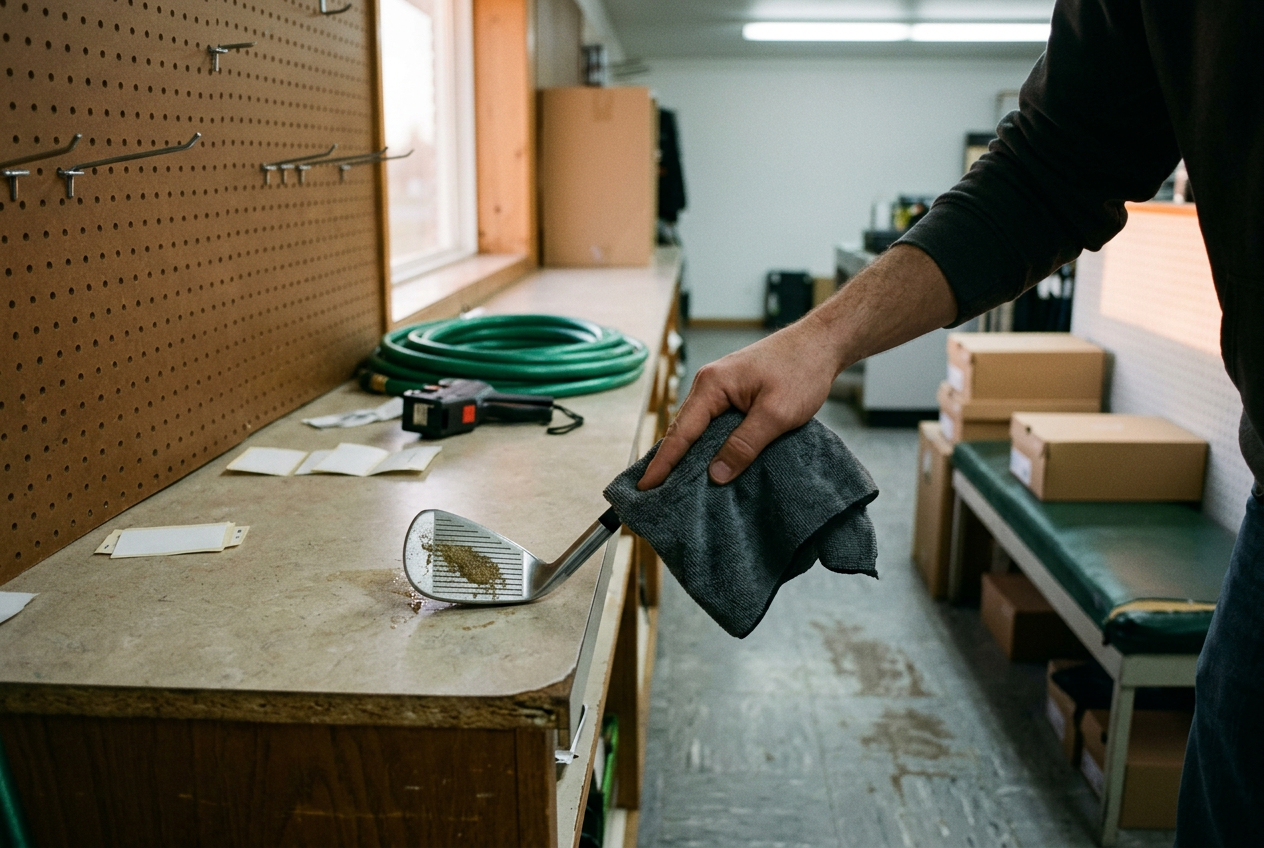
Rinse each head until no soap residue remains, then dry it thoroughly with a towel, working into the grooves and around the ferrule.
Trapped moisture is how rust starts, so don’t pack damp clubs into a closed bag. Let them dry completely first.
Check for damage, then polish
Consider a parent cleaning hand-me-down irons before their teen’s first high school season. First, they check each head for:
- Cracks. Look over the face and the area near the shaft connection for hairline cracks.
- Dents. Run your fingers across the face and sole to feel for any dents.
- Loose ferrules. Give each one a gentle twist. It should feel firmly seated.
They find a loose ferrule on a wedge and take it to the shop before the first practice. Catching problems now beats finding them mid-round.
Once the heads pass, add shine if you want it. A light coat of club polish adds gloss, but it’s optional.
Cleaning Methods for Each Club Type
Chrome, black and forged heads don’t all respond the same way, so check the finish before you reach for a product.
Caring for woods, drivers and putters
Start with a dampened cloth or towel to lift loose dirt, grass and sand from the face and crown. For caked-on mud, follow these steps:
- Dip the head in a soapy solution of warm water and mild soap.
- Wipe it dry with a microfiber towel.
Think of a weekend golfer who pulls a driver from a muddy bag after a rainy round. A damp towel, a quick soak and a dry microfiber wipe handle the mess before the next tee time, with no harsh tools needed.
If your head is titanium, skip steel brushes, which can mark the surface. A soft cloth or brush is the safer pick. A gentle hand works better than more pressure.
Finish woods and hybrids without streaks
Woods and hybrids need more than a quick towel to look their best. Dampen a rag with isopropyl alcohol (the common rubbing alcohol) and work it over the head.
Then switch to a fresh rag for the crown, the top of the head, since a dirty rag just moves grime around.
Consider a parent helping a teen clean a hybrid before a Saturday tournament. A light pass with alcohol and a fresh rag gets the head looking sharp for the first tee, and it’s a quick job.
The trick to avoiding streaks and smudges is less product, not more. Light passes with a clean rag beat a soaked cloth.
Keeping Shafts and Grips in Shape
Grips and shafts take a beating every round. A few minutes of gentle care after each outing keeps both in good shape.
Cleaning grips without soaking them
Your grip’s job is to hold tack, the slightly sticky feel that keeps your hands from sliding mid-swing.
- Wipe off sweat and dirt. A dry towel after each round removes most of what builds up.
- Use brush moisture only. Dip a soft brush in water, shake off the extra, and scrub gently.
- Clean gently with water. Work in small circles, then dry the grip with a towel.
- Don’t submerge grips. Soaking can loosen the grip and wear out the material faster.
The rule is simple: damp brush, not a soaked grip. Think of a weekend player who tosses his bag in the trunk still damp from a drizzly round.
A quick towel-down before he leaves the course keeps grime from setting in, so the club stays easy to hold on the next tee.
If a grip still feels slick, hard, or cracked after a careful clean, it’s time for a regrip. Cleaning can’t rebuild worn-out material.
Wipe shafts and lift sticker residue
Shafts need less work, but a few habits matter most.
- Wipe with a damp cloth. Remove dirt and grass after each round.
- Use Goo Gone for sticker residue. Apply it to a cloth rather than the shaft, then rub the spot gently until the label lifts.
- Dry shafts to prevent deterioration. Moisture left on a shaft can cause deterioration over time, so dry it before you bag it.
Dry it, every time.
Dealing with Rust on Your Clubs
Rust is more of a storage problem than a cleaning problem, so start with prevention.
Stop rust before it starts
Think of a weekend golfer who finishes a soaked round, tosses the bag in the trunk and forgets it until next Saturday. By then the grooves on her irons are spotted with rust, and a quick wipe won’t fix that.
Rust needs moisture to get going, so this is a job for prevention more than repair.
A few habits go a long way:
- Never store clubs wet. Moisture sealed inside a bag or trunk is the fastest route to rust.
- Dry after cleaning. Towel off every head and shaft before the clubs go back in the bag.
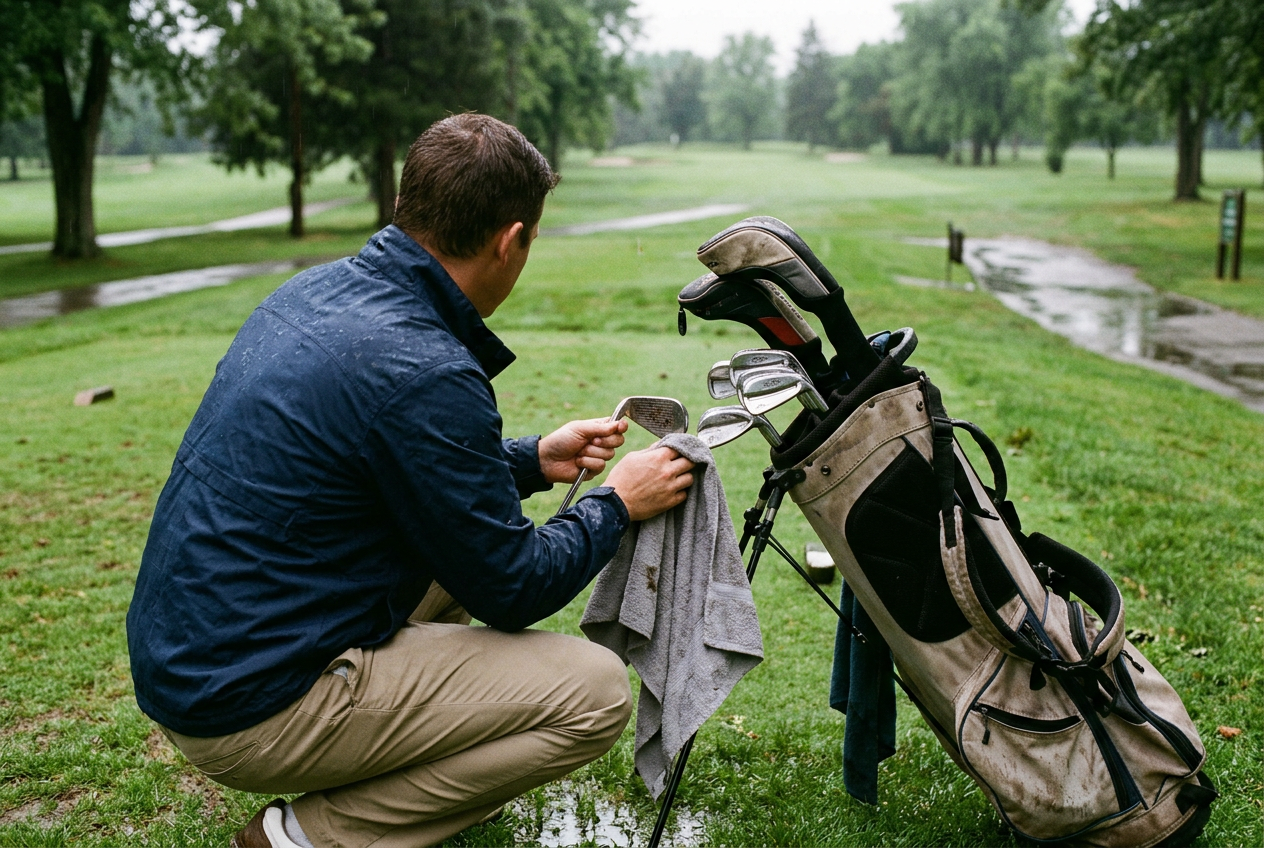
- Keep clubs dry on course. Dry the heads after a rainy hole, not just at the end of the round.
Take the water away and rust has nothing to work with.
Removing rust that has already formed
When rust has already formed, you’ve got a few options, and most are gentle. Start light and work up only if you need to.
- Vinegar for rust. Vinegar loosens surface rust on steel heads. Rinse and dry right after, so the acid doesn’t sit on the metal.
- Fine steel wool for old clubs. Fine steel wool in light strokes lifts heavier rust on older clubs, so keep pressure easy.
- Rust on irons is often minor. Spots on iron heads usually wipe off with a little effort, so you rarely need anything aggressive.
- Titanium woods rarely rust. Save the steel wool for the steel heads and skip the scrubbing on titanium.
- Steel shafts can rust. Don’t skip them when you’re checking the set, since shaft rust is easy to miss.
If the rust has gone deeper than a surface spot, ask a shop before you scrub harder.
Common Mistakes That Damage Clubs
A few common habits do most of the harm, and they’re easy to avoid once you spot them.
Harsh tools and too much pressure
The wrong tool ruins a finish fast, and the grooves are easy to damage. Stick to a soft brush, a cloth, and plain water.
- No wire brushes. They gouge the clubface, and those scratches are hard to undo.
- Avoid coarse steel wool. It leaves fine scratches that dull chrome and can shed tiny metal bits that rust.
- Use light pressure. Let water and a soft brush do the work, not your arm.
Consider a weekend golfer who scrubs her irons hard after a muddy round, sure that more elbow grease means cleaner clubs. The finish is scuffed now, and it’s the set she’ll swing all season. Your goal is to clean the club, not sand the finish away.
Where drying and soaking go wrong
Water isn’t the enemy. Trapped moisture and heat are the real trouble.
- Don’t sun-dry grips. Direct heat dries out rubber and can leave grips hard, slick, and cracked sooner than they should be.
- Don’t put clubs away wet. Moisture sealed in a bag invites rust, especially around the grooves and where the shaft meets the head.
- Don’t submerge grips. Soaking can loosen the grip’s hold on the shaft, and a loose grip is far harder to fix than a dirty one.
Picture a parent who rinses their kid’s clubs in the sink, leaves them in the sun to dry, then zips them into a damp bag. Later the grips are cracked and the irons have rust spots. A few minutes with a towel would have saved both. Dry first, then store.
When to Clean Clubs and Store Them
Cleaning and storage work as a pair. A clean set that sits wet in the trunk can still rust, so here’s when to clean and how to store your clubs.
Clean after rounds and before storing
- After every round: Wipe the face and grooves (the lines that grip the ball) with a damp towel while mud is still soft.
- Every few rounds: Scrub heavier buildup on irons and wedges with warm, soapy water, then dry each head.
- Before storing clubs: Clean, dry, and check the grips before the set goes away.
Think of a weekend golfer who wipes her clubs after each of three rainy rounds. The mud never dries into the grooves, so her wedges still look sharp in June.
The goal is to clean soon after you play, not someday when the set looks grimy. Moisture is the real enemy.
Store clubs dry, organized and covered
Storage comes down to keeping moisture off the metal and grips. Keep each club in its own slot so the faces don’t knock together.
Cleaning a golf bag is simple: empty the pockets, shake out tees and sand, and wipe the outside with a damp cloth and mild soap. Let it air dry fully before you pack it away.
Pick a dry, steady-temperature spot. Garages and car trunks swing between hot and damp, which is hard on grips and metal.
Keep headcovers on drivers and woods, but only once the heads are fully dry, since covers trap leftover moisture.
Consider a dad whose irons came out of a damp garage speckled with rust, even though he cleaned them in October. Next off-season he stores the bag indoors, and his clubs are ready for opening day.
Clean clubs feel more predictable in your hands, and they hold up longer when you stay on top of grooves, grips and shafts. Keep a simple routine, choose products that suit each finish, and act early when rust or worn grips show up.
When a club truly needs regripping or replacing, you’ll spot it sooner because you’ve been paying attention all along. A clean club lets you focus on the shot instead of the mess.
References
- Rules Interviews Part 2 — mgagolf.org (2010)
Questions
What is the 24-38 rule in golf?
The “24-38 rule” is not a standard golf rule or widely recognized golf term. If you saw it in a particular club’s policy or a specific golf context, its meaning may depend on that source.
How to clean a golf bag?
Empty all pockets and shake out loose tees, sand, and debris. Wipe the outside with a damp cloth and mild soap, then let the bag air-dry fully before storing or repacking it.
How do you clean golf grips?
Wipe grips with a towel after play, then gently scrub them with a soft brush dampened with water. Dry them with a towel, and do not submerge them or leave them in direct sunlight to dry.
Why was Mickelson kicked out of a golf club?
Phil Mickelson was not generally reported as being kicked out of a golf club. He faced criticism and scrutiny over his association with LIV Golf and related comments, but that is different from being expelled from a club.
What does WD-40 do to golf clubs?
WD-40 is a lubricant, not a golf-club cleaner, so it should not be used to clean clubs. Use warm water with mild soap and a soft brush for clubheads, and dry them thoroughly.
What do professional golfers use to clean their clubs?
Professional golfers commonly use warm water, mild soap, soft brushes, towels, and golf-club cleaning solutions. They may also use groove tools or a toothbrush for detail work, taking care to use tools suited to the club’s finish.
Sources
- Rules Interviews Part 2 - Metropolitan Golf Association, mgagolf.org,
Find your level
The Counter