Easy Soccer Drills for 5 Year Olds That Feel Like Play
Easy soccer drills for 5-year-olds turn practice into play with quick dribbling, passing, and space-finding games, plus simple tips for a safe, short session.
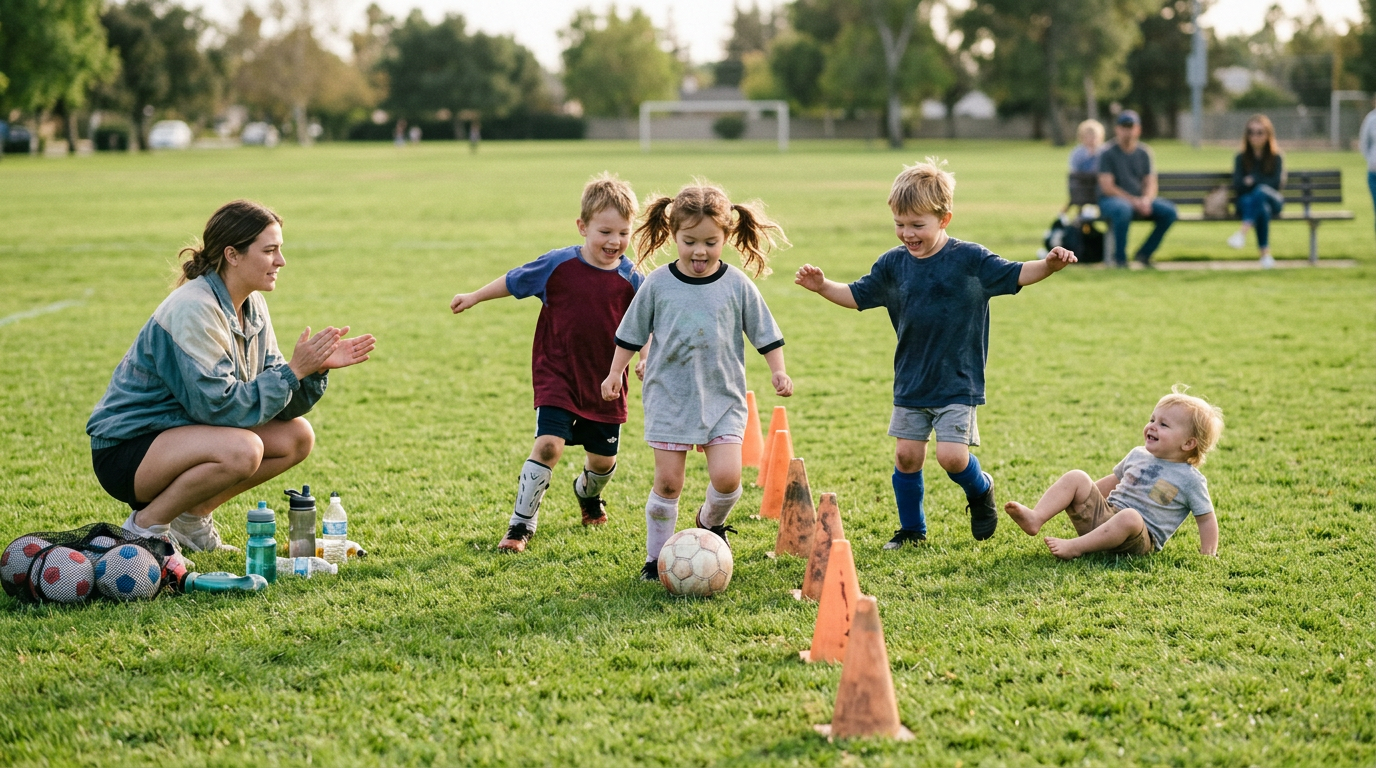
Think about how a five-year-old meets a soccer ball: they chase it in a happy pack, kick it wherever it happens to go, and grin the whole time. That’s exactly the energy you want at this age, so the best practice feels like play, not drilling.
Easy soccer drills for 5-year-olds are short, game-based activities that build dribbling, passing, and finding space without long lines or lectures.
In this post, we’ll cover how to plan a short practice, a few dribbling and passing games, and what parents should know about safety, kit, and picking a program.
Easy Soccer Drills for 5 Year Olds
You don’t need a tactics talk for five-year-olds. They need a ball, a few clear cues, and a coach who makes practice feel like a game.
Keeping practice fun and playful
Fun keeps kids coming back, so build every drill around play. Start with guided play: set up a simple game with a ball and let the kids explore, nudging them toward a skill without drilling it.
Add imagination too, like dribbling as a dinosaur or freezing like a statue. Success means smiling kids, not perfect passing.
Pressure is the quiet risk. According to a PubMed Central article, several studies have linked pressure and directive behaviors to reduced enjoyment and dropout, so keep the focus on playing rather than winning.
Giving clear, simple instructions
Kids this age tune out fast, so keep your words short. Lead with a one-word command like “Go,” “Stop,” or “Pass,” and skip the long explanation. Show the drill once, then let them play.
Repeat the same cue every session, so “freeze” means freeze in week one and in week ten. Keep rules to one or two at a time.
Think of a coach who explains the whole game before anyone touches a ball. By the time she’s done, half the group is chasing butterflies. Show it once, start playing, and the group stays with her. Short beats long every time.
Praising effort and correcting gently
Praise what kids try, not just what they nail. Call out bravery and effort, like “Nice work going after that ball!” When something goes wrong, offer one quick tip like “Try your other foot,” then restart the game.
Don’t chase perfect technique at this age. Confidence matters more than a textbook strike, so favor encouragement over correction.
Keep every child moving
Kids are happiest when they’re busy, so avoid waiting in lines. Give every child a ball.
Keeping five-year-olds active with a ball instead of waiting in lines can help reduce off-task behavior, and U.S. Youth Soccer’s coaching manual asks coaches to build activities where all players get the same practice opportunities.
Build each session around a simple loop:
- Move. Kids dribble, weave, and run with the ball.
- Stop. Freeze on your cue.
- React. Switch direction when the cue changes.
- Celebrate. Cheer every effort before the next round.
Movement often settles behavior before it turns into a problem.
How to Plan a Short Practice
Five-year-olds can run and chase with real energy, but their attention drifts fast and long instructions rarely stick. Plan around that and you’ll find practice feels like play, not a lesson to get through.
Keeping sessions short and smooth
A short practice is one you can sketch on a single sheet of paper. Aim for a 30-minute plan, keep everything under 45 minutes, and run it as:
- warm-up
- skills
- a game to finish
Clear signals like a whistle keep transitions quick, so kids spend less time waiting. The goal is flow rather than volume.
A wiggly warm-up to start
Start with movement before any ball work:
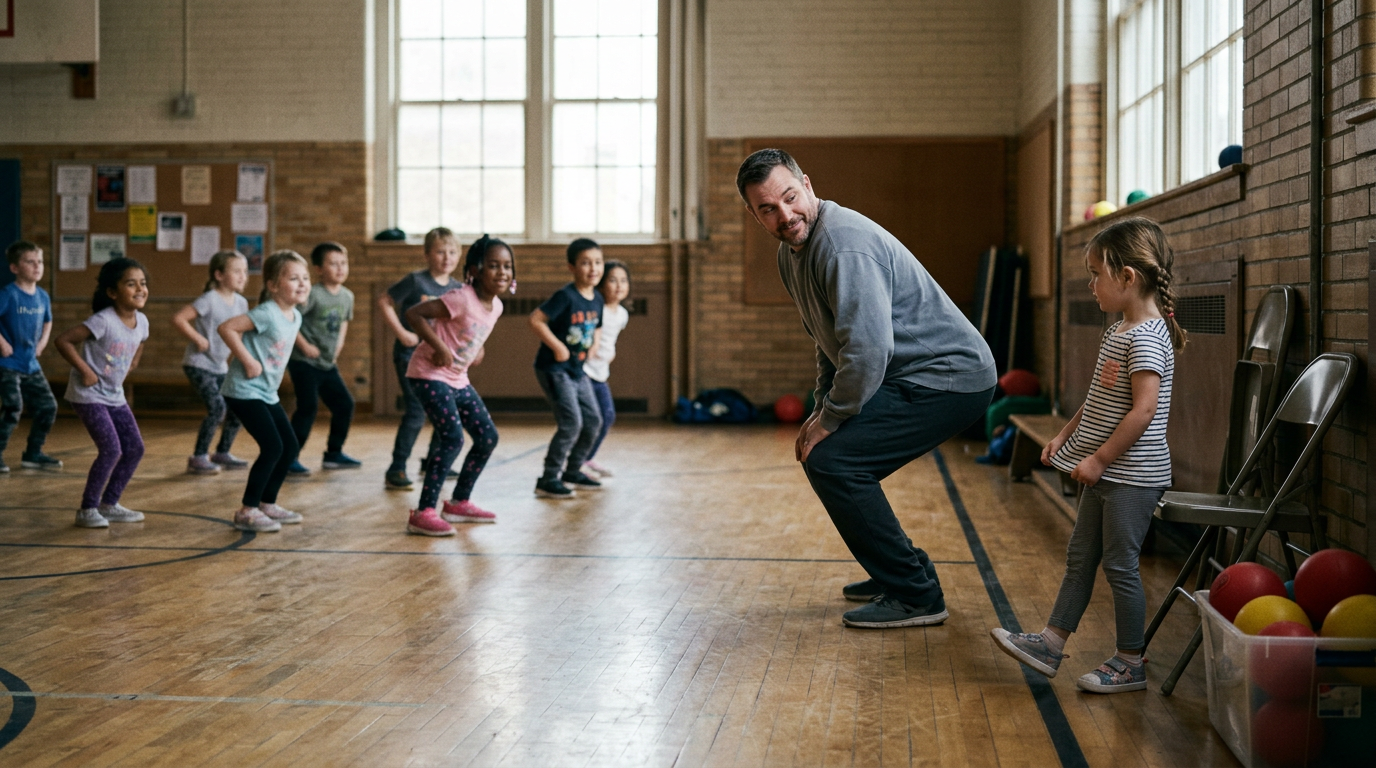
- Animal walks. Waddle like ducks, hop like frogs or crawl like bears.
- Silly running and freezing. Kids run on “go” and freeze like statues on “stop.”
- Ball wake-up rolling. Each child rolls a ball gently while you call out simple directions.
For hesitant kids, let them watch from the sideline or stand beside a friend until they’re ready. A volunteer dad who spots a shy five-year-old might invite her to copy the duck walk from the edge, and soon she’s waddling with the group.
Ending with a small game
Always end with a game, even if the skill work went rough. Play 3v3 or 4v4 so every child touches the ball often, and skip the goalkeeper, since a kid in goal spends most of the game waiting.
Keep restarts simple, like a quick roll-in, and ignore minor errors so the action keeps going.
Scores should stay loose, because the aim is involvement rather than winning. Let the game be messy.
Setting up the field and groups
Use cones to mark a small pitch and goals, keeping the space tight so kids stay close to the ball. Keep groups manageable so nobody waits long for a turn.
If equipment runs short, improvise with water bottles for goals or a jacket for a boundary. When the group doesn’t split evenly, try a 3v2 or a rotating extra player who swaps in each round. Time rounds in series so each one has a clear start and finish.
Picture a weekend coach with one ball bag and a handful of cones, turning a patchy park corner into a space the whole group can use.
Dribbling Games for Better Ball Control
Dribbling is where a five-year-old’s control really takes shape, and here’s how to make the practice feel like play.
Simple touch and stop games
In toe taps, kids tap the ball back and forth with the inside and outside of each foot, keeping every touch tiny. Then try red light, green light: dribble on “green” and freeze with a foot on the ball on “red.”
Stop the ball on cue works the same way, with kids pulling the ball under the sole the moment the coach says “stop.” For colour-call variations, the coach shouts a colour and kids dribble to a cone of that colour.
Think of a coach with one boy who kicks his ball away on every “stop.” Switching to the freeze game gives him a reason to pull it back, and the giggles keep him trying. The goal is control rather than speed, and these games build that first.
Dribbling through cone gates
Set pairs of cones a few steps apart to make cone gates, then mix up the rules:
- Find a new gate. Kids pick one nobody else is using, which means lifting their heads to scan the pitch.
- Colour-alternating gates. Players pass through a red gate, then a blue one, and so on.
- Count goals in 30 seconds. Treat each gate as a goal, count how many they dribble through, then try to beat that number.
- Right or left foot variations. Use only the right foot for one round, then only the left.
Collect treasure and bring it back
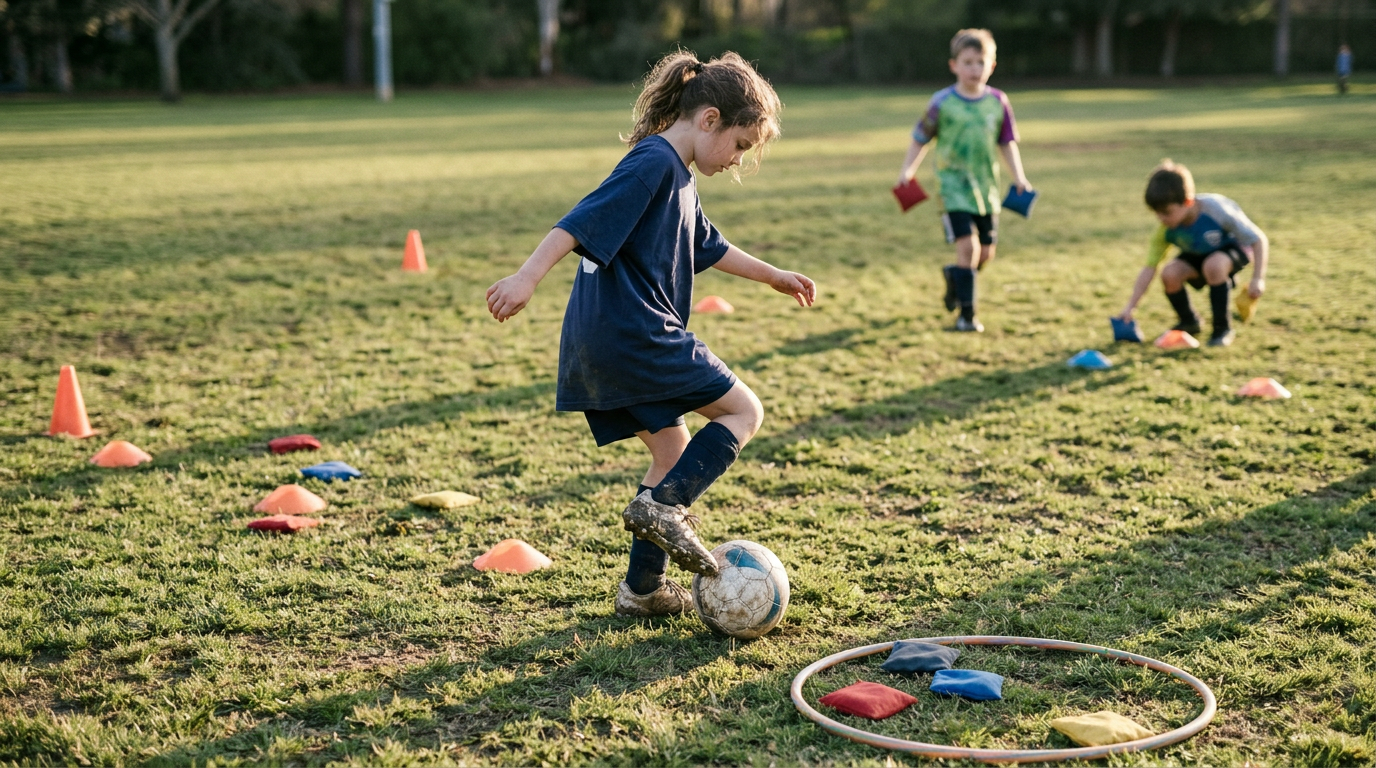
Scatter cones or beanbags around the pitch as treasure. Each child dribbles to one, stops the ball with the sole, and picks up the item. Then they dribble back to home base, a hoop or cone where the team gathers, and drop the treasure there.
Stopping on purpose before reaching for something carries straight into games, where a controlled stop keeps the ball from rolling away. Simple, but it works.
Reacting to signals while dribbling
Now kids have to watch as well as dribble. When the coach calls a player number, that child stops or sprints to a cone. In ball-swap on signal, kids leave their ball, grab a nearby one, and keep going.
Island search with hoops turns hoops into islands: when the signal sounds, everyone races to stand in one, then dribbles off again. Use visual or acoustic signals, like a raised colour card and a whistle, so kids learn to react to both.
Above all, aim for head-up dribbling, where kids keep their eyes up instead of on their feet.
Consider a parent watching kids whose heads stay down all session. Adding island search with a whistle and a raised card gets them looking up, and you’ll notice the change the first time one spots a teammate in open space.
Weaving through poles and obstacles
Set up a pole forest that kids weave through in relay teams, tagging the next teammate when they finish. Move to non-straight paths with curves and wiggles, so every turn asks for a tighter touch, not a bigger one.
For hand-carry ball variations, let kids carry the ball in their hands for one round, then switch back to their feet. Finish with two-footed zig-zag courses, alternating left and right foot touches between cones. Fun keeps them coming back.
Passing Games and Team Play
Five-year-olds learn passing fastest when the ball keeps moving, so we built these games to keep everyone touching it.
Passing with a partner or small group
Start with groups of three, so everyone has someone to pass to and receive from. The first player dribbles, then passes on to a teammate.
Picture a parent running this in the backyard with three kids, where nobody waits for a turn. Less waiting, more kicking.
Then add a few twists:
- Pass through pole gaps: send the ball through the openings between poles.
- Two-footed passing: use both feet, not just the stronger one.
- Point for gate passes: award a point for each pass through a gap.
The goal is more touches and fewer turns in line.
Quick mini games with simple rules
Try a ringball team game, where the whole group plays together. Add a rule that players hold the ball for three seconds before passing, so kids have a moment to look up first.
With an odd number of kids, one child becomes the joker, who joins whichever side needs an extra player, or the referee who keeps the rules. Rotate the job so nobody sits out.
Once the rule sticks, you can change one thing at a time, like the space or how points count.
Short matches on a compact field
Play on a compact field, a small marked area that keeps kids close to the ball. Cheer effort and dribbling over the final score, and keep tactical talk to a minimum.
Five-year-olds don’t need positions. Give them one cue, like ‘kick it toward the goal.’
Begin with early 1v1 duels close to goal, so each child gets a real shot.
Expect bunching: everyone chases the ball like it’s magnetic. When the group swarms, pause, ask one child to stay wide, and restart.
Games for Choosing and Finding Space
Five-year-olds don’t need a lecture on where to run. These games help them look up, pick a direction, and try again.
Looking up to find open space
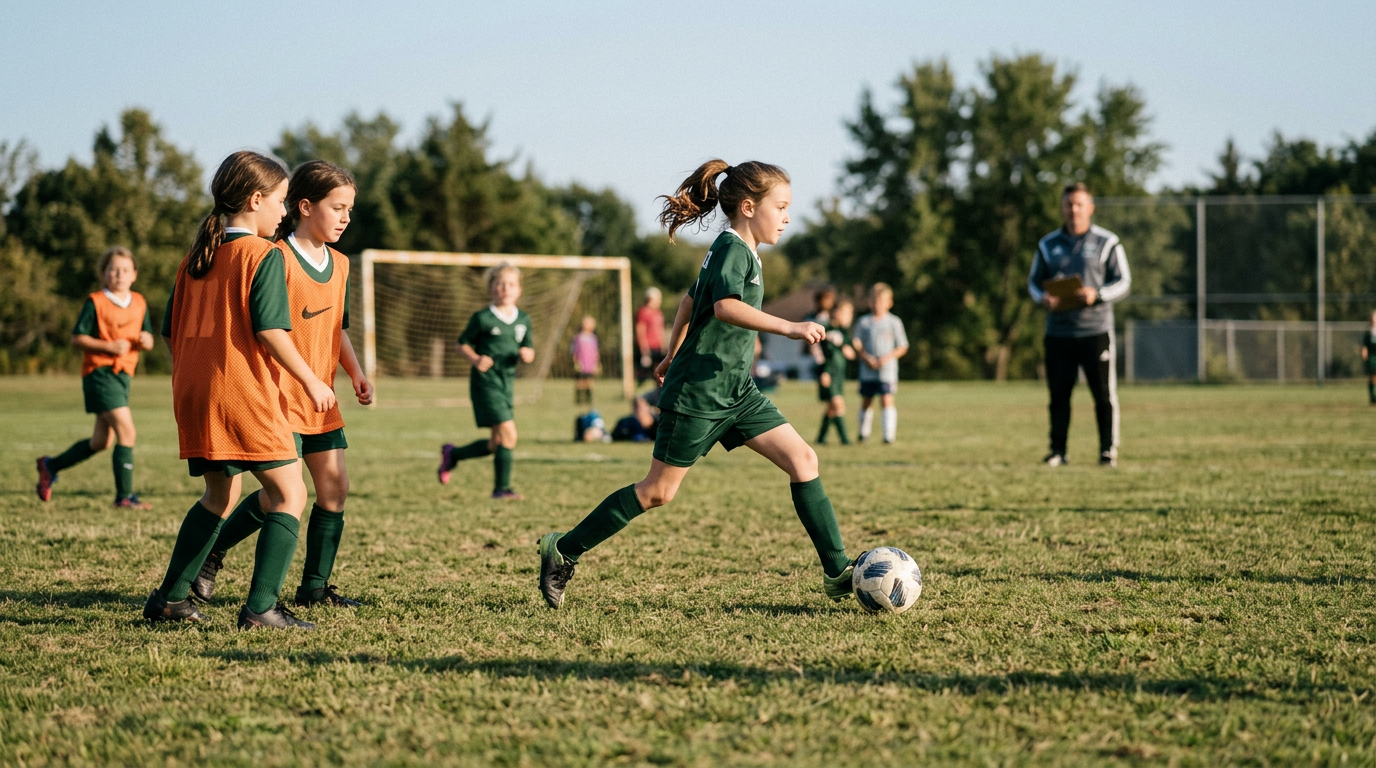
Many young players stare at the ball while they dribble, missing the grass right in front of them. In Volcano escape, kids dribble away from a pretend eruption, and the only way out is to spot the safe space.
Turn and find new path works the same way: when a teammate blocks the route, kids look for another one instead of forcing through.
Open space buys time and a passing option. Looking up while dribbling is the habit that makes it work.
Building courage under pressure
Think of a dad watching his son hesitate when a bigger kid steps toward him. Shark street gives him a lane to dribble down while helpers play sharks, so he practices committing to each touch. Dribble past adult sharks puts grown-ups in the path.
Bravery at this age is mostly timing: knowing when to go and when to wait. When a ball gets lost, ask ‘Want to go again?’ Kids learn more from a retry than from a lecture, and courage grows with repetition, not pep talks.
Letting kids solve problems in play
Get to the goal gives a child a target and lets them find their own route. Place a cone, hoop, or bench in the path, and you’ve created obstacles that force a choice.
Step back and let kids solve problems, because the answer they find is the one they’ll remember.
Red light with choices keeps the classic game but lets kids pick how to stop, such as a foot on the ball or a quick spin. Hidden lessons, no lecturing: kids pick up balance and turning without anyone naming them.
Reacting fast and moving without the ball
React quickly to signals like a whistle or a called number, and kids learn to change direction on cue. Good use of space means looking for open grass, not the crowd around the ball.
Picture a parent helping a Saturday team, where most of the kids swarm the ball like bees. Run a few rounds where anyone off the ball must move into space, and the scrimmage starts to spread out.
A kid who runs into space gives a teammate an option, so praise the run, not just the touch.
Parent Tips, Safety and Picking a Program
Sideline habits and a few simple checks matter as much as the drills.
How parents can help from the sideline
- Stay calm. Keep your cheering upbeat, even when play gets messy.
- Let the coach coach. Save your tips for the car ride home.
- Keep home practice light. A few backyard kicks are plenty.
- Praise bravery. Cheer effort, not just goals.
- Watch body language. Kids read your face, so encouragement beats correction.
Simple safety checks for young players
- Shin guards on. Wear them every session.
- Shin guards: snug, correct size. Loose pairs slide; oversized ones get in the way.
- Check shoelaces. Double-knot them or use velcro so nobody trips.
- Clear playing area. Remove toys, bottles and stones before practice starts.
- Frequent water breaks. Little bodies heat up fast.
- Watch fatigue. A kid who slows, walks or drops out needs a rest.
Starting out and picking a good program
According to a recent article on early football training, age-appropriate soccer gives children chances to build movement skills and experience organized play. Your first practice should feel like play, not a test. Expect plenty of running and giggles.
Good programs are play-based, favoring games like ball tag over long lines of kicking. Look for structure balanced with curiosity: a routine kids can count on, plus room to explore the ball.
Good signs include busy kids, positive feedback and a coach who keeps drills simple.
You don’t need much to start. Get the right ball size for their age; flat trainers work fine, so cleats are optional. Borrow or buy used first.
Consider a parent who borrows a ball and old sneakers, then hears their kid begging for the next practice. Fun keeps them coming back.
Keep the sessions short, keep the games simple, and keep the ball moving. When practice feels like play, your five-year-old gets plenty of touches, a few new friends, and a reason to ask for the next session.
Start with the right size ball, shin guards that fit, and shoes that let them run and stop safely, and the rest tends to fall into place.
The best training is the kind they don’t even realize is training.
References
- Is the Perception of the Frequency of Use of Parental Pressure and Directive Behaviors Related to Elite Adolescent Athletes’ Burnout, Emotions, and Motivation? — pmc.ncbi.nlm.nih.gov (2025)
- Early training as a key factor in the development of youth football — doi.org (2026)
- Official-US-Youth-Soccer-Coaching-Manual-1 — usyouthsoccer.org
Sources
- Is the Perception of the Frequency of Use of Parental Pressure and Directive Behaviors Related to Elite Adolescent Athletes’ Burnout, Emotions, and Motivation, pmc.ncbi.nlm.nih.gov,
- Official-US-Youth-Soccer-Coaching-Manual-1, usyouthsoccer.org
- Early training as a key factor in the development of youth football, doi.org,
Find your level
The Counter