Lacrosse Sticks for Beginners: A Complete Guide
Lacrosse sticks for beginners: compare complete and separate setups, then match stick length and features to age, position, and budget for easier catches.
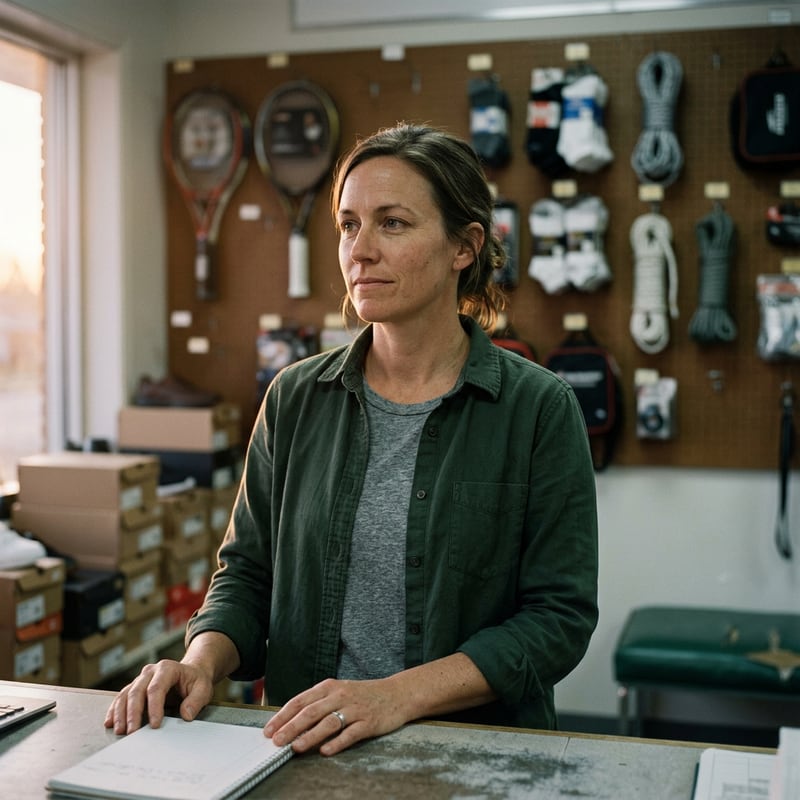
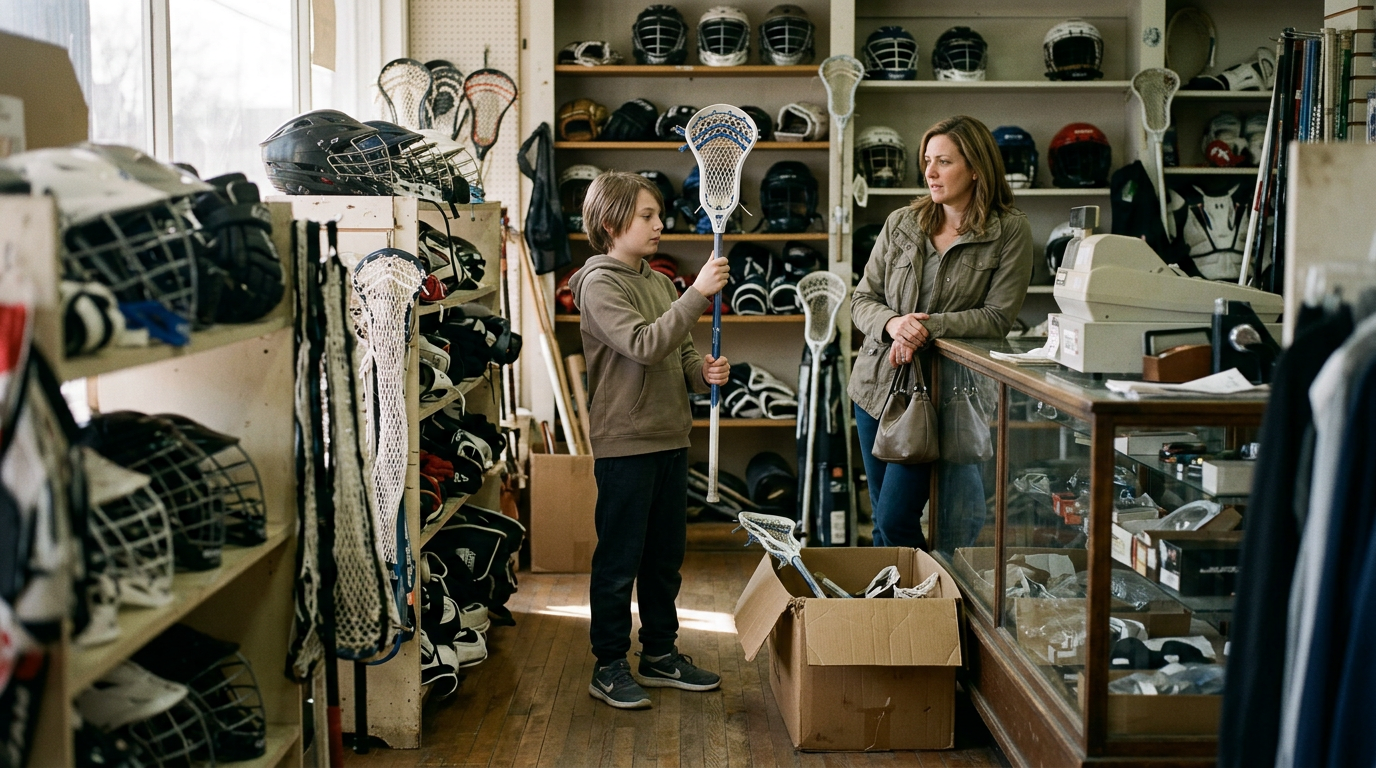
Picture a kid in a sports shop, turning over a wall of lacrosse sticks that all look roughly the same. Choosing a first stick is a lot like buying a first pair of cleats: the right one feels natural, and the wrong one makes every catch a chore.
A good beginner stick comes down to fit, not flash. In this guide, we’ll cover complete versus separate sticks, what each part does, how position and age shape your pick, what to spend, and how to care for it once it’s home.
Complete or Separate Lacrosse Sticks for Beginners
Lacrosse sticks come in two basic setups: complete sticks and separate parts. The right choice depends on how much stringing and assembly your player wants to handle.
Sticks that arrive ready to use
A complete stick is ready to use right out of the box. The pocket comes pre-strung, and the head and shaft arrive pre-assembled, so there’s nothing to set up before the first practice.
Think of a parent buying a first stick for a nine-year-old who just joined a rec team. They can grab it off the shelf and head straight to the backyard for throwing and catching.
That’s why complete sticks are ideal for beginners: they keep the focus on learning the game instead of fixing equipment.
Buying heads and shafts separately
Separate parts are better for progressing players who already know what they like. Heads arrive unstrung, so you’ll need a stringing kit or a shop to finish the pocket. That’s where you can customize the pocket to your preference.
Consider a middle schooler who has outgrown a starter stick but still likes the shaft. A new head, strung the way they want, keeps what works and changes what doesn’t.
Complete sticks are about convenience. Separate parts are about control.
Learning the head, shaft, and pocket
Before you buy, learn the three parts:
- Head: the frame at the top of the stick.
- Shaft: the long piece you hold, also called the handle.
- Pocket: the netting strung inside the head that cradles the ball.
Shafts come in different materials, grips, and lengths, so don’t treat the shaft as an afterthought. Buy for the player in front of you, not the one you hope they’ll be next season.
What Each Stick Part and Feature Does
Every stick is a set of parts, and each one changes how it plays. Here’s what the main pieces do.
How shaft material changes weight and feel
The shaft is the long handle, and its material changes more than the price tag. The two common options split like this:
- Metal alloy: affordable and durable, which matters when a first stick gets tossed in a bag and left in the car.
- Carbon fiber: lighter and more flexible, which changes how the stick feels in your hands.
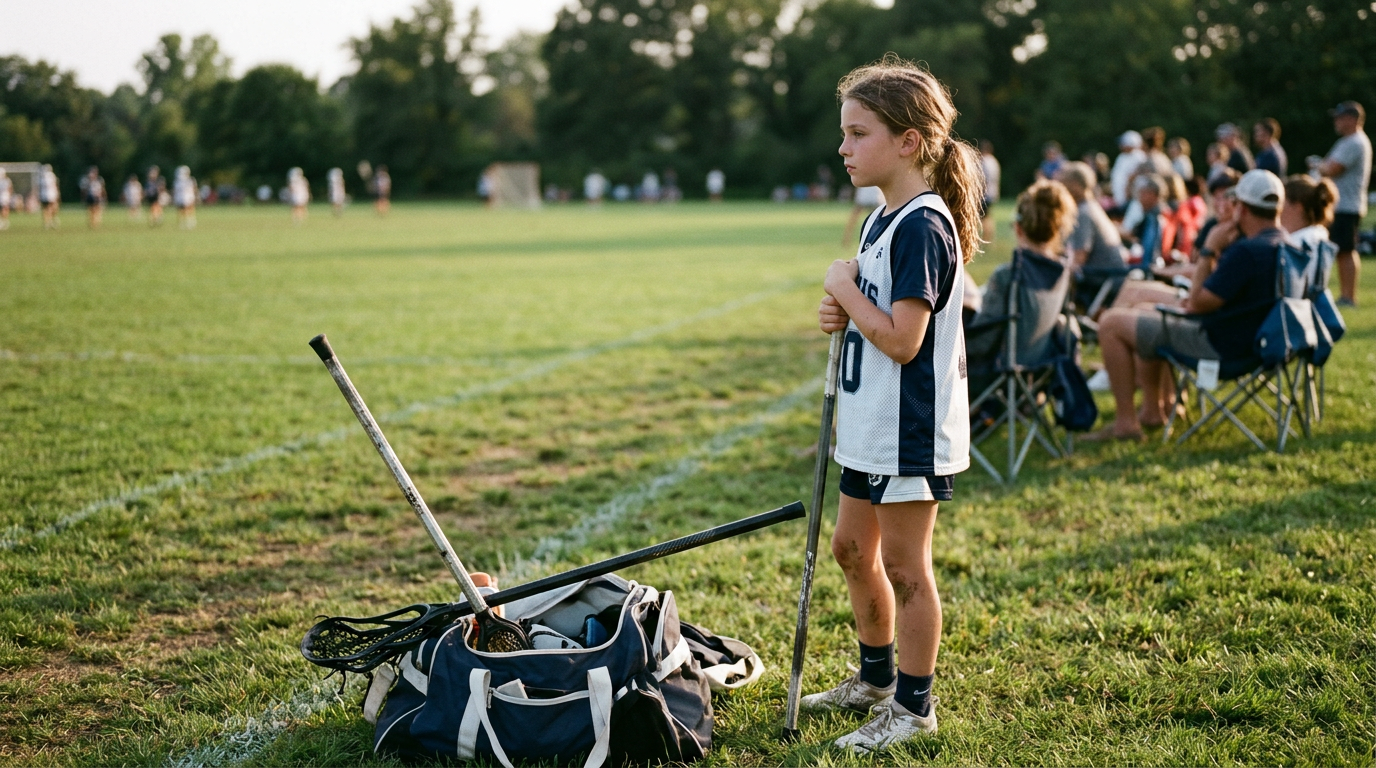
Consider a 10-year-old who fades in the second half of Saturday’s game. A lighter carbon shaft means less weight at the end of her arm, so she can keep her stick up when it counts. Lighter isn’t automatically better, though.
Weight, durability and feel all shift with the material, so you want to match the shaft to the player rather than chase the lightest option.
Stiff or flexible heads by role
The head is the part at the end of the shaft that holds the pocket, the mesh where the ball sits. Stiff heads suit defense, while flexible heads suit offense.
Head flex influences precision and control, so the role your player fills should steer the choice more than the brand name.
Pocket depth and mesh types
Pocket depth affects cradling, the rocking motion that keeps the ball secure while you run. Mesh comes in soft and semi-hard options, and each one feels different in the hand. Pre-strung pockets arrive ready to play, which saves a trip to a stringer.
The pocket that looks best in the store isn’t always the one that holds the ball best. Picture a first-season player who keeps dropping the ball on every cradle.
A pocket with the right depth gives them a better shot at keeping it, and a pre-strung stick means the first practice starts with gear that’s ready to go.
Beginner head shapes for catching and throwing
Head shapes fall into two groups for a new player:
- Beginner heads: designed to aid catching and throwing.
- Advanced pinched heads: harder to use, so they’re better saved for later.
Master basic skills first. The harder shapes will still be waiting when your player is ready, so there’s no rush.
Match Your Stick to Position and Age
Before you pick a stick, check your league’s stick rules, then match it to where your player lines up and how tall they are.
Sticks built for each position
Each position gets a stick built around its job:
- Attack and midfield: the shorter stick for players who handle the ball and shoot.
- Defense and long-stick middie: a longer stick built for defensive play.
- Goalie: a stick built for stopping shots.
- Box lacrosse: if your league plays box, ask for box-specific options rather than the outdoor stick you’d buy for the field.
Stick length for each position
Stick length follows position. Attack and midfield sticks sit at about 30 inches, defense sticks run about 60 inches, and goalie sticks are the flexible case, anywhere from 30 to 60 inches.
Attack sticks run shorter than defense sticks, so don’t assume one stick covers every spot.
Finding the right youth or adult size
Size by height, then allow room to grow.
- Youth and junior models: sized for younger players, so check the label against your player’s height.
- Adult and senior models: sized for full-grown players. Women’s and men’s sticks aren’t always interchangeable, so match the stick to the game being played.
- Sizing help: if you’re between sizes, contact the manufacturer or the shop’s staff before you check out.
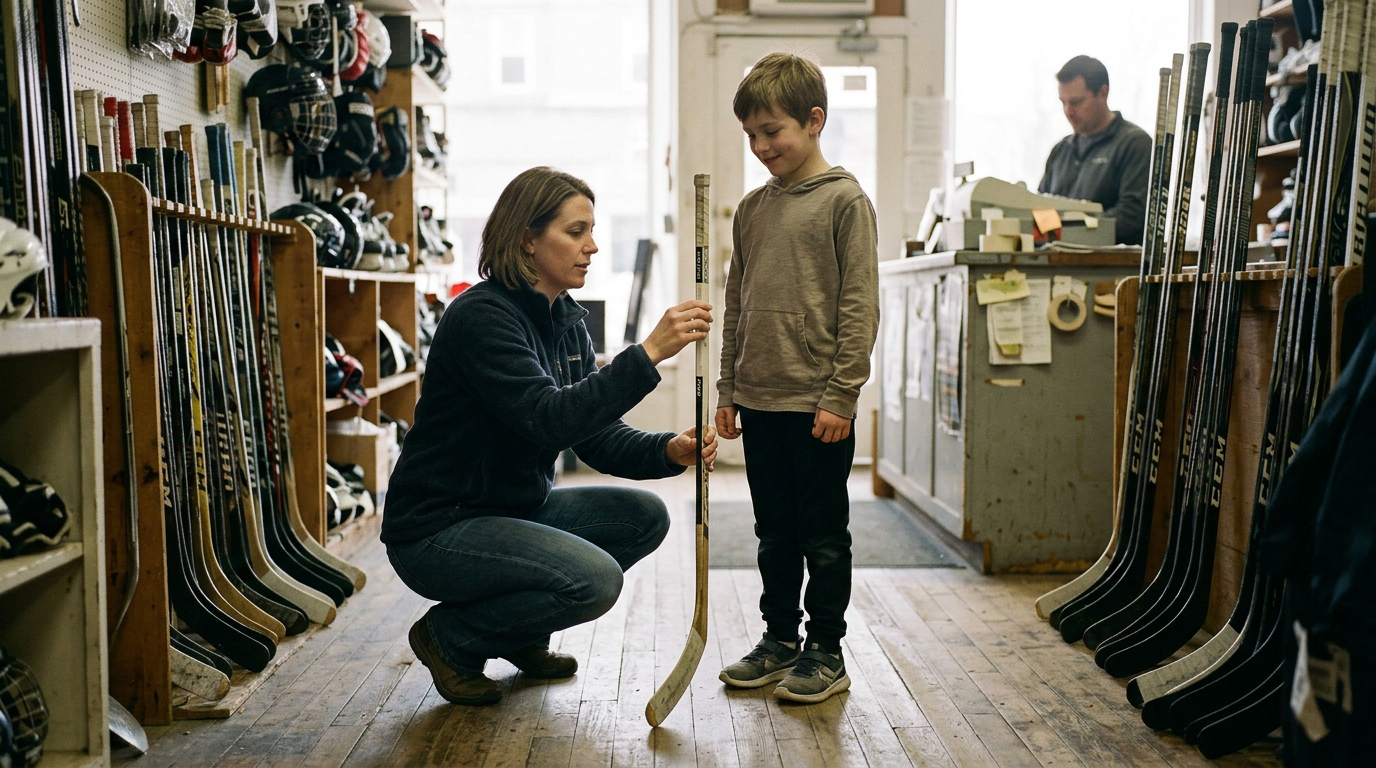
Think of a parent buying a first stick for a 10-year-old who’s grown since last season. Sized to their height now, with a little room to spare, the stick works all spring instead of feeling wrong by the third game. Fit beats brand.
How Much to Spend on a Stick
Lacrosse stick prices stretch from modest starter models to top-shelf sticks. Here’s where they land and how we’d keep the spend sensible.
Typical prices for beginner sticks
Most beginner sticks cost $40 to $100 and come strung, so they’re ready to play out of the box. Custom alloy sticks near $200 are a step up most new players don’t need. Remember that helmet, gloves, and other protective gear need budget room too.
Budget, mid-range, and premium complete sticks
Complete sticks come with the head and shaft already joined, and they fall into three tiers:
- Entry models around $50 cover the basics for a young player.
- Mid-range sticks at $100 to $130 make a sensible next step once your player is committed.
- Premium sticks at $150 to $250 suit players who already know their position and style, so most beginners can skip them.
Ways to avoid spending too much
Consider a parent buying a first stick for a nine-year-old on the spring rec team. They lean on a few habits:
- Advanced sticks don’t speed learning. Progress comes from practice rather than price.
- Marketing pushes costly models. Premium gear gets the best shelf space and loudest ads, which can make it look essential. It usually isn’t.
- Shop online without your child in tow. Compare models from home, then confirm the length suits your child before you buy.
- Buy used or borrow for the first season. A gently used stick or club loaner gets your player on the field for less.
Before buying, ask your club or coach for an equipment list so you pay for what the season requires and nothing more. That parent ended up with a basic stick and a helmet that fits, and the household budget survived the season.
Popular Brands and Starter Models
Lacrosse stick shelves can look like a wall of logos, so it helps to know which names you’ll see most and which models suit a beginner.
The biggest stick brands to know
These are the names you’ll run into most often while you shop:
- STX, Maverik, and Warrior
- StringKing, Nike, and Brine
- Epoch and ECD
Think of a parent buying a first stick for a nine-year-old. Several of these names will likely show up in the same store or listing, but the question isn’t which logo looks coolest. It’s what fits your kid’s height and how they play. Fit beats brand.
Starter and youth models worth a look
Here’s what to look at:
- Starter and junior sticks built for players still learning the basics
- Alloy-shaft entry models that use a metal shaft and give beginners an affordable place to start
- Youth models like the Warrior Burn Jr, sized for younger players
Consider a ten-year-old who just picked up the game. A junior model lets her practice catching and cradling (keeping the ball secure in the pocket) without wrestling a stick built for an older player.
If she outgrows it, you haven’t sunk money into a top-end stick she’d barely use. A stick that fits now usually beats a premium one that fits someday.
Why no single brand is recommended
We won’t name one brand as the answer for every beginner, because the right stick depends on position, size and budget. Colors and graphics are a real draw for kids, and that’s fine.
If the stick is the right length and weight, a kid who’s excited to carry it to practice is a good sign.
Caring for and Setting up Your Stick
A few simple habits now will keep your new stick playing well all season.
Adding tape and a stopper
Tape is personal preference, so wrap the handle however it feels best. Focus on feel rather than looks: some players want a thick, tacky grip, others a thin one.
Next, tape the stopper to the shaft so it can’t slip. It’s the piece at the end of the shaft that keeps your hands from sliding off. Then write the player’s name on the stick.
Consider a ten-year-old who keeps bringing home a teammate’s stick because they all look alike. One name on the shaft, and she grabs her own every time.
Cleaning, storing, and stringing your stick
Keep your stick clean and indoors when it’s not in use. Picture a parent who leaves a muddy stick in the car after a rainy game. Wipe it down and bring it inside, and it’s ready for the next one.
Also, learn to string the pocket, the netting that holds the ball. Ask a coach or shop staffer to walk you through stringing a head, then try it yourself so a snapped string doesn’t cost you a game.
Practicing outside to build skills
Practice outdoors whenever you can. Wind, uneven grass and a bouncing ball teach your hands more than a living room ever will.
A middle schooler who only throws against the garage door gets comfortable fast, but a backyard session with a friend shooting at them sharpens their catching. Get outside, because reps win.
A beginner stick doesn’t have to be the fanciest one on the wall. Start with one that matches your player’s position and age, has a head they can catch and throw with, and fits the budget without skimping on the basics.
Check the fit in hand, leave a little room to grow, and skip features they won’t use yet. Keep it clean and in good shape, and it’ll be ready for every practice and game.
When the fit is right, the stick disappears in your player’s hands, and all that’s left is the game.
Find your level
The Counter