Padel Sport Explained: Rules, Gear, and How to Play
Padel sport keeps rallies alive with playable walls. Get the rules, court and gear basics, plus clear comparisons with tennis and pickleball to start.
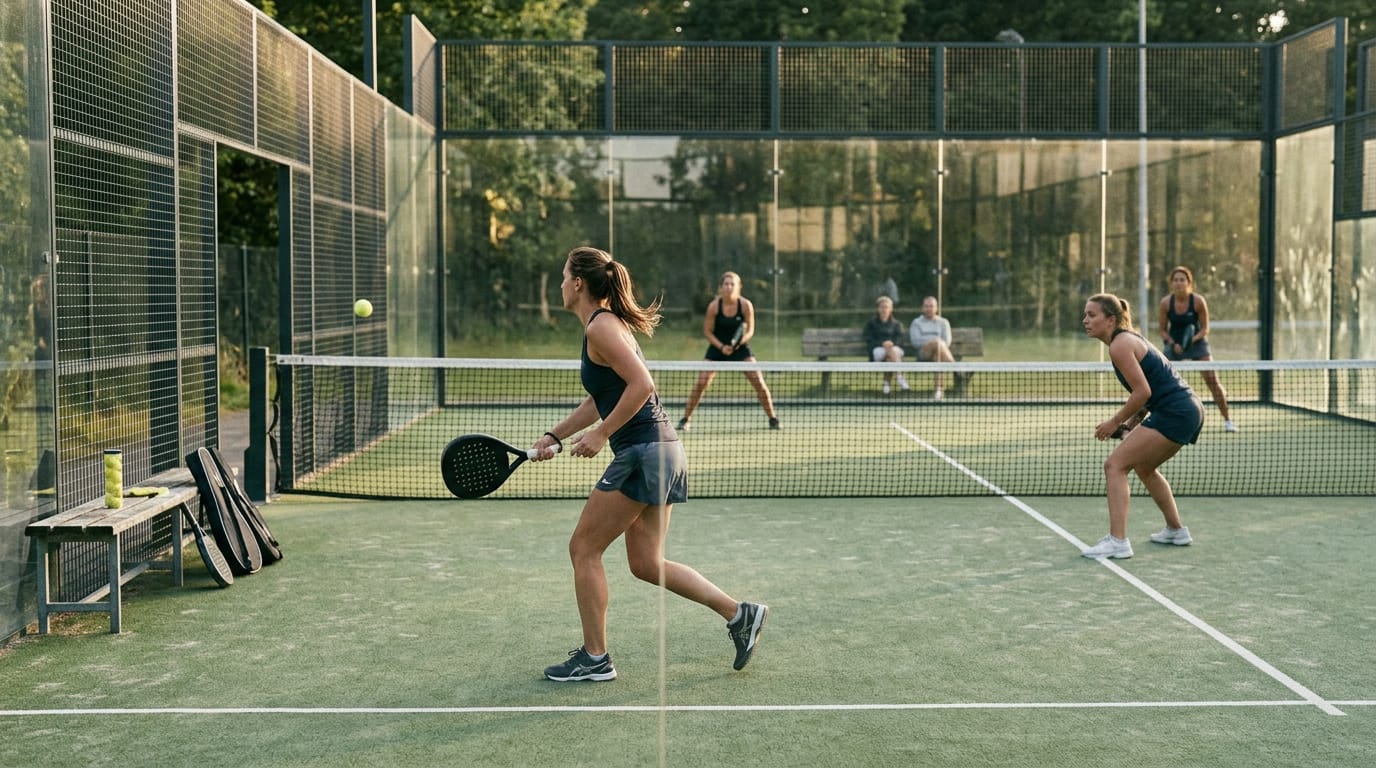
If you’ve ever bounced a ball off a garage wall on a lazy afternoon, you already have a feel for the basic idea behind padel. The walls stay in play, so rallies keep going long after a tennis ball would have sailed out of bounds.
Padel is a doubles racket sport played on a small, enclosed court with solid paddles instead of strings. The basics are easier to pick up than you’d expect.
In this post, we’ll cover the rules, the court and gear, how padel stacks up against tennis and pickleball, and what to buy at each level.
Padel Sport Rules and How to Play
Padel looks complicated from the glass, but the rules are simpler than the court suggests. Here’s how a match actually runs, from where players stand to how a point ends.
Who plays and where they stand
Padel is primarily played in doubles, so you’ll share the court with a partner against two opponents. Each point starts with the server behind the baseline, while the receiver stands diagonally opposite.
Levels in padel come down to consistency: how reliably you keep rallies going and where you place the ball, not how hard you hit it. Consider a tennis player who joins a friend for a Saturday morning session.
Her groundstrokes are strong, but her first rallies stall until she learns to let the ball come back off the glass. Two sessions later, she’s the one keeping points alive.
How points and sets are counted
Scoring follows tennis, so if you know that game, you already know the basics:
- Points go 15, 30, 40, just like tennis.
- At 40-all, one decisive point settles the game.
- A match is played as a best of three sets.
- You need a two-game lead to win each set.
The real difference is where the points happen, not how they’re counted.
Serving the ball the right way
The serve is underhand and must be struck below the waist. You get two attempts, and the ball must bounce before you hit it. It has to land in the opposite service box.
For example, a parent who’s never played lines up a first serve at a club court. She keeps the swing low, lets the ball bounce, and gets it into the opposite box on her first try. The goal is control, not speed. Keep it simple.
Playing off the walls in rallies
The walls are part of the game, not a hazard. Here’s how rallies work:
- Volleys (hitting the ball before it bounces) are allowed, except on the return of serve.
- The ball gets one bounce on the ground before you return it.
- Walls and fences are in play, and the ball can be played off them.
- A second bounce on the ground loses the point.
So, is padel tennis difficult? Less than it looks. The scoring matches tennis and the serve is underhand, so the real adjustment is the walls. Learn the walls, and the rest falls into place. If words like scoring and service box are new to you, a guide to tennis terms in plain English can help.
Court, Gear and the Tech Behind It
Padel gear is simple, but a few choices shape how the game feels. Here’s the court first, then what goes in your bag.
How the court is built
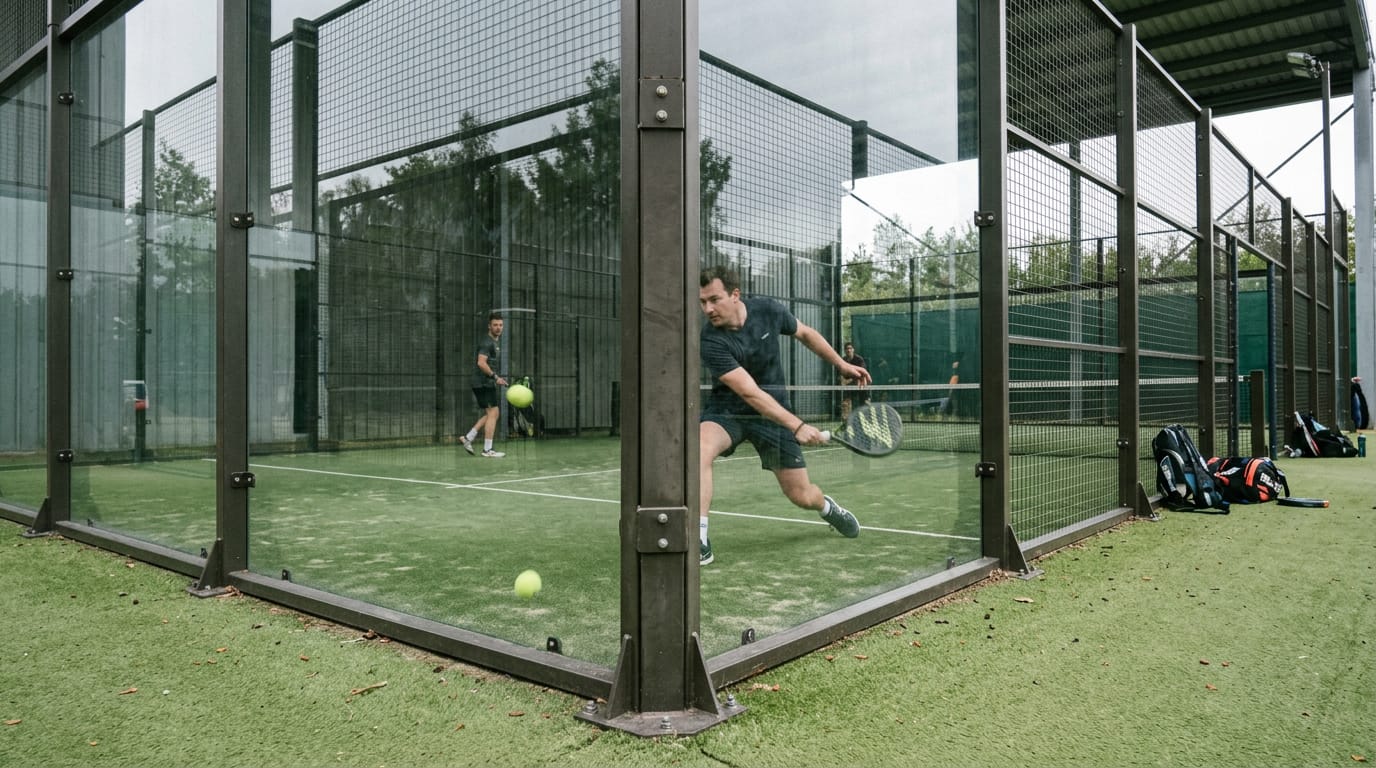
A padel court measures 10m by 20m and is enclosed by glass or concrete walls. Wire fencing and sharp corners are part of the design, so expect the ball to come off them during play.
Court surfaces vary in material, so ask what you’re stepping onto before you book. Some venues feature the Crystal Palace glass court, so check which setup your local club uses.
Rackets and balls, then and now
Is a paddle different from a padel? Yes: padel is the sport, and the paddle is the racket you play it with. Paddle rackets are solid and stringless, with perforated faces that have holes instead of strings.
They’re lighter and shorter than tennis rackets, and the balls are smaller and less bouncy. Gear has moved from wood to carbon, and signature models are built for a pro’s game.
Shape, weight and balance all change how a racket feels, so choose by feel rather than brand. Ask the shop for demo rackets before you buy. Think of a weekend player who swings three of them in a row and notices one feels like an extension of her arm.
That’s the one she takes home. Swing before you pay.
What beginners need to get started
Your beginner starter kit checklist is short:
- Padel rackets and balls: one racket and a set of balls to start.
- Bags: a place to keep everything together between courts.
- Padel shoes for grip: court grip keeps you steady on quick turns.
- Beginner guides: read one before your first session.
Why More People Take up Padel
Padel draws a wide crowd for three reasons: it’s easy to start, it suits almost any age, and the rallies keep you engaged.
Easy to pick up at any level
Padel welcomes all ages and skill levels. The smaller court makes it easy to start, since there’s less ground to cover, and the rules are simple, so you spend your time playing, not studying.
The game adapts to your level: newcomers rally at an easy pace while experienced players push the tempo. Think of a parent who has never held a racket, joining two friends for a weeknight doubles game and trading shots before the first set ends.
Is padel good for seniors?
Yes, it’s a strong fit for older players. It’s usually played as doubles, so you’re chatting with a partner between points and it feels more like a meetup than a workout.
As Thomas explains in a National Geographic feature, doubles means less distance to cover and often less heavy lateral movement, so it can feel a bit kinder on the joints. A weekly game also builds healthy active habits.
Parents, grandparents and teens can share a court, and a growing community means more people to play with. Consider a retired teacher who joins a Tuesday doubles group for the game and the conversation, and keeps showing up for both.
Quick rallies and smart wall tactics
The walls are part of the game, and that changes how points unfold. Rapid exchanges keep the pace high, while long, varied rallies keep you adjusting with every shot. Creative wall strategy is less about hitting harder and more about placement.
Picture a club player who lobs the ball off the back wall to reset a rally and force an opponent to scramble. Every rally is different, and that mix gives padel a playing feel you won’t find in most racket sports.
How Padel Compares to Other Racket Games
Padel borrows pieces from tennis and squash, so parts of it will feel familiar. People weighing pickleball often ask which is harder. Neither wins outright: padel asks more of your wall reading, while pickleball asks more of your touch at the net. Anyone weighing pickleball should first learn the pickleball rules, from serve to scoring.
How padel differs from tennis
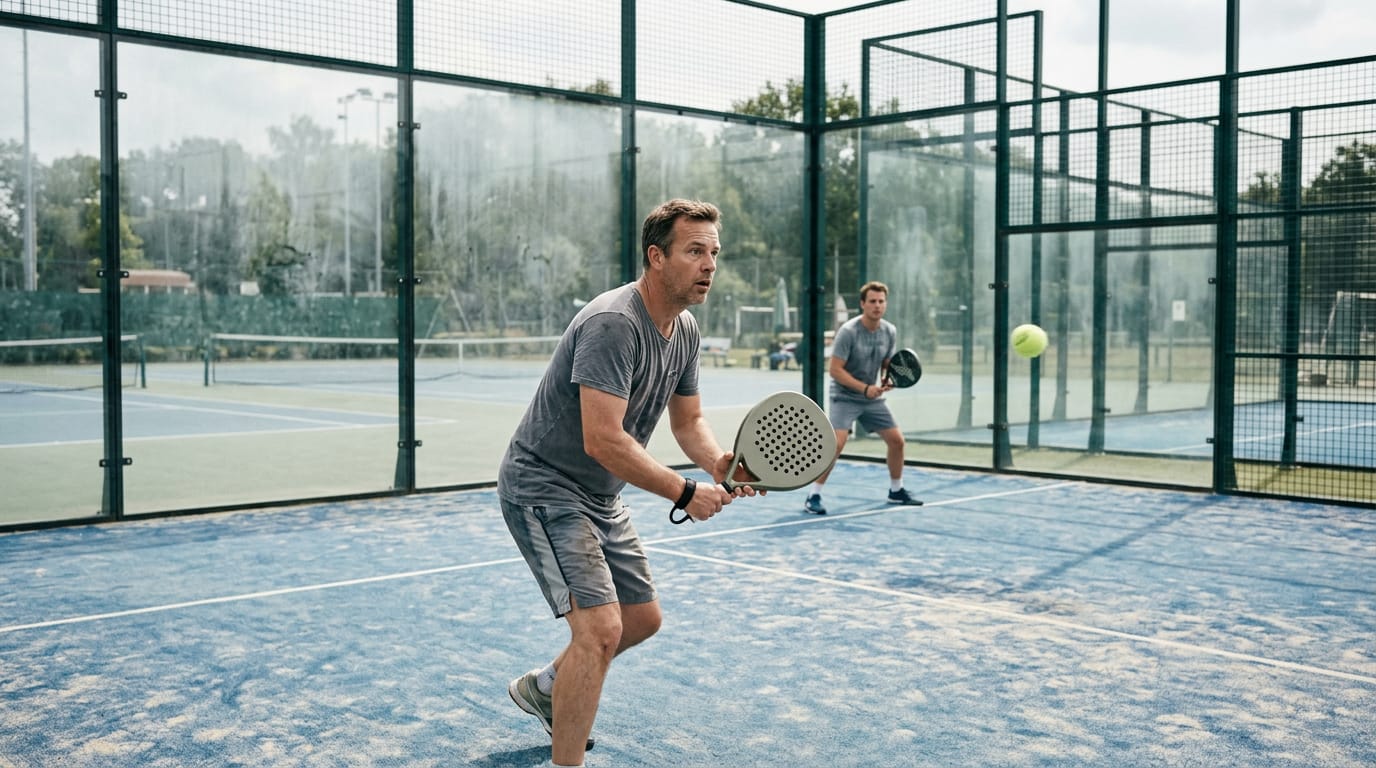
Padel is played on a smaller, enclosed court, so the ball stays inside the walls. Its stringless rackets have no string bed to tension or replace, though the feel takes some getting used to.
Tennis offers no wall rebounds. In padel, the walls are part of the rally.
Padel is a doubles game at its core. Tennis can be singles or doubles, so if you’re used to one-on-one, expect to share the court.
Think of a weekend tennis player who swings for the fences in padel and keeps losing rallies. Once they start placing the ball and letting the walls work, they start winning points. Padel rewards strategy over power. Power alone won’t carry you.
Here’s how we’d compare them:
| Feature | Tennis | Padel |
|---|---|---|
| Court | Larger, open | Smaller, enclosed |
| Racket | Strung | Stringless |
| Walls | No wall rebounds | Walls in play |
| Format | Singles or doubles | Doubles |
| Main focus | Power | Strategy |
Walls and bounces compared to squash
Squash is the closest comparison, since walls surround the court in both games. Padel adds one twist: the ball has to make a floor bounce before it can be played off a wall.
Think of a squash player on a Saturday doubles team who swings too early, before the bounce sets up the wall shot. Once they learn to wait, the wall becomes a teammate.
Where Padel Came from and Who Made It
Padel’s story runs through three countries before it reaches today’s clubs.
How the game started in Mexico
In 1962, Enrique Corcuera built the first version on his estate in Acapulco, Mexico. According to a systematic review of padel in Spain, he put walls along the back and sides of a 20x10 court with a central net.
The result was a fronton-style court, walled in and split by a net. It borrowed ideas from tennis, squash and badminton, so a racket player will recognize plenty of it.
You’ll hear a looser story about a ball bouncing off a wall. The account we’re working from credits a deliberate build, not an accident. Padel started on purpose.
How Prince Alfonso brought it to Spain
Prince Alfonso of Hohenlohe, a friend of Corcuera, brought the game to Spain in 1974, according to a review of padel’s history in Spain. The first courts at the Marbella Club used wire fencing along the sides, and players changed sides during play.
Then pro-am celebrity tournaments, where pros and celebrities play alongside amateurs, put the game in front of a wider crowd.
How it spread through Argentina and beyond
According to a study on competitive padel for players aged 6 to 12, Argentine millionaire Julio Menditeguy, a friend of Alfonso de Hohenlohe, decided to import the game in 1975 after a visit to Marbella.
Today Argentina ranks padel as its second most popular sport, with courts also in Brazil, Uruguay, the United States and across Europe.
Think of a weekend player who books an hour with three friends. Four players on one court is what makes padel so social, and it’s why families, friends and newcomers can all jump in.
Who Governs Padel and the Pro Circuit
Padel’s rulebook, professional tours and championships were built up in stages. Here’s who runs each piece, so you’ll recognize the names you hear on broadcasts and around your club.
The bodies that run the game
Governance comes from international, national and country-level groups:
- International Padel Federation (FIP): formed in 1991 in Madrid to build an international circuit and a common rulebook, according to a Spanish-language study of professional padel players.
- National associations: Argentina, Spain and Mexico each run their own.
- British Padel Federation: dates to 2011.
- LTA padel alliance: the Lawn Tennis Association (LTA) launched its padel alliance in 2019.
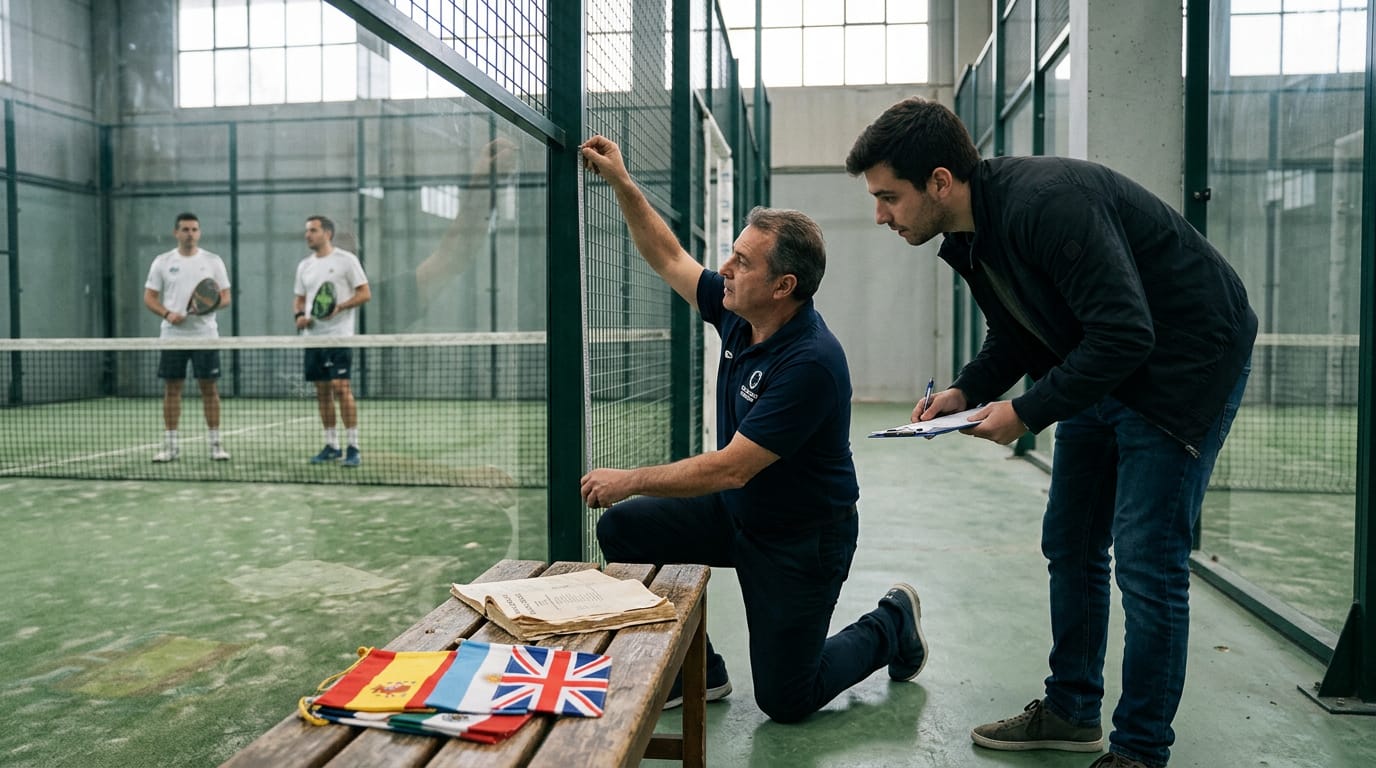
- Unified rules: by 1997 the rules were unified in Barcelona, and as the book chapter Environmental Sustainability in a Fast-Emerging Sport notes, all courts must share the same fence height.
How the professional tours took shape
A Spanish-language padel source dates the Padel Pro Tour, the first professional circuit, to 2005, and the World Padel Tour to 2013, when it became the sport’s main professional competition.
The FIP has also recognized these tours. Their following has been mostly Hispanic. Think of a weekend player who starts in a local club league, then follows the tour on her phone to see which shots the pros use.
Watching those shots gives her a clear target for her next practice session.
Championships and which nations lead them
According to iPadel Ltd’s history of the sport, the first World Padel Championship was held in Madrid in 1992, with the finals played at Expo 92 in Seville. Argentina and Spain stand out as the nations that lead the championships.
Junior championships are part of the picture too. Consider a parent whose 14-year-old is entered in a junior event: the racket and shoes have to hold up through a full tournament weekend.
European and North American championships add to the map, and the number of participating nations keeps growing.
The push for an Olympic spot
Padel’s supporters hope the sport will one day earn a place at the Olympics. Getting there takes official recognition, and the push for it has already raised padel’s global visibility, which helps everyone from club organizers to shop owners.
For a new player, the rules matter more than the names on the letterhead. Same fence height, wherever you play.
How Padel Has Grown Around the World
We’ll take padel’s growth one stage at a time, from its roots in Spain to the courts opening in your own province.
Key milestones in its global spread
Spanish clubs expanded through the 1990s, and the sport then spread across Europe and Latin America, with adoption following in Asia and North America. It’s less about where padel started and more about how it kept traveling.
Today it’s played in over 100 countries. A recent count from the International Padel Federation (FIP) puts it at 191 countries and territories, 21 more than the previous report.
How padel took off in the UK
The UK story starts small. The Padel Paper reports that in April 2011, two outdoor canopied courts at Huddersfield Lawn Tennis & Squash Club were among the first publicly available padel courts in the UK. It’s a humble start.
The UK picture also includes David Lloyd Leisure, the iPadel promotion and a London event on the World Padel Tour (WPT).
Where to find courts in Canada
Think of a weekend player in Montreal who hears about padel from a coworker. She checks a club’s booking page, reserves a Saturday court and shows up with a partner for her first match. By Sunday she’s already planning a rematch.
Club openings are growing, so start with the listings for your province:
- Ontario: search by city to find the closest court
- Quebec: compare court times on club websites before you drive over
- British Columbia (BC): check booking pages for weekend availability
How TV and social media boosted it
Television (TV) coverage plays a big role here. The glass walls that frame many padel courts make the action easy to film and easy to follow on screen, so televised matches draw in first-time viewers.
Social media and streaming then push short rally clips to people who may never have heard of the sport. Press coverage of events adds another layer, giving casual fans a reason to look up a court near them.
Watching a rally is one thing. Booking a court is what turns a fan into a player.
Padel makes more sense once you see how the pieces fit together. The walls, the solid paddles and the doubles format all shape a game built on rallies and positioning.
When you’re choosing gear, match it to where you are now, not where you hope to be. A paddle that suits your current level feels better in your hand and keeps you enjoying the game from your first match.
Pick the right gear, step onto the court, and let the walls do some of the work.
References
- Environmental Sustainability in a Fast-Emerging Sport — doi.org (2023)
- Factores de rendimiento deportivo del jugador de pádel profesional — hdl.handle.net (2017)
- MyPádel: aplicación android sobre el ámbito del pádel — oa.upm.es (2018)
- Revisión sistemática de las características e incidencia del pádel en España* — redalyc.org
- Revisión sistemática de las características e incidencia del pádel en España* — redalyc.org
- Promoción del pádel de competición desde las primeras etapas deportivas (6-12 años): un proyecto de intervención (Promotion of competitive paddle since the first sportive stages (6-12 years old): an intervention project) — doi.org (2008)
- It’s coming home! Padel to return to its UK birthplace in Huddersfield — thepadelpaper.com (2025)
- History Of Padel — ipadel.co.uk
- FIP report counts more than 40 million padel players and 91,000 courts — courtelier.com (2026)
- Why padel is a strangely effective workout for both brain and body — nationalgeographic.com (2026)
Questions
What is the layout of a padel court?
A padel court is 10 metres by 20 metres and enclosed by glass or concrete walls, with wire fencing also forming part of the enclosure. It is divided by a net, and the walls and fencing keep the ball in play during rallies.
What are the benefits of playing padel?
Padel is easy to learn, suits a wide range of ages and skill levels, and encourages social play because it is usually played in doubles. Its lively rallies offer physical activity, while the walls add variety and reward strategy and ball placement.
How do levels work in padel?
Padel levels are generally judged by consistency: how reliably you keep rallies going and place the ball, rather than how hard you hit. Beginners can play at an easy pace, while more experienced players can increase the tempo and use more advanced tactics.
What sport is padel in English?
Padel is called padel in English; it is not simply the English word for another sport. It is a racket sport that combines elements of tennis and squash, played in doubles on an enclosed court.
Is padel good for seniors?
Yes. Padel can suit seniors because doubles means less distance to cover and can involve less heavy lateral movement than some other sports. It also offers social interaction and a way to build regular activity, though players should choose a pace and level that fit their fitness and health.
Which one is harder, pickleball or padel?
Neither is harder overall: they challenge players in different ways. Padel requires reading wall rebounds and managing longer rallies, while pickleball places more emphasis on touch and control near the net.
Is a paddle different from a padel?
Yes. Padel is the sport, while a paddle, also called a padel racket, is the solid, stringless equipment used to play it. Padel rackets have perforated faces and are generally lighter and shorter than tennis rackets.
What equipment do you need for padel?
You need a padel racket, padel balls and court shoes with suitable grip. A bag is useful for carrying your gear, and a beginner guide can help you learn the rules before your first session.
Sources
- Revisión sistemática de las características e incidencia del pádel en España*, redalyc.org
- Revisión sistemática de las características e incidencia del pádel en España*, redalyc.org
- Promoción del pádel de competición desde las primeras etapas deportivas (6-12 años): un proyecto de intervención (Promotion of competitive paddle since the, doi.org,
- Factores de rendimiento deportivo del jugador de pádel profesional, hdl.handle.net,
- Environmental Sustainability in a Fast-Emerging Sport, doi.org,
- MyPádel: aplicación android sobre el ámbito del pádel, oa.upm.es,
- History Of Padel | iPadel Ltd, ipadel.co.uk
- FIP report counts more than 40 million padel players and 91,000 courts, courtelier.com,
- It's coming home! Padel to return to its UK birthplace in Huddersfield - The Padel Paper, thepadelpaper.com,
- Why padel is a strangely effective workout for both brain and body | National Geographic, nationalgeographic.com,
Find your level
The Counter