Electricity from a Bike: How It Works and What It Powers
Electricity from a bike can charge a phone or light a trail. See expected power, devices it can run, and what DIY builds or ready-made kits cost.

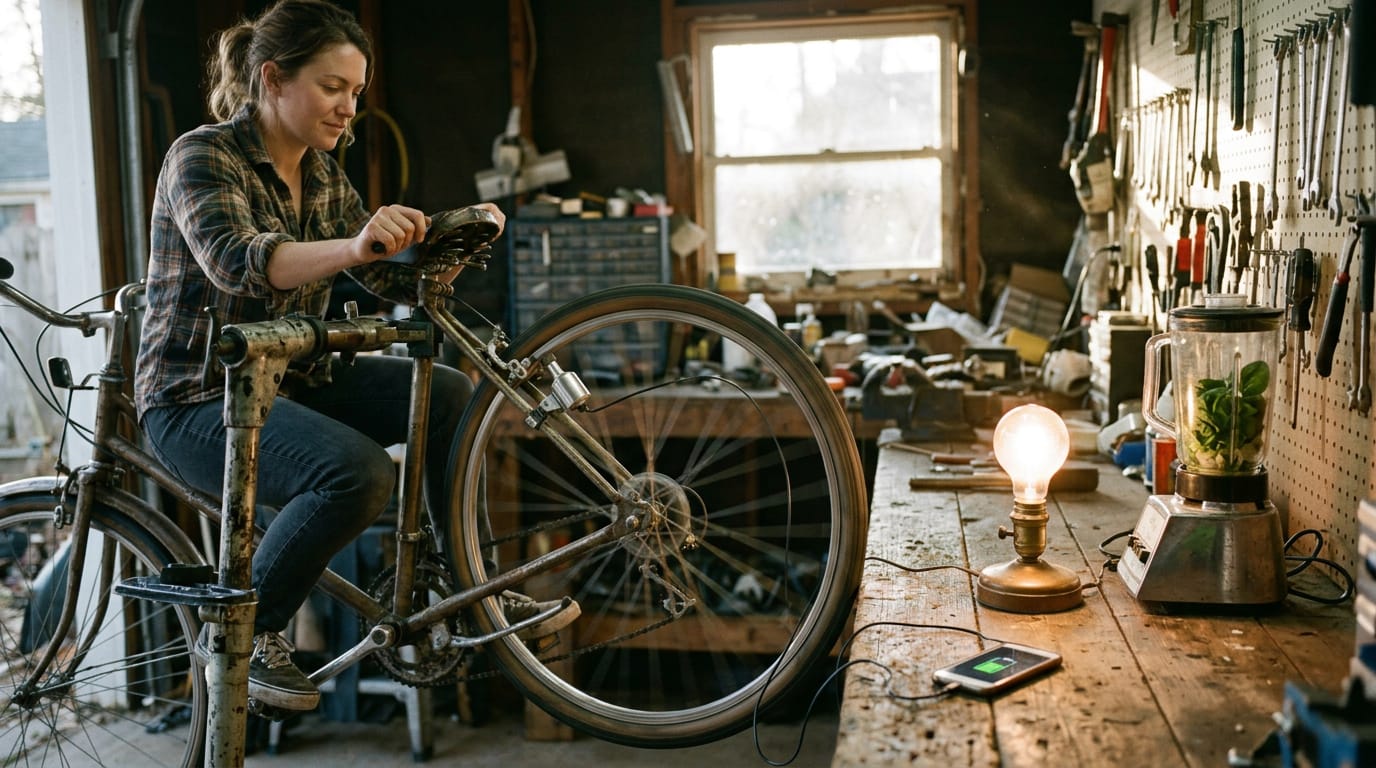
Think about the last time your phone died halfway through a long ride, or a headlamp dimmed on a dark trail. Your bike can help with that.
A bike generator is a setup that turns your pedaling into electricity, so the effort in the crank can charge a device or run a small light.
Whether you’re a weekend rider wanting a backup power source or a parent looking for a hands-on project, there’s a setup that fits.
Here’s what we’ll cover: how these generators work, how much power to expect, what they can run, and whether to build or buy.
Ways to Get Electricity from a Bike
Your bike can make electricity once a generator connects to a moving wheel or pedal.
Are there stationary bikes that make electricity?
Yes. Stationary bikes can power a phone or fan. Here’s the lineup:
- Bottle dynamo: mounts to the frame and rubs the tire to power a light.
- Hub dynamo: sits inside the front wheel hub, away from the tire.
- Pedal-powered generators: standalone units you turn by hand or pedal.
- Stationary exercise bike generators: units fitted to a fixed bike, so workouts make power.
- Roller dynamo on the rear wheel: a roller that turns with the rear tire.
Think of a gravel rider who wants lights without battery swaps: a hub dynamo keeps them on for the whole ride.
How the generator turns motion into current
A generator is a motor run in reverse. The spinning rotor (the moving part) carries magnets past fixed coils, called the stator. That motion triggers electromagnetic induction, pushing current through the wires.
Your legs supply mechanical energy, and the generator makes it electrical.
Output follows two rules: voltage tracks speed, and current tracks effort. Ease off, and your light dims.
Choosing a generator and its drive setup
- Brushed permanent magnet DC motor: it’s a simple design that outputs direct current (DC).
- Low no-load RPM: pick a unit with low no-load revolutions per minute (RPM), so it makes power at an easy pace.
- Friction drive with spindle: a small shaft, the spindle, presses the tire to spin the generator.
- Flywheel smooths pedaling: a heavy spinning disc keeps the generator turning between strokes.
- Gear ratio and spindle calculation: the ratio sets generator speed, so size the spindle for your normal cadence (pedaling rate).
Size it for the speed you ride, not the speed you wish you rode.
Power Output and How Efficient It Is
Before you pick a setup, know what your legs can realistically produce, since that caps everything else. Here’s what the figures show.
How many watts can a person generate?
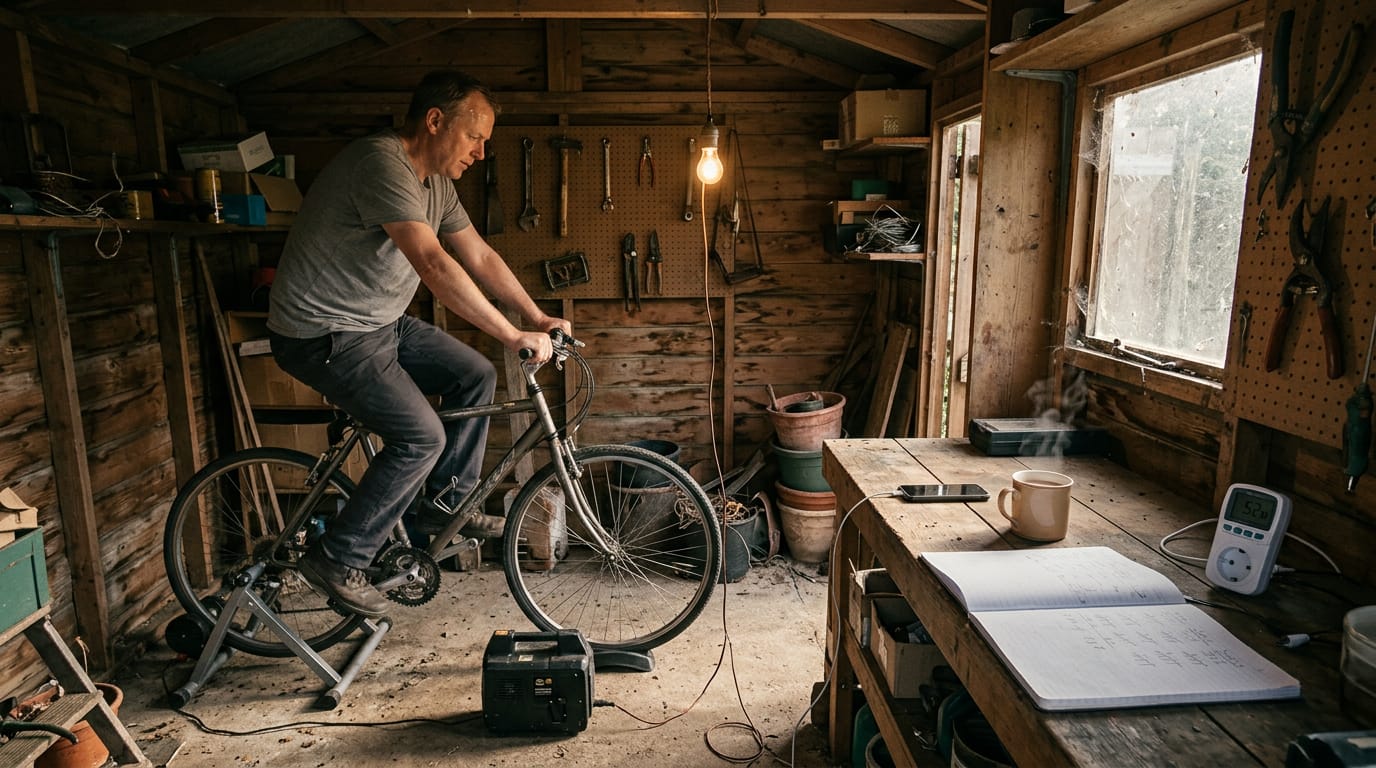
A dynamo for a bike light makes 3–6 W, while pedal systems run far higher, commonly 50–200 W. A review of pedal generators reports that some commercial units advertise up to 300 W.
So how many watts can a human generate on a bike? Plan for sustained output, not peak: a documented household build on Survipedia measured 45–75 W you can hold steadily, with about 100 W possible only in short, heavy efforts.
Match output to fitness: a paper on electric generators for wind or human power notes the maximum depends on athletic ability and training. Cost per kilowatt-hour is hard to pin down, but a steady 60 W takes roughly 17 hours of pedaling to make one.
Where energy gets lost along the way
Generator efficiency shifts with load, and a friction drive (a roller pressing on your tire) leaks power before the generator sees it. Cleaning your drivetrain (the chain and gears) doubled output.
Storage adds charge/discharge losses, so direct use beats stored use. Every handoff costs you something.
Voltage and current ratings to check
Check these three specs:
- Variable DC (direct current) voltage range: the span the generator outputs.
- Sustained current ratings: the amps it can hold over time, not a brief peak.
- Voltage matching: confirm the output fits what your device accepts.
A weekend rider charging a phone on a long gravel loop needs output inside the phone’s range, or it won’t charge however hard you pedal.
Devices You Can Power or Charge
Pedal power can run more than a headlight, but not every device is a good match. Here’s what works and where we see things get tricky.
Can a stationary bike charge my phone?
Yes, a stationary bike with a generator and a USB output can charge a phone. Picture a weekend rider who wants a trail map on her phone: a few minutes of easy spinning before setting off keeps it running.
Other easy jobs include:
- Bike lights: they run straight off the generator.
- GPS devices: they need similar easy pedaling.
- Emergency lighting and TV: lights for a power cut, plus a small TV if you don’t mind pedaling.
Charging batteries and e-bikes
Charging a lead-acid battery, the heavy, traditional kind, takes far more energy than a phone. Pedaling can also top up part of an e-bike battery. Think of it as a way to extend your range, not a replacement for the wall charger.
So does an e-bike use more electricity? Yes. Its battery holds far more energy than a phone’s, so a full charge from the wall draws much more electricity.
A blocking diode is a one-way valve for electricity, so charge can’t flow back into the generator. Add a fuse, a safety cutoff that breaks the circuit if something draws too much. Don’t skip either one.
Household appliances and power tools
Some loads are a better match than others:
- Electric kettle: it heats fast but pulls a heavy load all at once, so it’s a hard fit.
- Peltier refrigerator: a small cooler that moves heat with electric current, so it’s a more realistic target.
- Corded power tools: many draw heavy loads, so check the label before pedaling.
- Water pump, grinder, fan: a fan is gentle, but pumps and grinders surge when they start.
- Printer, sewing machine, stereo: usually lighter jobs that suit a steady pace.
Why matching power to devices is tricky
The real question isn’t how much power you make, but how steady it stays.
- Phone charging needs little power. Small devices are forgiving, so start there.
- Resistance too low or high. Too light, and voltage can climb; too heavy, and you pedal hard for little output.
- Variable demand devices. Kettles, pumps and tools change how much they pull, so output swings.
- Dimmers adjust pedal resistance. Turning one changes the load, so your pedaling feels heavier or lighter.
Your legs will tell you when you’ve asked too much. Start small.
Putting Together Your Own Bike Generator
Building your own setup suits anyone comfortable with basic tools who wants a system matched to how they ride.
Setup steps and skills you’ll need
Start by choosing a generator and mounting it firmly to the base, so your pedaling turns it smoothly. Next, wire it to a battery or device. Then check voltage (electrical pressure) and amperage (electrical flow) before anything valuable gets connected.
This is a do-it-yourself (DIY) installation with some assembly required, and the mounting and wiring take longer than you’d expect.
A weekend cyclist topping up a phone after a long ride checks the numbers before the plug goes in, so the phone charges on the first try.
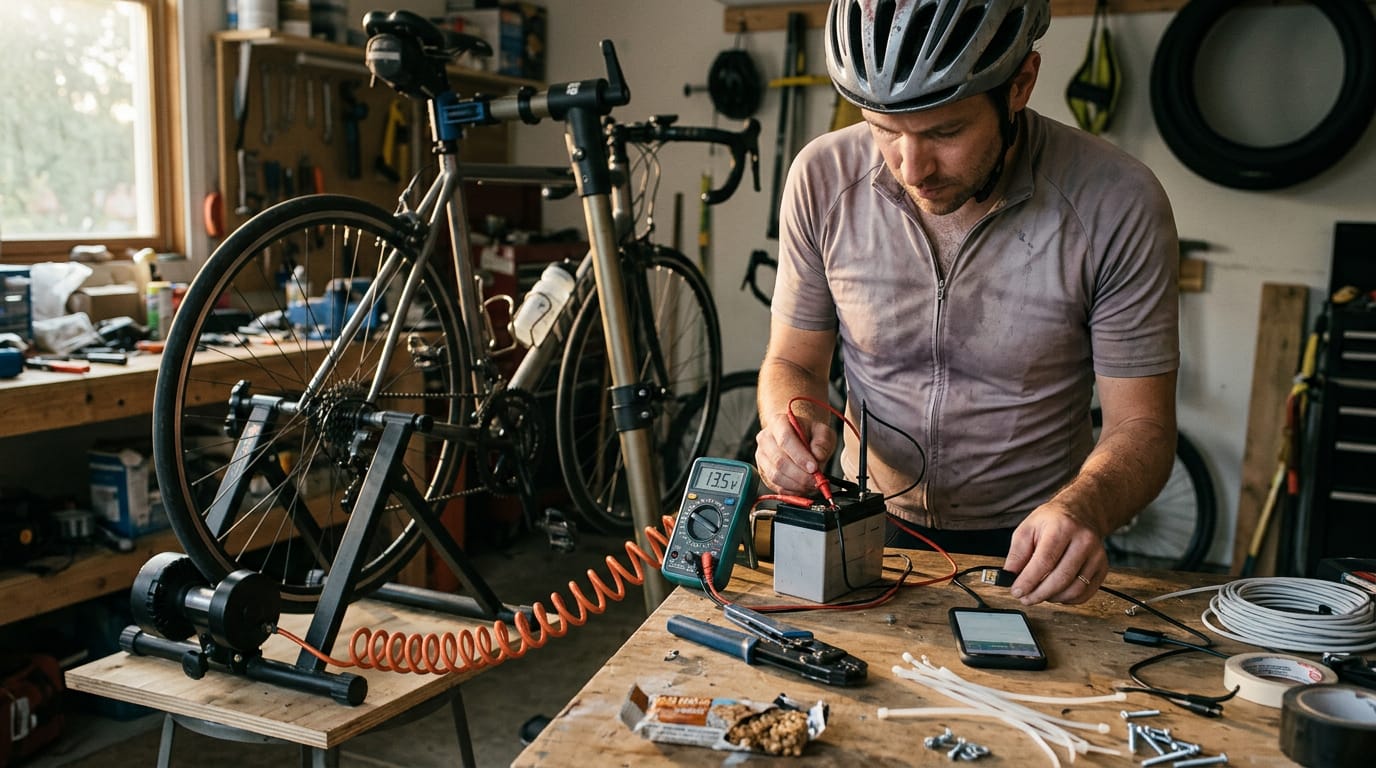
Control panel with meters and converters
The panel is less about making power than about controlling it. Buck converters step voltage down and boost converters step it up, so each device gets the level it needs.
Switchable circuits let you run one load or several, and an inverter turns the battery’s direct current into alternating current for 220-volt appliances. Mount volt and amp meters on the panel so you can read the output at a glance.
Protective parts and safe wiring
Protection matters as much as the generator. A wind charge controller regulates flow into the battery so it doesn’t overcharge. A Schottky diode, a one-way valve for current, stops power from flowing backward.
Fuses cut the circuit when something draws too much, and wire thickness has to match the current, since thin wire overheats. Add on/off switches so you can cut power fast.
Before you ride, check every connection and run a test with the bike stationary. Don’t skip that step.
Parts, tools and what it costs
Your parts list includes:
- Generator and vintage exercise bike base
- Wind charge controller, buck and boost converters, inverter
- Volt and amp meters, switchable circuits, on/off switches
- Schottky diode, fuses, wire
Required tools include a multimeter for checking voltage and amperage, plus basic hand tools. The itemized costs come to about 471 euros, so compare that against a ready-made unit before you commit.
Treat your first build as a prototype, and write down what you learn so the next one goes faster.
Why People Build Bike Generators
Building a bike generator appeals to riders for three main reasons:
- cleaner power
- backup electricity
- a hands-on science lesson
Clean power and a real workout
Your legs are the only fuel. A bike generator turns pedaling into electricity with no fossil fuels burned. It’s less about burning something and more about spending your own effort.
You get a workout while you charge. Think of a club cyclist stuck indoors through a snowy January, pedaling twenty minutes to top off a phone and a headlamp.
Watching the battery climb gives you a goal, and the warmth keeps winter sessions easier to stick with.
Backup power, off-grid living and solar
When the grid goes down, a bike can help. A paper on bicycle power battery charging stations for rural areas describes pairing a 100 W solar panel with a pedal-powered generator to keep energy available regardless of weather or time of day.
Solar photovoltaic (PV) panels make power from sunlight, and pedaling complements them when sunlight isn’t available. Output can reach up to 2.4 kWh per day.
A kilowatt-hour (kWh) is the energy a 1,000-watt device uses in one hour, a handy yardstick for what it can run.
Teaching kids how energy works
STEM (science, technology, engineering, and math) is easier to grasp when students can see it happen. Kids can take a turn on the pedals themselves, which makes them the power source.
Watching a bulb glow only while someone pedals shows that electricity has to come from somewhere. Effort in, electricity out.

Ready-made Kits and What They Cost
Ready-made options split two ways: kits that add motor help and units that turn pedaling into electricity. Which one fits your goal depends on whether you want to move farther or power more gear.
E-bike conversion kits and their trade-offs
A hub motor sits in your wheel and uses battery power to help you move, while a generator turns your pedaling into electricity. That’s the split to weigh first.
| Kit | Pros | Cons |
|---|---|---|
| 48V 1000W | Modest assist for everyday rides | Less help on steep climbs |
| 52V 2000W | Stronger assist for big climbs | More weight and more to manage |
| All-black wheel kit | Stealthy look that blends into your bike | Check its voltage and wattage first |
A commuter on a hilly route might find the 48V 1000W kit fine on flats, while the 52V 2000W kit gives climbs more push for extra weight. Match the kit to your route.
Store-bought pedal generators and prices
Store-bought pedal generators run from a few hundred dollars to a few thousand.
- Exercise bike generator: $3,500. A stationary machine you pedal in place.
- Dynamo units: $249 to $599. A dynamo is a small generator, usually mounted to the bike.
- BigFoot 500W with stand: rated at 500W and sold with a stand.
A parent who wants a workout and garage power gets both from the exercise bike generator, while a rider who just wants lights should choose a dynamo.
Before you check out, confirm the warranty and lead time (how long until it ships). Then read the owner’s manual and spec sheet: the specs show the rated output, and the manual covers mounting and upkeep.
Price tells you what you’ll pay. Specs tell you what you’ll get.
Answers to the Questions People Ask Most
Here are the questions riders ask most about the bike generator, answered straight so you can decide before checkout. The short version: it’s real electricity, but the specifics depend on the model and on how you ride.
Quick answers on power, setup and limits
- Can it charge an e-bike battery? Possibly, but don’t assume it will. Confirm the output works with your battery’s charger before you buy, since a setup sized for a phone may not fill a larger pack.
- How much power does it produce? Output depends as much on how you pedal as on the machine. Consider a weekend rider on a bike-camping trip who wants to keep a phone and headlamp charged. A modest setup handles that job, so the light stays on at dusk. Pull the maker’s stated figures rather than guessing.
- Installation skill needed? Expect a mounting job, usually with basic hand tools, and follow the maker’s instructions for your frame. If you’ve adjusted your own brakes or swapped a tire, you can likely handle it. If not, a local shop can install it for you.
- How efficient are generators? Not all of your pedaling turns into electricity. Some effort is lost to friction and heat, so expect less power than your legs seem to be producing. Plan around the output, not the effort.
- Age range and weight? Check the age range the maker lists, since it varies by model. Then weigh the unit against your frame and how much extra load you’re comfortable pedaling with. Read the spec sheet first.
The main thing to remember is that a bike generator works best when it matches how you ride and what you want to power. A light setup suits a phone on a weekend spin, while a bigger build fits someone who wants to run more gear.
Get clear on your goals first, and the build-or-buy decision gets much easier.
Whether you build your own or pick up a ready-made kit, the right choice is the one that fits your routine. Keep your expectations realistic and your needs honest. The best bike generator is the one you’ll actually pedal.
References
- Estado Actual de Generadores de Energía Eléctrica a Través de Pedales — doi.org (2024)
- Bicycle Power Battery Charging Station for Rural Areas — doi.org (2026)
- Electric Generator For Wind Or Human Power — doi.org (2020)
- Manual power — survipedia.com (2026)
- Pedal powered generator — appropedia.org
Questions
How many watts can a human generate on a bike?
A person can typically sustain about 45–75 watts of pedaling power, with around 100 watts possible for short, strenuous efforts. Pedal generators commonly produce 50–200 watts, while some commercial models advertise peak outputs up to 300 watts.
Does an eBike consume more electricity?
Yes. An e-bike uses electricity stored in its battery, and its much larger capacity means a full charge from a wall outlet draws substantially more electricity than charging a phone.
Is there a stationary bike that can charge my phone?
Yes. A stationary bike fitted with a generator and USB output can charge a phone while you pedal. Some exercise bikes are designed specifically to produce electricity.
Is there a such thing as an electric bike?
Yes. An electric bike, or e-bike, uses a battery-powered motor to assist your pedaling. It is different from a bike generator, which converts pedaling into electricity.
Is 30 minutes of stationary bike the same as 30 minutes of walking?
Not necessarily. The calories and fitness benefit depend on your pace, effort, resistance, and walking speed, so 30 minutes on a stationary bike cannot be assumed to equal 30 minutes of walking.
Are there stationary bikes that produce electricity?
Yes. Stationary exercise bikes can be fitted with generators that turn your pedaling into electricity, which can power or charge devices such as phones and fans.
Sources
- Pedal powered generator - Appropedia, the sustainability wiki, appropedia.org
- Electric Generator For Wind Or Human Power, doi.org,
- Estado Actual de Generadores de Energía Eléctrica a Través de Pedales, doi.org,
- Efficiency Mapping and Weighted Average Efficiency for Large Hydrogenerators, doi.org,
- Bicycle Power Battery Charging Station for Rural Areas, doi.org,
- Manual power - Survipedia, survipedia.com,
- Levelized Cost of Energy Assessment for Offshore Wind Farms—An Examination of Different Methodologies, Input Variables, and Uncertainty, doi.org,
Find your level
The Counter