How to Clean a Bike Chain: Step-by-Step Guide
How to clean a bike chain matters: get cleaning timing, degreaser and lube choices, plus on-bike, off-bike, and waxed-chain steps for smooth-moving links.

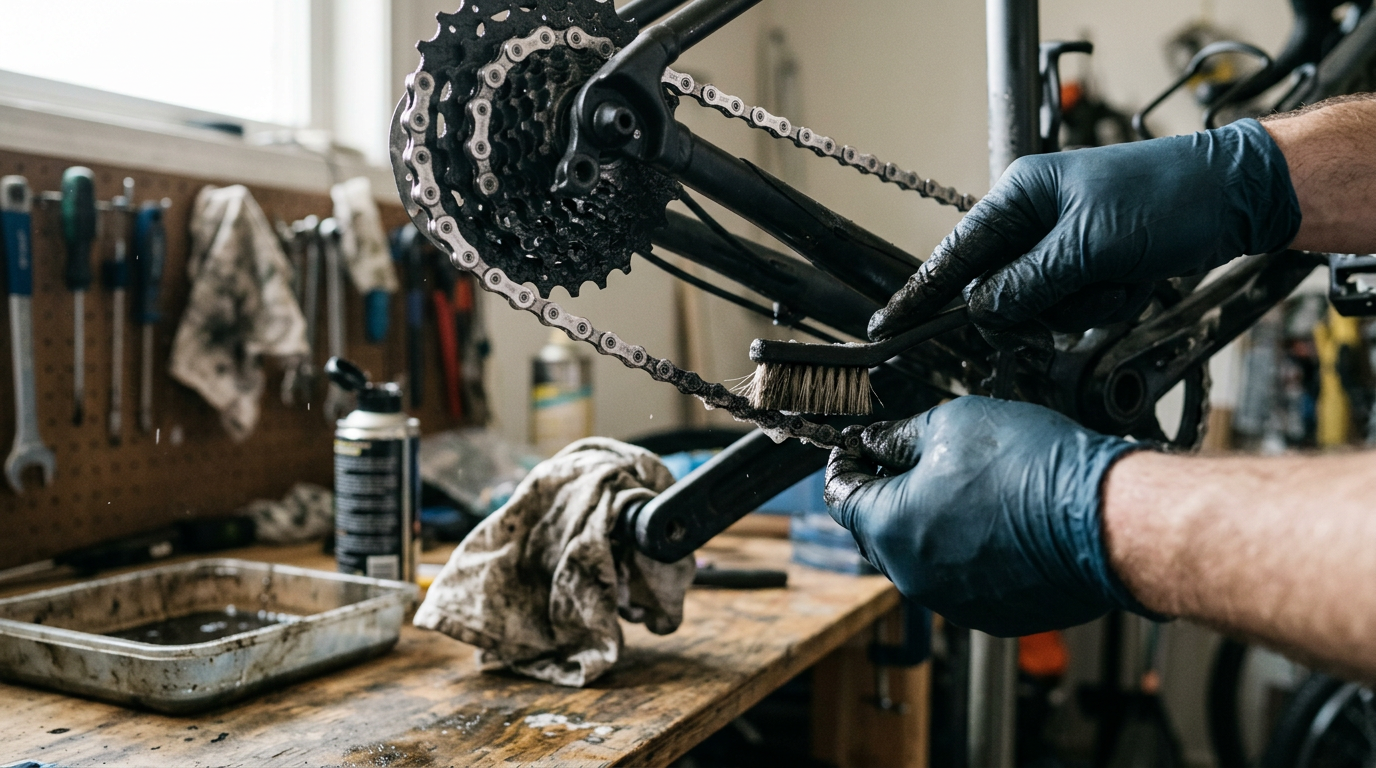
Think about the last time you took your car in for an oil change. A little routine care kept it running smoothly, and your bike chain works the same way. It’s one of the easiest parts to look after, and a few minutes of attention pays off on every ride.
Cleaning a chain means clearing out the grit and old lube that build up as you ride, then adding fresh lubricant so the links move freely.
We’ll cover timing, the right degreasers and lubes, on-bike and off-bike methods, and when a worn chain needs replacing.
Why and How to Clean Bike Chains
Keeping your chain clean protects your drivetrain, the parts that carry power from your pedals to the rear wheel. Here’s what it gets you and what skipping it costs.
What a clean chain gets you
- Longer drivetrain life: A design study of a bike chain cleaning product notes that removing dirt and grit can help reduce wear on the drivetrain.
- Saves money on parts: Less wear means fewer repair and replacement bills over time.
- Quieter, smoother shifting: Without built-up grease and dirt, you can change gears more smoothly.
- Less grease mess: Less of that grimy buildup ends up on your hands, clothes and frame.
- Improved efficiency: Cleaning helps the bike perform better overall.
Why factory grease attracts damaging dirt
Here’s the catch: the grease that comes on a new chain is a magnet for grit. The goal isn’t more lube. It’s a clean chain before the right lube goes on.
- Factory grease attracts dirt: That grease pulls in road grit and trail dust.
- Dirt causes excess wear: Grit trapped in that grease grinds into the moving parts.
- Strip new chains first: Clean off the factory grease before adding your own lube.
What happens when you skip cleaning
Picture a club cyclist who skips cleaning all spring. Shifting turns rough and the drivetrain wears faster than it should, turning simple upkeep into a repair bill.
- Noise and rough shifting: Built-up grime makes gear changes rough and can make the chain noisy.
- Wear on drivetrain: Dirt keeps grinding away at more than just the chain.
- Oil change analogy: Skipping chain cleaning is like skipping an oil change. Nothing seems wrong at first, but wear quietly adds up until something gives.
It’s about prevention, not repair. Dirt never takes a day off.
How Often to Clean Your Chain
Your chain responds to how you ride, not when you ride. Most riders settle into an on-bike routine somewhere between weekly and monthly:
- Quick clean: every two weeks, wipe away surface grit.
- Deep clean: once a month, on the bike, with degreaser and fresh lube.
- Full removal: once or twice a year, off the bike for a thorough clean.
Signs your chain is due for cleaning
Your chain usually warns you first. Watch for these signs:
- Noise. A new squeak, creak, or grind usually means grit has worked into the rollers.
- Gunky or dusty grease. Lube gone black, sticky, or dusty is holding dirt against the metal.
- Rough shifting. Gears that hesitate or skip are often grime, not a broken part.
- Grease on your legs and bike. Oily spots on your calves or frame mean lube is being flung around, usually because the chain is dirty or over-lubed.
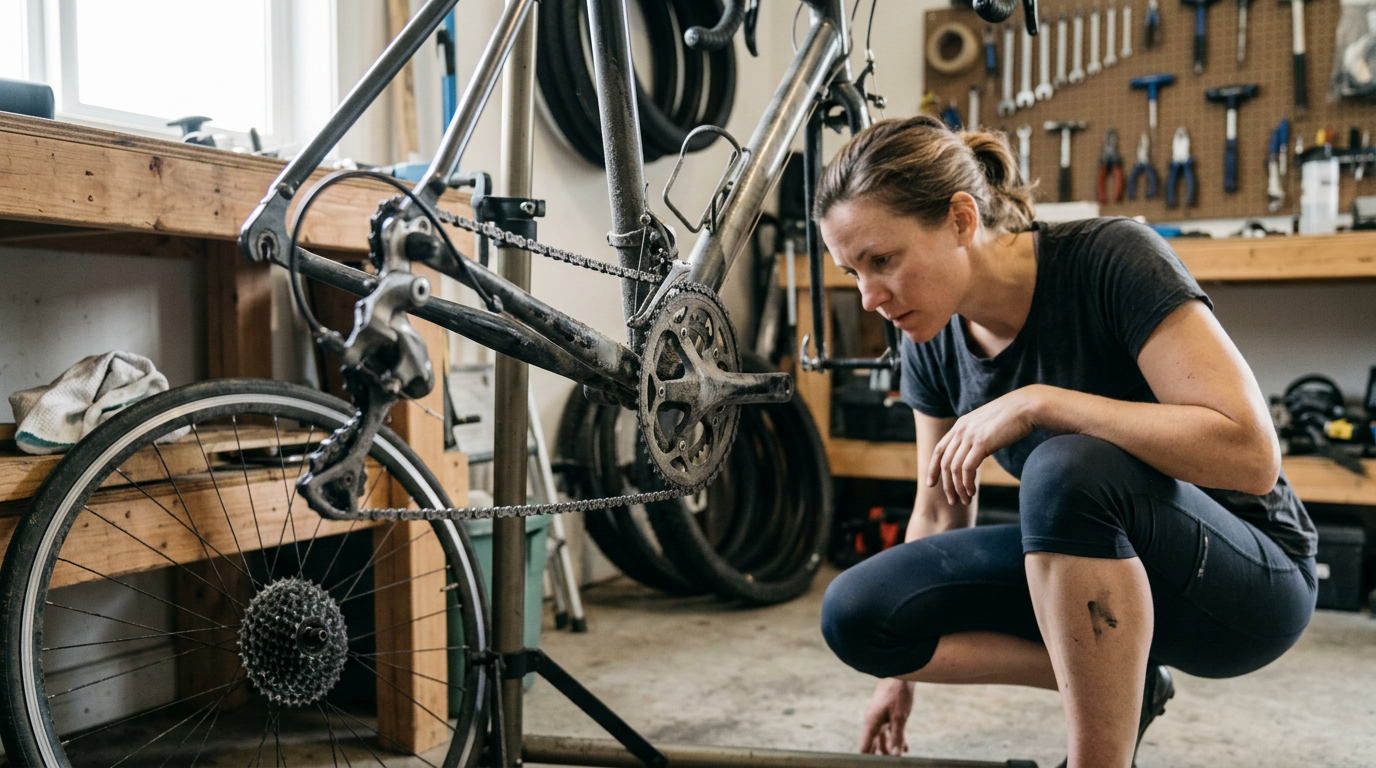
Riding conditions that call for more cleaning
Consider a club rider who hits muddy trails on Saturdays and commutes on salty winter roads. Her chain takes a beating, so she wipes it after every muddy ride instead of waiting for the monthly deep clean. Dirt doesn’t wait for the calendar.
That quick wipe keeps her gears shifting crisply all season.
- Mud and dust off-road. Trail grit packs in fast, so clean after rough rides.
- Wet, wintry, salty roads. Road salt is hard on metal, so wipe down more often.
- Mileage. More miles mean more grit and wear, so let your odometer guide your schedule.
Mileage also brings wear. Use a chain checker to measure stretch rather than guessing, and replace the chain once it reads worn. Waiting until it skips under load is the harder lesson.
Gear and Supplies You Will Need
Gather these before you start, and the job goes faster with less mess. Here’s what we’d put on the bench.
Choosing a degreaser and cleaning solution
Your main cleaner is a drivetrain degreaser, which cuts the grime and old lube on a chain. Soapy water works for routine cleaning, and a chain stripper handles caked-on gunk, but use it sparingly.
Can you use WD-40 on your bike chain? Skip it. It’s built to push out moisture, not to leave lube that holds up under pedaling.
Can you clean a bike chain with Dawn? Yes, for a quick wash. Rinse well and dry the chain before you re-lube, since leftover soap can wash your lube away. A waxed chain calls for hot water instead.
Brushes, rags and tools for drying
A stiff brush or old toothbrush reaches the rollers where grime hides. Wipe the chain with a microfiber towel or an old t-shirt, aiming for dry rather than damp, since trapped moisture invites rust.
For tight spots, compressed air or a leaf blower does the job, and a hose handles the rinse first.
Chain cleaners and stands worth having
- Chain cleaning tool. Holds degreaser around the chain while the drivetrain turns.
- Bike stand and dummy hub. The stand keeps the bike upright, and the dummy hub lets you spin the cranks with the wheel off.
- Chain pliers. For removing and reinstalling the chain.
- Water bottle for shaking. Seal the chain and degreaser inside and shake.
- Ultrasonic cleaner and electric kettle. Nice-to-haves: one scrubs for you, the other heats water for waxed chains.
For a budget starter kit, think of a parent who keeps a bike for a kid’s weekend trail rides. A stiff brush, a rag, and soapy water clear Saturday’s mud, so the bike is ready for Sunday.
Cleaning Your Chain While on the Bike
Cleaning the chain without pulling the wheel saves time, but only if you work in the right order. Skip a step and you’ll just move the grime around.
Setting up the bike first
Stand the bike upright or lean it against a wall so the rear wheel can spin freely. For better access, you can take the wheel off and slide a dummy hub (a spacer that stands in for the wheel so the chain stays put) into the frame where the wheel mounts.
Then shift onto the smallest cog at the back so the drivetrain is easier to reach.
Degreasing the drivetrain step by step
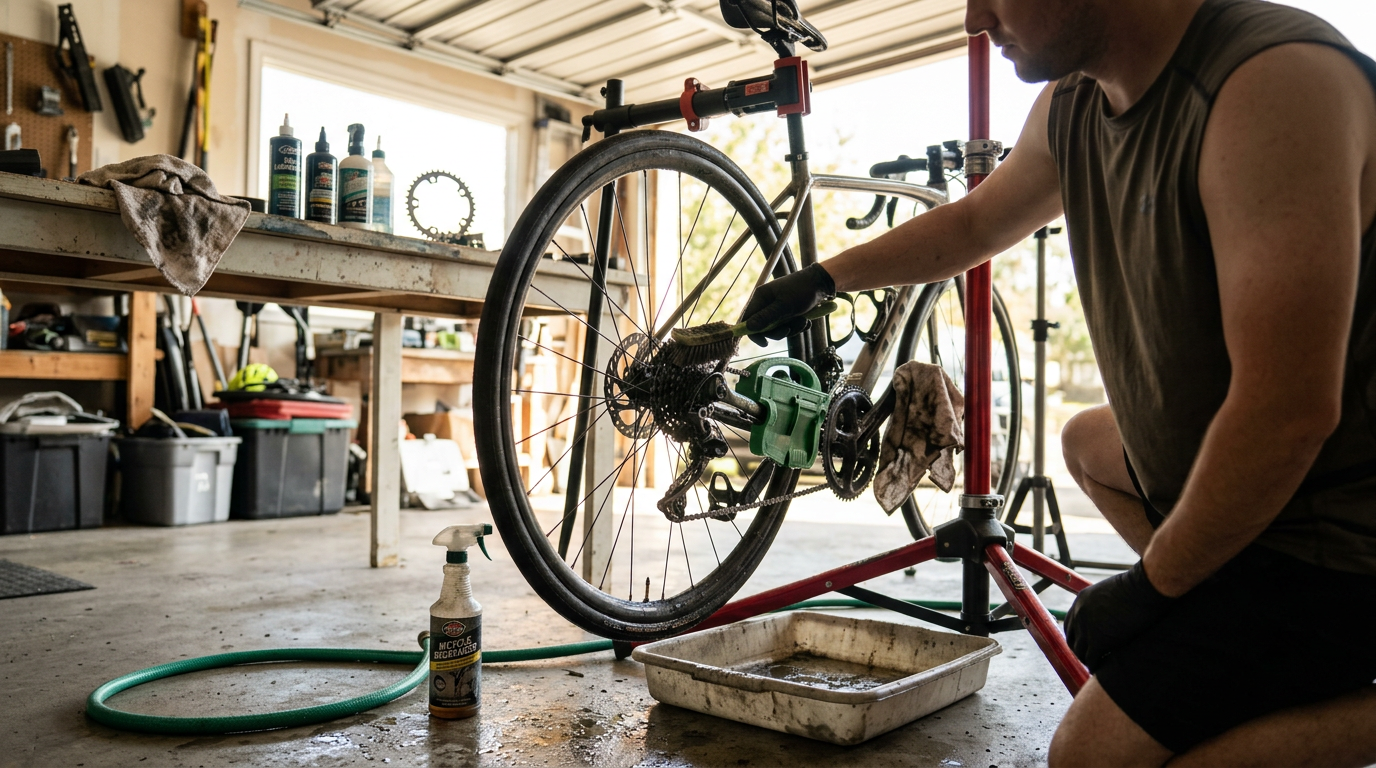
Start by wetting the drivetrain with a hose so loose dirt rinses away. Then work through these steps:
- Apply your degreaser (a cleaner that breaks down oil and grime) and let it sit for 3 to 5 minutes.
- Agitate the grime with a brush.
- Clip a chain cleaning tool onto the chain, then spin the cranks backward to pull the chain through it.
- Brush the cassette (the cluster of rear gears), chainrings, and pulleys.
- Keep degreaser off your brake pads and rotors, since it can contaminate them. Wipe up drips and dispose of used degreaser according to your local rules.
Rinsing off the degreaser
Rinse until the water runs clear, with no foam or dark runoff left behind. Next, wash with soapy water and a brush, then finish with a plain water rinse so no soap residue stays on the drivetrain.
Wondering whether a carwash is safe for your bike? You can use one in a pinch, but pressure washers can force water and grit past bearings and seals.
Keep the wand at a distance and avoid aiming it straight at the hubs or the bottom bracket, the bearings where the cranks attach.
Wiping down fast when you’re rushed
Picture a parent with ten minutes between school pickup and soccer practice and a kid’s bike that’s just been rained on. Hold a lint-free cloth around the chain and backpedal so every section passes through it, and the bike is ready for practice.
That gets the chain ride-ready, but only a full degrease gets it clean. When you’re rushed, skip the deep clean and save it for the weekend. Wipe it now, degrease it later.
Drying and Lubing Your Chain
Once the chain is clean, drying and lubing decide how smoothly it runs. Dry it first, match the lube to your riding, and go light on the application.
Ways to dry the chain fast
Dry the chain before lubing so the new lube isn’t mixing with water.
- Air dry. Leave the chain in open air until no moisture remains.
- Rag while backpedaling. Wrap a clean rag around the chain and backpedal to pull it through.
- Compressed air or leaf blower. Blast water out of the links and off the rollers.
Think of a weekend rider caught in a downpour. A quick pass with a rag gets the chain dry enough to lube that same night, instead of waiting for it to air dry.
Which lube suits how you ride?
Match the lube to the ride rather than the shelf. If you ride a bit of everything, multi-purpose is the simplest start.
- Multi-purpose lube. A general pick for a mix of conditions.
- Wet lube for rain. Suited to wet rides, when water washes over the chain.
- Dry lube for dust. Suited to dry, dusty conditions.
- Wax-based lube. Pairs with the waxed-chain method covered below.
Can you use motor oil on your chain? Skip it. It’s made for engines, not for the rollers and pins on a bike chain, so stick with a lube designed for bikes.
Consider a parent riding dusty summer gravel with a kid, then soggy fall trails. Dry lube fits the summer, wet lube fits the fall, and one bottle per season keeps the chain matched to the trail.
Applying lube one roller at a time
Lube goes on the rollers, not smeared across the outside of the chain. Work through it in this order:
- Mark your starting point. Use the quick link as a marker so you know when you’ve gone all the way around.
- Spin the chain backwards. Backpedal so the chain moves past you one link at a time.
- Put one drop per roller. Add a single drop to each roller as it turns.
- Spin the crank 5 to 10 times. This works the lube into the links before you wipe.
Wiping away extra lube that attracts dirt
Wipe the chain with a clean rag once the lube is on. Excess lube attracts dirt, so aim for less lube rather than more.
If you have time, let the lube soak overnight before wiping. It’s optional.
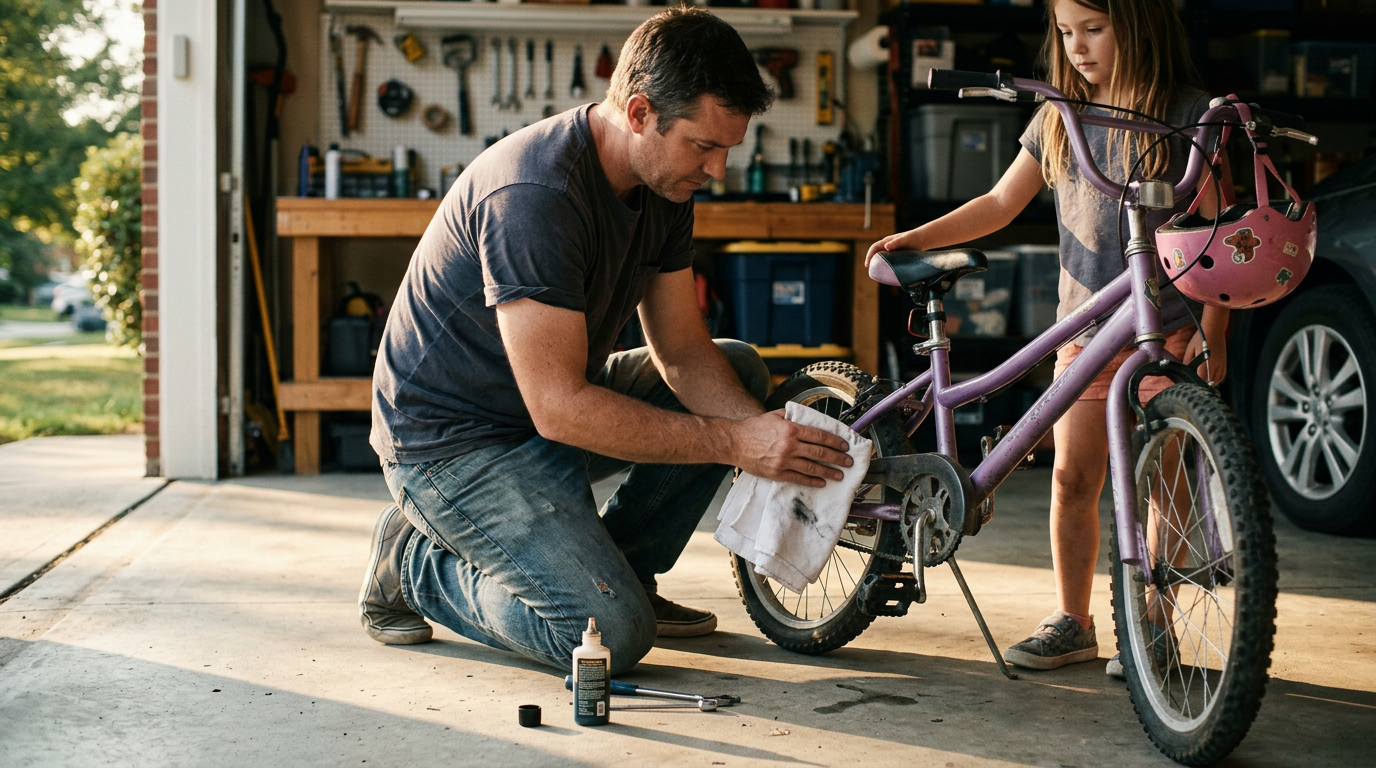
Picture a dad lubing his daughter’s bike the night before a Saturday ride. A quick wipe keeps the outside clean, so the first ride doesn’t leave grime on her shorts. It takes a minute.
Re-waxing a chain and letting it cure
Re-waxing a chain takes patience, so plan around the cure time.
- Dip in hot wax. Submerge the clean, dry chain in melted wax for a full coat.
- Hang to dry. Hang the chain so the excess wax can drip off.
- Let it cure. Let the wax drip and cure for 4 to 12 hours before you ride.
Don’t rush it.
Deep Cleaning with the Chain Off
Pulling the chain off lets you clean every link, not just the ones you can reach. The process runs from gentle to strong, and each step has a clear job.
Shaking the chain clean in a bottle
Drop the chain into an old water bottle and cover it with degreaser. Seal the lid, then shake for 30 to 60 seconds. Pour out the bath, refill with fresh degreaser, and repeat until the chain looks light gray instead of black.
Consider a weekend rider who pulls the chain off a muddy commuter bike after a wet winter. The first bath often comes out dark, and that’s the grime leaving the links. Keep going with fresh baths. Patience does the work.
Cheap soap first, strongest stripper last
Start with cheap soap and water to lift loose grit. Save your best stripper for the final baths, since it earns its keep on the grime soap can’t touch. Think of it as gentle first and strong last, not the other way around.
If you can, pre-clean the chain on the bike before you pull it off. Knocking off surface dirt while it’s still in place means the bottle has less work to do.
Stripping new chains before waxing or lubing
Before a new chain takes wax or lube, it needs to start clean. Drop the StripChip into your wax pot with the chain, then run it through a full degreaser bath. Once it’s fully clean, you’re ready to wax or lube it.
Cleaning a Waxed Chain
Waxed chains don’t follow the usual cleaning routine. Here’s what the upkeep looks like and why this setup isn’t for everyone.
Keeping a waxed chain clean
A waxed chain asks for less work to clean than most. Picture a weekend rider who commutes through a rainy week. Instead of breaking out degreaser after every ride, they follow a simple routine:
- Wipe it down. Run a microfiber towel along the chain to pull off dirt and grime.
- Pour boiling water over it. It’s a quick step that fits right into the routine.
- Skip the degreaser. You don’t need one here, so there’s no chemical to rinse off.
Of the lubricants you’ll see, wax is the easiest to clean. It’s about wiping grime off, not scrubbing it out. Less mess, less fuss, and more time on the bike.
Why wax is hard for beginners
Wax comes with a trade-off: it’s more complicated to work with than a standard lube. That complexity is the main reason it isn’t recommended for novices.
If you’re still learning how to tell when a chain needs attention, a waxed setup adds one more thing to get right at the same time.
Consider a first-time commuter who buys a waxed chain because it sounds low-maintenance, then finds the routine takes more attention than expected.
Our advice: start with a simpler lube, get comfortable with the basics, and move to wax once the routine feels second nature.
A clean chain is one of the simplest ways to make your gear last. Regular cleaning, the right degreaser, and a lube that suits your conditions keep the drivetrain quiet and efficient. Watching for wear tells you when it’s time for a new chain.
Keep a rhythm that fits your riding, keep supplies within reach, and give your chain a quick wipe after every wet or gritty ride. A little attention now means more miles of smooth riding later.
References
- Design, development, and prototyping of a bike chain & gear mechanism cleaning product — shura.shu.ac.uk (2015)
Questions
What are 10 things every cyclist needs?
Ten useful essentials for cyclists are a properly fitted helmet, a bike in good working order, front and rear lights, a spare tube, tire levers, a pump or CO₂ inflator, a multitool, a patch kit, a water bottle, and a phone or identification. What you need can vary with the length and remoteness of your rides.
How often should you clean a bike chain?
Clean your chain based on riding conditions, not just the calendar. A quick wipe every couple of weeks and a deeper clean about once a month work for many riders, but clean it sooner after muddy, dusty, wet, or salty rides.
Can I use motor oil on my bike chain?
No. Motor oil is made for engines, not bicycle chain rollers and pins, and it can attract dirt or perform poorly on a bike chain. Use a lubricant designed for bicycle chains.
Can you clean a bike chain with Dawn?
Yes. Dawn and other dish soaps can work for a quick wash; rinse thoroughly and dry the chain completely before applying bike-chain lubricant. For a waxed chain, use hot water instead.
Do I need to clean my bike?
Yes. Regular cleaning removes grit that can wear the chain and other drivetrain parts, and it helps keep shifting smooth and quiet. Wipe the chain more often after wet or gritty rides, and clean the rest of the bike as needed to remove dirt and salt.
Can I wash my bike at a carwash?
You can use a carwash in a pinch, but avoid directing high-pressure water at hubs, the bottom bracket, or other bearings and seals. Pressure can force water and grit inside and cause damage.
Is it okay to spray WD-40 on bike chain?
You can use standard WD-40 to help loosen grime on a bike chain, but it is not a substitute for bicycle chain lubricant. Wipe the chain clean afterward and apply a suitable bike-chain lube; keep spray and lubricant off brake rotors, pads, and rims.
Can you clean skateboard bearings with acetone?
Yes, acetone can dissolve grease from skateboard bearings, but it is highly flammable and can damage some bearing shields or plastics. Remove the shields only if appropriate, use acetone with good ventilation and away from flames, let the bearings dry completely, then apply a suitable bearing lubricant.
Sources
Find your level
The Counter