Putter Neck Types Explained: Which Style Suits You
Putter neck types shape toe hang, offset, and face rotation. Compare the main styles to match your stroke, then test your fit before buying.

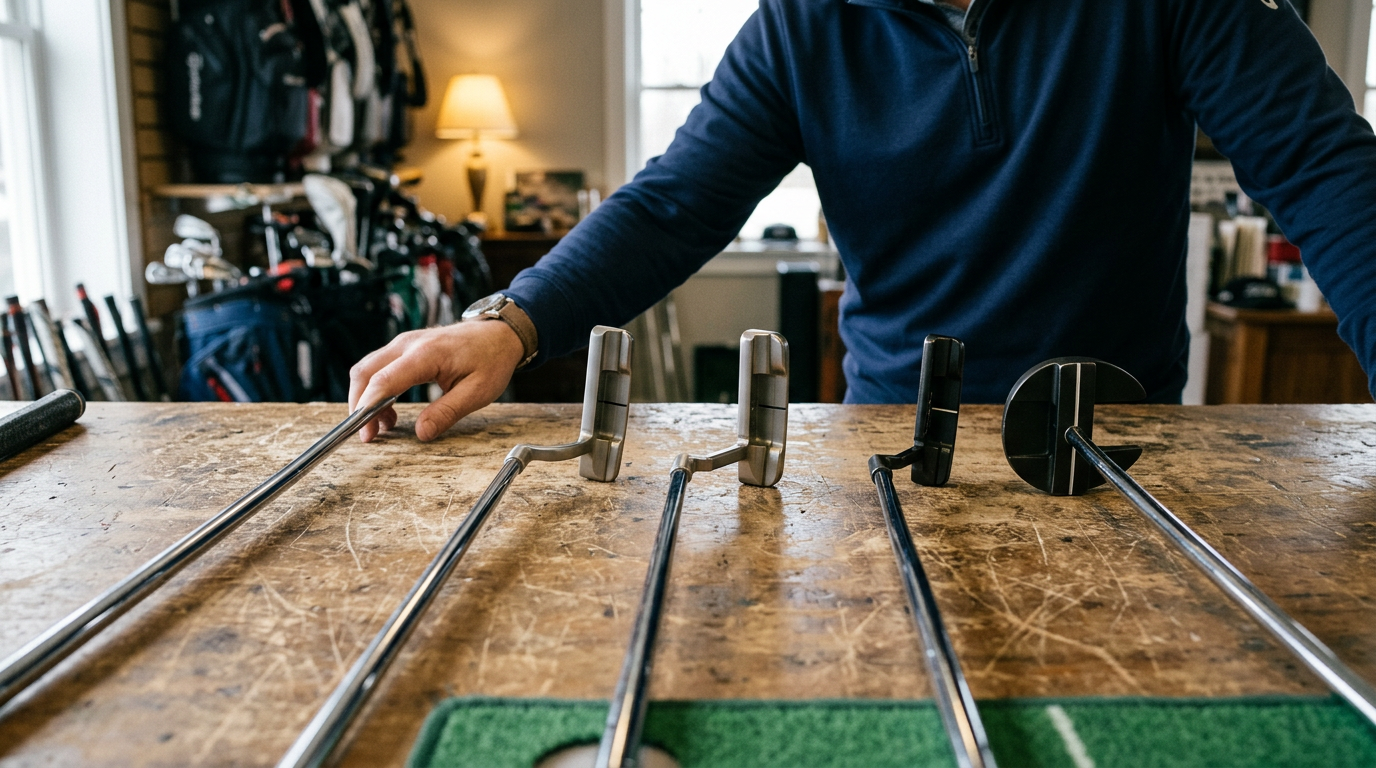
Think about reaching for a door handle. Step to the side and the same handle sits at a new angle, so your whole reach changes.
A putter’s neck works much the same way: it’s the bend where the shaft meets the head, and it shapes how the clubface sits at address.
Here’s the short answer: the neck controls toe hang (how the toe points when the putter sits naturally), offset (how far the shaft sits behind the face), and face rotation, which together decide whether a putter feels natural to your stroke.
We’ll cover the main styles, how balance differs, which stroke suits each, and how to test before you buy.
Why Putter Neck Types Matter
The neck is easy to overlook on the rack, but it quietly decides how the head moves through your stroke. Here’s why we think it deserves a closer look before you buy.
How the hosel affects your performance
The hosel is the piece where the shaft joins the clubhead, so every bit of your stroke travels through it. It also dictates how the putter balances and releases.
Consider a weekend player who tries three putters that look nearly identical on the shelf: one feels light and quick, another feels nose-heavy and slow to release, and the difference often traces back to the neck.
Many golfers study the head and forget the neck, which is the part that connects it to their hands. It’s less about how the neck looks and more about how it behaves once you’re swinging.
Make it your first check in the shop, before you fall for a finish or a logo.
Feel and face control from the neck
The neck also changes how the putter feels during the stroke, from the weight you sense at address to the feedback in your hands through impact. Here’s what a well-matched neck does for your face control:
- Feel through the stroke. It shapes the feedback you get on every swing.
- Squaring at impact. A neck that doesn’t twist the face open or closed means you aren’t correcting with your hands on every putt.
- Keeping the face square to the line. The face tracks your intended path with less effort, so your stroke stays simple.
Picture a parent who putts with their kid on the practice green most Saturdays. With a neck that keeps the face square, they spend less time fixing their stroke and more time enjoying the makes. The best neck is the one you forget about.

The Main Putter Neck Types to Know
The neck is where the shaft meets the head, and it quietly shapes how the face moves through your stroke. Here are the four families we see most, and the stroke each one suits.
Bent shafts that keep the face balanced
A bent-shaft putter has its shaft bent into the head, so the face points straight up when you hang it from the grip. That’s what face-balanced means: the head has minimal toe hang, so the toe barely drops.
The design is built to resist rotation, not invite it, so the face stays square with little help from your wrists. Less wrist, more consistency. It suits a short, straight-back-and-through stroke.
Short, slanted, and flowing necks
These necks use a short, flowing hosel that angles the shaft into the head. That gives more toe hang than a face-balanced design, so the head swings a little open and closed as you stroke. Picture a club golfer who swings in a gentle arc.
The flowing neck lets the face follow that arc instead of fighting it. The payoff is a smoother release through impact.
The traditional plumber neck
The plumber neck is the traditional, classic look most people picture: the shaft bends at the hosel like a pipe and connects toward the heel. It gives moderate, or half, toe hang, a middle ground between a balanced head and a strongly hanging one.
A weekend golfer who wants one putter for short straight putts and longer curving ones gets a middle ground that won’t push the face too far either way.
Center shaft designs with no bend
Center-shafted putters skip the bend entirely. The shaft enters mid-head, so there’s little toe hang, and these are usually face-balanced. Expect a distinct feel at impact, and good face control since the head stays square through a straight stroke.
Offset tracks the neck too: center-shafted designs keep it minimal, while flow and plumber necks sit further back from the face. Picture a golfer whose short putts keep drifting open at the last second.
A center-shafted putter is worth a test roll to see if a steadier face helps. Test it in the shop by hanging each putter from the grip and watching where the toe points. That’s the quickest read on toe hang.

How Balance and Toe Hang Differ
Before we compare necks, check how the putter balances. That one check shows how the head sits, and you can do it right in the shop.
Telling face-balanced apart from toe hang
Balance the shaft across one finger and let the head settle. Here’s what the two main results look like:
- Face-balanced: the face points skyward, and the putter sits level on your finger.
- Toe hang: the toe points downward, and the head hangs toward the floor.
Between those two sits the plumber neck, which has half toe hang. Slant and short hosel designs carry more toe hang, so their heads drop further when balanced.
Think of a weekend golfer who grabs a putter off the rack because the grip feels right. A few seconds on the balance check shows whether the head will sit differently than they expect, before they’ve paid for it.
Clues from where the shaft sits
Where the shaft meets the head often hints at the answer before you pick the putter up. It’s less about the shaft’s length and more about where it joins the head.
- Center shaft: usually face-balanced.
- Heel entry: usually toe down.
Treat these as clues, not verdicts. Your eyes can make a reasonable guess, but only the finger test settles it, so balance the shaft on one finger and let the head show you the answer. Trust the finger, not the eye.
Pairing Your Neck Type with Your Stroke
Your neck type should match how your putter moves, not just how it looks on the rack. Here’s how we’ll pair each neck with a stroke, and why the head shape you like matters too, since the two work together to set the face.
Strokes that go straight back and through
If your stroke moves straight back and through along the target line, you want a neck that keeps the face square with little help from you. Double bend and single bend necks suit this stroke.
A center shaft, where the shaft joins the head at its middle, fits too. Face-balanced heads are the preferred match: balanced on a fingertip, the face points straight up, so the putter tends to stay square.
Arcing strokes on an inside path
An arcing stroke travels inside the target line on the way back, square at impact, then inside again on the way through. A short slant or flow neck suits that path.
Here the toe hang, the amount the toe points down when the putter rests on the ground, matters most: more toe hang helps the face track the arc.
Consider a weekend golfer whose stroke swings inside on the way back. A flow neck with extra toe hang keeps her face matched to that arc, so she isn’t fighting her own stroke on every putt.
Not sure which path you own? Film your stroke from down the target line and watch whether the head curves inside or travels straight. A short clip beats guessing in the shop.

Strokes that mix arc and straight
Plenty of golfers land in the middle, with a stroke that’s mostly straight but carries a slight arc. A plumber neck, with its curved, pipe-like shaft, suits that slight arc. If your stroke blends both, don’t pick on looks alone.
Roll a few putts on the practice green and trust what you feel. Feel beats looks.
Getting a Putter Fitted
Every hole ends with your putter, so it deserves the same care as your driver or irons. Here’s how to get the neck right before you spend a dime.
Get fitted for the right neck
A putter fitting matters as much as any other club fitting. Think of a weekend golfer who grabs a sharp-looking putter off the rack, then spends the back nine wondering why her short putts keep drifting wide.
A neck that doesn’t suit her stroke can make even steady practice feel like it isn’t working.
Start by matching the neck to your stroke, not to whatever the pro on TV is using. Use the neck types explained in this article as your guide, and be honest about how you actually putt.
Next, make it happen:
- Book a pro shop session. Ask your local shop for a putter fitting, and tell the fitter how you currently putt.
- Bring your current putter. It gives the fitter a baseline to measure against, from grip and length to how it feels in your hands.
Testing matters too. Ask to roll several necks on the same green at the same distances, and notice which one you’d trust on a three-footer with the match on the line.
It’s less about how it looks on the rack and more about how it rolls under pressure. Feel is the tiebreaker.
Once you know what each neck does, the shop floor gets far less confusing. Toe hang, offset, and face rotation stop sounding like jargon and start showing up in how the putter feels in your hands.
Match the neck to your stroke, test it on real putts, and the choice gets much easier. The right neck won’t turn you into a better putter overnight, but it will stop fighting the stroke you already have.
Find your level
The Counter