Youth Baseball Cleats: How to Choose the Right Pair
Youth baseball cleats vary by style, league rules and fit. Compare options and find a pair that works for your player's position and growing feet.
Buying your kid’s first pair of baseball cleats is like shopping for school shoes in August. The box looks right, but the real test comes in October.
Youth baseball cleats are the spiked or molded shoes young players wear on the field, and the right pair depends on age, league rules, position and how fast their feet are growing.
In this guide, we’ll walk through the main cleat styles, the rules that can shape your choice, how to check fit, and our favorite picks, plus a few notes on softball crossover.
Youth Baseball Cleats, Past and Purpose
Cleats do two jobs on the diamond: they protect young players and keep them planted when the play gets quick. Here’s how those jobs work and how the design got here.
How cleats protect and grip young players
Think of a 10-year-old shortstop who fields a ground ball on a damp infield, plants her back foot, and fires to first in one motion. Her traction comes from the cleats, which keep that foot from skidding out from under her.
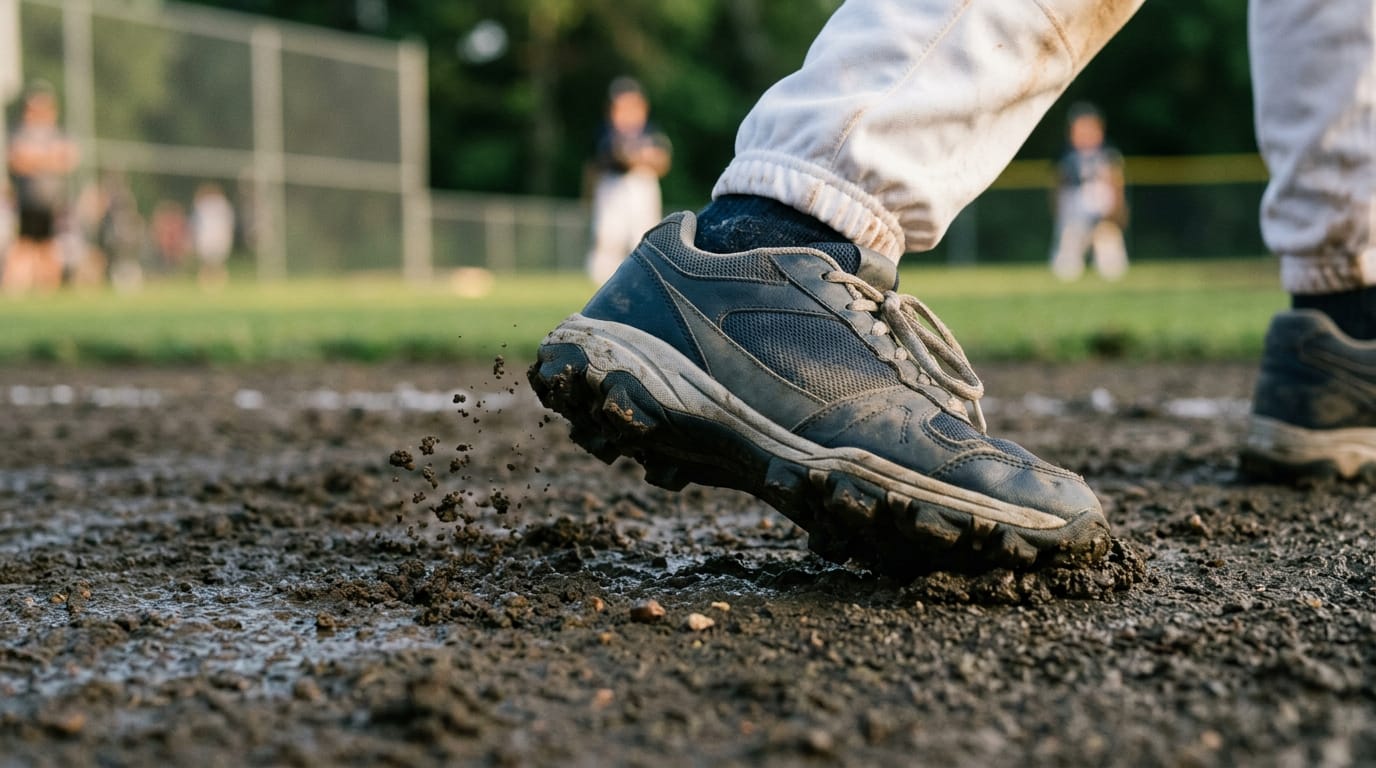
According to a Worcester Polytechnic Institute report on athletic shoe cleats and youth sport injuries, cleats can provide traction for sudden movements, support during slides, and extra grip on muddy fields. Grip is the job.
Protection is the other half, guarding against the ankle roll that comes with quick stops and sharp turns. The goal is grip rather than looks, so judge a cleat by how it holds the ground.
Where baseball cleats came from
Baseball cleats changed in three stages:
- Early soccer-style cleats. The first baseball cleats looked a lot like soccer cleats, built to bite into the ground.
- Spalding plates in the 1870s. Spalding plates marked the next step in that story.
- Fixed steel cleats in 1882. Fixed steel cleats arrived, and the purpose hasn’t changed: a planted, protected player.
Grip came first, and it still does.
Cleat Styles Worth Knowing
Cleats come in a few different builds, and the right one depends on where your player competes and how old they are. Here’s what to know before you pick.
Sole materials and what leagues allow
Sole material shapes grip, and it also decides whether a league lets your player wear the shoe. Think of a parent buying cleats for a nine-year-old in a recreational league, with the first game on Saturday morning.
A pair that’s not allowed on the field means a wasted purchase and a last-minute scramble.
- Metal cleats offer strong traction on dirt and grass, but many leagues limit them by age, so check your league’s rules before you buy.
- Molded cleats have a rubber or plastic sole with the pattern built in. They’re the safe default for most beginners.
- Turf shoes are a good pick for practice, though they’re no substitute for game-day cleats.
- TPU (thermoplastic polyurethane) molded soles are another option to compare on fit and price.
Pick for the league you play in, not the cleats you saw on TV. Rules come first.
Choosing high, mid, or low tops
Tops describe how much of the ankle a shoe covers, and each height gives you a different mix of support and speed:
- High tops deliver maximum support around the ankle.
- Low tops are lightweight and built for speed, best for players who prioritize quick movement.
- Mid tops offer balanced mobility, a middle ground between support and freedom of movement.
Consider a middle schooler who loves stealing bases but feels wobbly in low tops. A mid top gives her a bit more ankle support without weighing her down on the basepaths. Match the top to how your player moves, not how the shoe looks.
Picking the Right Pair for Kids
Youth cleats have to grip the dirt, protect growing feet and still fit a kid who changes every season.
What cleats are made from
Uppers come in two main types. Genuine leather molds to the foot and breathes well, while synthetic options are usually lighter and cost less. Mesh and textile panels add breathability.
Choose a sole that bends with the foot rather than resists it, and look for solid toe protection and stitching that survives a full season.
Getting the fit and size right
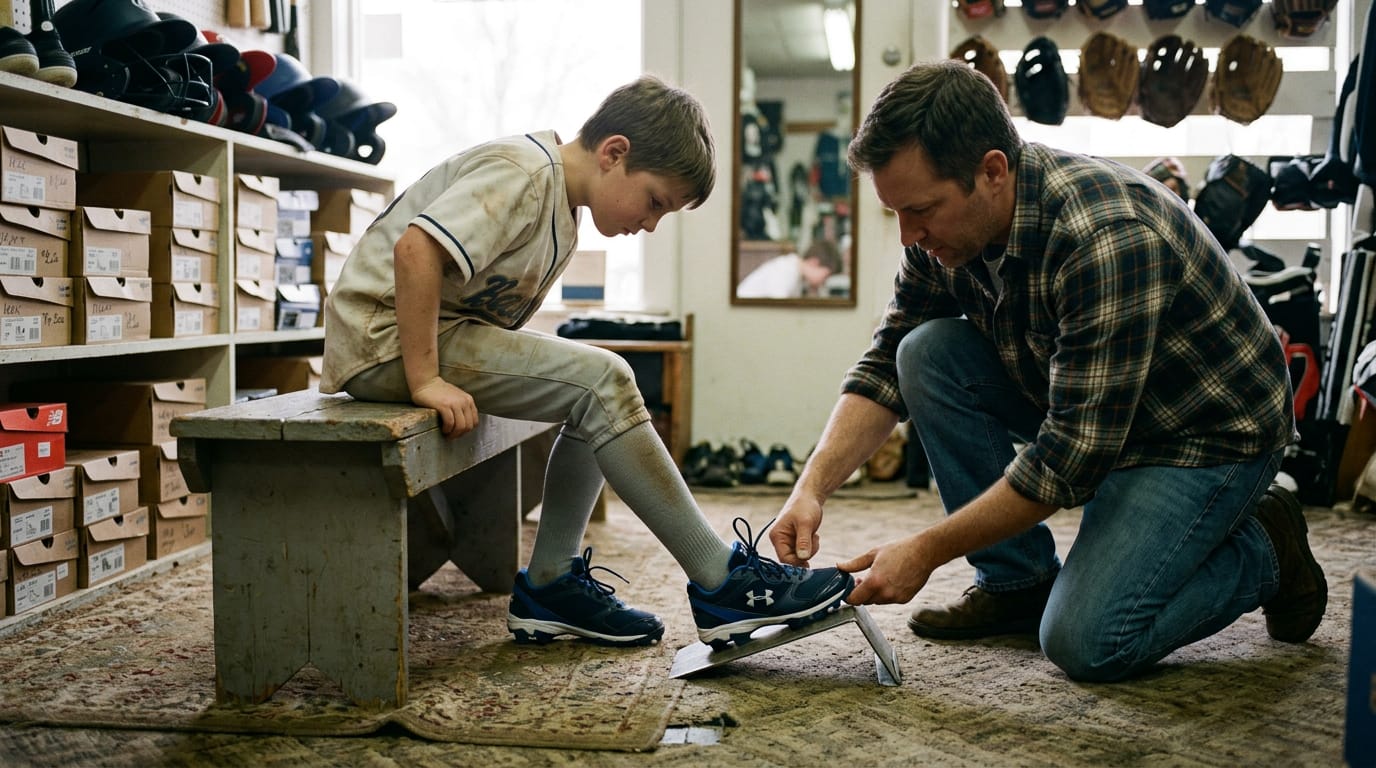
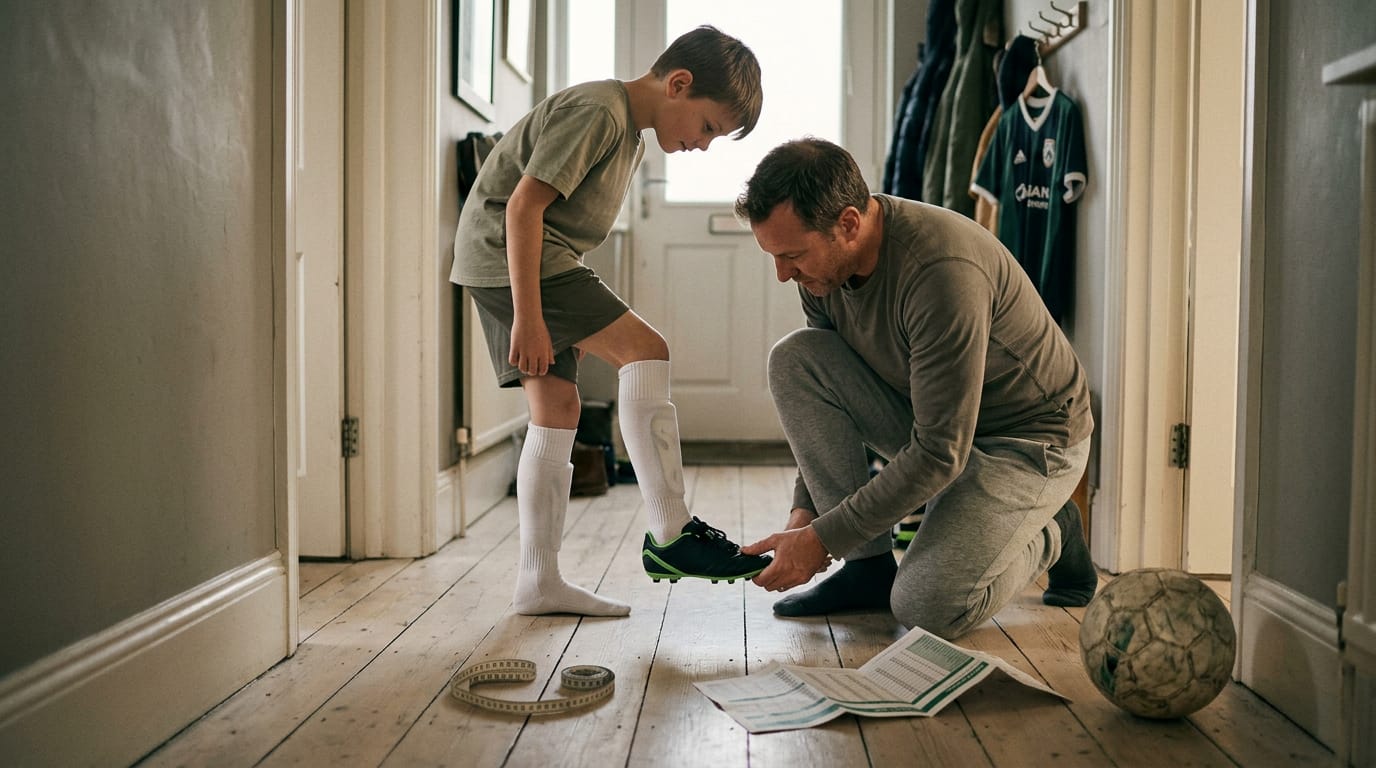
Kids’ feet grow fast, so a pair that fit in spring can pinch by midsummer. Check the size chart for your player’s age band, then measure the foot rather than trusting last year’s size.
For a wide or narrow foot, choose a matching width instead of forcing a standard fit. Leave a little toe room, but not so much that the heel slides. Fit beats brand.
For 8U and 10U players, a lightweight, flexible synthetic with a padded collar covers most needs. From 12U to 14U, bigger fields make a sturdier sole matter more.
Try this at home before you buy:
- Put on the game socks your player will actually wear.
- Stand and press the toes forward. You’ll feel a little room at the front.
- Jog a few steps on a hard floor. The heel should stay put.
Think of a parent buying cleats for a 10-year-old. Thick game socks made the toes pinch on the first step, and a quick home check would have caught it.
Cushioning that keeps feet comfortable
Look for an EVA midsole, short for ethylene-vinyl acetate, a foam layer that absorbs impact on hard infields. A padded collar and heel stop rubbing through long innings, and lightweight midsoles keep the shoe from feeling heavy.
For closures, velcro is quick for younger players, while laces let you dial in the fit. Comfort should protect the foot, not weigh it down.
Spending wisely and how long they last
Youth cleats typically last one season, so you’re buying for a window, not a lifetime. Buy a touch of extra room for longevity, but not so much that the shoe slides.
Affordable value picks exist: a plain synthetic pair often serves a young player just as well. Replace cleats once they’re outgrown or worn, such as when the tread smooths out.
Our Favorite Youth Baseball Cleats
Youth cleats come from a crowded shelf, so we’ve narrowed it to a handful of brands worth a look.
Brands and models worth considering
Start with the core picks: the Under Armour Harper and Leadoff, the Adidas Wheelhouse and Icon, and the New Balance 4040 series. If none fit, try the Nike Huarache Keystone or Mizuno Wave Lightrevo. On a tight budget, look at the Guardian and EQW options.
Pros and cons of each pair
Compare every pair on the same points so you’re not guessing. Picture a 10-year-old shortstop planting and pushing off on a damp infield. Grip on that first step matters more than a bold colorway.
- Traction and grip. The outsole, the bottom that bites into the dirt, decides how the cleat holds. Check the tread.
- Breathability. Mesh uppers let air move on a hot doubleheader.
- Fit. Read the wide or narrow notes on each listing, not just the size chart.
- Durability. A pair that wears out by midseason isn’t a bargain.
- Affordability and value. The cheapest pair only wins if it lasts the season.
The real test is how a cleat performs after ten games, not what the box promises. Fit beats brand.
Shopping listings, prices, and ratings
Listings change fast, so use this as a checklist, not a price tag. Compare sizing charts across the Adidas Adizero lineup, New Balance Velo and 3000, Under Armour Harper and Leadoff, and Mizuno Cushionrevo before you add anything to your cart.
Prices, sale discounts, and ratings are snapshots. A best seller tag shows what’s selling, not what fits your player, so treat it as a tiebreaker. Check the return policy before you buy.
Softball Crossover and Other Gear
Plenty of families end up with a kid who plays both baseball and softball. Here’s how to sort out the cleats first, then the rest of the gear. Once the cleats are sorted, the right bat size for a kid is the next decision.
Cleat options for girls and softball
Start with where your player spends most of her season. Your main choices are:
- Unisex baseball cleats. These suit a girl who plays baseball and only crosses over to softball now and then.
- Softball-specific cleats. These are the better match when softball is her main sport.
Think of a girl who plays shortstop all spring and joins a summer baseball team for a few weeks. If that stint is brief, one unisex pair may cover both seasons, so you’re not buying a second set for a short run.
Color is the fun part, and it’s a personal call for boys and girls alike. Let your player choose the look, but let the fit decide. Check your league’s gear rules before you buy.
Other youth baseball gear to buy
A few extra pieces round out the list:
- Batting gloves. They add grip on the bat handle, and a snug pair keeps your player’s hands from sliding mid-swing.
- Baseballs and bats. Ask the coach which bat and ball the league uses before you buy, so you don’t end up with the wrong one.
- Baseball pants and slider shorts. Slider shorts are padded shorts worn under the pants to cushion the hips and thighs on slides.
- Sunglasses and gloves. Sunglasses cut glare on bright fields, and a glove that fits your player’s hand and position makes fielding easier.
The gear should match the player on the field now, not the one you hope to see next year. Buy for now.
Good cleats do their work quietly. Once the first pitch is thrown, nobody is thinking about their feet, and that’s exactly the goal.
Start with your player’s age and league, check fit with a real walk around the store, and leave a little room for growth without buying a size that slides around. Watch the wear, too, and replace worn-out pairs before they cost your kid a steady stance.
Get the fit right and the rest of the season gets easier. Your player just gets to play.
References
- Athletic shoe cleats and their relationship to youth sport injuries. — digitalcommons.wpi.edu (1999)
Sources
- Athletic shoe cleats and their relationship to youth sport injuries., digitalcommons.wpi.edu,
Find your level
The Counter