How to Choose Soccer Cleats: FG, AG, Turf and Fit
Match the soleplate to the field you play on most, then fit the cleat snug with a locked heel. FG, SG, AG, turf and indoor compared, plus shin guards.
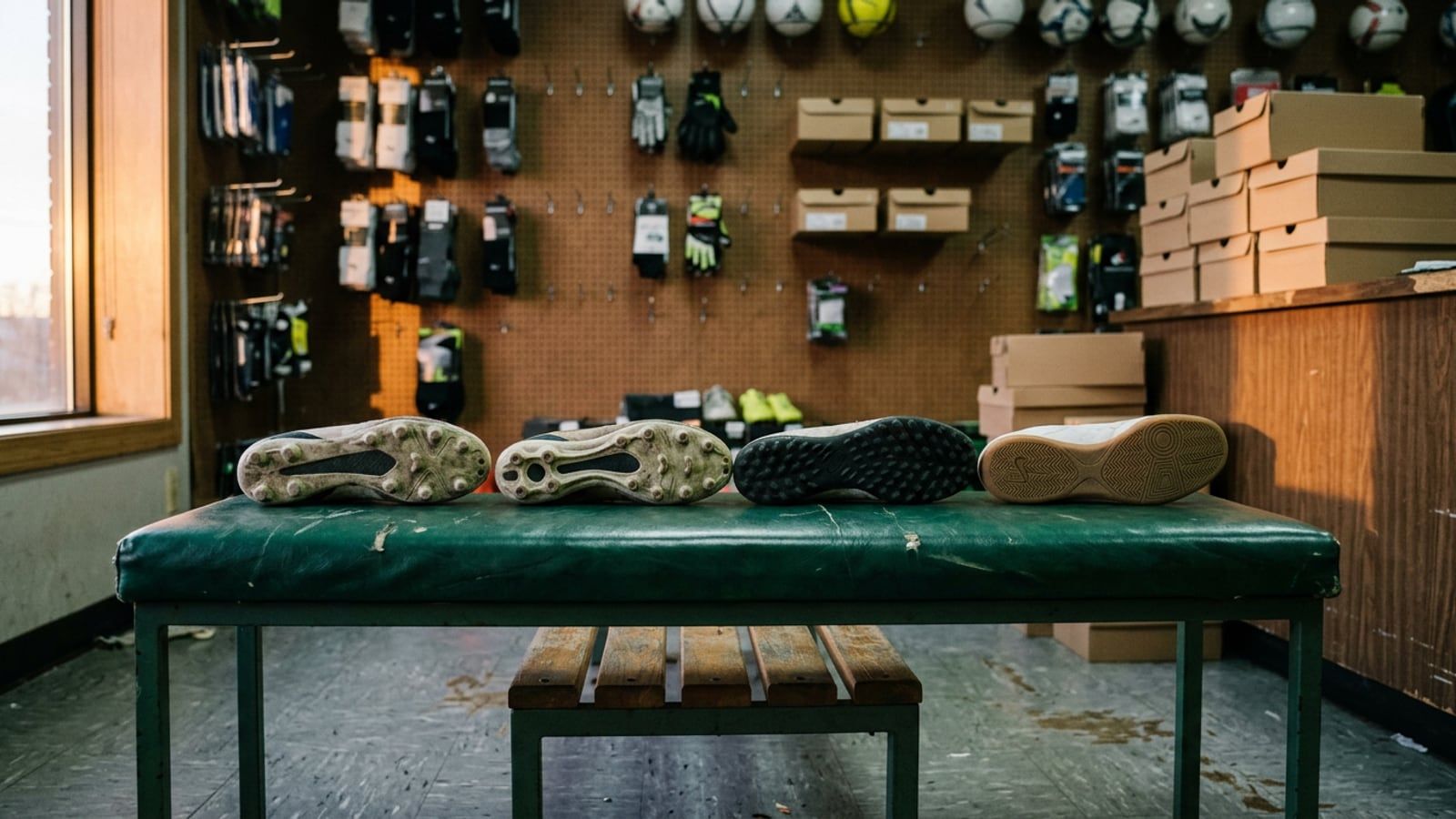
Choose soccer cleats in two steps. First, the soleplate: buy the one made for the surface you play on most, which for most players is firm grass (FG) or artificial grass (AG). Then the fit: snugger than a running shoe, with your longest toe clear of the front, no movement at the heel and nothing pinching across the forefoot. The upper, the brand and the price tier come after those two, and for most players they matter less.
Start with the field you play on
Before you look at a single cleat, think about where you actually play. Not where the tournament in June is, but where you spend most of your season: the park field, the school’s artificial pitch, the indoor facility in winter. The letters on the box are about that surface.
If you play on two surfaces regularly, buy for the one you are on most and add a cheap second pair for the other later, or look for a model the maker lists for both. A multi-ground (MG) or FG/AG cleat covers both natural and artificial grass reasonably well, though it is rarely the best on either.
Soleplates compared: FG, SG, AG, turf and indoor
Each label is a promise about one kind of surface, and the labels vary a little between brands. ProSoccer’s guide to cleat types makes the point that matters most: check the maker’s listed surfaces for the exact model, not just the letters.
| Label | Made for | Underneath | Not for |
|---|---|---|---|
| FG | Firm natural grass, dry or a little damp | Molded studs, conical or bladed | Mud, artificial grass, hard ground |
| SG | Soft, wet or muddy natural grass | Fewer, longer studs, often screw-in, some with metal tips | Firm or dry fields, any artificial surface |
| AG | Artificial grass with rubber infill | More, shorter, rounded studs | Mud, hard courts |
| MG or FG/AG | Natural and artificial grass, as the maker lists | A mix of short studs | Whatever the maker leaves off the list |
| TF (turf) | Short, hard or older artificial turf | Many small rubber nubs | Wet natural grass |
| IC or IN | Indoor courts, gyms and futsal | A flat, non-marking rubber sole | Any outdoor field |
A few things the table cannot say on its own:
- FG is the default for most youth and adult league players who play outdoors on grass.
- SG cleats with screw-in or metal studs are for adults on genuinely soft fields. Check your league’s rules before buying a pair, as youth leagues often do not allow metal studs.
- Turf shoes are the most forgiving pair to own. They grip on short turf and on hard, dry ground, and they double as training shoes. Many young players start in a pair.
- Indoor shoes really are for indoors. Their flat soles slide on grass, and facilities often require non-marking soles.
Nike’s own fit and selection guide adds a practical reason to stick to the right surface: wearing a cleat only on the surface it was designed for helps it last longer.
How soccer cleats should fit
Soccer cleats fit closer than any other athletic shoe you own, because touch on the ball depends on how little space there is between your foot and the leather. If you have read our guide to fitting running shoes, forget the half inch in front of your toes: a cleat wants much less.
- Measure both feet and fit the larger one. Stand on a sheet of paper, mark your heel and longest toe, and look the longer foot up on the maker’s size chart for that line.
- Wear the socks you play in. Soccer socks with shin guards under them are thicker than everyday socks, and the thickness changes the fit.
- Stand up, then move. Your longest toe should be close to the front but not pressed against it. Walk, jog and cut side to side if the store lets you.
- Check the heel. A well-fitting cleat has no movement at the heel. If the heel lifts with the laces snug, the cleat is too long or the wrong shape for your foot.
- Check the width. The forefoot should feel held all round, not pinched at the little toe. Some lines are cut narrower than others, and Nike, for one, suggests half a size up in its narrow, contoured line for players with wider feet.
Tip: if a toenail or the tip of a toe is pressing on the front, try the next size or a different model. Do not count on the upper stretching enough to fix it.
Nike says its cleats generally fit true to your regular shoe size, and that recreational players do not need to size down the way some elite players do. Sizing still varies by brand and by line within a brand, so try the exact model or buy where returns are easy.
Leather, synthetic or knit uppers
- Leather (calfskin or kangaroo, often called k-leather) molds to your foot and feels soft on the ball. It stretches with wear, so fit it snug from the start, and it needs drying and a little care to last.
- Synthetic uppers are the most common today. They are light, cope well with wet fields and need little break-in. Nike notes that its synthetic uppers are made to be comfortable out of the box and will not overstretch the way natural leather can.
- Knit uppers wrap the foot like a sock, often with a built-in collar. They feel close and comfortable, and the collar is a matter of preference rather than performance.
What to buy at each level
Starting. A molded FG cleat, or a turf shoe if your child plays mostly on turf, from the lower or middle tier of a maker’s range. At this level fit is everything and the top-tier soleplate adds nothing you will notice. Buy shin guards at the same time.
Regular. You play every week and know your surface. The middle tier of a range is where most of the comfort and durability is, and where a leather or a better synthetic upper starts to show. If you play on both grass and artificial grass, this is when a second pair for the second surface earns its place.
Serious. You train several times a week or play competitively. The top tier brings lighter soleplates, thinner uppers and closer fits, and some elite players size down in them. They are also less durable, so many serious players keep a newer pair for games and an older one for training.
The team sports list on The Counter sets out the gear each level needs across soccer and other sports.
Shin guards and socks
Shin guards are not optional. Law 4 of the Laws of the Game, from the IFAB, lists shin guards among a player’s compulsory equipment, along with a shirt, shorts, socks and footwear: they must be covered by the socks and give suitable protection, and the player is responsible for their size and suitability. Youth leagues require them too.
Fit them with the cleats, not separately. The KidsHealth soccer safety guide says a shin guard should start just below the knee and fit snugly around the ankle, and suggests bringing the soccer socks and cleats when you buy them. Slip-in guards with a separate sleeve suit older players; guards with an ankle stirrup stay put better on young ones.
Socks go over the guards, and any tape on the outside of a sock has to match its color under Law 4. A grip sock under the team sock is a matter of preference.
When cleats are worn out or outgrown
A pair is done when:
- The studs are worn down or uneven, especially at the front, where you push off and turn.
- The soleplate is coming away from the upper, at the toe or along the sides.
- The upper has split or stretched until the heel no longer holds.
For children, outgrown comes before worn out. Check the fit at the start of every season and whenever they complain: press on the toe while they stand, and watch for red marks on the toes or the heel after a game. As with a youth baseball bat, buy for the foot they have this season, not the one they might have next year. Our Kids’ Gear section covers sizing and growth room across sports, and the Team Sports section covers the rest of the gear bag.
Questions
Can I wear FG cleats on artificial turf?
FG cleats are designed for firm natural grass, and makers advise wearing a cleat on the surface it was made for. On artificial grass an AG cleat, or a model the maker lists for both FG and AG, is the better choice. Some facilities also set their own footwear rules, so check before you play.
Should soccer cleats feel tight?
Snug, not painful. Your heel should not move, your foot should not slide forward and your longest toe should not be pressed against the front when you stand. Pressure on a toenail or a pinch across the forefoot means another size or another model, not a break-in period.
Can you wear baseball cleats for soccer?
It is not a good idea. Many baseball cleats have a stud at the front of the toe, which many youth soccer leagues do not allow, and metal baseball spikes are a different thing altogether. Under the Laws of the Game a player may not wear anything dangerous, so the referee has the final say on the day.
Should I buy my child’s cleats a size up?
A little room for growing feet is fine, and Nike says kids may need a slightly roomier fit. A full size up is not: extra length lets the foot slide and the heel lift, which costs touch and invites blisters. Fit the heel and the toe today, and check the fit again at the start of each season.
Sources
- Law 4: The Players’ Equipment, The IFAB
- How Should Nike Soccer Cleats Fit? A Sizing and Selection Guide, Nike,
- Different Types of Soccer Cleats: A Guide to Every Surface, ProSoccer,
- Safety Tips: Soccer, KidsHealth, Akron Children’s Hospital,
Find your level
The Counter