Cycling Helmet Replacement: When and Why to Swap Yours
Cycling helmet replacement starts with checking crash history, age, and hidden damage. Know when yours is unsafe and what to check before buying a new one.
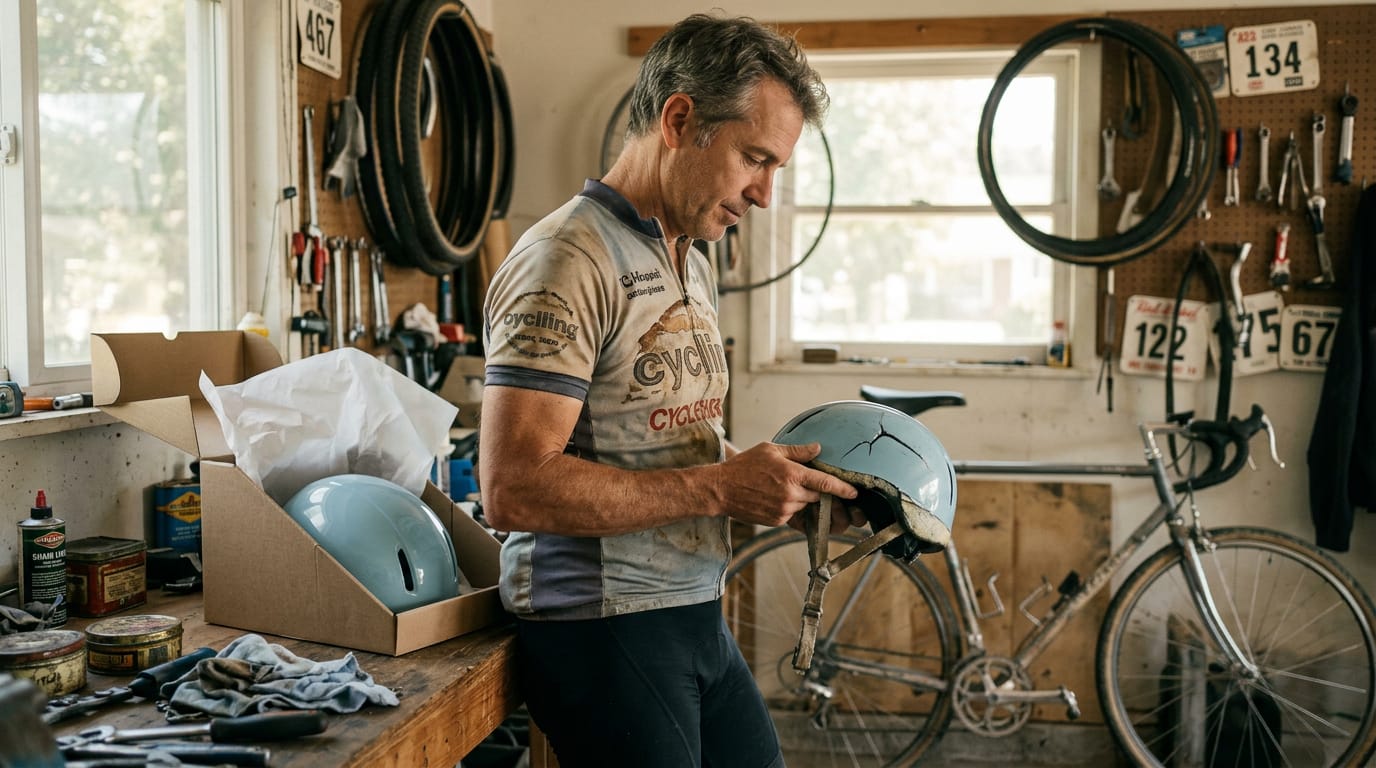
Your bike helmet has probably been hanging on the same hook for seasons, looking fine enough to keep using. But helmets don’t always show their wear, so knowing when to replace one matters.
This guide covers when and why to replace a cycling helmet, from crashes and age to damage you can spot. It also gives you a clear path from deciding whether to swap yours to choosing the right replacement, with notes on kids’ fit and disposal.
Whether you’re outfitting a young rider or upgrading your own gear, you’ll know what to check before you buy.
Cycling Helmet Replacement After a Crash
Your helmet is designed to take the damage so your head doesn’t. Knowing when to replace it is one of the simplest safety calls you’ll make.
Swap it out after a significant hit
Think of a weekend rider who goes over the bars on a gravel descent. The expanded polystyrene (EPS) foam inside is designed to absorb one hit: it crushes, and it stays crushed. The helmet protects you by giving way, not by bouncing back.
Manufacturers recommend replacing it after a significant impact, and some airbag-style models are built for single use. Some brands also run crash replacement programs, so check yours before paying full price.
Replacing it means the next descent starts with foam that can still do its job.
Damage you can’t see
A helmet can look fine and still be compromised. Internal cracks often don’t show on the outside, so a clean shell proves little. Light impacts still matter, too, even when the paint barely shows a mark.
Unsure if your helmet was hit
Shock from a crash can cause memory gaps, so you may not recall hitting your head at all. Check the outer shell for scratches or gouges, which can be a clue that something hard made contact.
Picture a club ride where one rider clips a pothole and takes three others down. Everyone in that pileup should check their own helmet, because the rider who stayed upright may have hit something too.
A two-minute look in the parking lot beats finding out on the next ride. When in doubt, replace it.
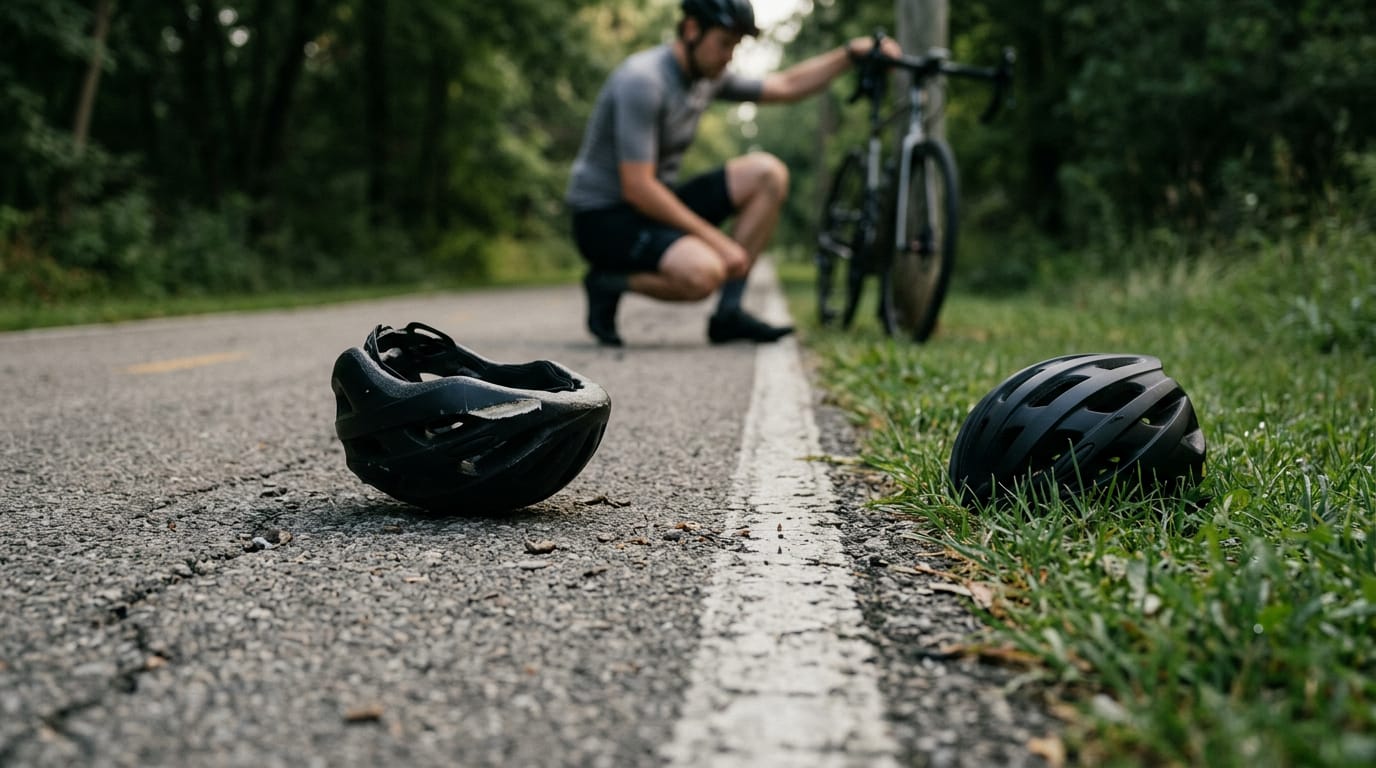
Dropped helmets and how hard they landed
Whether a dropped helmet needs replacing depends on the height and surface of the impact, and research on friction in oblique helmet impacts shows that surface changes the rotational forces on the head. Two things decide it:
- Height. A short drop and a long one aren’t the same impact.
- Surface. Asphalt can be more damaging than grass, according to a 2020 study on surface roughness by Petersen and colleagues.
You’ll often hear a table-height rule of thumb: a drop from about table height is the cutoff. The threshold is debated, so treat it as a starting point, not a verdict.
Higher-speed crashes and special cases
A higher-speed crash, including one on an e-bike, calls for the same replace-it rule, even when the damage looks modest.
If you fall but your helmet never touches anything, such as a slide onto your shoulder, the helmet hasn’t taken a hit, so there’s nothing to replace.
Kids often take lower-impact falls, but a real hit still calls for a new helmet, so don’t let your kid keep wearing a damaged one. Minor dings aren’t always critical, but cracks are a different story, so look closer before you decide.
How Long a Helmet Actually Lasts
Helmets don’t come with a simple countdown, so you’ll need to weigh age, use, and condition together. Here’s how often to swap one out and what actually wears it down.
How often to replace a helmet
There’s no fixed expiration date for a helmet, but the guidance clusters around a window.
According to Cycling Weekly, Consumer Reports, the independent U.S.-based publication, indicates you should routinely replace your helmet every three to five years. Those are guidelines, not guarantees.
Manufacturers point to a specific number: helmets.org notes that most now recommend replacing helmets after five years, though some of that may be just marketing.
Materials age even when a helmet sits unused in a closet, so a helmet you rarely ride still has a clock running.
If you ride heavily every week, plan on replacing sooner.
Think of a club rider who trains most days of the week through a hot summer: their helmet takes more sweat and sun than a casual rider’s ever will, so checking it each season beats waiting for the calendar.
Use the timeline as a reason to inspect, not the only reason to replace.
What wears a helmet down
Three everyday factors take a toll:
- UV radiation. Sunlight wears on the helmet, especially when it’s parked in a sunny spot.
- Heat. Time in a parked car or hot garage works on the materials too.
- Sweat. It works into the padding and straps over a season.
Checking Your Helmet for Damage
Before you decide anything, give your helmet a slow, honest once-over. Here’s what to look for, including the damage you can’t see right away.
Signs of damage you can spot
Start on the outside, then work your way in. Look for:
- Cracks in the shell. Hold it up to a window and look for hairline or visible cracks.
- Dents and compressions. Run your fingers over the surface. Any spot that’s pushed in or soft has taken a hit.
- Scratches and deformation. Deep gouges, or a helmet that no longer sits round, are signs it’s been stressed.
- Frayed or damaged straps. Check the straps for fraying, stretching, or a cracked buckle.
- Loose adjustment systems. If the dial no longer tightens or holds its setting, the helmet won’t stay put.
- Check under the padding. Pull out the removable pads and look for cracks or crushed foam beneath.
Past impacts, even light ones
Consider a weekend rider who slides out on wet gravel and clips the helmet back on for Saturday’s ride. Did it hit pavement or a curb? If so, it has already absorbed one hit, and the real question is whether it can handle the next fall.
Even light impacts affect foam, which is the hardest part to judge. The impact foam inside does the real work in a crash, and a tip-over that barely scuffs the shell can still crush it.
So a helmet can look fine and still have lost much of its protection. Crushed foam doesn’t bounce back.
Looking After Your Helmet in the Meantime
Until a new helmet arrives, a few simple habits keep the current one in good shape.
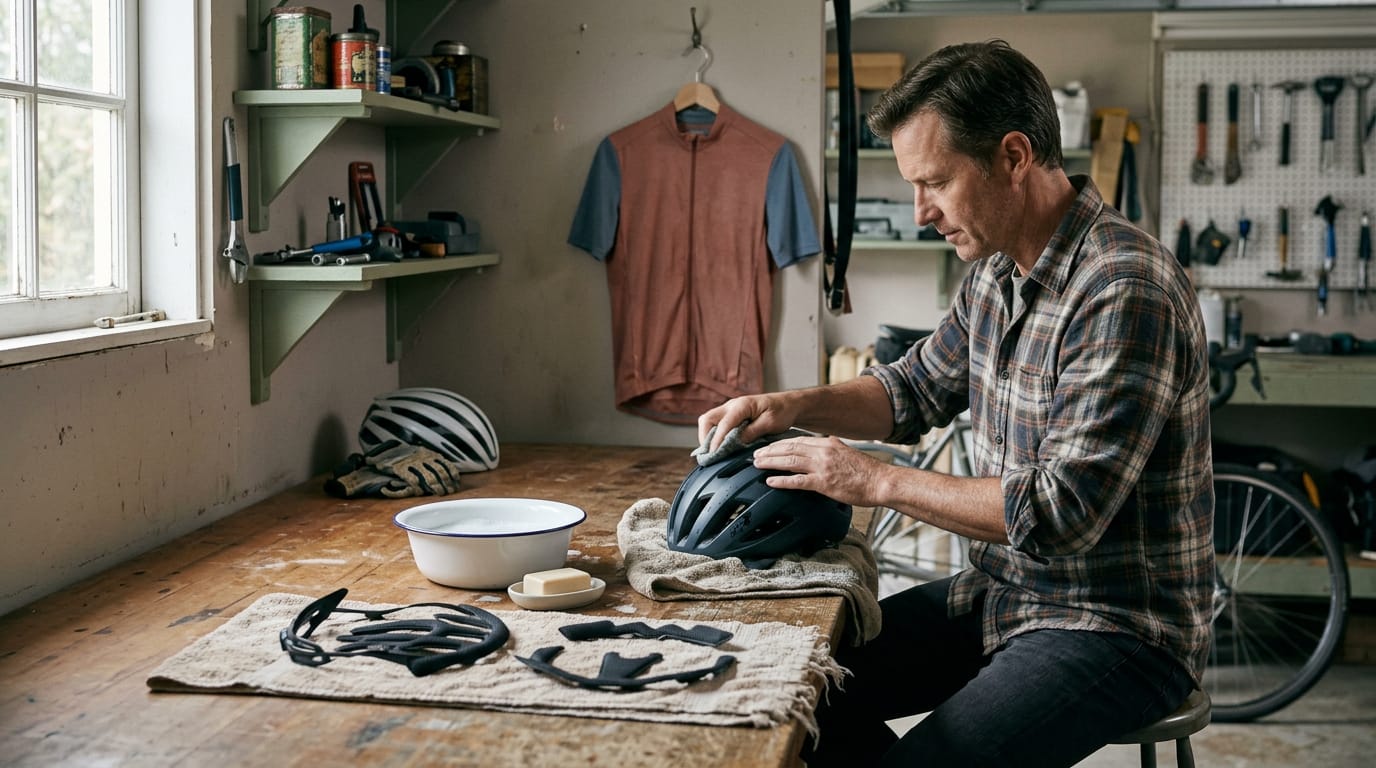
Clean gently and store it somewhere dry
Picture a weekend rider who tosses the helmet on a hook after every commute. Sweat soaks into the pads and grit builds up on the shell, so it soon smells like a gym bag. A little care each week fixes that. The goal is routine rather than rescue.
- Hand-wash the removable pads in lukewarm water with mild soap, then rinse them well.
- Wipe the shell with a damp cloth to lift dirt and sweat.
- Air dry fully before you put it on or store it, and keep it away from heaters.
- Store it cool and dry, never in a hot car or a damp basement.
- Avoid chemicals and sunlight. Harsh cleaners and long hours in the sun can wear down the materials.
Riding in a damaged helmet for now
Think of a parent whose kid’s helmet has a crack in the shell and a replacement still a few weeks off. Keeping it on still beats riding bare, so old helmet beats none holds true for now.
Treat it as a bridge, not a fix: a damaged helmet may not protect as well as an intact one, so swap it as soon as you can.
Insurance is the other thing to check. Before you keep riding a damaged helmet, ask your insurer or read your policy so you know how damage would be viewed after a crash.
When the new one arrives, don’t just toss the old helmet in the bin or hand it to a friend. A damaged helmet is best retired for good: cut the straps so no one tries to wear it, then follow your local rules for disposing of it.
Buying a New Cycling Helmet
Once it’s time to replace your helmet, the choice comes down to price, the safety label, and fit. Here’s how to work through each.
How price relates to safety
Expensive doesn’t automatically mean safer. A properly certified cheap helmet can offer comparable protection, since the Bicycle Helmet Safety Institute found the basic impact protection of its cheap test helmets equaled the expensive ones.
The extra money mostly buys comfort and weight, not protection. A review of cyclist head injuries notes that higher-priced models may offer lower weight and greater comfort.
Brand-name helmets run about 50 to 70 euros, and a helmet costs far less than a head injury. Fit beats brand.
Safety labels to look for
Check the label itself, not just the marketing on the box. Look for a label citing the Consumer Product Safety Commission (CPSC) standard, and make sure the helmet says it meets current standards. A label you can point to beats a slogan.
Getting the right size and fit
Measure your head circumference with a soft tape around the widest part of your head, just above your eyebrows, then match it to the manufacturer’s size chart. Most adult heads fall near the average, so standard sizes usually cover you.
Don’t size up for growing room or down for a snugger feel: a helmet that’s too big slides around, and one that’s too small pinches. Many helmets have a dial at the back that tightens the fit with a turn.
Use the 2-2-2 rule as a check:
- the front edge sits about two finger-widths above your eyebrows,
- the straps form a V just below your ears,
- and two fingers fit between the chin strap and your chin.
Aim for snug, not tight. It shouldn’t rock side to side or slide back when you shake your head.
Helmet types and the features that matter
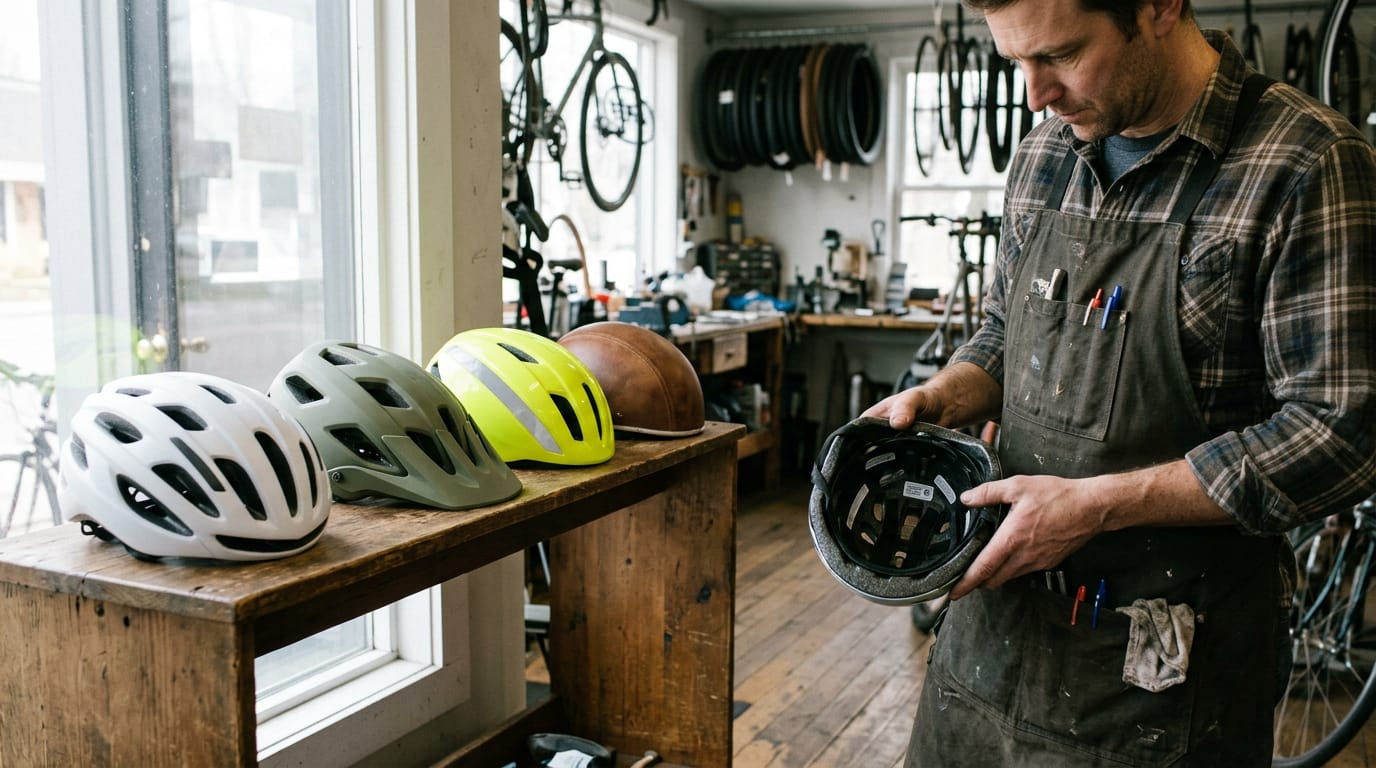
Match the helmet to how you ride:
- Road: light weight and airflow for steady miles.
- Mountain bike (MTB): more coverage for rough trails, often with a visor.
- Commuter: everyday comfort and visibility in traffic.
- Cruiser: a relaxed look for easy rides.
A visor shades your eyes and blocks some sun and rain, but it adds bulk and can catch wind. Bright or reflective colors help drivers spot you, especially at dawn and dusk.
Some helmets add MIPS (Multi-directional Impact Protection System), a liner that adds rotational protection in angled crashes. A skate helmet can look like a bike helmet, so check that the label says it’s certified for cycling.
Helpful guides and kids’ sizes
Buying guides can help you narrow the field, but the label and fit checks still come first. Kids’ helmets come in their own sizes, so measure your child’s head and use the children’s chart, not your own.
Kids outgrow helmets fast, so recheck the fit at the start of each season. Think of a parent buying a first helmet for a nine-year-old who grew over the winter. A quick measurement and a 2-2-2 check before the first ride saves a trip back to the shop.
Swapping Out Helmet Parts
Plenty of helmet parts can be replaced on their own, which is often smarter than buying a whole new lid. Here’s what to swap, what to match, and which add-ons are worth your money.
Fresh pads for comfort and less odor
Pad kits are brand-specific, so match the kit to the exact model, not just the brand. Fresh pads improve comfort and fit, because worn pads let the helmet shift. Pads that wick moisture also help reduce odor, and you’ll want to replace fit pads yearly.
Take a weekend rider who logs three early-morning rides a week. By August her pads smell and feel flat, so she orders the kit made for her exact helmet. The snug fit returns, and the helmet feels like new again.
Fit dials and which models match
A BOA fit system (the rotating dial that tightens the inner band) only works with the parts built for it. Compatibility comes down to the model and the size, not the brand name, so check both before you order.
If you’re buying for a kid, confirm whether the helmet uses one of the kids’ Headmaster systems.
Consider a parent whose nine-year-old’s dial cracks midseason. They look up the model and size, order the matching part, and the helmet fits securely again before the next practice. Model first, size second.
Bolt-on visors and replacement shields
Brand-specific replacement visors attach with hardware, so a bolt-on swap is a home job if you follow the instructions included with the part. Lenses and shields work the same way: you replace the part that wore out, not the whole helmet.
Picture a commuter who rides into low morning sun. They keep a second shield in their bag, swap it in when the light changes, and never buy a second helmet just to change the view.
Mounts, storage pods, and add-on pricing
Camera and light mounts and helmet storage pods can add useful features, but each has to match your helmet’s model.
Add-ons add up quickly, so compare the full cost of the mount plus any fitting parts, then look for bundles or discounts before you check out.
Think of a parent who wants a light on their kid’s helmet for dusk practices. They confirm the mount fits the model, skip the storage pod they don’t need, and the kid heads home visible after dark without a pile of extras.
Buy the add-on you’ll use, not the one that looks handy in the cart.
Replacing a helmet isn’t overkill. It’s a simple way to trust the gear that protects your head on every ride. Check it after a crash, keep an eye on its age and condition, and choose a replacement that fits the rider who’ll wear it.
Good gear disappears once you’re riding, and that’s the whole point. A helmet that fits well and is in good shape lets you focus on the road or trail ahead instead of wondering whether it’s still doing its job.
References
- A Review of Cyclist Head Injury, Impact Characteristics and the Implications for Helmet Assessment Methods — pmc.ncbi.nlm.nih.gov (2023)
- Evaluation of Coefficient of Friction in Oblique Helmet Impacts: An Experimental and Numerical Study — urn.kb.se (2022)
- The effect of surface roughness on oblique bicycle helmet impact tests — journals.sagepub.com (2020)
- How often should you replace your cycling helmet? — cyclingweekly.com (2026)
- When Should I Replace My Bicycle Helmet — helmets.org
- Testing Cheap and Expensive Bicycle Helmets — helmets.org
Sources
- How often should you replace your cycling helmet? | Cycling Weekly, cyclingweekly.com,
- When Should I Replace My Bicycle Helmet – BHSI, helmets.org
- A Review of Cyclist Head Injury, Impact Characteristics and the Implications for Helmet Assessment Methods, pmc.ncbi.nlm.nih.gov,
- Testing Cheap and Expensive Bicycle Helmets – BHSI, helmets.org
- The effect of surface roughness on oblique bicycle helmet impact tests - Philip G Petersen, Lloyd V Smith, Derek Nevins, 2020, journals.sagepub.com,
- Evaluation of Coefficient of Friction in Oblique Helmet Impacts: An Experimental and Numerical Study, urn.kb.se,
Find your level
The Counter