What Golf Clubs Do Beginners Need? A Starter Checklist
Eight clubs or so, not fourteen: the starter checklist, what each club is for, box set or half set or used, and the shaft and forgiveness to get right.

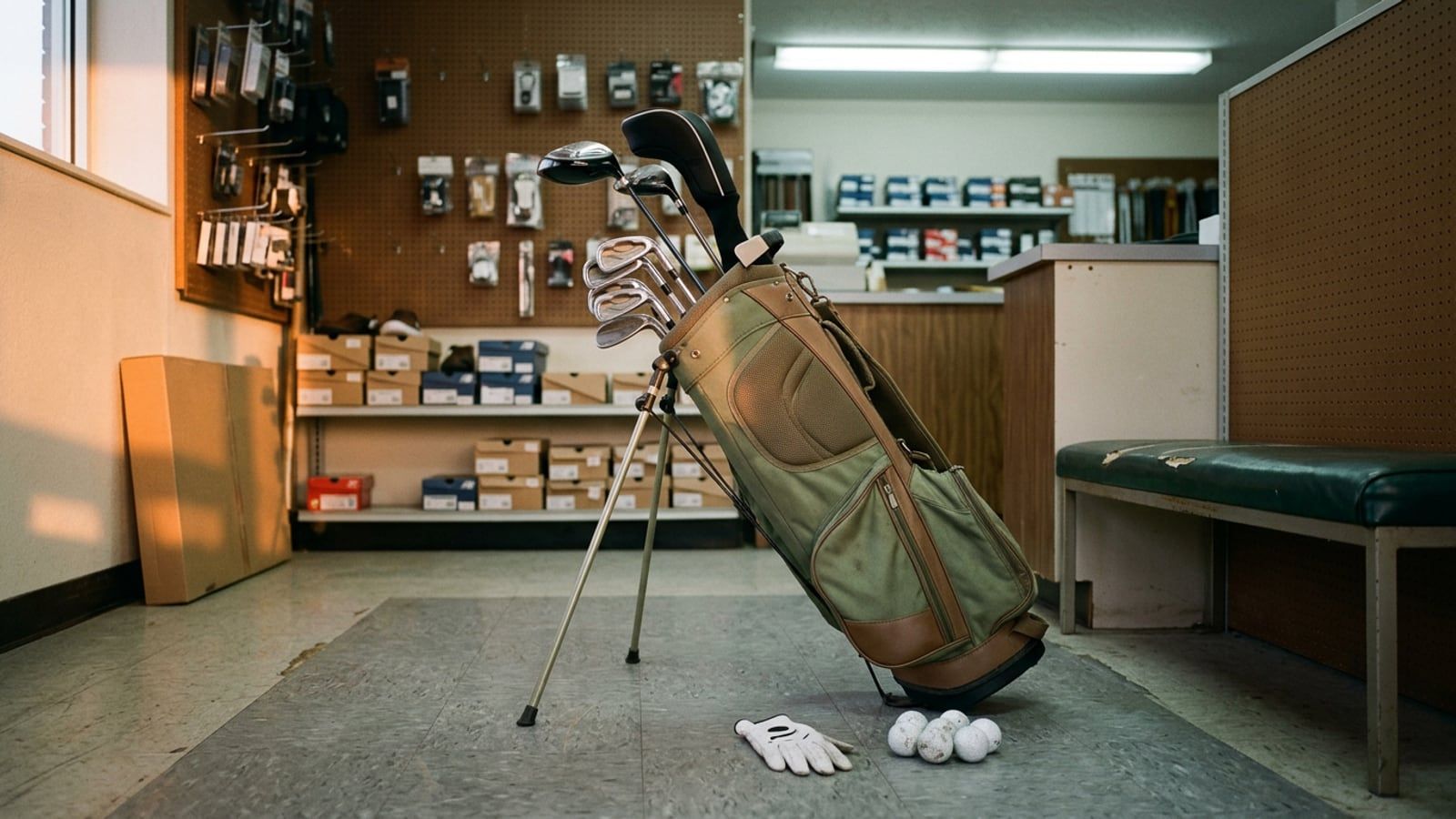
A beginner needs seven to nine clubs, not fourteen: a fairway wood, a hybrid, three or four irons from the 6 or 7 down to the 9, a pitching wedge, a sand wedge and a putter, plus a driver if you want one. What matters more than the count is that the shafts suit your swing speed and height and that the heads are forgiving. Get those two right and a box set, a half set or a used set will all do the job for your first season.
Fourteen is a limit, not a target
Package sets often advertise “14 pieces”, which makes it sound as though a full bag is the starting point. It is the ceiling. Rule 4.1b of the Rules of Golf says a player may not start a round with more than 14 clubs; it sets no minimum, and a player who starts with fewer may add clubs during the round up to the limit. (The “14 pieces” in a box set often counts the bag and headcovers too.)
For a new golfer, fewer clubs is the better start. The gaps between, say, a 7-iron and an 8-iron are small when your contact is still inconsistent, so carrying both buys you very little. Fewer clubs also means fewer decisions over each shot, a lighter bag and money left over for lessons and range balls.
The starter checklist
This is the bag we would put together for a first season. Clubs marked optional can wait until you know you need them.
| Club | What it is for | First season? |
|---|---|---|
| Driver | The longest shots from the tee on longer holes | Optional |
| Fairway wood (5-wood) | Tee shots while the driver is unreliable, and long shots from the fairway | Yes |
| Hybrid (4 or 5) | Long shots from the fairway and light rough, in place of the 3, 4 and 5 irons | Yes |
| Irons (6 or 7 through 9) | Approach shots into the green from mid and short range | Yes: three or four of them |
| Pitching wedge | Short approaches and longer chips | Yes |
| Sand wedge | Bunker shots, short pitches and chips that need to stop | Yes |
| Putter | Everything on the green | Yes |
That comes to eight or nine clubs. A half set goes lower still: a fairway wood or hybrid, the 5, 7 and 9 irons (or the 6 and 8), a wedge and a putter is enough to play nine holes and learn which distances you actually hit.
A few notes on the choices:
- Skip the long irons. A 3, 4 or 5 iron has a small head and little loft, and most new golfers hit a hybrid of the same number higher and straighter.
- A 5-wood before a 3-wood. The extra loft makes it easier to get the ball in the air from the ground.
- Pick the putter you can aim. A mallet putter, with a larger head and alignment lines, is easier for many beginners to line up and keep steady than a narrow blade.
Box set, half set or used clubs
Each route has a place. What decides it is your budget, your height and how sure you are that you will keep playing.
| Option | Good for | Watch for |
|---|---|---|
| Complete box set | One purchase with matching clubs, headcovers and a stand bag | Standard lengths and one flex; more clubs than a first season needs |
| Half set | Trying the game, nine holes, a smaller budget | You will add clubs within a season or two if you keep playing |
| Used clubs, mixed | The most club for the money, and better heads than the price | Shafts, lengths and lofts that do not match each other or you |
A complete set built for beginners, like the Wilson Profile set on our Gear page, comes with forgiving heads and a stand bag, in right- and left-handed versions and a version for taller golfers. Check what is in the box and which flex the shafts are before you buy, because the same name can cover more than one configuration.
Used clubs can be excellent value, but buy from a seller that grades condition and takes returns. GlobalGolf’s condition ratings, for example, run from Mint (no previous use) through Excellent and Very Good to Value (played frequently, cosmetic blemishes, fully playable), and say what wear each grade allows; its Certified Preowned clubs also pass an inspection and carry a 12-month limited warranty. Cosmetic marks on the face and sole do not affect how a club plays; a worn, shiny grip does, but a new grip is a small repair compared with a new club. Pass on old blade irons, however cheap, and on any set whose shafts are stiffer than your swing needs.
Get two things right: the shaft and forgiveness
Shaft flex and length
The shaft decides how high the ball launches and how well you can control it, and the wrong flex is the most common mistake in a beginner’s bag. Flex is chosen by swing speed, measured with the driver. TGW’s shaft flex chart is a typical retailer’s version:
| Driver swing speed | Flex |
|---|---|
| Under 60 mph | Ladies (L) |
| 60 to 75 mph | Amateur (A) |
| 75 to 85 mph | Senior |
| 85 to 95 mph | Regular (R) |
| 95 to 110 mph | Stiff (S) |
| Over 110 mph | Extra stiff (XS) |
Treat it as a starting point: flex labels are not standard, so one maker’s regular can play like another’s stiff. Most new golfers do not know their swing speed, and many golf stores and ranges with a launch monitor will measure it in a few minutes. Go by your average over several swings, not your best one. If you are unsure, a softer shaft is the safer mistake: a shaft that is too stiff for your swing tends to send the ball lower and shorter than it should go.
Length matters as much. Off-the-shelf clubs are built for golfers of about average height. If you are well above or below it, look for a set made in tall or petite lengths, or have used clubs lengthened or cut down by a club repair shop.
Forgiving heads
Forgiveness means the club still sends the ball a reasonable distance and direction when you miss the center of the face, which as a beginner you will. Look for:
- Irons described as game-improvement or super game-improvement: a cavity back, a wide sole and weight moved to the edges of the head.
- Hybrids in place of long irons, for the reasons above.
- A driver, if you buy one, with a large head and 10.5 degrees of loft or more. The PING G440 MAX on our Gear page, which PING calls its most forgiving G440 model, comes in 10.5 and 12 degree lofts, though it is a club worth buying through a fitting.
Balls, a bag, a glove and shoes
The rest of a starter bag costs less than one club, and most of it you can take your time over.
- Balls: you will lose some, so do not start with tour balls. A two-piece, low-compression ball such as the Srixon Soft Feel suits slower swings; recycled or used balls are fine for the range and a first few rounds.
- A bag: a light stand bag is the most useful, and box sets include one. A cart bag only makes sense if you always ride or use a push cart.
- A glove: one glove, on your lead hand (the left hand for a right-handed golfer). It should fit snugly with no loose material across the palm.
- Shoes: golf shoes help you keep your footing, but clean sneakers with good grip will do for the range and a few rounds. Check the course’s dress code; some ask for golf shoes or soft spikes.
- The small things: tees, a ball marker, a pitch-mark repair tool and a towel.
When to book a fitting
A full fitting, where a fitter watches you hit on a launch monitor and adjusts shaft, length, lie angle and grip, is worth booking when:
- you are well above or below average height, or have unusually long or short arms, and standard lengths feel wrong from the first swing;
- your current clubs feel heavy, whippy or too long, and the ball flight is consistently too low or too high;
- you have played a season or two, your swing is repeatable, and you are about to buy a new set or a new driver.
It is less useful in your first months, when your swing will change week by week. Some stores fit for free when you buy and others charge, so ask first. Before your swing settles, a few lessons with a teaching professional will usually do more for your scores than any club, and a good teacher will tell you when your clubs are the problem.
What to add next
Once you have played for a season, the gaps in your bag will show themselves: a distance you keep facing with no club for it. Add one club at a time to fill them.
- A gap wedge, if there is a big distance gap between your pitching wedge and sand wedge.
- The missing irons or a second hybrid, to even out the gaps between the clubs you have.
- A driver, once your fairway wood is reliable from the tee and you want more length.
- A rangefinder, when you want to know your distances for certain rather than guessing them.
When you are ready to upgrade properly, The Counter’s golf list, by level, says what is worth spending on at each stage. For more on clubs, balls and fitting, see our Golf section. Choosing a racket works on much the same principle, by the way: our guide to choosing a tennis racket by level and grip size starts from the player you are now, not the one on the box.
Questions
How many clubs should a beginner carry?
Seven to nine is plenty. The Rules of Golf allow up to 14, but that is a maximum, and you can play a round with fewer. A smaller bag means fewer decisions over each shot and less money spent on clubs you would rarely hit.
Is a complete box set good for a beginner?
Often, yes. A box set gives you matching woods, irons, wedges, a putter and a bag at one price, with forgiving heads and shafts suited to a moderate swing. Check that the flex and length suit you; a set built for an average-height golfer will not suit someone well over or under average height.
Should a beginner buy used golf clubs?
Used clubs are a sensible way to start, as long as the shafts and lengths suit you. Buy from a retailer that grades condition and offers returns, and check the grips, which are cheap to replace but often worn. Avoid old long irons and blade-style irons, which are hard to hit for a new golfer.
Does a beginner need a driver?
Not at first. The driver is the longest club in the bag and the hardest to hit straight, and many new golfers tee off with a fairway wood or a hybrid until their contact is steady. If you do buy one, pick a forgiving head with 10.5 degrees of loft or more.
When is a club fitting worth it?
When you are well above or below average height, when your current clubs feel too long, short, heavy or whippy, or when you are buying a new set after your first season or two. Before your swing settles, a few lessons usually do more for your game than a full fitting.
Sources
- Rule 4: The Player’s Equipment, The R&A, Rules of Golf
- Golf Shaft Flex Chart, TGW (The Golf Warehouse)
- Used Golf Club Condition Ratings, GlobalGolf
Find your level
The Counter