How to Choose a Tennis Racket: Size, Weight and Grip
Head size, weight, balance, strings and grip size by level, how to measure your grip, whether to buy strung and why a demo week beats any spec sheet.

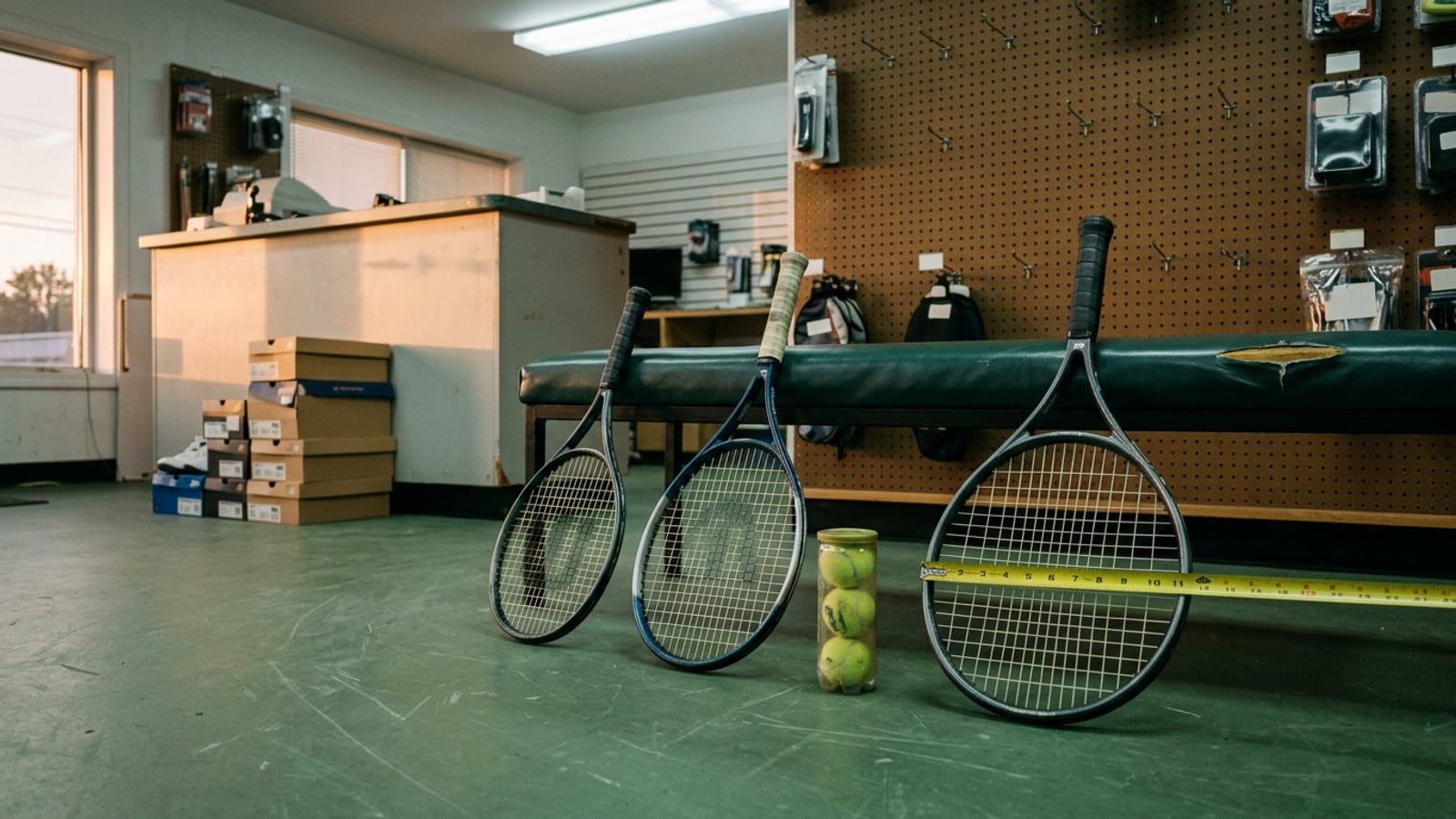
Buy for the tennis you play now. If you are starting out, that means a light racket with a large head, sold strung, in a grip that fits your hand. If you play most weeks, it means a midplus frame you have tried on court before paying for it. Only players who swing fast and hit cleanly need a heavier racket with a smaller head. The grip size is the one number to get right at every level, and it takes a ruler and thirty seconds to find.
Pick the level you play now
Rackets are built along a line from power and forgiveness to control and precision. A larger head and an open string pattern add forgiveness and easy power; a smaller head and a denser pattern add control. Weight is the third dial: a light frame is easy to swing, and a heavier one is more stable but asks more of your arm. The right place on that line depends on how often you play and how cleanly you hit, not on what the pros use.
| Level | Head size (Wilson’s chart) | Weight | What to look for |
|---|---|---|---|
| Starting | 105 to 110 sq in | Light, about 9 to 10 oz strung | Sold strung, soft strings, an easy swing |
| Regular | 100 to 105 sq in | Between light and heavy | Demoed first, strung to suit you, a grip that fits |
| Serious | 95 to 100 sq in | Heavier, about 11 to 12 oz strung | Your own string setup, a second identical racket |
Pick the lower level if you are unsure. A forgiving racket will not hold back a beginner’s game, but a heavy, small-headed one will make every off-center hit feel worse. The racket sports list on The Counter uses the same three levels; it starts new players anywhere from about 100 to 110 sq in, and most regulars settle within a few square inches of 100.
Head size: forgiveness against control
Head size is measured in square inches of strung area and is the first thing to choose. Wilson’s racket guide splits frames into midsize and midplus (under 106 sq in) and oversize (106 sq in and up), and suggests 105 to 110 sq in for beginners, 100 to 105 for intermediate players and 95 to 100 for advanced players. Other makers draw the lines in slightly different places, so treat the numbers as a range rather than a rule.
- Oversize (106 sq in and up): the largest sweet spot and the most free power. The right start for most new adult players and anyone who wants the ball to go deep without a big swing.
- Midplus (about 100 to 105 sq in): where many club players settle. It gives up a little forgiveness for a good deal more control.
- Smaller heads (about 95 to 100 sq in and under): precise, but they punish a mishit. For players who already find the middle of the strings most of the time.
Weight and balance
Weight
Most adult rackets weigh 9 to 12 ounces strung, and Wilson’s guide calls 9 to 10 oz light and 11 to 12 oz heavy. Light frames are easier to swing and less tiring over an evening of doubles; heavy frames are more stable when a hard ball hits them and carry more of their own power through the ball. The trade-off is that a racket too heavy for you will be late on fast balls and tiring by the third set.
Spec sheets often give the unstrung weight, so check which figure you are reading before you compare two frames. A grip that fits and a racket you can swing freely late in a match matter more than a few grams either way.
Balance
Balance says where the weight sits. A head-light racket feels quick at the net and sends less vibration to the hand; a head-heavy one feels more powerful and more stable on mishits. Light rackets are often built head-heavy, so they do not twist on contact, and heavier rackets head-light, so they stay quick to swing. Makers print balance in points or millimeters; the feel in your hand during a few rallies tells you more.
String pattern and strings
The string pattern counts the main and cross strings. A 16x19 pattern is open: more spin, a larger sweet spot and a little more power, but strings that move and wear faster. An 18x20 pattern is dense: a flatter, more controlled ball and strings that last longer. If you have no preference yet, a 16x19 frame is the forgiving choice.
The strings matter as much as the frame:
- Multifilament or synthetic gut: soft and comfortable. The right string for beginners, most club players and anyone whose arm gets sore.
- Polyester: stiff and durable, with more control and spin for fast swings. Usually strung lower, or as a hybrid with a softer cross string.
- Tension: higher tension gives more control, lower tension more power. Every frame has a recommended range printed on it; Wilson suggests 53 to 55 lbs as a starting range for multifilament.
Strings lose tension long before they break. A common rule of thumb among stringers is to restring as many times a year as you play each week, so twice a year if you play twice a week.
Find your grip size
A grip that is too small makes you squeeze to stop the racket twisting; one too big makes it hard to change grips and whip the head through. Tennis Warehouse’s grip size guide gives two ways to measure:
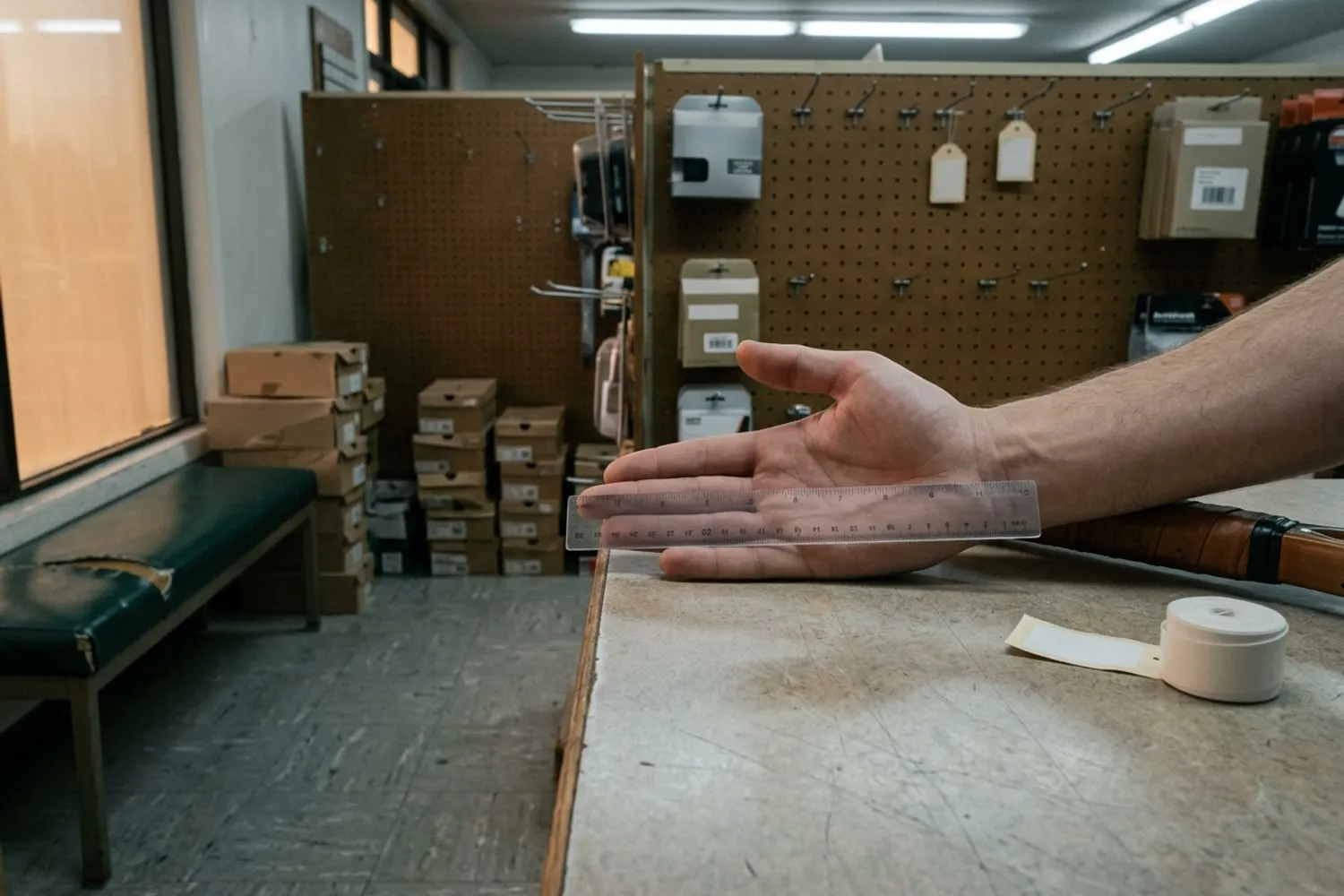
- With a ruler: hold your hitting hand open with the fingers together. Measure from the bottom crease of your palm to the tip of your ring finger. That length in inches is your grip size.
- With a racket: hold it in an eastern forehand grip, palm against the same bevel as the string face. The index finger of your other hand should just fit in the gap between your ring finger and your palm. No room means the grip is too small; space to spare means it is too big.
| US grip size | European size |
|---|---|
| 4 in | 0 |
| 4 1/8 in | 1 |
| 4 1/4 in | 2 |
| 4 3/8 in | 3 |
| 4 1/2 in | 4 |
| 4 5/8 in | 5 |
Size 0 is mostly found on junior rackets. Wilson notes that most adult women use 4 1/4 and most adult men 4 3/8, but measure rather than assume.
Tip: between two sizes, take the smaller. An overgrip adds about 1/16 inch and a heat-shrink sleeve about 1/8 inch, but a handle can rarely be made thinner.
Strung or unstrung
Rackets for starting players are usually sold strung, and the factory strings are fine for your first season. Many performance frames are sold unstrung so you can choose the string and tension; the Babolat Pure Drive on our Gear page is one, and its price does not include strings or stringing. Before you buy an unstrung frame, ask the shop what a set of strings and the labor cost, add it to the price on the tag, and compare racket against racket on that total.
Demo before you buy
Two rackets with the same head size and weight can feel quite different, and a spec sheet cannot tell you which one suits your swing. A few sessions with a racket on court can.
Many clubs and pro shops keep demo rackets to lend. By mail, Tennis Warehouse’s demo program sends up to three rackets at a time for a flat $25 shipping fee, plus tax; you keep them for up to a week and return them with a prepaid label, and if you then buy a racket it credits $25 toward it on selected brands and models. It ships only within the contiguous United States. Demo two or three frames that fit your level, play your normal sessions with each, and note which one you stop thinking about.
What to buy at each level
- Starting: a light oversize racket, sold strung, in your grip size; tennis shoes for the surface you play on rather than running shoes; a can of balls. Skip the polyester strings and the frame your favorite pro uses.
- Regular: a frame of about 98 to 105 sq in, most often 100, demoed first; multifilament or synthetic gut at the middle of the recommended tension; a few overgrips; restringing on a schedule.
- Serious: a frame you know you like, a second identical one strung the same, and a string setup chosen for your swing and kind to your arm.
The same thinking runs through our guide to choosing a pickleball paddle if you play both, and through golf clubs for beginners: buy for the player you are this season. You will find more racket, string and court-shoe guides in Racket Sports.
Rackets for children
Junior rackets are sized by length, and height matters more than age. Tennis Warehouse’s junior racket guide suggests:
| Age | Racket length |
|---|---|
| 3 to 5 | Up to 20 inches |
| 6 to 8 | 21 to 23 inches |
| 9 to 10 | 24 or 25 inches |
| 11 and up | 26 inches or longer |
To check, have your child stand with their arms relaxed at their sides and measure from the floor to their fingertips; the racket should be about that long. A standard adult racket is 27 inches. Junior programs also use slower balls on smaller courts (red, then orange, then green), so ask the coach which ball your child plays with. A racket that is too long or too heavy for your child now makes the game harder this season, so buy the length that fits today.
Questions
What head size tennis racket should a beginner use?
A large one. Wilson’s sizing chart puts beginners at 105 to 110 sq in, and other makers start the range at about 100 sq in. A bigger head gives a bigger sweet spot, so more of your off-center hits still go over the net.
How do I measure my tennis grip size?
Hold your hitting hand open with the fingers together and measure from the bottom crease of your palm to the tip of your ring finger. The length in inches is your grip size, from 4 to 4 5/8 inches. Between two sizes, take the smaller and build it up with an overgrip.
Is a heavier tennis racket better?
Only for a player who can swing it. A heavier frame is more stable and gives more control against hard-hit balls, but it is slower to move and more tiring over a match. Most players starting out do better with a lighter frame they can swing freely, and move up once their strokes are grooved.
Should I buy a tennis racket strung or unstrung?
A first racket bought strung is fine; the factory strings will do for a season. Many performance frames are sold unstrung, so you choose the string and tension, and you pay for the strings and the stringing on top of the frame. Ask the shop for that price before you buy.
What size tennis racket does my child need?
Go by height more than age. Tennis Warehouse’s junior guide suggests rackets up to 20 inches for ages 3 to 5, 21 to 23 inches for 6 to 8, 24 or 25 inches for 9 and 10, and 26 inches from 11. To check, measure from the floor to your child’s fingertips with their arms relaxed at their sides; the racket should be about that long.
Sources
- How to Choose a Tennis Racket (Size, Weight & Grip Guide), Wilson
- Tennis Racquet Grip Size Guide, Tennis Warehouse
- Demo Program, Tennis Warehouse
- How to Choose a Junior Tennis Racquet, Tennis Warehouse
Find your level
The Counter