Barbell Weight by Bar Type and How to Check Yours
Barbell weight varies by type. Compare standard bar types, learn to verify the bar in front of you, and choose plates for your space and budget.

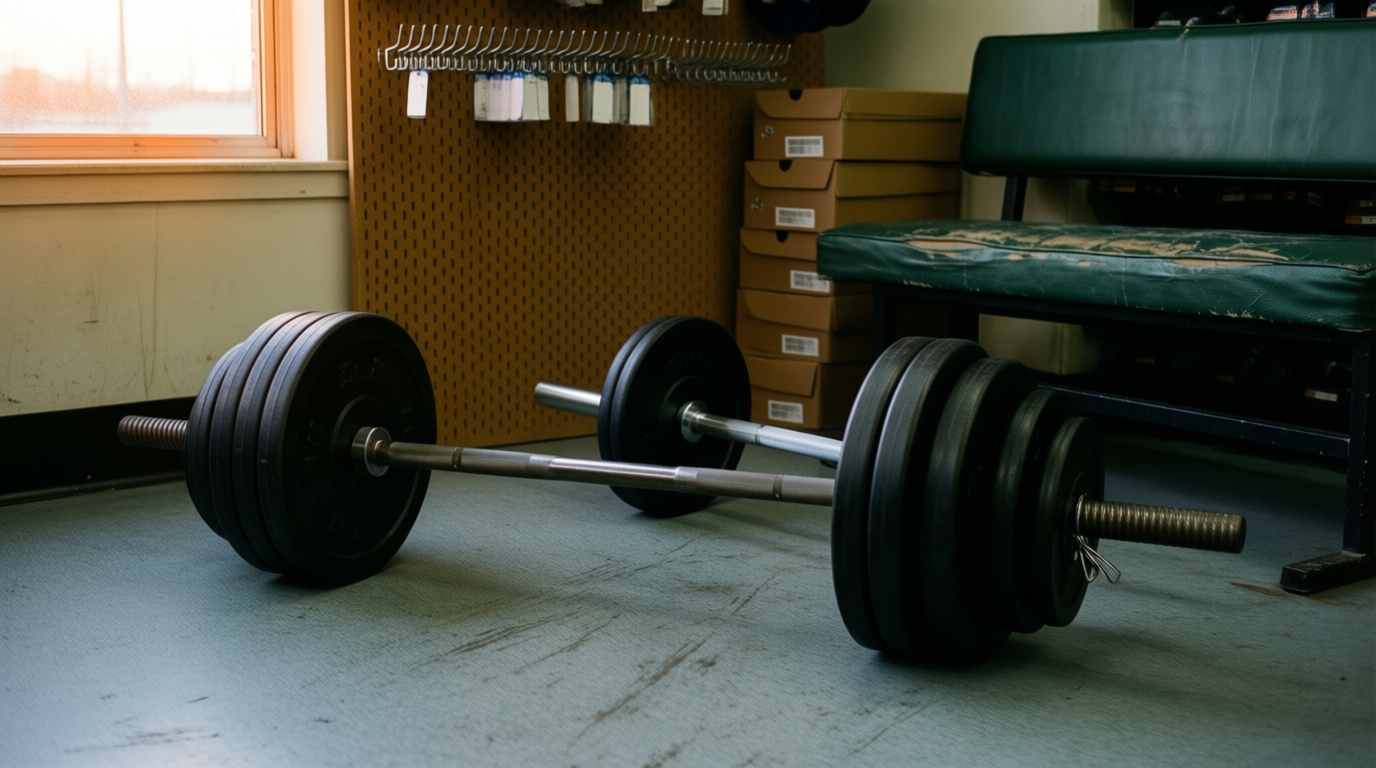
Picture grabbing a bar off the rack and realizing it feels heavier or lighter than you expected. Knowing what a barbell weighs before you load it keeps your math honest and your lifts predictable.
The short answer depends on the bar type, and it’s easy to confirm once you know where to look. In this post, we’ll cover the standard weight for each bar type, how bars are built, and how to check the one in front of you.
From there, we’ll help you pick a bar, plates and a set that fit your space and budget.
Standard Barbell Weight for Each Bar Type
The bar with weights attached is called a barbell, but the empty steel bar on its own is just the bar. We’ll compare bars by their empty weight first, since plates change the total, not the bar.
Men’s Olympic bar weight and dimensions
The standard men’s bar is an Olympic bar, and its key specs are:
- Weight: 20 kg (44-45 lb)
- Length: 2.2 m (7 ft)
- Grip diameter: 28-29 mm
That’s why people often call it a 45 lb bar or a 7 ft bar.
Lighter bars for women and youth
Women’s bars run shorter, with a 25-28 mm grip and a weight of 15 kg (33 lb). Some are listed as 35 lb, so check the spec before you assume. Youth bars drop further to 10 kg (22 lb).
Consider a parent setting up a home gym for a 13-year-old who’s just starting strength work. At 22 lb, the youth bar weighs about half as much as a standard men’s bar, so the first sessions can focus on form rather than strain.
Curl, trap and safety squat bar weights
EZ curl bars weigh about 17-25 lb, and curl bar lengths run 45-54.5 in. Trap bars come in at 45-66 lb, while safety squat bars vary by brand. Always check the listing.
So, are deadlift bars 45 or 55 lb? It depends on the bar. A standard Olympic bar sits at 44-45 lb, but trap bars, which are used for deadlifts, run anywhere from 45 to 66 lb, so 55 is a real possibility.
Standard, fixed and Smith bar weights
A 1-inch standard bar varies widely in weight, so one listing’s number may not match another’s. Fixed barbells, which come at one set weight, run 20-115 lb. Smith machine bars vary by machine, so check the specific unit.
At the light end, some bars weigh under 5 lb. The range is wide, so read each spec sheet.
How compact and specialty bars weigh
A compact bar is 8 inches shorter than standard and 11 lb lighter, which helps when your space is tight. Swiss bars and powerlifting bars are also offered, so you have more options than the basic bar.
Know the empty weight, and the rest of the math gets easy.
How Barbells Are Built and What Differs
Two bars can look alike and still lift very differently. The gap comes down to a few parts and finishes, and each one changes how the bar feels in your hands.
Sleeves, bushings and bearings that spin smoothly
The sleeves are the rotating ends where plates slide on, and they turn around the center shaft through bushings or bearings. Bronze bushings suit slow lifts like squats and bench presses.
Needle bearings suit Olympic lifts, where the sleeves need to spin quickly. Either way, smooth, consistent rotation is the goal. A sticky sleeve is a distraction you don’t need.
Bar whip and steel tensile strength
Bar whip is how much the bar flexes under load. Pick a stiff bar for core lifts like the squat, bench press and deadlift. Choose more whip for Olympic lifts like the snatch and clean and jerk, where the bar bends and rebounds.
Good bars are built from steel rated at 160,000 pounds per square inch (PSI) or more of tensile strength, the maximum stress the steel can take before it breaks. Yield strength is the point where it starts to bend permanently.
Yield tells you when a bar stops springing back, and tensile strength tells you when it finally breaks.
Coatings that prevent rust and affect grip
Bare steel rusts without regular oiling. Black oxide adds a dark finish with some rust resistance, zinc and stainless steel resist rust better, and Cerakote, a ceramic-based coating, is another option. The trade-off is between protection and grip.
Sealed finishes keep moisture out but can feel slicker in your hands, while rawer finishes grip better and need more attention.
Knurling patterns and mark spacing
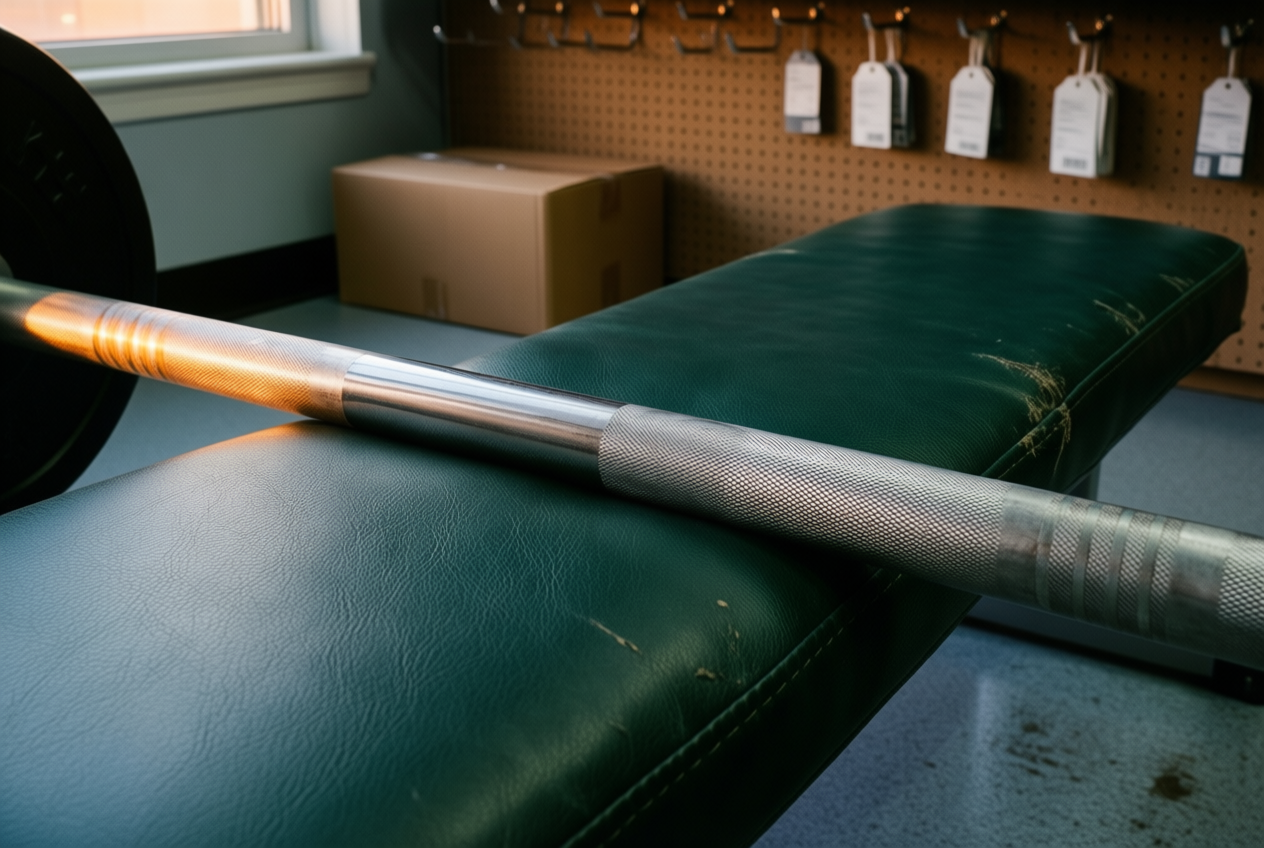
Knurling is the cross-hatched texture that keeps your hands from sliding. Aggressive knurling suits deadlift bars, and powerlifting bars often add a center knurl, a band of texture at the middle.
Knurl marks, the smooth spots that show where to place your hands, are spaced to a standard so your grip carries over from bar to bar.
How much load each bar can handle
Some barbells have manufacturer-listed maximum load capacities. One Lund University student paper on Eleiko’s product range notes that Eleiko’s barbells are tested with a force equivalent to 1.5 tons. Capacity varies by bar type:
- Example bar: 1,500 pound maximum load
- Women’s bar: 700 pound capacity
- Swiss bar: 600 pound capacity
Think of a parent setting up a garage gym for their own squats and their teenager’s first sessions.
Checking the listed load before checkout shows whether one bar covers both, and a look at the knurl shows whether it’ll grip well in sweaty hands. Check the number first, then the grip.
Why Barbell Weight Matters and Checking It
Before you load a plate, you need the bar weight. Here’s why that matters and how we’ll check it.
What makes bars weigh different amounts
Bars don’t all weigh the same. Length, steel thickness and sleeves (the ends where plates slide on) all add to the total. Intended use drives those design choices, so two bars that look alike can still weigh differently. Always ask which bar you’re using.
Tracking bar weight for steady progress
Tracking strength progression depends on honest numbers. Count the bar in every total, not just the plates. At home, you usually know your one bar.
In a commercial gym, several bars may sit side by side, and the one you grab may not be the one you used last week. Beginners especially avoid guesswork by confirming the number up front.
Picture a weekend lifter who sets a personal best, then finds they never weighed the bar. Now the whole chart is in doubt, and they can’t tell real gains from a math error.
Log in kilograms or pounds, but pick one and stick with it, since switching mid-log makes trends hard to read.
Ways to check a bar’s real weight
Three quick checks will confirm the bar in front of you:
- Home scale method: Weigh yourself alone, then again while holding the bar, and subtract the first reading from the second. The difference is the bar’s weight.
- End cap or sleeve stamps: Look for a printed weight. Stamps can wear off, so treat them as a clue, not the final word.
- Ask staff or look up the model: In a gym, ask staff what it weighs. At home, find the brand and model and check the listed weight.
Two checks beat one.
Picking the Right Barbell for You
Your bar carries every lift, so choose it before you add plates. Start with the training you do, then check the details that decide whether it fits your room.
Match your bar to your training goal
Each bar type is built for a different job:
- Powerlifting bar: Made for the big three (squat, bench press and deadlift) and heavy loads.
- All-purpose bar: A solid pick for mixed training without being specialized for one lift.
- Beginner or compact bar: Shorter and built for small spaces.
- Olympic weightlifting bar: Built for the snatch and clean and jerk, the fast lifts that finish overhead.
Consider a parent squatting in a spare-room gym after the kids are asleep. A compact bar fits the corner and still covers the lifts without eating the floor. Buy for the lifts you do, not the ones you hope to do someday.
Compare prices within one bar type, since a powerlifting bar and a compact bar are built for different jobs.
Other things to check before buying
- Length and grip diameter: Make sure the bar fits your rack and that the grip diameter (the thickness of the shaft in your hands) feels comfortable.
- Sleeve design: The sleeves are the ends that hold the plates. Look for collars that lock them in place so plates don’t slide mid-set.
- Weight capacity: Check the maximum load the maker lists and make sure it sits comfortably above what you plan to lift.
- Intended exercises: Match the bar to the lifts on your list. Not sure? Ask the seller what it was built for.
Buying second-hand? Inspect before you pay. Sight down the shaft for bends, check that each sleeve spins without wobbling, and look for rust or deep dents near the ends. Condition beats brand name.
Plates and How Much to Buy
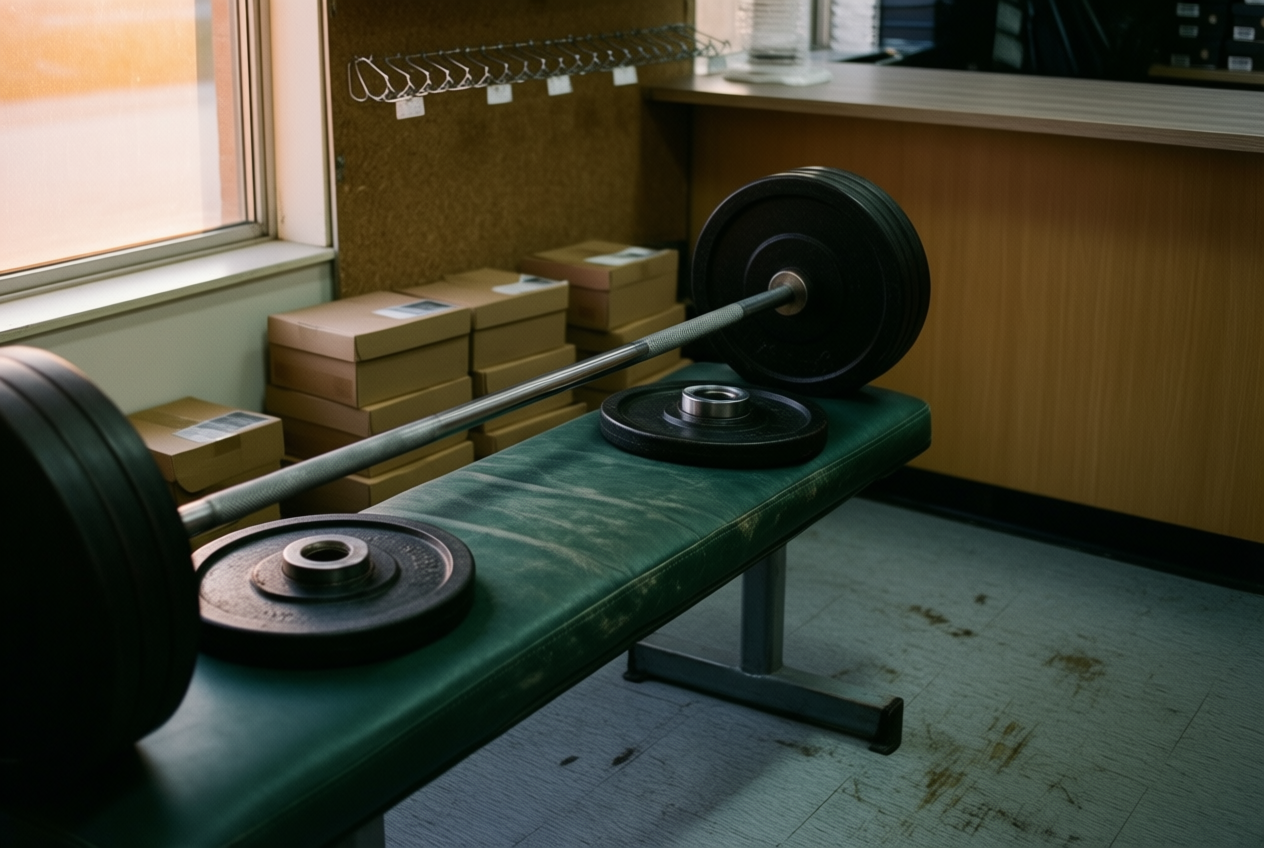
Plates set how far you can load the bar, so match them to your lifts, your level and your budget.
Which plate types suit different lifts
Plates come in a few types, and the big split is whether you control the weight or drop it:
- Iron plates suit core lifts like squats, deadlifts and presses.
- Rubber bumper plates are made to be dropped, so they suit lifts where the bar falls.
- Urethane and machined plates are the polished, cleaner-looking options.
- Grip plates have handholds built in, so they’re for add-on training rather than your main load.
Right plate set size for your level
Match the number to your level:
- 90 lb beginner set: a solid start for learning the movements.
- 180 lb for squats and deadlifts: room to keep progressing.
- 250-270 lb for experienced lifters: the range to aim for once your numbers have climbed.
- Small change plates: tiny add-ons for smaller jumps.
Consider a new lifter who starts on the 90 lb set and adds small change plates as the numbers climb, so each jump feels earned instead of a leap.
Checking plate quality and weight tolerance
- Powder coating durability: according to a quality control study, plate quality can be assessed by its finish, so check the coating first, since it takes the daily knocks.
- Tolerance variation of 5-10%: a product study found weight plates can differ from their stated weight, so expect that much variation.
- 2% tolerance guarantee: look for plates that carry one, since a promise of 2% is tighter than the 5-10% range.
Think of a parent outfitting a garage gym who checks both before ordering, so the plates match their labels. It’s the actual weight that counts, not the number stamped on the side. Check before you load.
Helpful Extras to Pair with Your Bar
Here’s what we’d pair with a bar, and where to shop.
How to take weights off a bar safely?
Taking weights off safely comes down to one routine:
- Bar collars. They clamp the bar ends to hold plates, and they come off first.
- Lifting straps. They loop around your wrists to help you grip a heavy bar, but they don’t take plates off.
- Magnetic clamp collars. Magnets hold them shut, so they slide on and off quickly between sets.
- Deadlift jack. It lifts one end of a loaded bar so you can slide plates on or off.
- Safely unloading plates and collars. Remove both collars, then alternate plates from each side so the bar stays level. Lift with your legs.
Dumbbells and kettlebells versus a barbell
Is a weight bar better than dumbbells? Not always. A barbell suits heavy, full-body lifts, while dumbbells suit tight spaces and varied workouts.
- Adjustable dumbbells. One pair covers many weights and saves floor space.
- Rubber hex dumbbells. Their six-sided heads resist rolling, and the rubber protects floors.
- Competition kettlebells. Built to competition standards, so handles stay consistent across weights.
Think of a weekend player with one garage corner. Adjustable dumbbells cover a wide range without a wall of plates.
Barbell versus dumbbells: which to buy. Pick the bar for progression and dumbbells for space.
Storing and caring for your gear
The goal is to protect the bar, not just put it away.
- Plate trees. They stand plates upright so they don’t roll across the floor.
- Storage builders. Modular pieces grow with your collection.
- Barbell cleaning cloth. Wiping the bar after sweaty sessions keeps rust and grime off the shaft and knurling (the textured grip).
- Weight racks. They hold the bar off the floor, where it can’t get dinged.
Where to find a barbell set for sale?
- Trusted brand list. Shortlist brands with clear weight markings, then compare price and return policy.
- Bulk pricing and promos. Bundled complete sets can cost less than buying each piece alone.
- Free printable spec chart. If a seller offers one, keep it by the rack to check weights at a glance.
- Where to buy barbell sets. Check sporting goods stores, online retailers, and used-gear listings.
Shop around, then buy once.
Once you know what your bar weighs, the rest of the setup gets easier. Check the bar in front of you, match it to how you train, and buy the plates and extras that fit the room and budget you actually have.
Good gear fades into the background once you’re lifting, and that’s the whole point of choosing it well. Know your bar, and every rep starts from the right number.
References
- Quality Control for Manufactured Weight Plates — doi.org (2024)
- Förnyelse av Eleikos produktsortiment — lup.lub.lu.se (2015)
Questions
What is the weight of a barbell?
An empty barbell’s weight depends on its type. A standard men’s Olympic bar weighs 20 kg (about 44–45 lb), a women’s bar weighs 15 kg (33 lb), and a youth bar weighs 10 kg (22 lb); specialty bars vary.
What is the bar with weights attached called?
The bar with weights attached is called a barbell. The empty steel part is the bar, and the plates add to its total weight.
What is the 2-2-2 rule in weightlifting?
The 2-2-2 rule is not a single standardized weightlifting rule, and its meaning can vary by coach or program. Ask the person or source using it what they mean; in a training plan, it may refer to sets, reps, or tempo rather than a universal standard.
What is the weightlifting bar called?
The weightlifting bar is generally called a barbell or bar. The standard men’s Olympic weightlifting bar is 20 kg (44–45 lb), while women’s Olympic bars are 15 kg (33 lb).
How to tell if a barbell is 15 or 20 kg?
Check the bar’s end cap or sleeve for a weight stamp, then confirm it with the brand and model specifications or ask gym staff. If needed, weigh yourself holding the bar and subtract your body weight from the reading.
Is the bar actually 45 lbs?
A standard men’s Olympic bar is 20 kg, which is about 44.1 lb, and is commonly rounded to 45 lb. Other bar types can weigh less or more.
Is a barbell always 20kg?
No. A standard men’s Olympic bar weighs 20 kg, but women’s, youth, curl, trap, Smith machine, and other bars have different weights. Check the specific bar’s markings or specifications.
Is a weight bar better than dumbbells?
Neither is always better. A barbell suits heavy, progressive full-body lifts, while dumbbells can be easier to use in a small space and offer more independent movement for each arm. Choose based on your exercises, space, and training goals.
Sources
- Förnyelse av Eleikos produktsortiment, lup.lub.lu.se,
- Quality Control for Manufactured Weight Plates, doi.org,
Find your level
The Counter