How to Clean Running Shoes Without Ruining Them
How to clean running shoes with a soft brush and mild soap without damaging different uppers. Get drying, odor-control, and replacement advice.

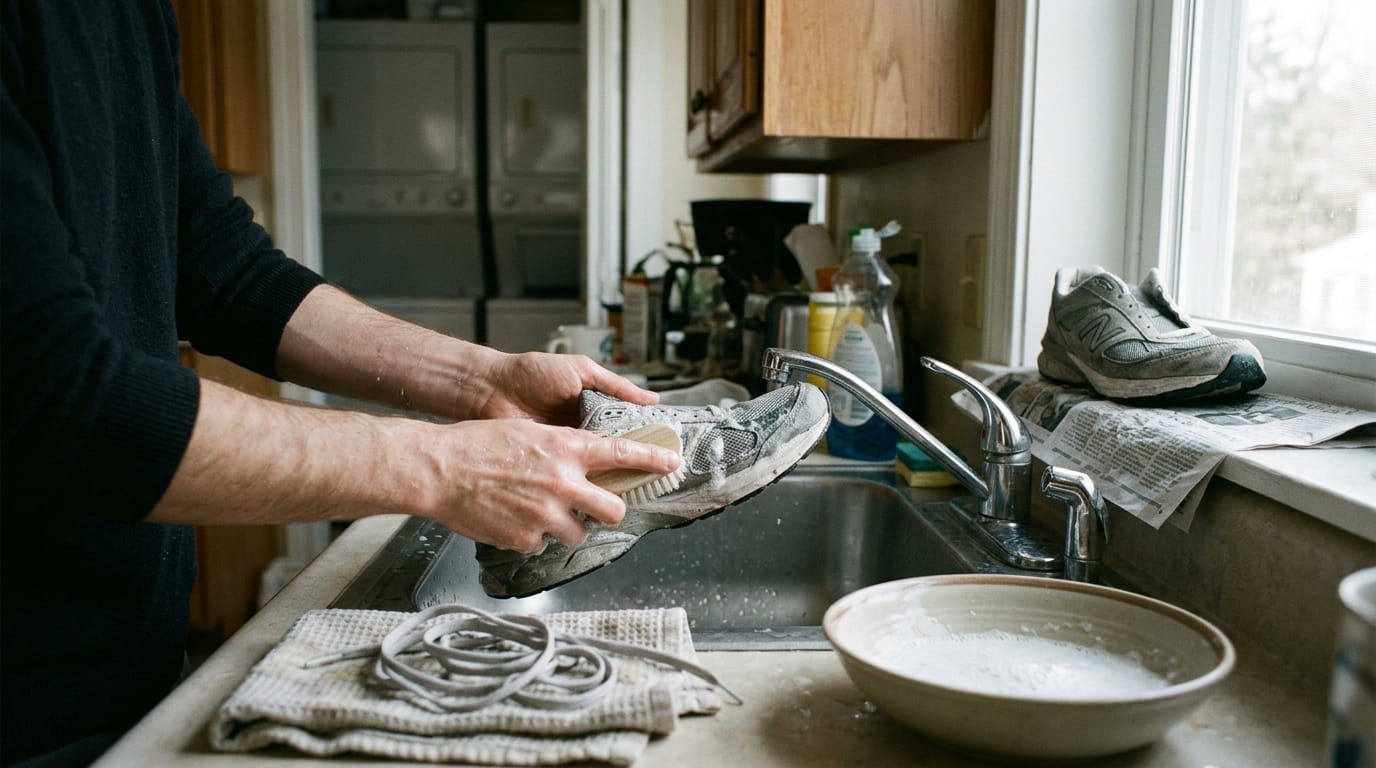
Think of your kitchen sink. A quick scrub keeps it fine, but let grime pile up and it takes real work. Running shoes work the same way. Mud, sweat, and road grit build up fast and wear on the fabric the longer they sit.
The good news is you don’t need special gear. A soft brush, mild soap, and a little patience handle most of the job.
Here’s what’s ahead: dry brushing, hand-washing, drying, and odor control, plus how different uppers call for different care.
Why and How to Clean Running Shoes
Regular cleaning protects how your shoes perform and how long they last. Here’s why we think it’s worth the few minutes it takes.
Clean shoes last longer and grip better
Grit acts like sandpaper on mesh and overlays. Caked-on mud also packs into the outsole lugs, which cuts your traction on wet pavement. Take a weekend 10K runner who logs three runs a week through a soggy March.
Rinsing off the mud after each outing keeps the shoes gripping through the final mile.
Dirt also works into the midsole foam and glue at the seams, where regular care helps protect the cushioning and bonds. According to Good On You, regular cleaning helps shoes look their best and prolong their lifespan.
Think prevention rather than replacement. Less grit, more grip.
Keep smells down and shoes looking fresh
Sweat feeds the bacteria that cause odor, so the fix starts the moment you get home. Pull out the insoles, rinse off the sweat and let the shoes air out before they go back in the bag. Clean pairs also look sharp, and it’s easier to spot wear early.
Some runners treat trail mud as a badge of honor, and that’s fine after a single run. Just don’t let that badge sit in the bag all week.
Why keeping shoes longer helps the planet
Longer-lasting shoes cut down on resource use, since one pair worn longer means one less pair made. The Green Runners argues that choosing durable footwear and repairing frayed uppers is a powerful way to reduce your lifetime carbon contribution.
When a pair is done, look for a shoe subscription or recycling option instead of the trash. More miles, less waste.
What You’ll Need Before You Start
You don’t need a special kit to get your running shoes looking and smelling better. Most of what you need is already in your kitchen or under the bathroom sink.
Basic kit you likely have at home
Consider a weekend runner who comes home from a muddy trail loop, sets her shoes by the kitchen sink and cleans them with dish soap, an old toothbrush and a towel. Within minutes, the mud is gone. Simple tools work.
Here’s what to gather:
- Mild detergent or soap. Choose something gentle, not a harsh degreaser.
- Soft brush or toothbrush. An old toothbrush reaches seams and the area around the laces.
- Sponge, cloth or towel. Use one for scrubbing and one for wiping.
- Warm water. Warm, not hot, is the safer choice for the shoe’s materials.
- Paper towels or newspaper. Stuff them inside to help the shoe hold its shape as it dries.
- Baking soda. A sprinkle inside the shoe helps with odor, which we’ll tackle later.
Extras that are nice to have
Helpful isn’t the same as required. These extras make the job easier, and you can skip any of them and still get clean shoes.
- Shoe-specific cleaner. A product made for athletic shoes can help with stubborn stains.
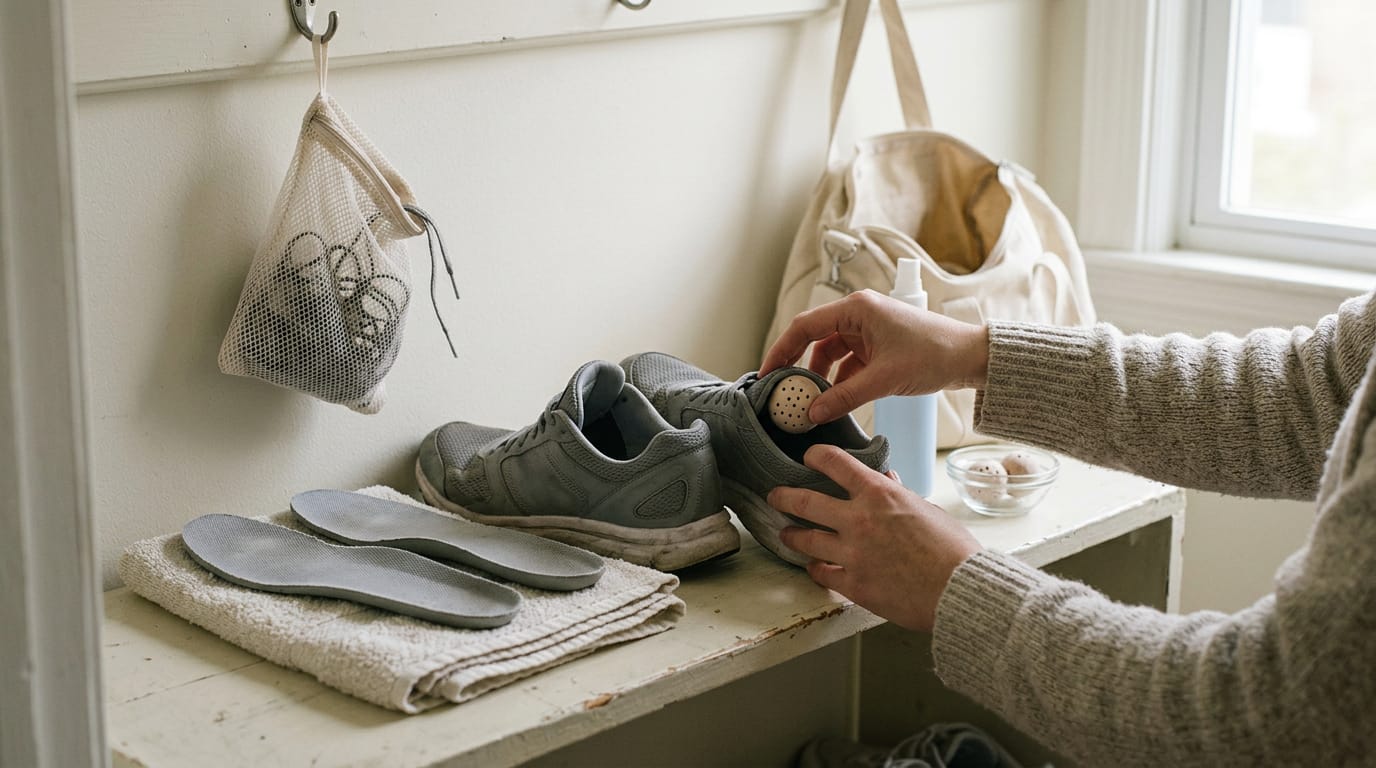
- Deodorizer spray or fresheners. Handy for keeping the inside fresh between cleanings.
- Shoe trees. Inserted after cleaning, they help the shoe keep its shape as it dries.
How Do You Wash Sneakers Without Ruining Them?
Washing running shoes is simple, but the order you do things in makes the difference between a pair that looks fresh and one that wears out early. Work from dry to wet, keep the wet work gentle, and let everything dry fully before it goes back on.
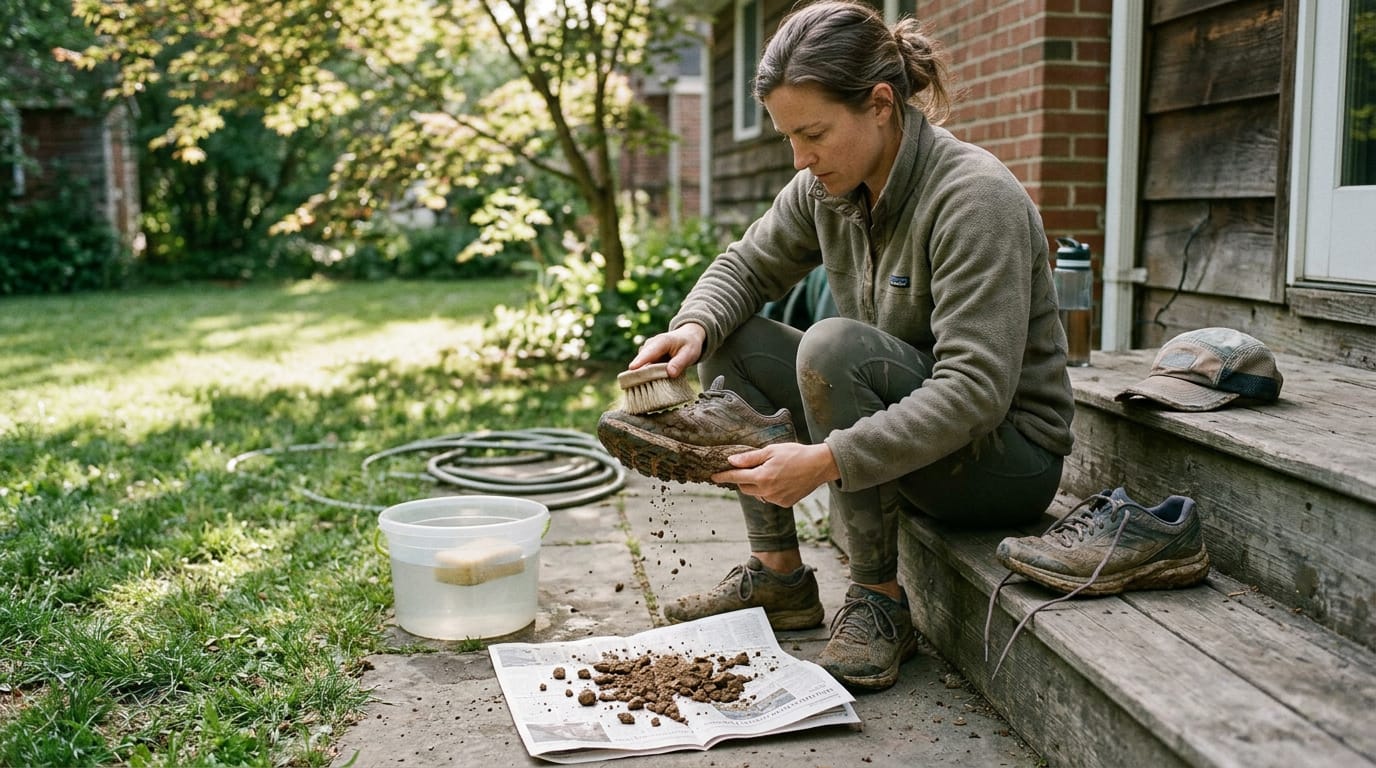
Knock off loose dirt first
Get the loose stuff off the upper and sole before any water touches the shoe, since dirt that gets wet turns into grime that’s harder to lift. Here’s the routine:
- Tap the soles together to shake out pebbles and packed grit.
- Use a soft brush to sweep debris off the upper and around the laces.
- Brush the outsole first, since it takes the most contact with the ground.
Picture a weekend runner who finished a muddy trail loop on Saturday and wants her ASICS trainers ready for Sunday’s long run. A few minutes with a dry brush on the dried mud does more than a long scrub later, and she’s back out the door on time.
Pull out laces and insoles before washing
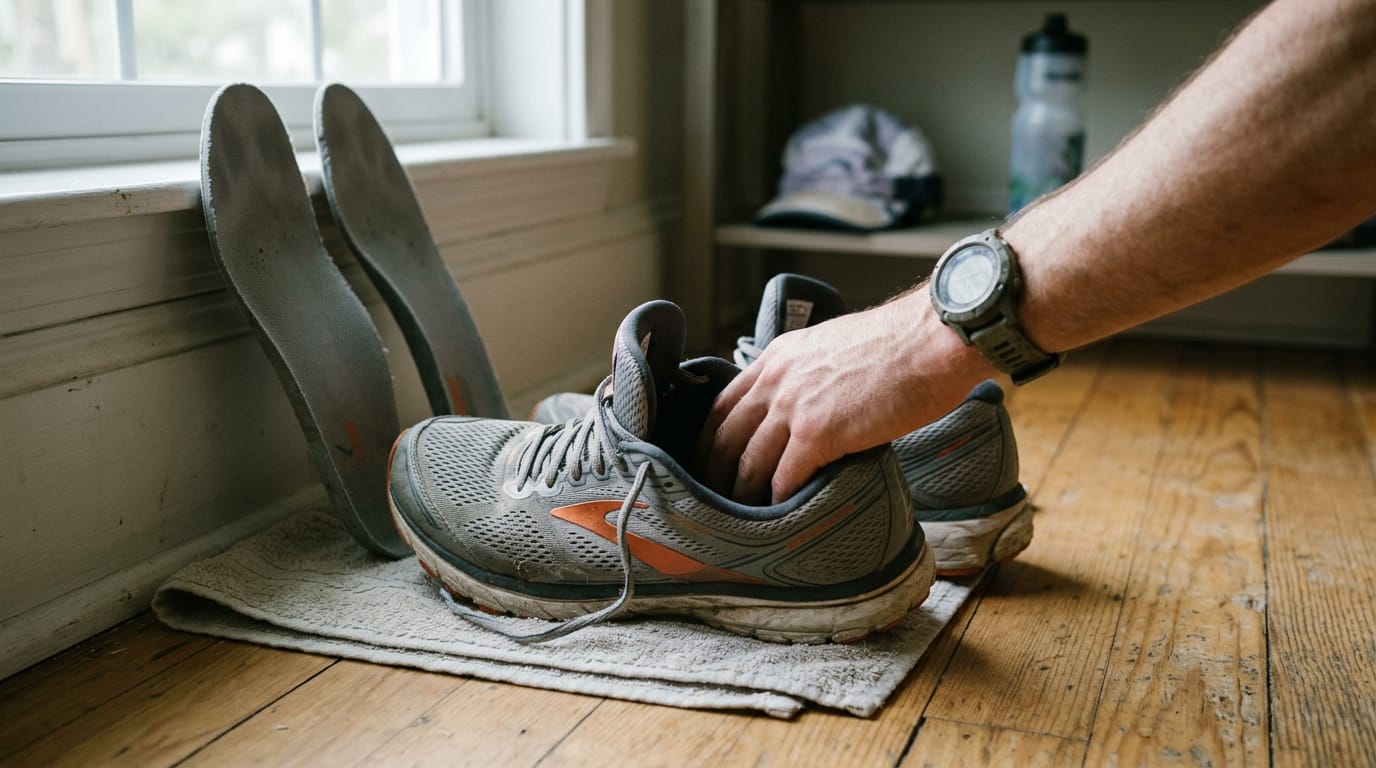
Take the laces and insoles out before you clean anything. Wash them separately, not tossed in with the shoe. Cleaning them on their own gets them more thoroughly clean and cuts odor, so the whole pair comes out fresher.
Treat this as its own job, not an afterthought.
Wash the upper by material type
Mix mild detergent with warm water, then work it into the upper with a gentle sponge or soft brush. Rinse the sponge often so you’re lifting dirt off rather than dragging it across the fabric. Spot-treat stains instead of scrubbing the whole shoe hard.
Leather or suede uppers need different care. Reach for special products made for those materials rather than the everyday detergent.
Always clean by upper material type. Check what your pair is made of before you pick a method, because a mesh upper and a leather one don’t call for the same handling. That’s true for ASICS trainers too, which follow the same routine:
- dry brush first
- pull out the laces and insoles
- then wash the upper by material
Get the sole and tread clean
The sole takes the most abuse, so it gets the most attention. Brush out the tread to lift grit packed into the grooves. For stubborn dirt, mix a baking soda paste with a little water, work it into the outsole with the brush, then rinse and wipe dry.
Rinse off soap without soaking
Soap residue is the last thing you want on a clean shoe, so remove every trace before you move on. Wipe the upper with a damp cloth or rinse it under clean water. A damp cloth is plenty. Don’t soak shoes, even when they look grimy. Quick and light wins.
Put everything back once dry
Wait until the shoes are fully dry before you do anything else. Then replace the insoles and laces. Fresh laces and dry insoles make a clean pair feel ready to run again.
Dry Your Running Shoes the Right Way
Drying is where a clean pair either holds up or falls apart, so give it the same care you gave the scrub. Here’s how to do it right.
Air dry them with paper stuffed inside
Air drying at room temperature is the gentlest approach, and paper is your best helper. Stuff each shoe with paper or newspaper so it keeps its shape as it dries.
The paper stuffing also absorbs moisture from the inside, so the shoe dries through, not just on the surface. Then leave them overnight.
Think of a weekend runner who gets caught in a downpour on Saturday and wants her shoes ready for Tuesday’s track session. She pulls the insoles out, packs both shoes with newspaper, and leaves them in a spare room until morning.
By then, the shoes have kept their shape and the paper has done its job. Patience does the rest.
Make sure no moisture gets trapped
Even a shoe that feels dry on the outside can hold damp in the wrong places, so run through this quick check before you call it done:
- Check that the toe box (the roomy front where your toes sit) is completely dry.
- Dry the insoles separately so they aren’t trapping moisture against the shoe.
- Avoid trapped moisture: if any spot still feels cool or damp to the touch, give the shoe more time.
- Dry fully before the next run, even if the shoes look ready to go.
Skipping this check is the easiest way to start your next run in soggy shoes. Don’t rush it.
Common Mistakes That Damage Running Shoes
A well-meaning cleaning session can do more harm than the mud it’s meant to remove. Here are the habits we’d steer you away from.
Skip the washing machine and dryer
Is it better to wash shoes in the washer or the dishwasher? Neither. Heat and detergent damage the bonding, the glue that holds the upper and sole together, so both are risky.
- Washing machine: Its heat and detergent wear down seams and bonding, so skip the cycle.
- Tumble dryer: The heat that dries your clothes is the same heat that damages shoes.
- Dishwasher: Hot water and harsh detergent make it no safer than the washer.
The only exception is when the manufacturer’s care instructions explicitly allow machine washing. If they don’t, hand-wash instead. When in doubt, skip the machine.
Keep shoes away from heat and sun
Heat is the quiet enemy here. According to THEESE’s guide on drying wet shoes, you should keep them off radiators and out of direct sunlight. Heat warps or shrinks materials, so a shoe dried in a hurry may not fit the way it used to.
Think of a trail runner who parks soaked shoes on a radiator overnight. By morning the upper has warped, and they no longer fit her feet. Let them dry slowly and away from heat, even when you’re in a hurry.
Avoid bleach and rough scrubbing
- No bleach or harsh chemicals.
- No abrasive materials, like scouring pads.
- Don’t scrub mesh aggressively.
Test any cleaner on a small, hidden area first, so you can see how the material reacts before treating the whole shoe. The goal is to clean gently, not to scrub the dirt out at any cost. Gentle wins.
Don’t let mud and sweat sit
Consider a weekend player who leaves muddy shoes in the trunk until Monday. By then the mud has dried into the rubber and stitching, which is far harder to remove than a same-day rinse.
Mud damages rubber and stitching, so deal with it soon after the run. Sweat is the same story: air the shoes out afterward instead of leaving them balled up in a gym bag. Don’t over-wash, either. Save the full clean for when the shoes actually need it.
Banish Odor from Your Shoes
Nobody loves talking about smelly shoes, but odor is one of the easiest problems to keep under control. Here’s how to stop it before it starts, and how to handle it once it’s already there.
Sprinkle baking soda inside overnight
Start with baking soda. Sprinkle a light layer inside each shoe, covering the insole and toe box, then leave it overnight so it has time to work on the smell.
Think of a club player who trains most weeknights and tosses sweaty shoes by the back door. By Saturday morning, the pair smells like the bottom of a gym bag.
One overnight dusting can be the difference between a game-ready pair and one that gets left in the car.
In the morning, vacuum or shake out the powder. Then wipe away any residue and let the shoes air dry before you lace them up again.
Other ways to keep odor away
A few habits go a long way, so build them into your routine:
- Wash insoles and laces separately. Pull them out and clean them on their own so they aren’t keeping the smell going.
- Deodorizer sprays or ball fresheners. A spray gives a quick mist inside the shoe, while ball fresheners are small scented balls you place inside.
- Store in a cool, dry place. Keep shoes out of the car trunk and away from damp gym bags so moisture doesn’t have time to build up.
- Refresh spray product. Use a refresh spray between runs when a full clean isn’t practical.
Make these habits part of your routine, and you’ll be scrubbing far less down the road. Prevention beats scrubbing.
What Is the Best Homemade Shoe Cleaner?
Here’s the honest answer: the best homemade shoe cleaner might be no cleaner at all. A few claps and a soft brush handle a lot of the mess before you ever reach for water.
Clean without water by clapping and brushing
Clapping and brushing is the quickest route, and it works in a few steps:
- Clap shoes together. Knock the soles and uppers together outside to shake loose mud and grit.
- Brush off dirt. Sweep a soft brush over the uppers, mesh and seams to lift what’s left.
- Store with laces and insoles out. Pull the insoles and loosen the laces so the shoes can air out before they go back in the closet.
Dry cleaning is quick, but it’s less effective than washing, since it only removes loose dirt. Think of a weekend runner who finishes a muddy trail loop Sunday morning and needs her shoes ready for Tuesday’s track session.
A quick clap and brush gets the worst off so she can save a deeper clean for when the shoes really need it.
Shoe-care products made for the job
When you need more than a brush, dedicated products skip the mixing and measuring, and that’s the whole point. Here’s what you’ll find:
- Foam cleaner, no mixing. Spray it on and wipe away, with nothing to measure or stir.
- Deep cleaning solution. A stronger formula for stubborn grime that a quick wipe leaves behind.
- Repel spray. Helps the upper shed water and dirt between washes.
- Refresh spray. A quick freshener for days when your shoes need to smell better, not get scrubbed.
- Cleaning kits. A bundle of brushes and cleaners that covers the basics in one purchase.
Consider a parent who runs before work and also cleans up after two kids’ soccer practices. A foam cleaner means no bucket and no measuring, so the job fits between dinner and bedtime and the shoes are ready by morning.
Match the tool to the mess.
When to Clean and When to Replace
Dirt and wear look different, and they call for different fixes. A running shoe rotation guide from Malakye.com notes that rotating pairs can help extend each one’s life, so it pays to know which problem you’re facing.
Clean them whenever they look dirty
Skip the calendar. There’s no fixed schedule, so go by sight: clean them when they look dirty. A muddy pair isn’t a worn-out pair. It needs cleaning, not retiring. Trail shoes take the worst of it: let the mud dry, then brush it off.
Spot clean stains quickly, before they set. Think of a weekend runner who alternates between a road loop and a muddy trail. The road pair gets a quick wipe, and the trail pair gets a brush-off, so both stay ready for the next run.
Signs it’s time for new shoes
Cleaning can’t bring back lost cushioning or grip, so watch for these signs:
- Flattened cushioning. The foam midsole under your foot should feel springy. If it feels firm or looks packed down, the cushioning is gone.
- Worn outsole and reduced grip. The outsole is the rubber bottom. When the tread looks smooth or the shoe slips on wet pavement, you’re losing grip.
- New aches or discomfort. A new ache in your shins, knees, or feet is worth taking seriously, since worn shoes can be part of the cause.
- High mileage. According to a running shoe rotation guide from Malakye.com, running shoes typically last between 300 and 500 miles.
- Track mileage per pair. Log each pair’s miles separately, in an app or notebook. A pair you rotate logs fewer miles than one you wear every day, so one shared count would mislead you.
If a pair checks more than one box, it’s done.
Pulling it together, the routine is simple: brush off loose dirt, wash gently by hand, dry away from heat, and tackle odor before it sets in. Match your method to the upper material, and you’ll skip the mistakes that wear shoes out early.
Keep an eye out for signs that cleaning can’t fix, and you’ll know when to replace a pair instead of fighting a losing battle. Treat your shoes well, and they’ll keep up with you mile after mile.
References
- Save your wallet and the planet: the case for durable running shoes — thegreenrunners.com (2026)
- How to Care For Your Sneakers So They Last Longer — goodonyou.eco
- How to Dry Wet Shoes Without Damage — weartheese.com
- Running Shoe Rotation: Why Every Runner… — malakye.com
Questions
What is the best homemade shoe cleaner?
For most shoe dirt, start with a soft brush and no cleaner; brushing removes loose grit without getting the shoes wet. For grime that needs washing, mix mild soap or detergent with warm water and gently clean with a soft brush or sponge. Use products made specifically for leather or suede uppers.
How do I clean my ASICS trainers?
Clean ASICS trainers according to their upper material. Dry-brush off loose dirt, remove the laces and insoles, then gently wash the upper with mild soap and warm water; clean leather or suede with products made for those materials. Wipe away soap with a damp cloth and air-dry at room temperature, away from direct heat.
How do you wash sneakers without ruining them?
First brush off loose dirt while the shoes are dry, then remove the laces and insoles and wash them separately. Gently clean the upper with mild soap and warm water, taking care to match the method to its material, and wipe away the soap without soaking the shoes. Air-dry them at room temperature with paper stuffed inside; avoid the washer, dryer, and direct heat unless the manufacturer explicitly permits machine washing.
Is it better to wash shoes in the washer or dishwasher?
Neither is generally recommended. Washing machines can wear down seams and glue, while dishwashers expose shoes to hot water and harsh detergent; hand-washing is safer unless the manufacturer specifically allows machine washing. Dry shoes away from heat rather than using a tumble dryer.
Sources
- How to Care For Your Sneakers So They Last Longer - Good On You, goodonyou.eco
- Save your wallet and the planet: the case for durable running shoes - The Green Runners CIC, thegreenrunners.com,
- How to Dry Wet Shoes Without Damage | THEESE Guide, weartheese.com
- Running Shoe Rotation: Why Every Runner… - Malakye.com, malakye.com
Find your level
The Counter