Weight-Bearing Exercises for Bone Density: A Complete Guide
Weight-bearing exercises for bone density strengthen bones against gravity. See effective moves, weekly targets, and safety tips for osteoporosis.

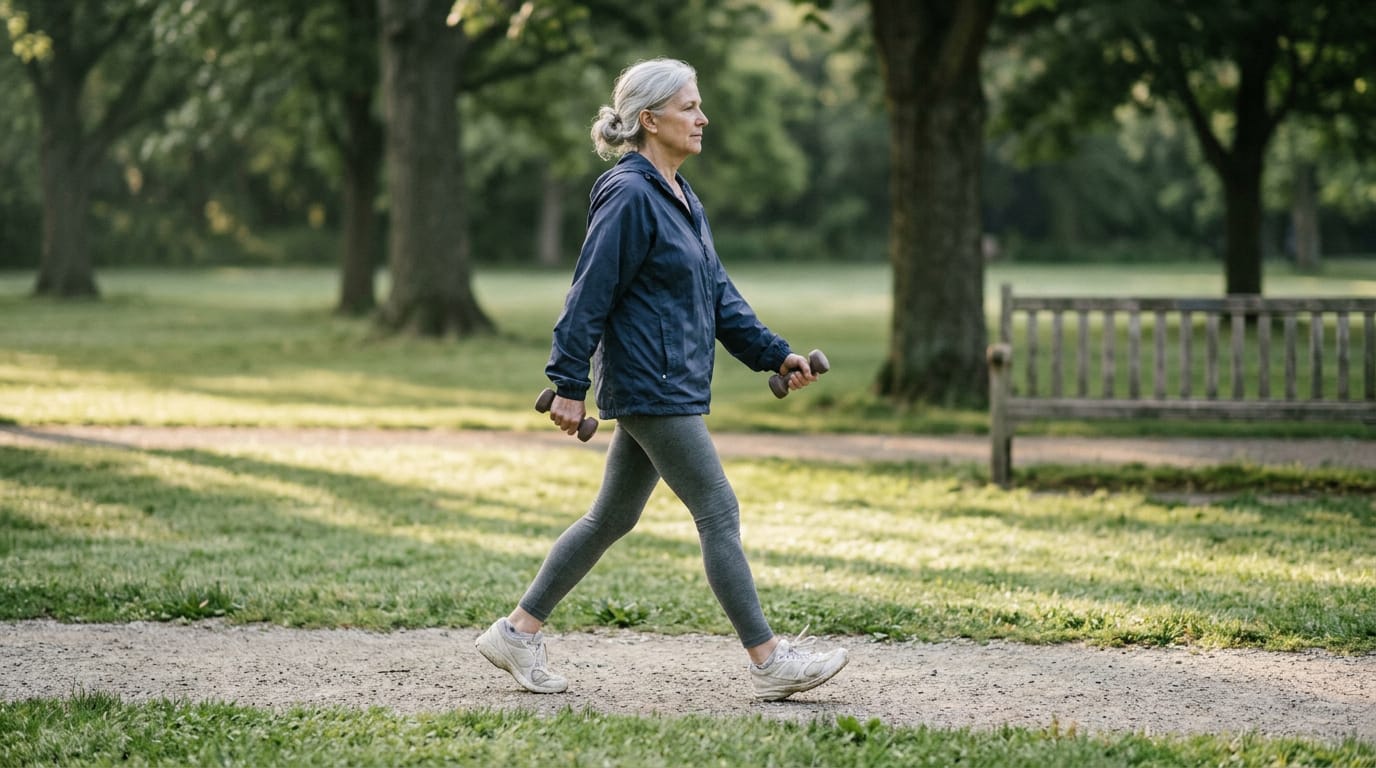
Think of your bones like a kitchen shelf. Load it with heavy jars every day and it stays sturdy, while an unused shelf tends to weaken over time.
That’s where weight-bearing exercise comes in. When your legs, hips, and spine push against gravity, your bones get the signal to build and hold onto density. Here’s how that works, which moves do the job, and how much you need each week.
We’ll also cover gear and home set-up. If you already have low bone density or osteoporosis, check with your doctor before you start.
How Weight Bearing Exercises Build Bone Density
Your bones respond to the work you give them. Here’s how weight-bearing exercise works and which types do the job.
Why working against gravity builds bone
Weight-bearing exercise means working against gravity. It’s about loading the bone, not just moving around.
- Works muscles and bones against gravity. Standing, jumping, and lifting make your skeleton carry weight.
- Muscle and tendon tension on bone. When a muscle pulls on its tendon, that tension reaches the bone.
- Stimulates new bone tissue. That loading is the trigger for new bone to form.
- Bone is living tissue. It changes in response to the load you put on it.
Load it, and it adapts.
Aerobic and resistance types to choose from
Weight-bearing work comes in three main forms:
- Aerobic: walking, jogging, and dancing keep you on your feet.
- Resistance: lifting weights lets you add load on purpose.
- Your own body weight or equipment: push-ups and squats need no gear, while dumbbells add more load.
The best option is the one you’ll keep doing.
How force, speed, and frequency affect bone
Not all loading is equal. Strain is how much a bone gets stretched or squeezed under load. University of Michigan research identifies three characteristics that affect the bone-building response to exercise:
- Strain magnitude: how big each stretch or squeeze is.
- Strain rate: how quickly that happens. A jump lands fast, while a slow stroll does not.
- Strain frequency: how often the bone gets loaded.
Bone responds to how it’s loaded, not just how much.
Why swimming and cycling don’t build bone
Think of a dad who plays Saturday pickup basketball but bikes on weekdays. The bike keeps his heart happy, but the jumps on the court are what load his bones.
- Swimming and cycling. Water and the bike seat support your weight, so gravity isn’t loading your skeleton.
- Good for cardiovascular health. Both are great for your heart and lungs.
- Don’t stimulate bone growth. Without gravity loading, they don’t trigger the bone-building response.
Keep them, but add weight-bearing work alongside.
The Best Weight Bearing Exercises to Try
Here’s a practical set of options, from home moves to sports you may already play, with the dose research points to wherever it exists.
What weight-bearing exercises can I do at home?
Weight-bearing exercise means your bones work against gravity as you move. Good home options include:
- Running, walking, and hiking
- Stair climbing and jumping rope
- Tennis, soccer, and basketball
- Push-ups, lunges, and squats
Walking and hiking are the low-impact choices, so you stay on your feet without landing hard. Running is high-impact, but it still counts as weight-bearing.
Whatever you pick, choose cushioned, supportive shoes for impact work, since they’re what sits between your joints and the pavement.
Is running good for bone density? Running is weight-bearing and high-impact, which is the kind of loading the jumping research below points toward. If you have low bone density or a history of fractures, check with your doctor first.
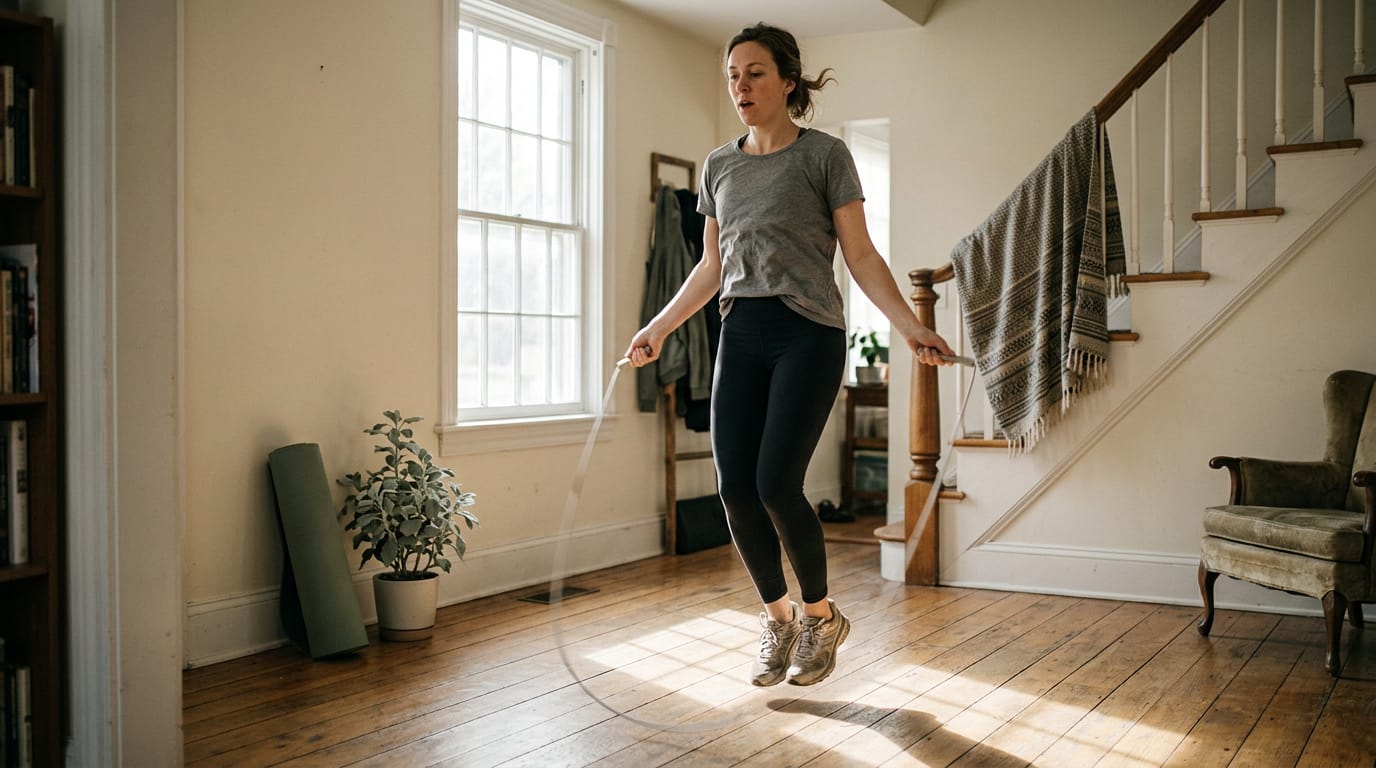
Jumping to boost hip bone strength
One study in premenopausal women looked at jumping as a simple way to load the hips. The routine was 10 to 20 jumps, twice a day, and the result was increased hip bone density. That’s a few minutes of work.
How brisk walking lowers hip fracture risk
The Nurses’ Health Study examined the relationship between walking and hip fracture risk.
The Harvard Gazette reported on the latest finding of the landmark study, which examined walking frequency and appeared in the Journal of the American Medical Association.
The target is walking four or more times a week. A prospective analysis of registered nurses, begun in 1986 with 12 years of follow-up, assessed that frequency. The payoff is lower hip fracture risk.
Side-to-side and backward moves for hips
Consider a weekend tennis player who adds side shuffles and backward steps before Saturday’s match.
A study of young elite tennis players found that rapid stop-and-go movements, meaning quick changes of direction, are major performance determinants in tennis.
Sideways and backward steps load your hips and spine from angles that straight-ahead walking doesn’t, which is why they’re meant to reduce hip and spine fragility. It’s about which way you move, not just how far.
Pair lifting weights with high-impact exercise
Lifting alone isn’t enough. Pair it with high-impact exercise and train both your upper and lower body. That combination beats no-impact sports alone.
Think of a dad who keeps one set of adjustable dumbbells at home, using them for squats and rows, then jumping rope between sets. One set covers both halves of the routine.
Dumbbells, resistance bands, and a weighted vest are the usual picks. Choose by how you train:
- dumbbells to add load over time
- bands if space or travel is tight
- a vest if you already walk or jump and want more challenge
Vibration platforms as an add-on only
Whole-body vibration platforms get plenty of attention, but they belong in a supporting role. Lai et al. found that six months of high-frequency, high-intensity vibration in postmenopausal women produced about a 2% gain in spinal bone density.
The routine to try is five minutes, three times weekly. Add the platform on top of your exercise, never instead of it.
How Much Activity You Need Each Week
Most weeks come down to two jobs: steady aerobic movement and strength work. Here’s how much of each we’d aim for.
Aim for moderate to vigorous activity weekly
Aerobic activity is the foundation, and the benchmark is clear.
According to the National Institute of Diabetes and Digestive and Kidney Diseases (NIDDK), adults should get at least 150 minutes a week of moderate-intensity aerobic activity, a total of 2½ hours.
That’s the kind of effort where you’re breathing harder but can still hold a conversation.
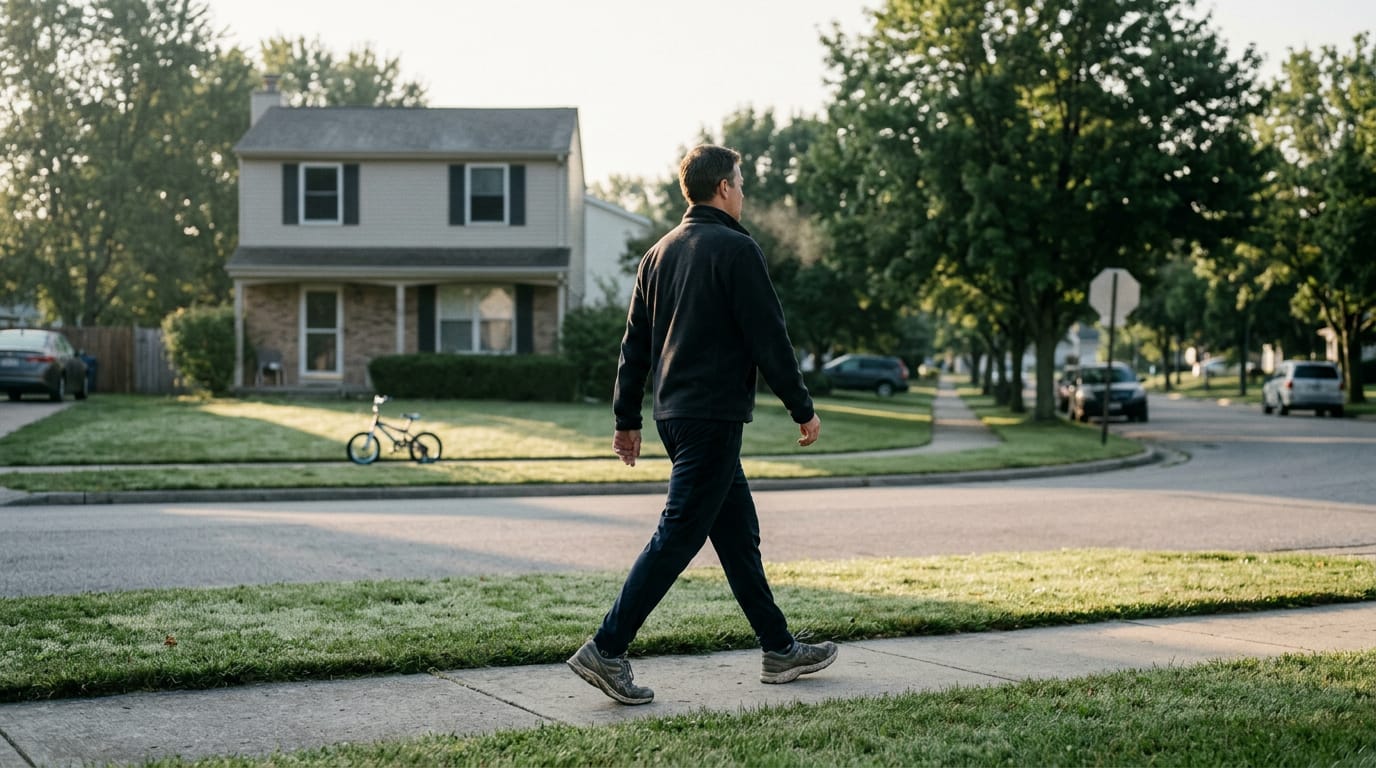
For example, a parent who wants to skip the gym can split it into five 30-minute brisk walks, one before the kids wake up on each weekday. Five days, half an hour each. That covers the target without a single long workout.
Strength work at least twice weekly
Aerobic work alone doesn’t cover the strength side of the plan. Aim for resistance training on at least two days each week, and build the sessions so the load grows over time. Body weight squats are a simple way to start resistance work with no equipment at all.
Progressive overload means gradually increasing the challenge through more weight, more reps, or harder variations.
The same logic applies to bone: a routine that felt hard last month stops challenging you once your body adapts, so the load has to keep climbing. The goal is more load over time, not the same weight forever.
A realistic weekly shape looks like this:
- Resistance days: at least 2 each week
- Short sessions: 15 to 20 minutes on three days
Consider a weekend tennis player who squats, lunges, and rows dumbbells for 15 minutes before work on Monday, Wednesday, and Friday. A month later, she’s moved to heavier dumbbells, and the same short routine still pushes her.
Bone Loss and Osteoporosis Across Life
Your skeleton changes across your whole life, often quietly. Here’s what to know and why it matters for how you train.
Thinning bone that quietly raises fracture risk
Your bone mineral density (BMD), the amount of mineral packed into your bones, doesn’t stay put. According to a review of osteoporotic fractures, BMD gradually decreases with aging after age 30.
When density drops below normal, the early stage is called osteopenia. It’s a warning sign, and if it goes unchecked it can progress to osteoporosis, where bones are weak enough to break more easily.
Osteoporosis is a silent condition with no symptoms, so you can carry thinning bone for years without knowing it. Then comes the fall. Consider a weekend tennis player in her fifties who slips on a wet court and breaks a wrist when she catches herself.
A slip that would only bruise a younger player can crack a thinned bone. The break is often the first sign anything was wrong, which is why it pays to know where your bones stand before a fall, not after.

Building and keeping bone at every age
Bone is living tissue that responds to the demands you place on it, so the habits you build matter at every stage:
- Build bone when young. Activity started early gives you a head start on the decades ahead.
- Maintain density as an adult. The goal shifts from building bone to keeping it.
- It’s never too late to start. Adults who begin later still give their bones a reason to respond, so don’t write off exercise because you missed the early years.
- Bones thin if you stop. When the loading stops, the bone it supported starts to thin.
Staying Safe with Osteoporosis While Exercising
Weight-bearing work is worth doing with low bone density. It’s less about how hard you push and more about how you move.
What exercises should you avoid with osteoporosis?
Get the green light from your provider or physical therapist (a movement specialist) first, especially after a recent fracture or with very low bone density.
The main exercise to skip is anything that bends you forward from the waist, like toe touches or full sit-ups. Also steer clear of excessive spinal twisting, such as fast rotating moves. Pain is a stop signal. Don’t push through it.
Add posture, balance, and functional moves
Pair your program with posture exercises, hip and back strengthening, balance exercises, and functional exercises (moves like standing up from a chair). Do them alongside your weight-bearing work, not instead of it.
Picture a weekend golfer in her sixties: hip work and balance drills give her a steadier stance for lifting her golf bag and enjoying the back nine.
Sample moves and how to do them
Try these five, moving slowly:
- Corner stretch: Place your forearms on both walls of a corner and step forward until your chest feels a gentle stretch.
- Hip abductor strengthening (the muscles that move your leg sideways): Hold a counter and lift one leg out to the side, keeping your torso upright.
- Prone leg lifts: Lie on your stomach and lift one leg a few inches, keeping your back flat.
- Toe and heel raises: Hold a counter, rise onto your toes, then rock back onto your heels.
- Wall slide: Stand with your back against a wall and slide your arms up and down it.
No standing? Try seated toe and heel raises, seated leg extensions, or seated marching from a sturdy chair.
Your provider or physical therapist can set your sets, reps, and how often to train.
Build balance to prevent falls and fractures
Practice balance training progression by starting with:
- both hands on a counter
- then one hand
- and only letting go once standing feels steady.
Fewer falls mean lower spinal fracture risk, and steadier movement makes stepping onto a curb easier. Steady feet protect your spine.
For yoga or Pilates, pick classes with bone-safe modifications and tell the instructor about your diagnosis. Ask your provider about safety resources too.
Bone density doesn’t change overnight, but steady weight-bearing work adds up. Walking, stair climbing, dancing, and strength training all give your skeleton the regular load it needs, and the right gear makes those sessions easier to keep up.
Pick a routine that fits your body, your schedule, and your space, and build it up gradually. Start where you are, keep showing up, and let every step count toward stronger bones.
References
- Health Tips for Adults — niddk.nih.gov (2026)
- Toward a clear relationship between mechanical signals and bone adaptation — pmc.ncbi.nlm.nih.gov (2025)
- Review of Osteoporotic Fractures: Occurrence, Prevention, and Consequences — pmc.ncbi.nlm.nih.gov (2025)
- The Association of Bone-related Biomarkers With Incident Hip Fracture: A Nested Case-control Study — pmc.ncbi.nlm.nih.gov (2025)
- Frontiers | Advances in vibration therapy for the treatment of osteoporosis — frontiersin.org (2025)
- Incidence of hip fractures reduced by walking: — news.harvard.edu
- Walking and leisure-time activity and risk of hip fracture in postmenopausal women — pubmed.ncbi.nlm.nih.gov (2002)
- Effects of Resisted vs. Conventional Sprint Training on Physical Fitness in Young Elite Tennis Players — doi.org (2020)
- 5 Jumping Exercises to Help You Age Better and Live Longer — self.com (2025)
Questions
What are good exercises to increase bone density?
Good bone-building exercises include brisk walking, hiking, stair climbing, dancing, jogging, and resistance exercises such as squats, lunges, and lifting weights. Choose activities you can do regularly, and check with a healthcare provider before starting if you have osteoporosis or a history of fractures.
What are low impact weight-bearing exercises?
Low-impact weight-bearing exercises keep you upright and working against gravity without hard landings. Walking and hiking are examples; stair climbing can also be adapted to a comfortable pace. Cycling and swimming are low impact but do not provide the same weight-bearing stimulus for bones.
What are some safe chair exercises for people with osteoporosis?
If standing is difficult, try seated toe and heel raises, seated leg extensions, and seated marching from a sturdy chair. Move slowly and use a stable chair; ask a healthcare provider or physical therapist to tailor the exercises and repetitions to your needs.
What are some weight-bearing exercises I can do at home?
At home, try walking or climbing stairs, and do body-weight exercises such as squats, lunges, and push-ups. Dumbbells or resistance bands can add load to strength exercises. Build up gradually and get medical advice first if you have osteoporosis or a history of fractures.
What exercise should you not do if you have osteoporosis?
With osteoporosis, avoid exercises that bend you forward from the waist, such as toe touches and full sit-ups, and avoid excessive spinal twisting or fast rotational movements. Stop if you feel pain, and ask a healthcare provider or physical therapist for safe alternatives, especially after a recent fracture.
Is jumping good for bone health?
Jumping can provide a strong, rapid load that stimulates bone. A study in premenopausal women found increased hip bone density with 10 to 20 jumps twice daily, but jumping may not be safe for everyone with osteoporosis or fracture risk. Ask your healthcare provider before trying it.
Is running good for bone density?
Running is a weight-bearing, high-impact exercise that loads bones, so it may support bone health. If you have low bone density or a history of fractures, check with your doctor before running and choose an appropriate activity level.
What exercises are recommended by the NHS for preventing osteoporosis?
NHS guidance commonly recommends regular weight-bearing activity, such as brisk walking, dancing, or stair climbing, alongside muscle-strengthening exercise. For adults, general NHS activity guidance also recommends at least 150 minutes of moderate activity weekly and strength exercises on at least two days; people with osteoporosis should seek individualized advice before high-impact exercise.
Sources
- Toward a clear relationship between mechanical signals and bone adaptation, pmc.ncbi.nlm.nih.gov,
- Review of Osteoporotic Fractures: Occurrence, Prevention, and Consequences, pmc.ncbi.nlm.nih.gov,
- 5 Jumping Exercises to Help You Age Better and Live Longer | SELF, self.com,
- The Association of Bone-related Biomarkers With Incident Hip Fracture: A Nested Case-control Study, pmc.ncbi.nlm.nih.gov,
- Walking and leisure-time activity and risk of hip fracture in postmenopausal women - PubMed, pubmed.ncbi.nlm.nih.gov,
- Incidence of hip fractures reduced by walking: — Harvard Gazette, news.harvard.edu
- Effects of Resisted vs. Conventional Sprint Training on Physical Fitness in Young Elite Tennis Players, doi.org,
- Effects of Resistance Exercise on Bone Health - PMC, pmc.ncbi.nlm.nih.gov
- Effects of Physical Exercise on Whole-Body Bone Mineral ..., pmc.ncbi.nlm.nih.gov,
- Effect of 6 months of whole body vibration on lumbar spine bone density in postmenopausal women: a randomized controlled trial, pmc.ncbi.nlm.nih.gov,
- Frontiers | Advances in vibration therapy for the treatment of osteoporosis, frontiersin.org,
- Health Tips for Adults - NIDDK, niddk.nih.gov,
- Strong, steady and straight: UK consensus statement on physical activity and exercise for osteoporosis - PMC, pmc.ncbi.nlm.nih.gov,
- Exercise for fracture prevention - evidence and consensus-based practice guideline of the osteology umbrella association (DVO), pmc.ncbi.nlm.nih.gov,
Find your level
The Counter