Gait Test for Running Shoes: What It Shows and Why
A gait test for running shoes shows how your feet land and what the results can and can’t decide. Use a practical fit check to judge the store’s recommendation.
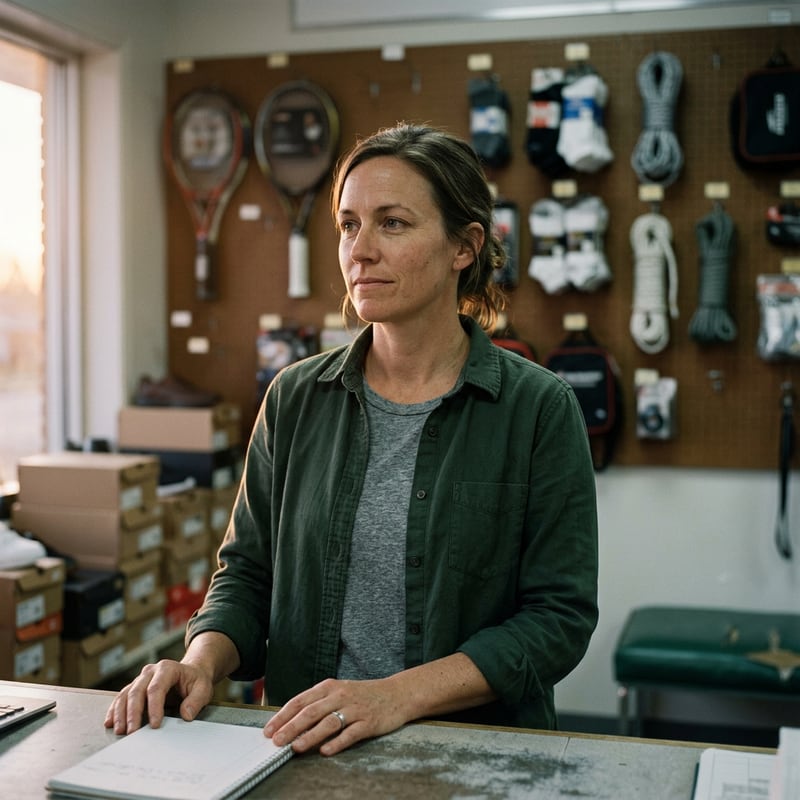
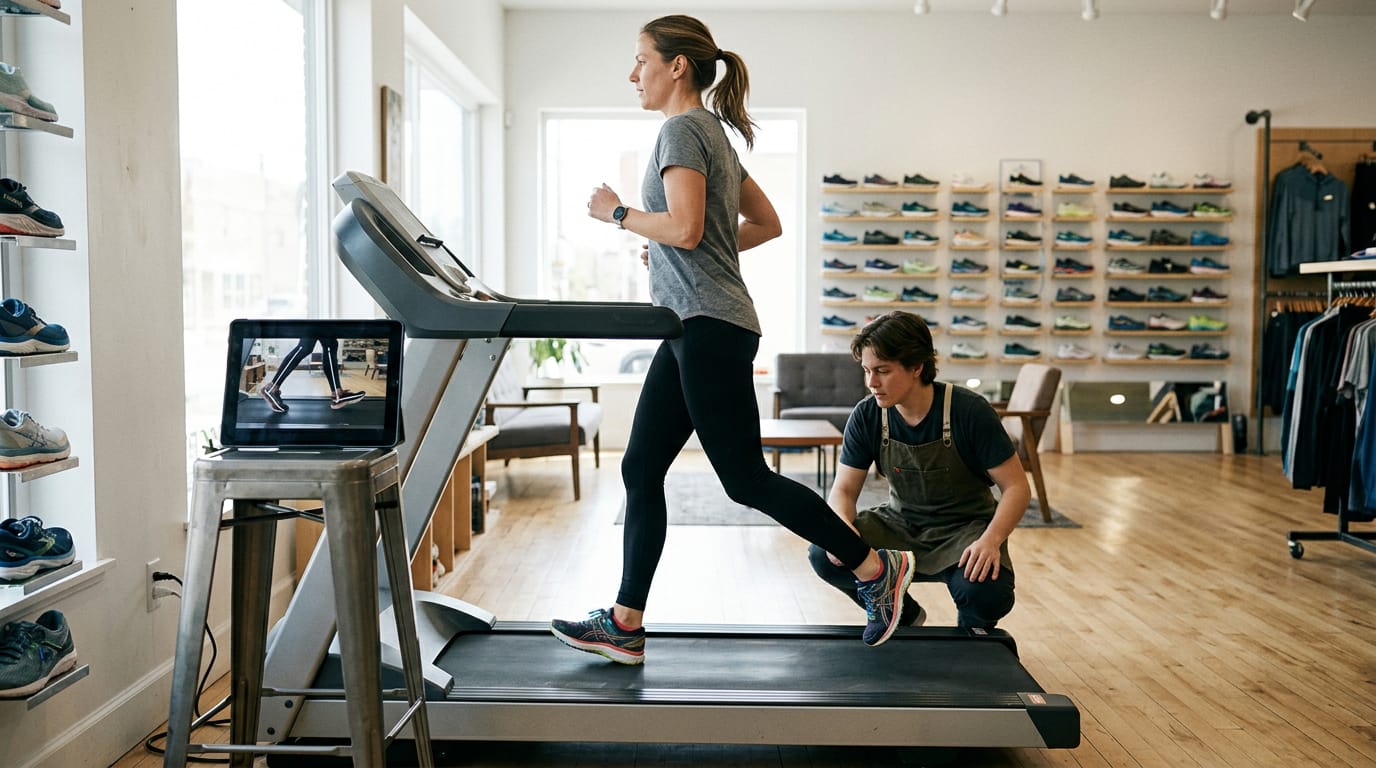
Picture stepping into a running store, jogging a few steps while a staffer watches how your feet land, then leaving with a shoe suggestion. That’s the basic idea behind a gait test.
Your gait is simply how your feet and legs move as you run, and the test gives the shoe you choose a better chance of working with your stride.
In this post, we’ll cover what the test measures, how it works in store, and what its results can and can’t decide. Then you’ll get a practical plan for checking fit and judging the recommendation yourself.
Gait Test for Running Shoes, Explained
A gait is the way you move when you run: how your foot lands, how your legs swing, and how your body travels over each step. So what’s the ideal running gait?
There’s no single perfect model, just the pattern that’s efficient and comfortable for your body.
What gets measured as you move
The test takes a detailed look at movement, usually while you run at your normal pace, because the goal is to see how you move, not how you think you move. Here’s what gets measured:
- Foot strike is which part of the foot lands first.
- Stride is how long each step is, and cadence is how many steps you take per minute.
- Joint alignment shows how your knees, hips, and ankles line up as weight passes over each foot.
- Pronation is the natural inward roll after landing, and supination is the outward roll as you push off.
Take a parent who started running after the kids went to school and worries her feet roll in too much. The fitter watches a few easy strides and bases the advice on what they show. She walks out with a pair fitted to her stride, not her fear.
Your whole body, not just your feet
Your body moves as a unit. When a foot lands, your ankle, knee, and hip all respond, so a change in one place ripples through the rest.
The foot doesn’t work alone. A shoe can cushion or support it, but it can’t fix movement that starts higher up the leg.
Hip strength and technique matter too. Weak hips or form that slips late in a run can push extra work onto the knee and foot. A good fitter asks how you train, not just how your feet look. Fit starts with the whole runner.
Why Getting a Gait Analysis Helps
A gait analysis shows how your foot lands and rolls through each stride, so the shoe you buy suits how you move.
Avoiding shin splints and knee pain
A gait check can help with these:
- Shin splints. Pain along the shinbone from repeated stress.
- Plantar fasciitis. Heel pain from strain under your foot.
- Knee and hip discomfort. Aches higher up the leg.
A systematic review of gait modifications in runners notes that many modifiable biomechanical risk factors have been proposed as interventions through gait retraining.
That’s where a gait analysis helps by identifying changes meant to reduce stress on your body.
Feeling comfortable with a smoother stride
Comfort comes first. A shoe that supports how your foot moves feels settled from the first step, and that carries into a smoother stride.
Think of a weekend runner whose pair feels fine in the store but leaves her arches sore by mile two. After a gait check, she finishes the same route feeling fresh.
Walkers benefit too. The bigger payoff is efficient movement: a stride that wastes less effort on every step. A good fit is less about style and more about stride.
Avoiding costly returns and wasted pairs
Trial and error gets expensive fast. A gait analysis helps you get the right shoe first time, with fewer returns and fewer pairs left unworn.
Consider a runner who buys online on a friend’s recommendation, then finds the heel slipping on every run. That’s a return, a reorder and more guesswork.
A gait check points you toward a pair that fits from the start, but you still judge the fit on your own runs. Fit beats guesswork.
Walking Through the In-store Gait Test
A gait test follows a clear sequence, and we’ll walk through each step. Each one narrows the options before you lace up a single pair.
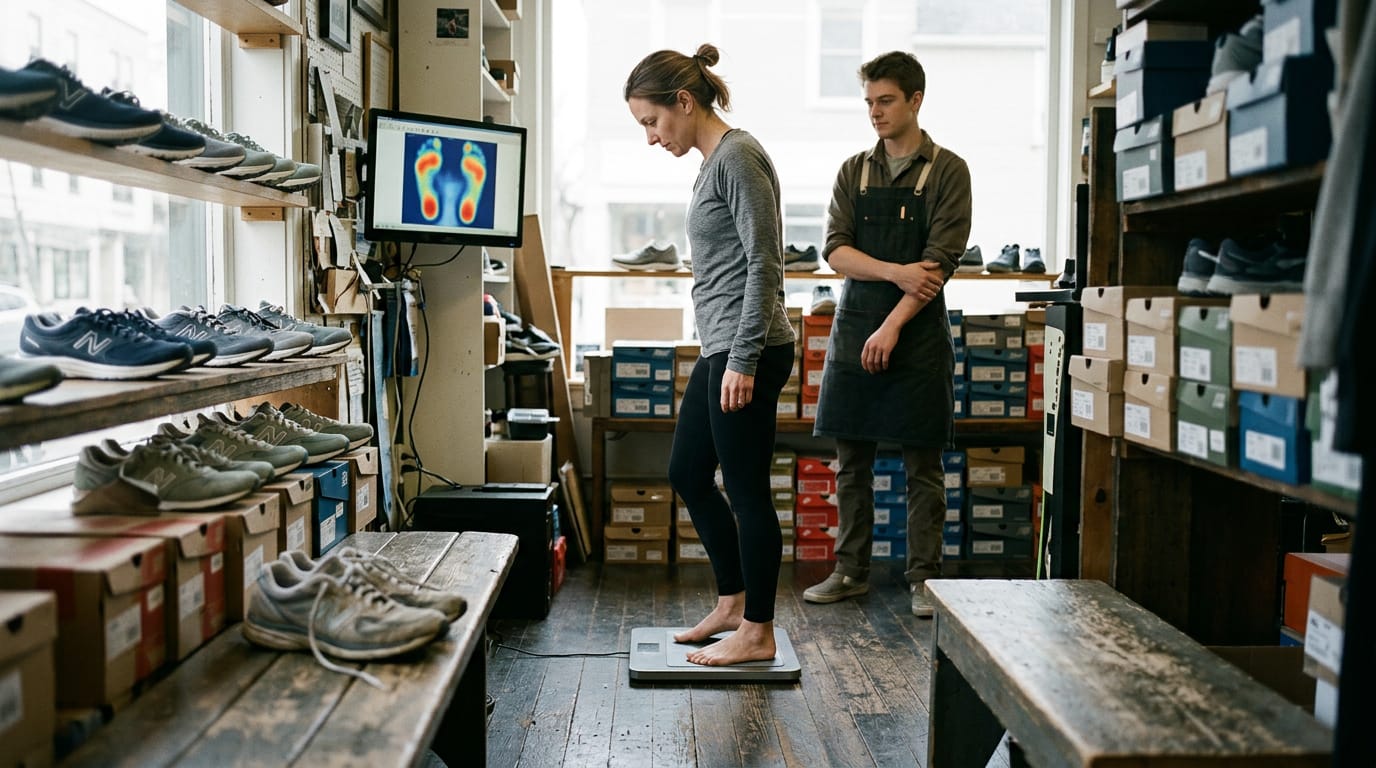
Measuring your feet and arch height
The fitter starts with the basics. Your arch height and foot shape help determine which shoes will sit well on you. Expect a Brannock measurement for length and width, and some shops add a 3D foot scanner. Then mention any aches and pains.
A weekend runner with a sore shin can change which pairs the fitter pulls off the wall, and that context matters as much as the numbers.
Recording a short walk or run
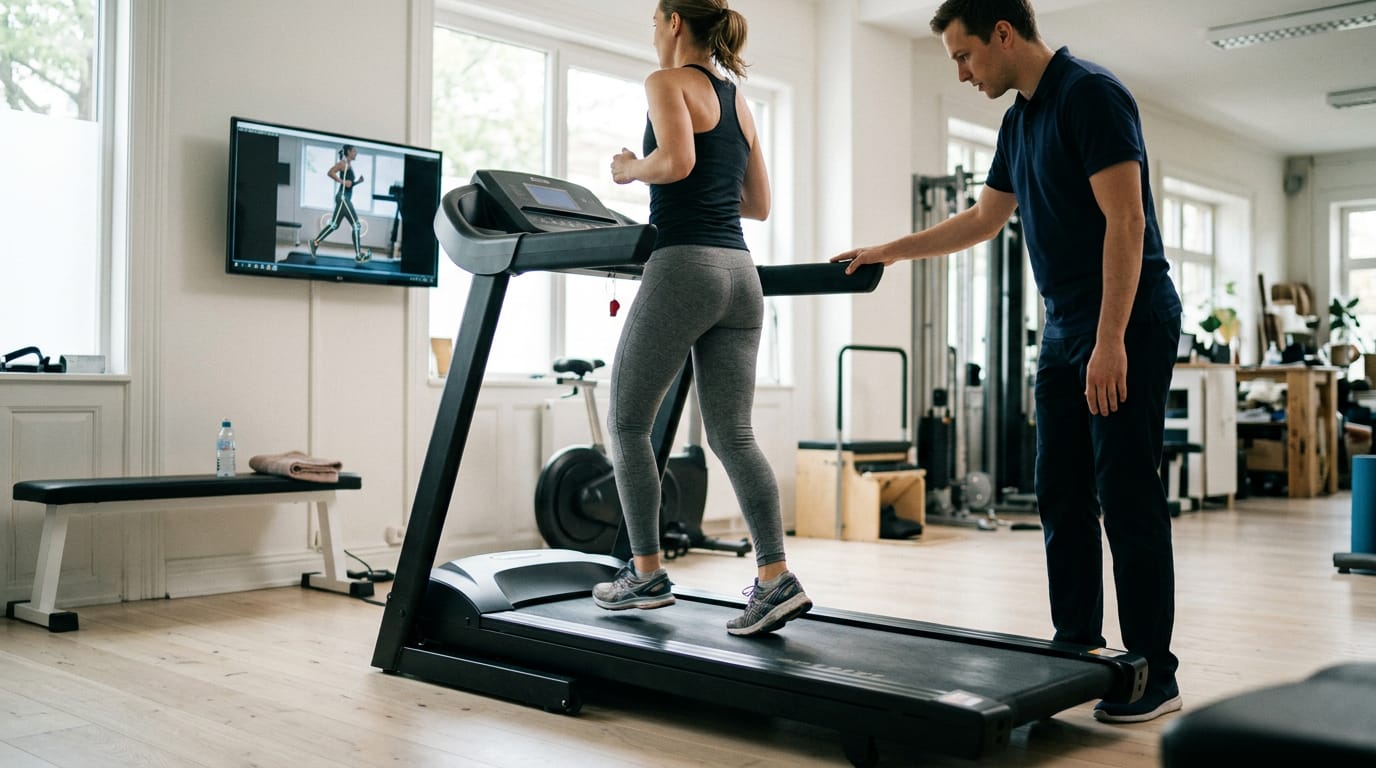
Next, you’ll walk or run briefly, often on a treadmill in stocking feet, so the fitter can see how your foot lands and rolls. That pattern is your gait. Many stores record the session on video so you can review it together.
The video shows how your foot moves, not whether your running is good or bad. Some shops also offer an optional 3D gait analysis for more detail.
How should a shoe fit?
Most runners want to know this first, and the answer starts with trying more than one pair. Compare length, width and cushioning across several options, then jog at your usual pace in each one, not a slow shuffle around the store.
Your stability level is the other piece, from neutral to more supportive.
Picture a new runner who tries three pairs and finds the middle one holds her heel and width best, even though it isn’t the cushioned pair she pictured. She leaves with a pair that feels right from the first stride.
Look for a shoe that feels settled by the end of the test, not one that just scores well on paper. Comfort is the final judge.
Matching insoles to your foot type
If your arch or heel needs extra help, the fitter may suggest insoles matched to your foot type. Brands such as Superfeet, Powerstep and Currex offer options, so ask which line suits you.
Read your results critically. A gait report is a starting point, not a prescription. Weigh it against how the shoes feel and how your body handled your last pair.
Retest when shoes or mileage change. As shoes wear and your training shifts, your results can shift too, so a fresh check is worth the time. If your training shifts toward a marathon, running shoes for marathon training deserve their own look.
Get Ready and Book Your Fitting
A little prep makes your fitting smoother. Here’s what to bring, how to book, and what to know before you pick a store.
What to bring and how to book
Start with your socks: wear light-colored ones, the kind you’d actually run in. Then pick how you want to get started:
- Book a fitting for a set time with a fitter.
- Take the online fit quiz to get a head start on the basics.
- Walk-ins are welcome if you can’t plan ahead.
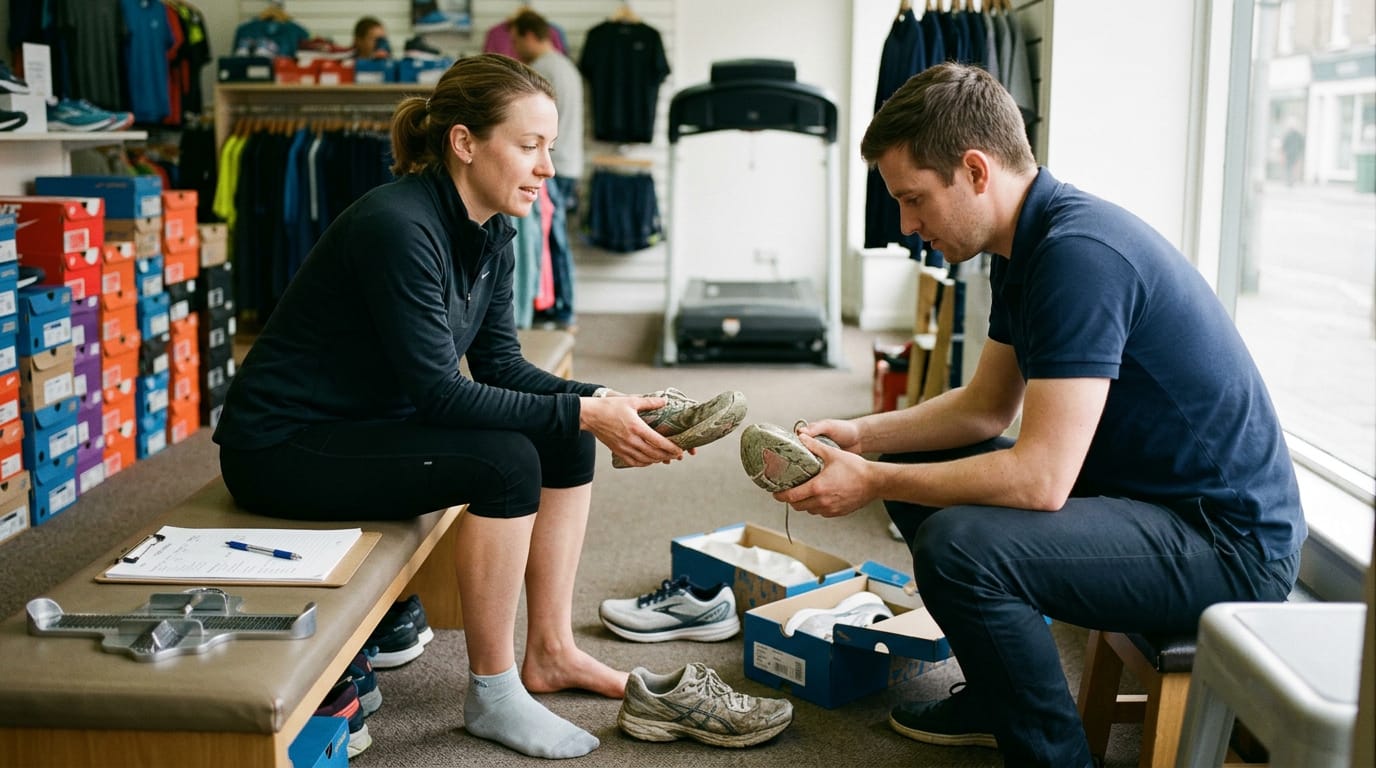
Don’t forget your old running shoes. Think of a weekend runner training for her first 5K who walks in with her worn-out pair in hand.
The fitter can see where those shoes have worn down, which gives them a starting point for your next pair. Bring them, worn out or not.
Exchange rules, hours, and store locations
Keep the 30-day exchange window in mind. A shoe can feel different after a few real runs, so you’ll want that time to test it out.
Check store hours before you head out so the trip isn’t wasted. Service is consistent across locations, so the fitting process should feel the same at every store you visit.
Why a specialty store beats big box
A specialty store gives you one-on-one time with staff who focus on running shoes. Big box shops sell plenty of shoes, but a specialty store makes the fitting the whole point. The goal is the shoe that fits how you actually run, not how you wish you ran.
For runners in Iowa, a local specialty store puts that fitting close to home.
Shoe Features and the Debates Around Them
Shoe features make big promises, and not all of them hold up on the road. In this section, we’ll look at what each one actually does.
How cushioning changes impact on your legs
Every footstrike sends a load up your leg, and the biggest load arrives at mid-stance, when your foot sits flat under your body. A 2023 study by Malisoux and colleagues of recreational runners found peak forces occur right there.
Leg stiffness, how firmly your leg acts as a spring on landing, shapes how that load gets handled. A softer leg absorbs impact over a longer stretch instead of all at once.
Consider a club runner who grabs the plushest shoe for sore knees. Thick foam helps, but a stiff-legged landing still jars her legs. Jog a few easy minutes. Your legs will tell you more than the label.
Pronation and what stability shoes really do
Pronation is the natural inward roll of the foot after landing, and everyone does it. What matters is how fast that roll happens. When that roll happens too fast, stability running shoes are worth a closer look.
A recent clustering study titled Which pronator are you? found distinct patterns, including fast rollers with large movements and slower rollers with high peaks.
Anti-pronation features sound like the fix if your foot rolls in, but the backing is thin.
Research on running shoes for preventing lower limb injuries found it’s uncertain whether motion control shoes reduce injuries compared with neutral or cushioned shoes, since the evidence is of very low certainty.
A gait test tells you how you move, not which shoe will keep you injury-free. Use it as one input and judge the recommendation yourself. Cross-over stepping, where your feet land across your body’s midline, adds stress of its own.
Easing into minimalist and barefoot running
Minimalist shoes leave less between your foot and the ground, which asks more of your feet. Ease in with short barefoot drills, like easy walking or light balance work on grass, adding time gradually.
Barefoot work can also build foot strength, and a study on daily activity in minimal footwear set out to test whether those small foot muscles get stronger with use.
Why orthotics are often over-prescribed
Orthotics, often handed out as a quick fix, can help, but they’re rarely the whole answer. A paper on medically based running analysis calls them a temporary bridge for foot support during rehabilitation, not a long-term addition to a shoe.
If strength is the root issue, train it first, since an insert can’t do that work. A sports podiatrist, a foot specialist who works with athletes, can tell you whether you need one.
Wide sizes and the brands they carry
If your toes feel squeezed across the front of the foot, a wide size may fit better. Major running brands typically offer wide and extra-wide (XWide) options.
Think of a weekend runner whose favorite shoe pinches after a couple of miles: checking the wide version of that same model is simpler than switching shoes.
What Clinicians Say About Your Running Gait
Before a shoe ever gets a recommendation, clinicians often look at how your body moves. Here’s what they tend to focus on, and when it’s time to bring in a specialist.
Start with hip strength and running form
Think of a weekend 10K runner who starts feeling knee pain around mile five. Before she buys another pair, a clinician may ask about her hips, since hip strength is often a priority when knees start to complain.
A shoe can only do so much if the muscles around your hips aren’t pulling their weight, so she may start with hip work instead of spending money on new shoes right away.
Running technique matters too. Small tweaks, like where your foot lands under your body or how long each stride feels, can ease strain on sore spots.
A clinician may also suggest adjusting your step width, the side-to-side distance between your feet, if your stride looks uneven. Make small changes rather than rebuilding your stride overnight, and try them on easy runs first.
When to see a sports medicine physician
A sports medicine physician is a doctor who focuses on injuries from exercise and sport. Picture a club runner whose shin hurts every time she laces up, even after a few easy days off.
Pain that sticks around or keeps coming back is a reason to get it evaluated, not just to buy a new pair.
Call the clinic to book, and bring a short list to the visit:
- Your most-worn running shoes
- When the pain shows up and what makes it worse
- Your typical weekly mileage and any recent changes to your routine
Don’t wait for it to fix itself.
A gait test is a useful starting point, not a final verdict. It shows how your feet move, which helps narrow the field, but the shoe still has to fit your foot and feel right on your stride.
Judge the fit yourself, pay attention to how the shoe feels on a short run, and ask questions if a recommendation doesn’t add up.
When a shoe fits well and feels natural, you’ve found the right pair. Good running shoes fade into the background, and that’s exactly what you want, so you can focus on getting out the door.
References
- Which pronator are you? New perspectives from an unsupervised clustering approach in running — pmc.ncbi.nlm.nih.gov (2026)
- Reference Values and Determinants of Spatiotemporal and Kinetic Variables in Recreational Runners - Laurent Malisoux, Christopher Napier, Paul Gette, Nicolas Delattre, Daniel Theisen, 2023 — journals.sagepub.com (2023)
- Running shoes for preventing lower limb running injuries in adults — pubmed.ncbi.nlm.nih.gov (2022)
- Setting Standards for Medically-Based Running Analysis — pmc.ncbi.nlm.nih.gov
- Gait modifications to change lower extremity gait biomechanics in runners: a systematic review — pubmed.ncbi.nlm.nih.gov
- Daily activity in minimal footwear increases foot strength — pmc.ncbi.nlm.nih.gov (2021)
Questions
What is gait analysis?
Gait analysis is an assessment of how your feet and legs move as you walk or run. It may examine foot strike, stride, cadence, joint alignment, and how your feet roll after landing, helping narrow down shoes that suit your movement.
What is the ideal running gait?
There is no single ideal running gait that works for everyone. The best pattern is one that feels comfortable and moves efficiently for your body; a gait assessment can describe how you run but does not determine whether your form is good or guarantee injury prevention.
How should a shoe fit?
A running shoe should feel secure at the heel and comfortable across the width, without pinching or slipping. Try several pairs and jog at your usual pace; choose the one that feels settled and natural, rather than relying only on a size, cushioning level, or gait-test result.
Sources
- Reference Values and Determinants of Spatiotemporal and Kinetic Variables in Recreational Runners - Laurent Malisoux, Christopher Napier, Paul Gette, Nicolas, journals.sagepub.com,
- Which pronator are you? New perspectives from an unsupervised clustering approach in running, pmc.ncbi.nlm.nih.gov,
- Running shoes for preventing lower limb running injuries in adults - PubMed, pubmed.ncbi.nlm.nih.gov,
- Setting Standards for Medically-Based Running Analysis, pmc.ncbi.nlm.nih.gov
- Daily activity in minimal footwear increases foot strength, pmc.ncbi.nlm.nih.gov,
- Gait modifications to change lower extremity gait biomechanics in runners: a systematic review, pubmed.ncbi.nlm.nih.gov
Find your level
The Counter