Lugged Bike Frame Explained: How It's Built and Why
A lugged bike frame uses brazed sleeves at tube joints; compare its build with welded frames and know what to inspect for price, condition, and fit.

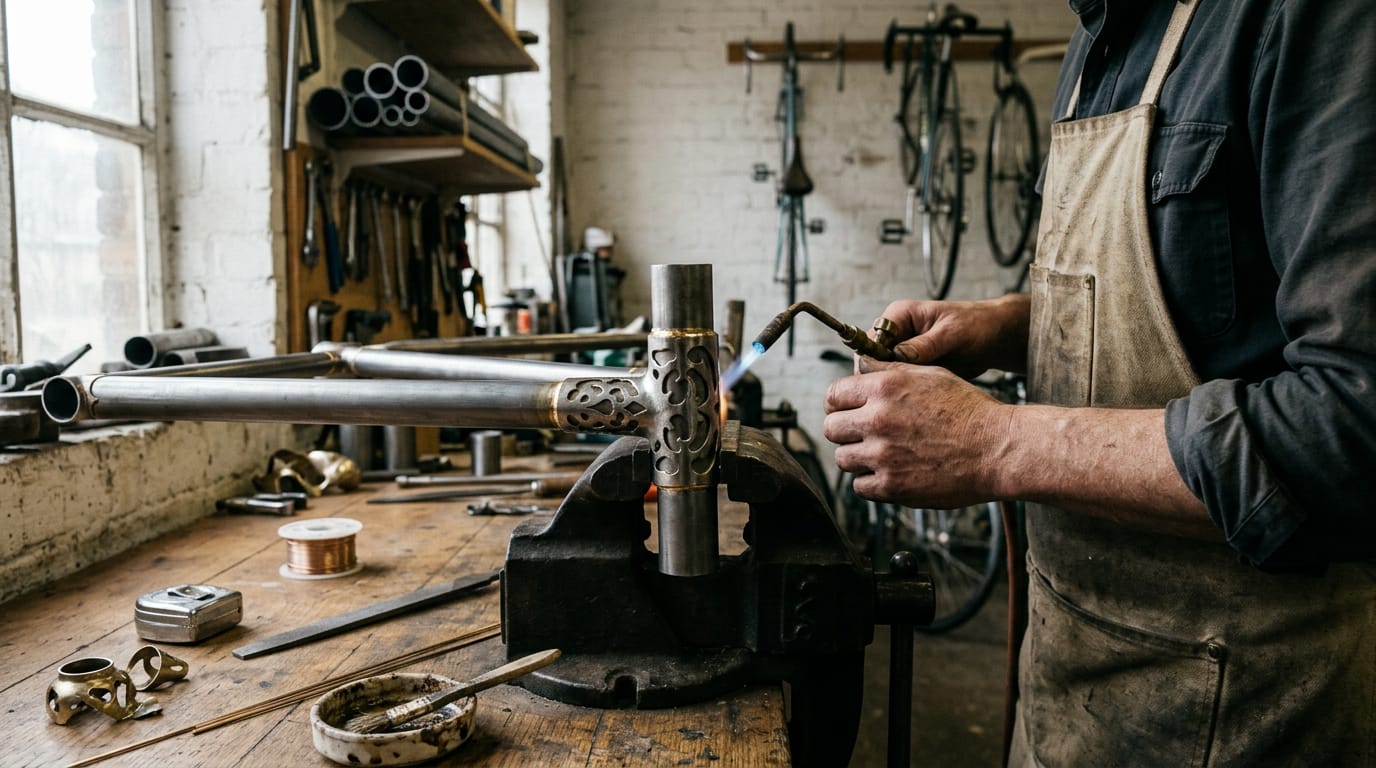
Think of an old wooden chair with carved collars at each joint, keeping the pieces firmly together. A lugged bike frame works on a similar idea.
Small metal sleeves called lugs sit at each joint, and the tubes slot into them and get brazed (joined with a filler metal melted into the seam) in place.
Knowing how this joint is built helps you see what you’re paying for, whether you’re eyeing a new steel bike or a used frame.
Here’s what’s ahead: how these frames are made, how they compare to welded and fillet-brazed options, and what to check on price, condition and fit.
How a Lugged Bike Frame Is Built
Each joint on a lugged frame gets its own fitting before any metal is joined. Here’s how the pieces come together.
Sleeves that join the tubes together
A lug is a socket-like sleeve that joins two tubes at one point. The builder slides each steel tube into a lug, with its end cut and mitred (angled so it fits flush inside the sleeve).
The outside of each lug has an elbow-shaped fitting that wraps around the joint.
How brazing melts filler into the joint
Lugs are joined by brazing, where a lower-melting alloy acts as a kind of glue. Builders use silver or brass filler, which melts well below the steel’s own melting point.
Once everything is hot, capillary action pulls the molten filler into the tight gap between lug and tube and spreads it through the whole joint. Jigs hold every tube and lug in place so the frame stays aligned.
Where lugs sit on a diamond frame
On a classic diamond frame, which is built from top, down, seat and head tubes plus rear stays, lugs go wherever tubes meet. The main spots are:
- Seat cluster. Where the seat tube meets the top tube and seat stays.
- Bottom bracket shell. The tube that holds the crank’s bearings, where the down tube, seat tube and chainstays come together.
- Head lugs. Upper and lower lugs join the top and down tubes to the head tube.
- Dropouts and fork crown. Dropouts hold the rear wheel, and the fork crown joins the steerer to the fork legs.
Why lugs make the joint stronger
Lugs give the filler more to grip, since the sleeve adds surface area for the bond. The shape matters too.
Smoothly tapered, pointed ends keep force from shearing across the joint and spread it along the tube, and a smooth lug avoids the sharp corners that create stress risers.
Lugs are less about adding metal and more about spreading the load. Think of a club rider on a long Saturday climb, standing on the pedals with every stroke loading the joints.
Because the load fans out along the tube instead of piling up in one spot, the frame stays steady under her and the joints don’t become the weak point. Strength lives in the joint.

How Lugged Frames Compare to Other Joints
Lugs aren’t the only way to join frame tubes, so it helps to see where they stand next to the alternatives. Here’s how they compare with welding and fillet brazing.
Lugged frames against welded ones
Welding needs thicker tube walls to hold up to the heat. According to a study on modern steel weldability, welding heat can affect steel, although modern steels are more tolerant of welding. Lugged construction sidesteps that welding step entirely.
TIG (tungsten inert gas) and MIG (metal inert gas) welding are cheaper to set up and easier to automate.
A paper on robotic bicycle frame welding notes they’re commonly used in frame production because they can be more readily automated than lugged construction.
Hand-run TIG is another story. It takes years of skill to lay down clean, consistent joints.
Think of a rider comparing two frames at a shop, one welded and one lugged, with similar price tags. Ask how each was joined so you know exactly what you’re paying for.
Lugs compared with fillet brazing
Fillet brazing takes a different route. The tube ends are mitred, which means cut at an angle, and shaped into a fish-mouth profile so they fit together. The tubes meet directly, with no lug in between, and the filler builds up along the seam.
No lugs are needed, so the joint looks different from a lugged one. Once the joints are brazed, the filler blobs get filed smooth for a clean finish.
Neither joint is necessarily better. Judge the frame, not the joint name.
Lug Types and the Craft Behind Them
Lugs are the sleeves that join a frame’s tubes, and how they’re made shapes both price and looks. Here’s what to know.
How stamped and cast lugs differ
Most lugs come in one of two forms, and the real split is cost versus detail.
- Stamped lugs are pressed from sheet metal and joined along a seam.
- Cast lugs offer finer detail and tighter tolerances.
- Cast lugs cost more, so expect that on the price tag.
- Cast lugs have fixed angles, so the builder works within them.
- Stainless cast lugs need silver filler, a detail worth knowing.
Picture a club player on a budget: stamped lugs keep the price down, while cast lugs suit the rider who values sharper detail enough to pay for it.
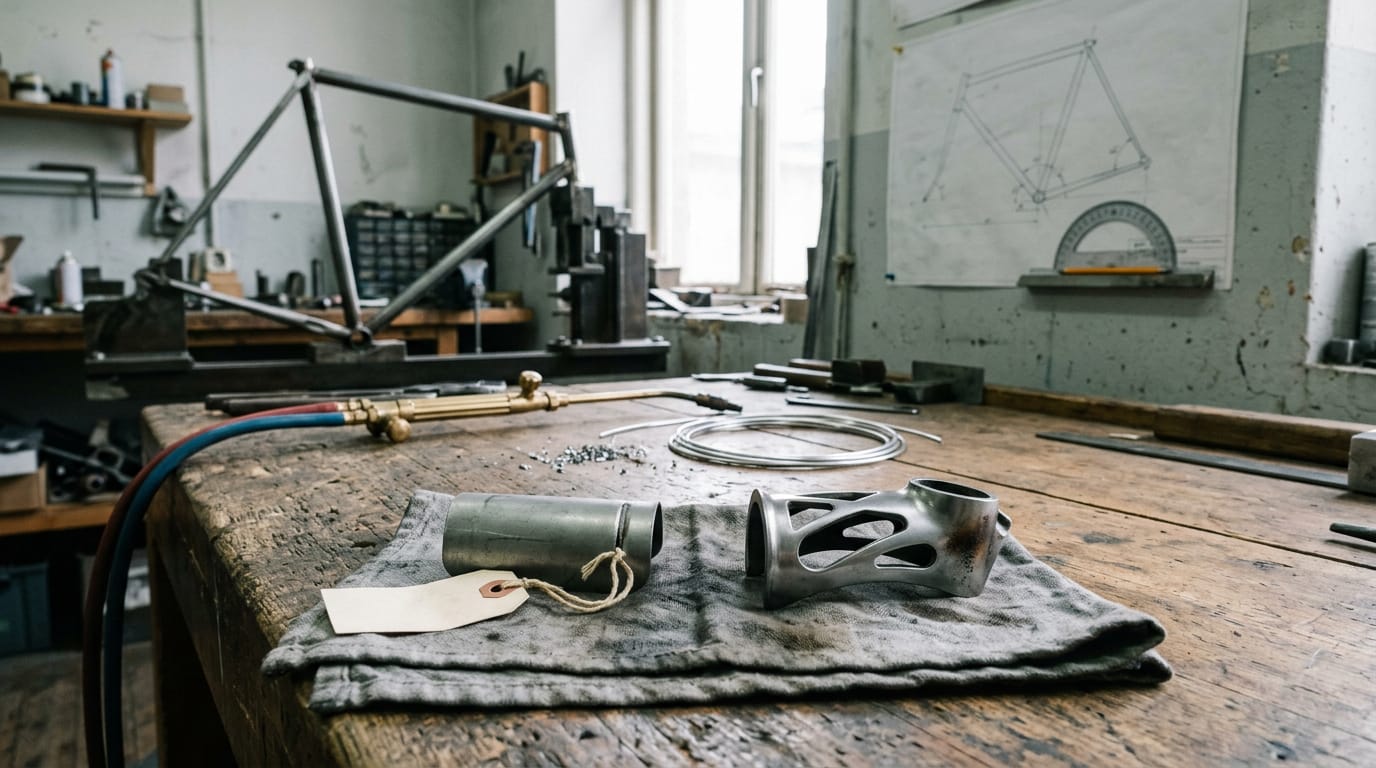
Shaping and decorating the lugs
Simple pointed lugs are the common shape, and plenty of solid frames wear them. Hand-filed, ornate lugs are the showpieces.
According to a thesis on wood as a bicycle frame material, lugs on high-quality racing and custom frames may be sculpted by removing material, either to save weight or for aesthetic effect, so hand-filed, ornate shapes can contribute to a frame’s aesthetic appeal.
Luglining (thin painted lines that trace a lug’s outline) and paint add a finishing touch. Thinning lugs reduces stress, so it’s a practical step as well as a visual one.
Think of a weekend rider who wants a bike she’s proud to be seen on. Ornate lugs and a clean paint job can make it one she wants to ride every Sunday, as long as the fit is right. Aesthetic appeal is a real perk, but fit still beats flash.
Where Lugged Frames Shine in Use
If you ride long distances, value gear you can fix yourself, or want a frame built with a classic look, a lugged frame may suit how you actually ride.
Why touring riders favor easy repairs
Touring riders are often far from a bike shop, so repairs need to be practical. On a lugged frame, the tube ends sit inside metal sockets called lugs, and brass is melted into each joint.
A case study on materials for the bicycle industry describes this as brass flowing by capillary action between the tube and a pre-heated lug.
Because the joints are brazed rather than welded, you can heat one, un-braze (sweat) a damaged tube free, and fit a new one. That lets you repair rather than replace.
Steel adds to the appeal. A thesis on sustainable bicycle manufacturing notes that steel frames are generally easier to repair than aluminium frames, which helps explain why touring cyclists often prefer them.
Lugs also give you stronger, reinforced joints where the tubes meet.
Think of a weekend tourer three days into a coastal ride who cracks a tube near the seat cluster. Instead of hauling the whole bike home, she heats the joint, swaps the tube, and keeps pedaling. Same frame, new tube.
Building custom frames by hand
Lugs suit hands-on builders, too. Brazing asks for less skill than TIG (tungsten inert gas) welding, which makes lugged construction approachable for amateur builders with patience and the right tools.
Custom builders also favor it, since each frame can be shaped around one rider. Lugs are back in style, and many riders are chasing that classic look.
A custom frame is built around your body, not picked off a shelf. If you’re buying a stock frame, check fit before you pay. Stand over the top tube with room to spare, and make sure you can reach the handlebars without strain. Fit beats fancy.
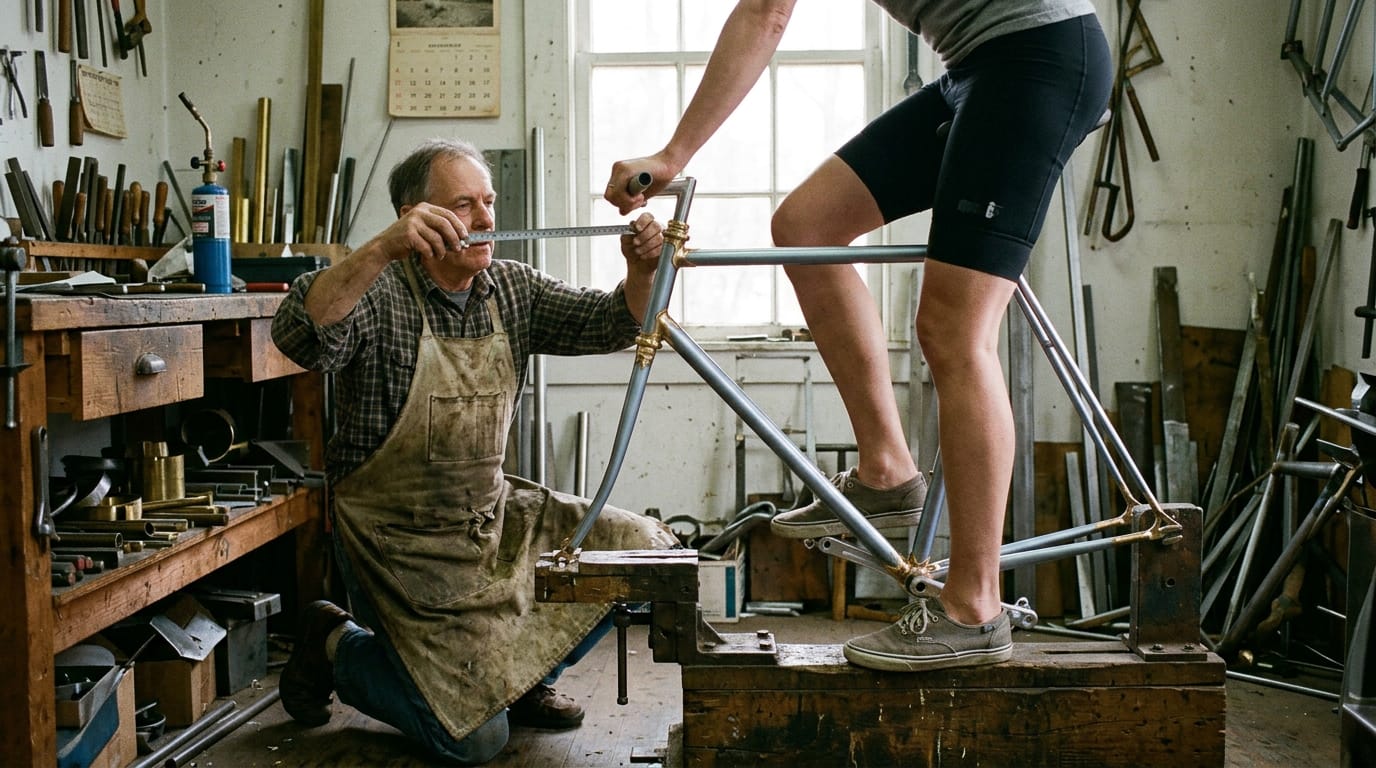
Lugged Frames Through History and Today
Lugged frames have a long history, and that history still shapes what you’ll find on the used market and in new custom builds.
When lugs ruled, and why they faded
For much of bicycle history, a lug (a pressed or cast sleeve that tubes get brazed into) was the main way to build a frame. According to a paper from The Steel Bicycle Project, lugged construction was the primary method of building frames until the 1970s.
Welding, aluminum, and carbon then displaced it. You’ll find lugs on older Raleigh and Schwinn bikes, and the Schwinn Paramount is a lugged model worth knowing.
Used and new lugged frames today
The bike boom brought Japanese and French lugged frames, and they’re worth knowing when you shop used. Tubing ranges from hi-tensile steel to chromoly, a steel alloy with chromium and molybdenum added.
Higher-end frames often use butted tubing, which is thinner in the middle and thicker at the ends. For daily riding, ask which tubing the frame uses.
Think of a weekend rider buying an older frame at a yard sale. A quick check of the joints and tire clearance keeps them from hauling home a bike that won’t suit how they ride.
New custom lugged frames remain available alongside vintage bikes on the used market, and a research paper on custom frame companies notes their builders vary in size, scope, and reputation.
Compare new custom prices against used asking prices before you commit.
Modern standards like disc brakes and tire clearance may not match an older frame. Check them first.
Utility bikes built in large numbers
Not every lugged bike was a racer. Flying Pigeon lugged steel bikes and other utility bikes from China and India were built in large numbers to get people around, not to race.
A lugged frame is really a story about its joints. The lugs, the brazing and the care put into each fitting all shape how a bike rides and how it ages.
Whatever you’re weighing, focus on what matters most: a price that matches the frame’s condition, a used frame you’ve checked closely and a fit that suits how you actually ride.
The right frame fits how you ride, and after a few good miles, you’ll forget the joints are even there.
References
- Weldability of Modern Steel Materials. — doi.org (1995)
- A Parallel Algorithm for Scheduling a Two-Machine Robotic Cell in Bicycle Frame Welding Process — doi.org (2021)
- Designing for Sustainable Bicycle Manufacturing — scholarworks.rit.edu (2019)
- Marketing engineering materials to the bicycle industry : a case study for Duralcan metal matrix composites — hdl.handle.net (1994)
- The Steel Bicycle Project: Bringing Together Tube Manufacturers, Frame Builders, and Engineers through Sports Engineering — mdpi.com (2020)
- The Feasibility of Wood and its Derivatives as a Bicycle Frame Building Material — doi.org (2016)
- Recommended Citation — citeseerx.ist.psu.edu (2015)
Sources
- Weldability of Modern Steel Materials., doi.org,
- A Parallel Algorithm for Scheduling a Two-Machine Robotic Cell in Bicycle Frame Welding Process, doi.org,
- Designing for Sustainable Bicycle Manufacturing, scholarworks.rit.edu,
- Marketing engineering materials to the bicycle industry : a case study for Duralcan metal matrix composites, hdl.handle.net,
- The Steel Bicycle Project: Bringing Together Tube Manufacturers, Frame Builders, and Engineers through Sports Engineering, mdpi.com,
- The Feasibility of Wood and its Derivatives as a Bicycle Frame Building Material, doi.org,
- Recommended Citation, citeseerx.ist.psu.edu,
Find your level
The Counter