Pink Badminton Racket Guide: Frame, Weight, and Balance
A pink badminton racket should fit your game, not just your style. Compare frame materials, prices, and level-specific picks, and avoid toy-like listings.
Picking a badminton racket is a lot like picking running shoes: the color catches your eye first, but the fit decides whether you’ll still be using it by midseason.
If you’re shopping pink for yourself or a young player, you deserve a straight answer about what you’re really buying.
A pink badminton racket is a real, playable racket with pink in the design, and that’s the easy part.
The harder part is matching frame, weight, and balance to your level and spotting toy-like listings that look right but won’t hold up on court. Here’s how we’ll work through it.
Spotting a Truly Pink Badminton Racket
Plenty of listings call a racket pink when it’s mostly black with a small logo. Check the details before you buy.
What qualifies as pink
Pink has to be a design feature, chosen on purpose rather than a stray detail. Look for full or dominant pink accents, where pink covers the frame or is the first thing you notice. Coral-pink colorways count too. Tiny logos don’t qualify.
Think of a parent buying a first racket for a 10-year-old who’s set on pink. A racket that’s mostly pink keeps her excited to bring it to practice, while a black racket with a pink logo doesn’t.
Choosing between pink shades and finishes
Pink comes in several shades:
- Hot pink is bold and loud.
- Pastel is light and soft.
- Blush is a gentler, rosier tone.
- Coral leans warmer, toward orange.
Glossy gives a bright, polished look, while matte looks softer and more understated.
A full-frame pink racket commits to the look, while accent pink stays subtle. Minimal graphics let the pink stand out, but busy graphics compete with it.
If two rackets are otherwise close, let shade break the tie and pick the pink you’d happily carry every week.
Spotting pink in product names
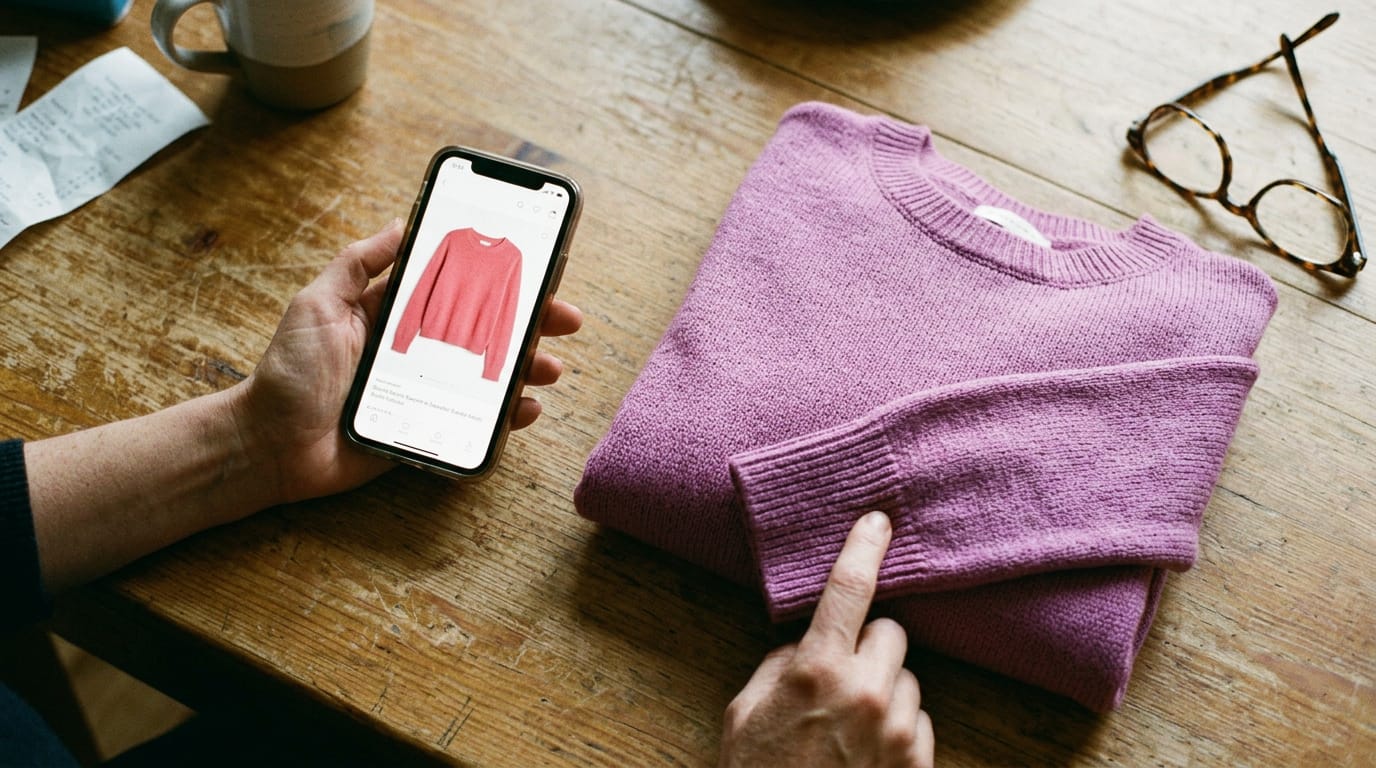
Product titles can be misleading. A listing might show a purple-pink colorway, which is a different shade from the pink you’re after, so read the color line before you buy. If the color is named in the title, trust that over the photo.
How Frame Material Affects Weight and Feel
Frame material sets the baseline, but we’ll show you how the specs decide the rest.
Comparing graphite, steel and iron frames
- Graphite (carbon): light and responsive.
- Steel or aluminium: heavier and more basic.
- Iron alloy: tough but heavy.
- High modulus graphite shaft: a stiffer carbon grade.
How to read weight and balance specs
A Chalmers University simulation study puts a modern racket at about 90 g, and many standard models land around 80–90 g unstrung. A 72g 6U racket is lighter still, in the 70–74g class that Global Carbon Sports calls an emerging ultra-light segment.
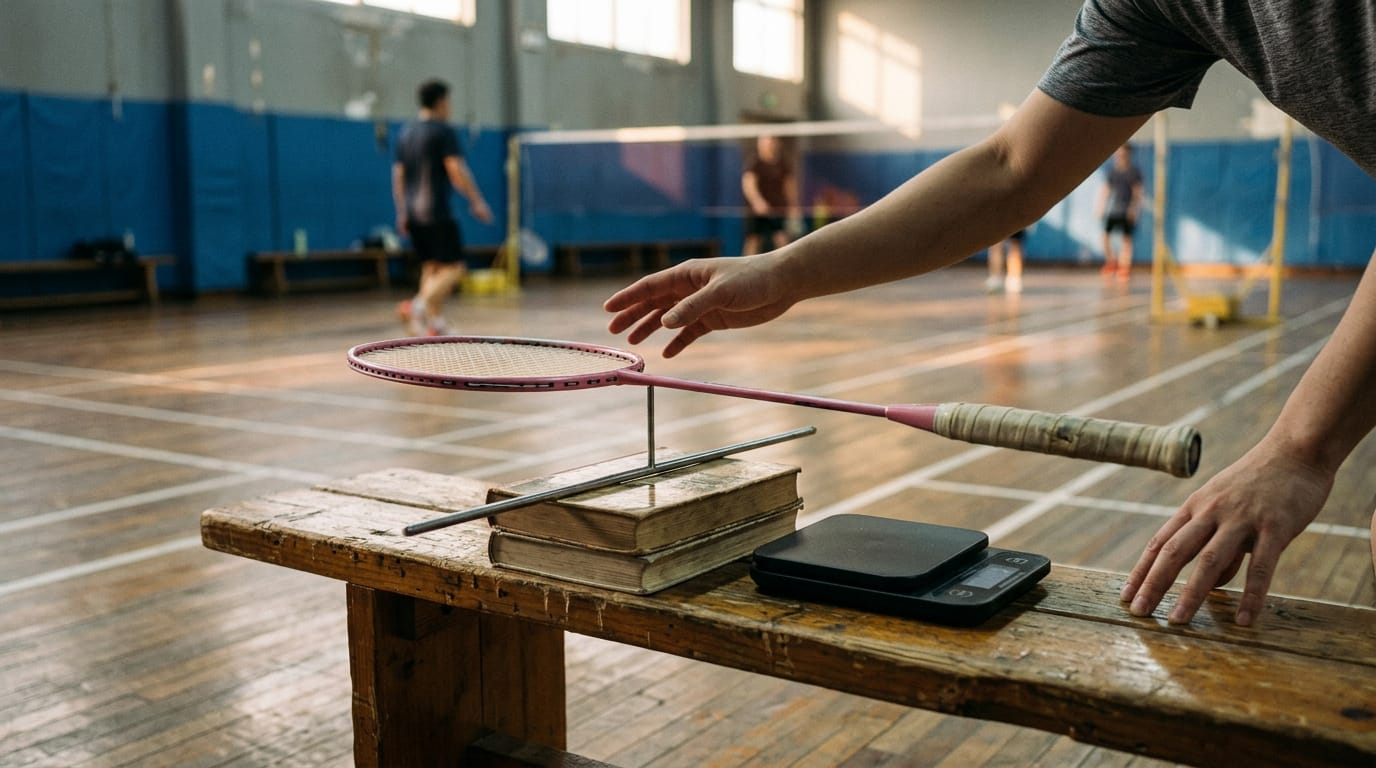
The balance point isn’t about how much a racket weighs. It’s about where that weight sits. A head-heavy build suits players who want momentum through the swing, even balance splits the difference, and head-light suits quick hands.
Picture a parent shopping for a teen: a listing that says only ‘lightweight’ is a toy-like warning sign, while a stated gram figure lets them compare.
A spec like 4U/G5 pairs weight class with grip size, so read both, then ask the shop to let you hold it.
Frame features that affect performance
- Aerodynamic Fluid Box frame: shaped to move through the air more easily.
- Isometric head: a rounder head with a larger sweet spot, where hits feel best.
- Max string tension: a study of badminton racquet strings notes some specs allow up to 30 lbs, so never string above the printed limit.
- 76-grommet durability: grommets are the holes strings pass through, and a 76-count frame is a durability marker.
- Flex rating and length: flex is how much the shaft bends under load, and length sets your reach.
The numbers narrow the field. Your hand makes the final call.
Pink Options and What They Cost
Pink rackets vary more than the color suggests. Here’s what each tier gets you.
Pink and near-pink racket examples
Some are fully pink, while others are only near-pink. Here’s what you’ll find:
- Full carbon offensive racquet: a pink full carbon frame listed as an offensive model.
- All-carbon couples pair: two matching all-carbon rackets for two players.
- Iron alloy double set: two iron alloy rackets sold together.
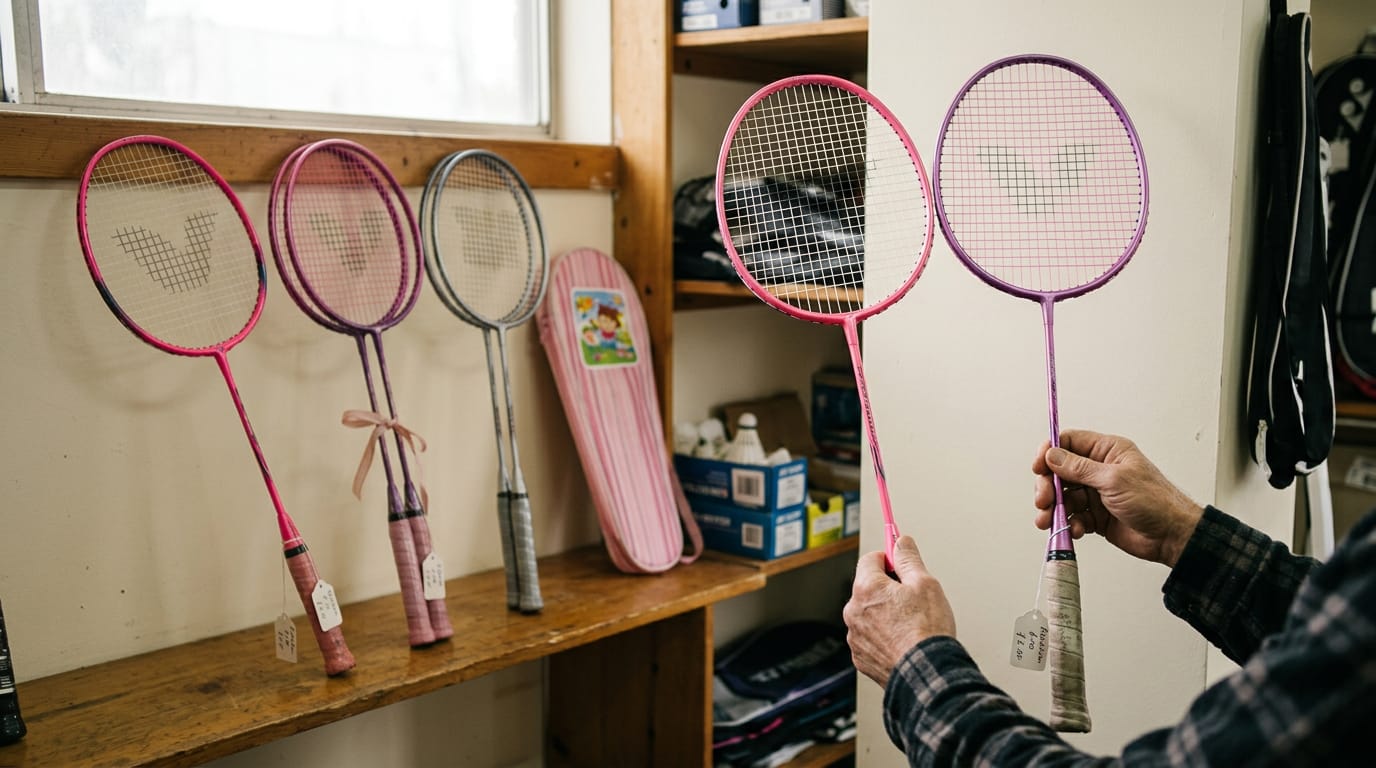
- Kids pink-themed set: a pink-themed set for younger players.
- Maxx Venus purple-pink: a purple-pink shade, so check photos before you assume it’s pink.
What each price range gets you
The price tells you where a racket sits, not whether it suits you. A parent buying a first racket for a nine-year-old can start with a budget set and step up later without overspending.
- Budget kids and backyard sets: the lowest prices, aimed at casual play.
- Mid-range carbon racquets: a step up from the budget sets.
- Discounted entry-level racket (~€49): listed at around €49 after a discount.
- Premium branded rackets, $165 to $305: branded models at the top of the range.
Entry-level rackets can be found alongside budget sets and mid-range carbon models.
A study on racket stiffness and the backhand smash describes the Yonex Duora 33 as a low-range racket usually used by less experienced players, and it’s more flexible than the mid-range Duora 88.
Premium lineups from Yonex, Victor and Protech
These are the premium lineups in the listings:
- Yonex Astrox and Nanoflare lines: Yonex’s premium options.
- Victor and Protech brands: premium lineups from two more brands.
- Various colorways, none pink: premium models come in many colors, but none listed are pink.
- Pagination of 62 rackets: the category runs to 62 rackets over several pages, so filter by color and price first.
Whatever the tier, have the shop check your grip size before you pay. Fit beats color.
Picking a Pink Racket for Your Level
Pink looks great on the court, but your skill level should decide what goes in your hand. Here’s how we’d match the frame to how you actually play.
How skill level changes your choice
Beginners on a budget do well with a steel or aluminium frame. If your budget stretches, graphite or carbon is the better pick.
Club players should check the listed weight before buying so they can compare frames side by side. Look for a beginner-to-intermediate label too, which shows whether the racket suits your current game.
Think of a weekend player who just joined a club and wants a pink racket for doubles. A lighter frame keeps her shots up without her arm tiring by the third game. Start light.
Rackets sized for juniors and kids
Kids need a racket built for their size, so junior sizing comes first. Look for:
- A shorter length and slimmer grip
- A junior or age label on the packaging
- Soft grips and an oversize, lightweight head
Kids’ sets often include shuttles and a bag, which helps with a first season.
Juniors: check length before colour. A pink racket that’s too long will frustrate a child all season, however much they love it.
Backyard sets and single performance rackets
Two-racket sets with a bag suit casual garden or park play. Outdoor game kits run heavier, so save them for relaxed rallies.
Consider a dad who wants a racket for the park with his daughter. A two-racket set covers them both, and the bag keeps the shuttles from going missing. Serious players should buy one good single performance racquet instead.

Mistakes to Avoid When Buying
Pink can look right in a photo and still be wrong for your game. Three checks cover most of the risk: the listing, the strings and extras, and the paperwork.
Spotting toy-like listings before you buy
Some toy-like listings look like a bargain until the racket arrives. A parent buying a first racket for a 12-year-old on the school team might spot a cheap pink option with no weight or size listed. Without those specs, it’s a guess until it arrives.
Pink sells the look, but specs tell you how it plays, so check material, weight and size first.
Confirm the listing sits in the badminton category, since a pickleball paddle is not a badminton racket. And remember that price doesn’t equal fit: judge the frame by fit, not the sticker. Fit beats price.
Picking strings, tension and extras
Choose a model that suits how you play, and set tension by level rather than copying a pro’s setup. A free grip or cover is a nice bonus, not a reason to buy.
Ask the shop about an expert pre-stringing service, where the racket is strung before you take it home, or ask for a restring when you buy.
Afterward, keep the racket in a cover, store it dry, and track string life so you know when a restring is due.
Confirming authenticity and warranty cover
Look for a listing that says the racket is 100% genuine, plus a 1 year manufacturer warranty that’s stated clearly, not implied.
A genuine racket can be verified with the manufacturer, so you don’t have to take the seller’s word for it. Check first, then pay.
Good gear disappears once you’re playing, and that’s the point of getting a pink racket right the first time.
Check that the pink is genuine, match the frame, weight, and balance to your current level, and watch for toy-like listings that promise more than they can deliver.
If you can, test the grip and ask a shop to confirm the fit. A racket that suits your level is one you’ll keep reaching for, and in pink, it’ll look great doing it.
References
- Experimental and Computer Simulation Studies on Badminton Racquet Strings — mdpi.com (2023)
- Simulation of a badminton racket — studentarbeten.chalmers.se (2017)
- sEMG Analysis of Upper Limb Muscles during Backhand Smash Using Badminton Rackets of Different Stiffness — mdpi.com (2022)
- Badminton Racket Weight & Balance Point Guide 2026 | GCS — globalcarbonsports.com (2026)
Sources
- Simulation of a badminton racket - A parametric study of racket design parameters using FEA, studentarbeten.chalmers.se,
- Badminton Racket Weight & Balance Point Guide 2026 | GCS | Global Carbon Sports, globalcarbonsports.com,
- Experimental and Computer Simulation Studies on Badminton Racquet Strings, mdpi.com,
- sEMG Analysis of Upper Limb Muscles during Backhand Smash Using Badminton Rackets of Different Stiffness, mdpi.com,
Find your level
The Counter