How to Break In a Baseball Glove (Without the Oven)
The break-in method glove makers advise, step by step: catch, a light coat of oil, a ball in the pocket, and why ovens and soaking shorten a glove’s life.

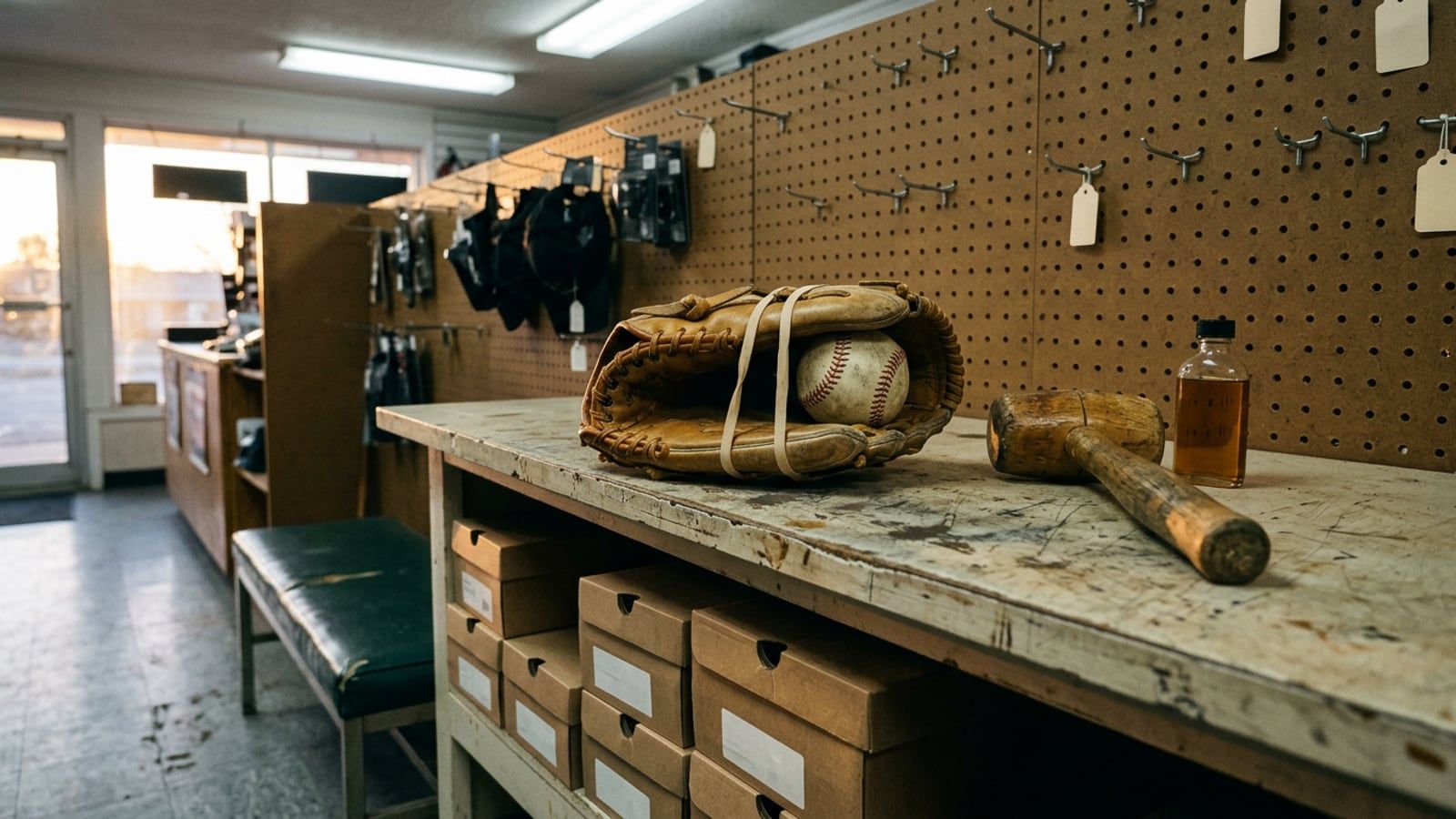
The fastest safe way to break in a baseball glove is the plain one. Work the stiff hinges at the heel with your hands, rub in a light coat of glove oil, fold the glove around a ball and band it shut for about a day, then play catch as often as you can. That is what both Rawlings and Wilson tell you to do. The oven, the microwave, the hot car and the bath all make a glove soft quickly, and all of them shorten its life.
What breaking in actually does
A new glove is stiff in three places: the heel, where the glove folds; the pocket, where the ball lands; and the laces and web along the top. Breaking it in teaches the leather where to bend, so the glove closes along the line you want and the pocket sits where you catch. It is not about making the whole glove floppy. Rawlings puts it well in its break-in guide: the leather should still push back a little when you pull on it. A glove with no resistance left will not hold its shape or the ball.
Know your leather before you start
How much work a glove needs depends mostly on what it is made of, so check before you reach for the mallet.
| Glove | What to expect |
|---|---|
| Youth glove, soft or pre-oiled leather | Little to no break-in; usable after a session or two of catch |
| Mid-range adult glove | Some stiffness in the heel and web; the full method below, done patiently |
| Premium adult glove, heavy, stiff leather | The longest break-in; worth it, because this leather holds its shape longest |
Wilson says all of its youth baseball and fastpitch gloves are made with game-ready materials, with “little to no break-in period,” in its guide to choosing a glove. The Wilson A450 youth glove on our Gear page is one of those. At the other end, Rawlings notes that its premium lines take longer to break in.
If you are still deciding which glove to buy for a young player, the team sports list on The Counter covers what each level needs, and our guide to sizing a youth baseball bat does the same for the bat.
Play catch: the method that works
Every maker’s method ends the same way, and so does ours. Catch is what shapes the pocket to your hand and to the way you close the glove. Rawlings says to play as much catch as possible once the glove closes easily: the oil from your hand softens the lining, and each catch deepens the pocket where the ball actually lands.
- Start with short, easy throws so you can catch in the pocket rather than the web or the heel.
- Close the glove the way you will in a game, thumb and pinky toward each other, not by folding it flat like a taco.
- Lengthen the throws as the glove loosens.
- Field a few grounders too, so the glove learns to open as well as close.
No partner? Throw a ball into the pocket yourself, or pound it in with your fist. Rawlings calls this “hand catch,” and it is a decent stand-in for the real thing.
Conditioner, a ball and a band
Before the first game of catch, and on the evenings between, this is the routine that gets a stiff glove there sooner. It follows the steps Rawlings and Wilson both describe.
- Work the hinges. Hold the glove by the heel with both hands and twist the thumb and pinky down and in toward each other, then back, as Rawlings describes. Keep at it for a few minutes. This softens the padding where the glove folds.
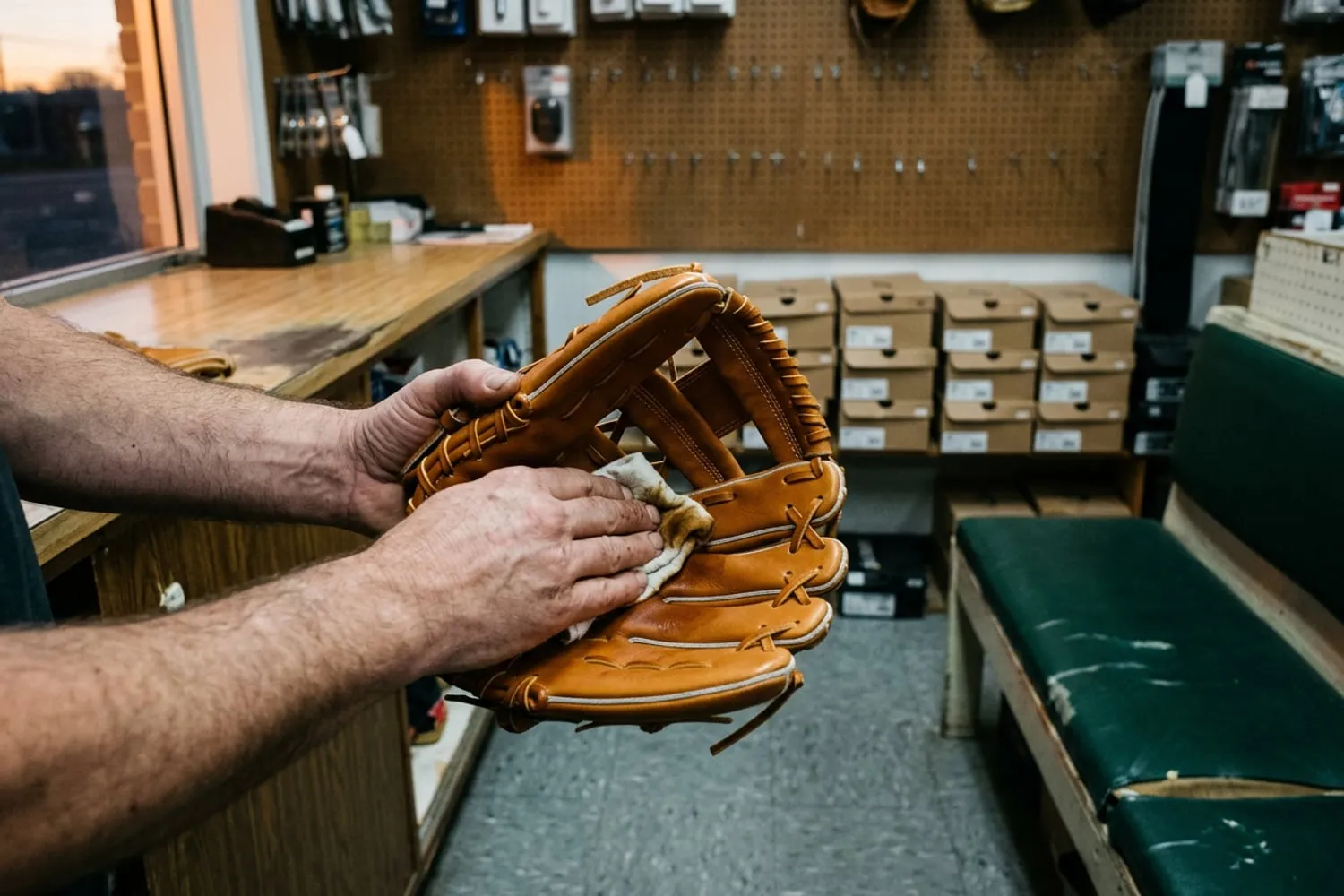
- Add a light coat of glove oil. Put a small amount on a soft cloth and rub it into the pocket and the hinge points. A glove oil made for the job, such as Rawlings Glovolium (on our Gear page), is better than anything from the kitchen or the garage. Test it on a hidden spot first if the leather is light tan, because oil can darken it.
- Shape the pocket. If you have a glove mallet, open the glove on a firm surface and pound the spot where you want the pocket. Wilson’s seven-step method also pounds the thumb and pinky sides above the wrist opening to set the break points.
- Ball and band. Put a ball in the pocket, fold the glove closed around it and hold it with a couple of rubber bands or a glove wrap. Rawlings suggests leaving it for about a day in a cool, dry place.
- Unwrap and play catch. Then repeat from step 1 on the parts that still feel stiff.
Tip: band the glove around the ball at the heel and palm, not tight across the fingertips. You want the pocket to set, not the fingers to curl in permanently.
What not to do: ovens, microwaves and soaking
The shortcuts all work the same way: they force the leather soft by heating it, flooding it or crushing it. The glove feels ready in an hour and wears out years early.
- The oven or the microwave. Rawlings advises against steaming, boiling, baking or otherwise heating a glove, and says these techniques can damage it and affect your warranty. Heat dries leather out, leaving it brittle and more likely to crack, and the laces suffer too.
- A hot car. Leaving a glove on the dashboard is the slow version of the oven.
- Soaking it. Dunking a glove in a bucket or a bath and letting it dry stiffens it all over again and can damage the padding inside.
- Heavy oil, petroleum jelly or shaving cream. Rawlings warns against petroleum jelly and other oily products, and against saturating the glove even with glove oil. Too much makes the glove heavy and floppy, and it attracts dirt.
- Running it over with a car. People do it. Rawlings asks you not to.
One honest exception: Wilson’s master glove craftsman, Shigeaki Aso, starts his method by pouring a little warm, not boiling, water into the palm, finger side up, to relax the leather before shaping it. That is a small, controlled step, not a soak, and it is Wilson’s own advice. Rawlings advises against heating a glove in any form. Follow the maker of the glove you own, and if the instructions in the box say something different, go with the box.
Steaming and paid break-in services
Some sporting goods stores offer glove steaming in the store: a staff member uses a glove steamer to warm the leather and shape the pocket while you wait. It is optional. A steamed glove still needs catch to fit your hand, and since Rawlings lists steaming among the methods that can affect its warranty, check with the maker before you have a new premium glove steamed. If you do use the service, have it done by someone who steams gloves regularly, and do not try it at home over a kettle.
Keep its shape between seasons
A glove you have broken in well is worth looking after, and the care is simple:
- Store it closed around a ball in a cool, dry place, as Rawlings advises, not loose at the bottom of a bat bag with the cleats on top of it.
- Keep it out of the heat. The car trunk in July and the shelf over a heater both dry the leather.
- Let a wet glove dry slowly. Wipe off mud and water, reshape the pocket around a ball and let it air-dry at room temperature, never on a radiator or with a hair dryer.
- Give it a light coat of oil about once a season to keep the leather from going brittle.
- Check the laces every six months. A worn lace is cheap to replace and a snapped one in the middle of a game is not; a local shop can relace a glove if you would rather not do it yourself.
For the rest of your gear, from shoes to rackets, our Care & Repair section covers cleaning, storing and knowing when to replace, and the Team Sports section covers what to buy in the first place.
Questions
How long does it take to break in a baseball glove?
It depends on the leather. Wilson says its youth gloves are made with game-ready materials and need little to no break-in, while Rawlings notes that its premium leathers take longer. A stiff adult glove usually needs weeks of regular catch rather than a single afternoon, and it keeps shaping to your hand after that.
Can you put a baseball glove in the oven?
No. Rawlings advises against baking, boiling or steaming a glove, and says heat can damage it and affect your warranty. An oven or a microwave softens leather fast by drying it out, which leaves it weaker and more likely to crack.
How much glove oil should I use?
Less than you think: a light coat on a soft cloth, worked into the pocket and the stiff hinge points rather than poured over the glove. Rawlings warns against saturating a glove with oil. You can always add a little more later, but you cannot take it back out.
Should I break in my child’s new glove for them?
You can do the setup: work the hinges, add a little oil and band it around a ball overnight. The catch is the part that shapes the pocket to their hand, so let them do that. Many youth gloves need little break-in at all, and Wilson’s sizing test doubles as a readiness check: a player who can easily squeeze the glove closed can use it; one who struggles needs more break-in or a smaller glove.
Sources
- How to Break In a New Glove, The Rawlings Way, Rawlings
- How to Break in a Glove In 7 Easy Steps, Wilson Sporting Goods
- How to Choose a Glove, Wilson Sporting Goods
Find your level
The Counter