Flat Bike Tire Guide: Causes, Fixes and Prevention
A flat bike tire can stop your Saturday ride; get roadside repair steps, puncture prevention tips, and know exactly when to call a mechanic.

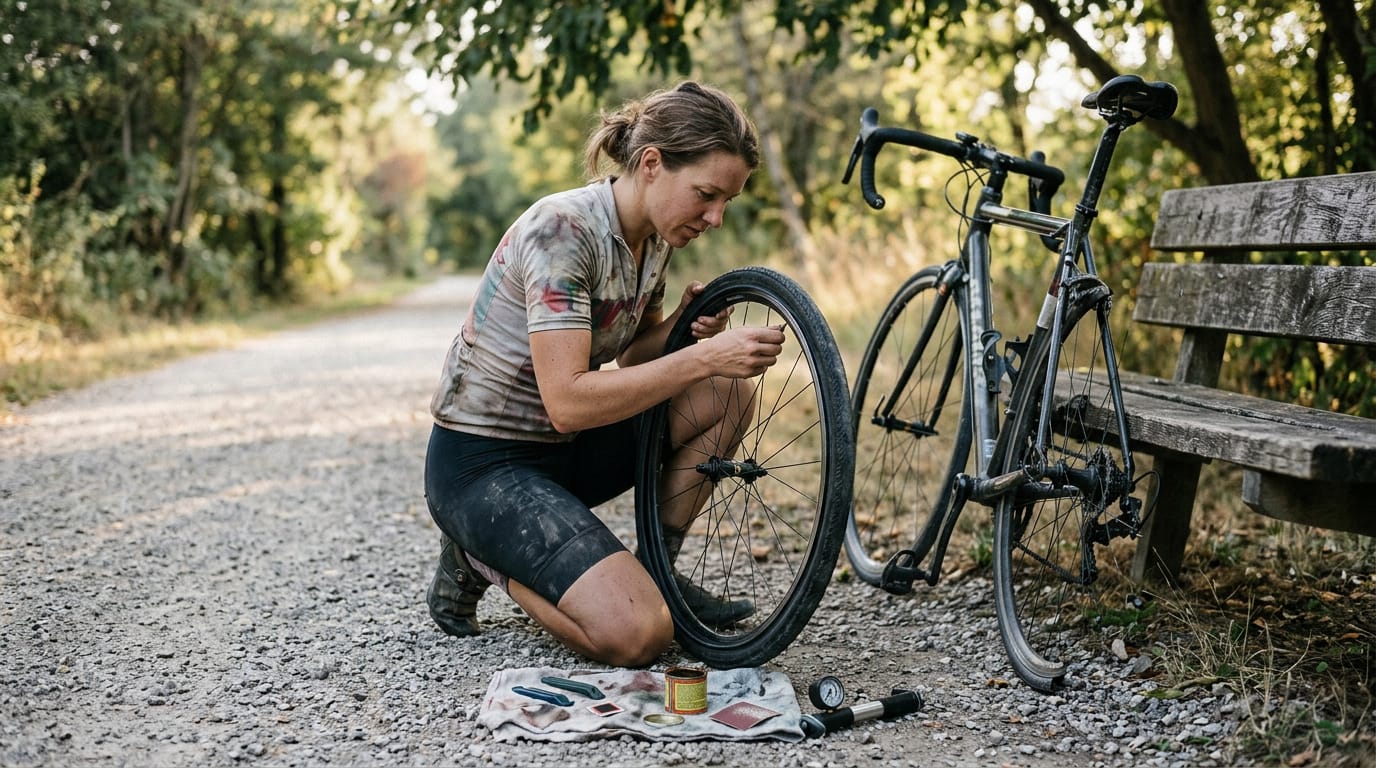
Picture this: you’re twenty minutes into a Saturday ride, and your back wheel suddenly feels like it’s dragging through sand. That’s a flat, and it means the air inside has escaped.
You don’t need to be a mechanic to handle one. Here we’ll cover why flats happen, how to fix one roadside, how to prevent them, and when to see a pro, plus how to choose replacement tires, tubes and puncture protection that fit how you ride.
Why a Flat Bike Tire Happens
Flats feel random, but they usually trace back to something we can check.
Keeping the right air pressure
Under-inflation lets the tire sag over bumps until the tube gets squeezed against the rim, a pinch flat. Overinflation is the reverse: too much pressure makes the ride harsh and stresses the tire and rim.
Heat adds a wrinkle: air expands as it warms and can blow a tire out on a hot day. Picture a commuter who rarely checks her hybrid’s tires. On a warm afternoon the pressure climbs, a pothole hits, and the tire gives out.
A gauge check that morning would have saved her the walk home.
Stay within the recommended PSI (pounds per square inch) range on the sidewall. A gauge gives a real number, while a squeeze only gives a guess. Trust the gauge.
Watch for glass, nails, and thorns
Glass, nails, and thorns can puncture a tire in an instant. The sneaky part is what they leave behind: a fragment can stay lodged in the tread and cause a second flat. Check the tread after rough rides and pull out anything you find.
To avoid debris, scan the path ahead and steer clear of the gutter and shoulder. That’s easier than fixing a flat by the road.
Installation mistakes that pinch tubes
Some flats start in the garage. Watch for these three:
- Tube pinched during installation. A tube caught under the tire’s bead (the edge that seats on the rim) gets pinched on the first hard hit.
- Wrong tire or tube. A tube that doesn’t match the tire’s size bunches up inside and gets pinched.
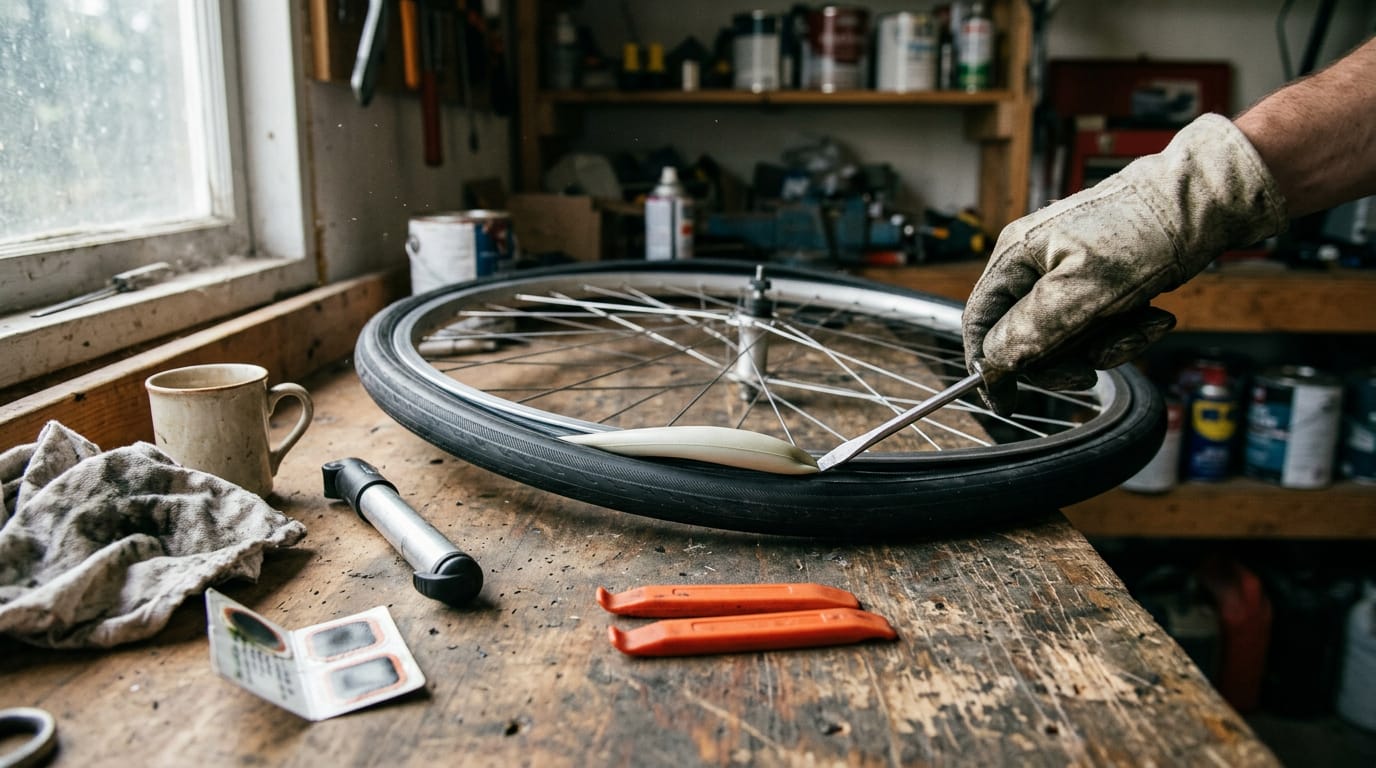
- Proper tools like levers. Use real tire levers, not a screwdriver, which can nick the tube.
Rim tape, valve, and sidewall problems
- Worn or torn rim tape. The strip over the spoke holes shields the tube. Once it wears through, spoke ends can poke the tube.
- Faulty valve stem. A cracked or loose valve leaks air slowly, leaving a soft tire with no visible puncture.
- Sidewall damage. A cut or bulge lets the tube push through, so it’s worth inspecting before you trust it again.
- Low tubeless sealant. In a tubeless setup (no inner tube), sealant plugs small punctures. Low or dried-out sealant leaves them open.
How terrain and tire design matter
Road tires are built for smooth pavement, so taking a road bike onto gravel, potholes, or curbs invites cuts and pinch flats. Thin tires trade durability for speed. You get a lighter, faster tire, but you give up some protection.
Tires wear out on their own schedule, so check the tread and sidewalls for wear and cracks, and replace when either shows up.
Poor-quality tires may use a thinner casing (the tire’s body) and less puncture protection, so that bargain can cost you on the trail.
Fixing a Flat on the Road
A flat on the road is frustrating, but we’ll walk through the fix in order.
Finding where the tire is damaged
Start by finding the puncture, the hole letting air out. Listen for a hiss after pumping up, or submerge the wheel and watch for bubbles. Run your fingers around the inside of the tire.
A weekend rider who finds a tiny wire poking out should pull it free before the new tube goes in, or it’ll puncture that too. Inspect the rim and the rim tape, the strip covering the spoke holes, for a shifted edge.
Your goal is to fix the cause, not just the flat.
Taking the wheel off and back on
Open the quick-release lever, or unthread a thru-axle with a hex key, and the wheel drops free. Release the brakes first so the rim clears the pads. Refit the wheel, center it in the frame, then spin it and squeeze the brakes to make sure nothing rubs.
Patching a tube and how long it lasts
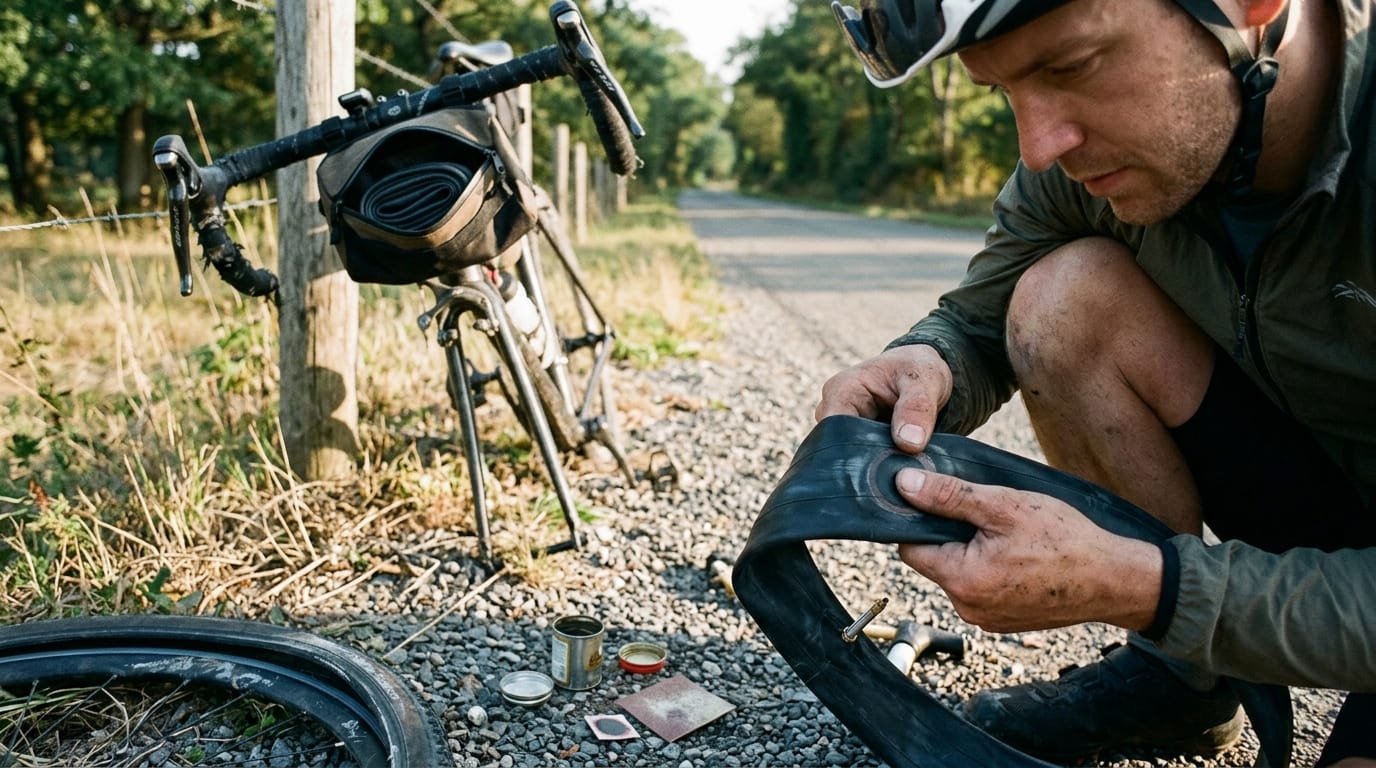
A patch kit holds sandpaper, rubber cement, and patches. Sand around the hole, apply adhesive, let it get tacky, and press the patch on firmly. Self-adhesive patches skip the glue but still need a clean, dry surface.
Carry a spare tube to swap in on the road and patch the old one later. Recheck for leaks before you ride.
To inflate a Presta valve (the thin valve common on road bikes), unscrew the small lock nut at the tip, attach the pump, pump to the pressure printed on the sidewall, then retighten the nut.
Can you fix a bicycle tire with Fix a Flat? A canned tire sealant inflator can get you moving in a pinch, but it’s only a stopgap. How long can you ride on a patched bike tire?
There’s no guaranteed mileage, so check the patch each time you pump up, and replace the tube if it leaks there again.
Should you bike on a flat tire?
Usually, no. Stop as soon as you notice the flat and pull somewhere safe, since riding on it can damage the tube and rim and makes steering harder. Don’t push it. A tire boot, a patch placed inside the tire over a small cut, can get you home.
If the damage is too big to patch, replace the tire.
Keeping Your Tires from Going Flat
Flats are frustrating, but a few setup choices and habits can head off a lot of trouble.
Do puncture proof bike tires work?
Puncture-resistant tires help, but no tire is flat-proof. A tougher layer stops small glass and thorns, though a sharp enough hit still gets through.
Three add-ons work from inside the wheel:
- Rim tape covers the spoke holes so the tube can’t poke through.
- Tire liners sit between the tire and tube to guard against debris.
- Talcum powder dusted on the tube helps it seat smoothly and lowers the risk of a pinch during installation.
They reduce your odds of a flat. They don’t erase them.
Going tubeless with sealant
Going tubeless swaps the inner tube for a tire that seals to the rim, with sealant inside.
- No inner tube to pinch. The sealant takes its place, so there’s no tube to puncture.
- Self-sealing. Minor punctures plug as they happen, but bigger cuts still need a patch.
Routine checks and better tire brands
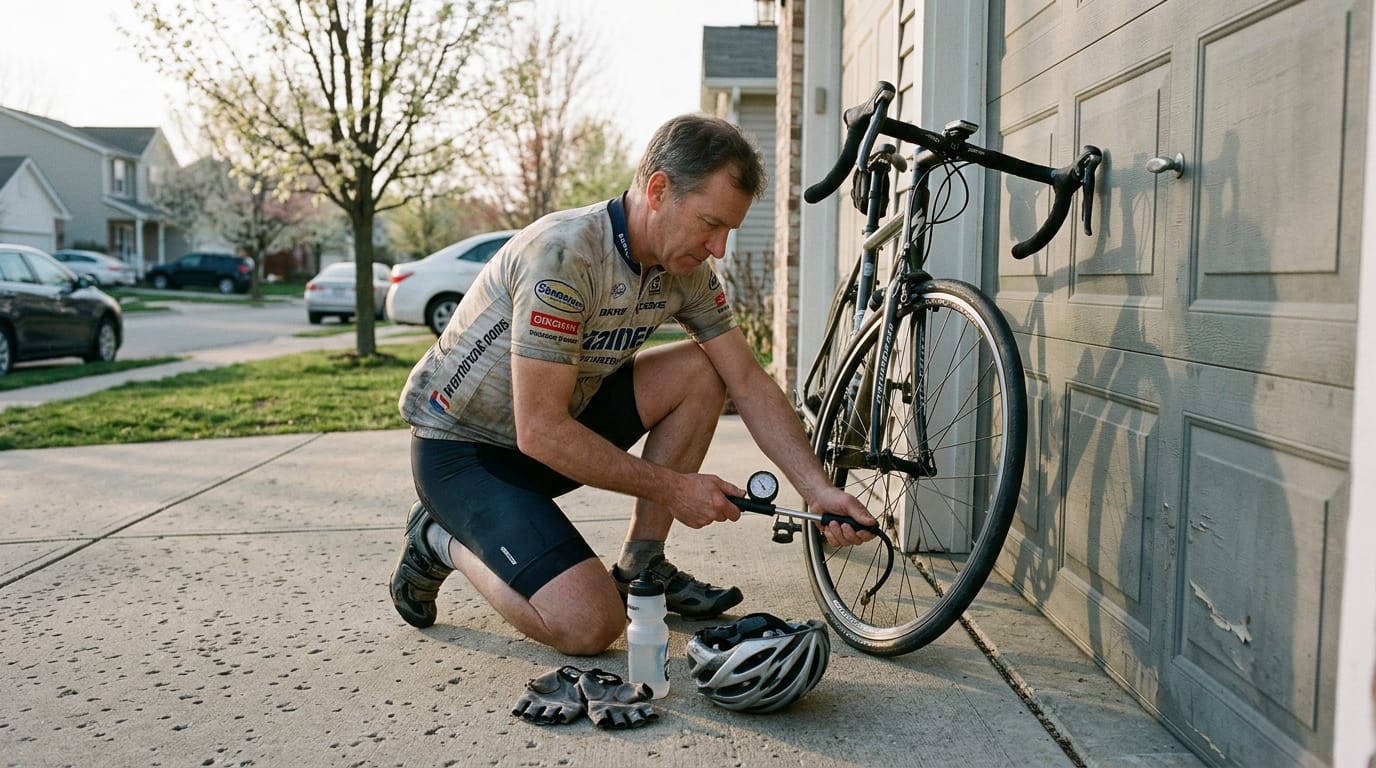
Consider a weekend rider who checks each tire before Saturday’s group ride and finds a soft one in the driveway, not three miles out. Air is cheap. Walking home isn’t.
According to Geriatric Cyclists: Assessing Risks, Safety, and Benefits, checking pressure regularly and inspecting tires for wear can help reduce the risk of flats.
- Check pressure regularly. Stay within the range printed on the sidewall.
- Inspect tires for wear. Replace any with thin tread or cuts.
- Catch punctures early. Fix a slow leak the day you spot it.
- Switch to better brands. A cheap tire that wears fast can cost more over a season.
When buying, match the replacement tire and tube to the size on your current tire’s sidewall. Then match the tire to your riding: smooth for pavement, more tread for dirt.
When to See a Bike Mechanic
Most flats are quick fixes on the road or trail. Some problems keep coming back, though, and knowing when to hand the bike to a shop saves time and frustration.
Signs you need a mechanic
Bring it in if you notice any of these:
- Multiple punctures in one ride or one week usually point to the tire, rim, or tube fit, not bad luck.
- Rim or sidewall damage, such as dents, cracks, or a bulge in the tire wall.
- Valve stem problems, like a stem that leaks or wobbles when you inflate.
- Frequent recurring flats that return after you’ve checked for debris and patched the tube.
Consider a weekend rider who patches the rear tire three times in a month and keeps blaming bad luck. A mechanic can tell whether the tire, tube, or rim is the real culprit, so you ride on a real fix instead of a fourth patch.
Why a pro install helps
A shop brings the tools and routine to get the job right the first time. That matters most for three things:
- Avoiding pinched new tubes. A tube caught between the tire and rim during installation can fail right away.
- Fresh rim tape installation. Rim tape is the strip that shields the tube from the spoke holes, and worn or shifted tape leaves it exposed.
- Diagnosing underlying issues. A new tube fixes the flat you can see, while a pro checks for the cause you can’t, like a worn rim or loose valve stem.
Fix the cause, not just the flat.
A flat is a hassle, not a disaster, once you have the steps down. Knowing why it happens, carrying a basic repair kit, and checking your tires before rides keeps you moving and worrying less.
Match your replacement tires, tubes and puncture protection to how you actually ride, and when a repair looks beyond a patch, let a mechanic take over.
Fix it, learn from it, and get back in the saddle, because the best flat is the one you never have to think about.
References
- Geriatric Cyclists: Assessing Risks, Safety, and Benefits — pmc.ncbi.nlm.nih.gov (2018)
Questions
What is the bead on a bike tire?
The bead is the reinforced edge of a bike tire that seats against the rim. It holds the tire in place and helps keep it sealed when inflated.
How long can you ride on a patched bike tire?
There’s no guaranteed mileage for a patched bike tube. Check the patch whenever you inflate the tire, and replace the tube if it leaks again at the repair.
How do I inflate a Presta valve?
Unscrew the small lock nut at the tip of the Presta valve, then attach a compatible pump and inflate to the pressure range printed on the tire’s sidewall. Remove the pump and retighten the lock nut.
Can you fix a bicycle tire with fix a flat?
A canned sealant inflator can sometimes seal a small puncture and help you get moving, but it’s a temporary fix. Check the tire afterward and repair or replace the tube as needed; make sure the product is compatible with your tire setup.
Should you bike on a flat tire?
Usually, no. Stop somewhere safe because riding on a flat can damage the tube and rim and make steering harder. A tire boot may help you get home if the tire has a small cut.
Can you fix a flat tire on a bike?
Yes. You can replace the inner tube or patch its puncture, after first checking the tire and rim for debris or damage that could cause another flat. For tubeless tires, sealant may close small punctures, while larger cuts may need a patch.
What's the difference between a clincher and a wire bead?
A clincher is a tire design whose beads hook into the rim; it is commonly used with an inner tube, though tubeless clinchers also exist. A wire bead is one kind of clincher bead, reinforced with wire rather than the lighter, flexible material used in folding-bead tires.
Do puncture proof bike tyres work?
Yes, puncture-resistant tires reduce the chance of flats by adding a protective layer against small glass and thorns. They are not flat-proof, and sharp or forceful impacts can still puncture them.
Sources
- Geriatric Cyclists: Assessing Risks, Safety, and Benefits, pmc.ncbi.nlm.nih.gov,
Find your level
The Counter