How to Throw a Disc Golf Disc, Step by Step
How to throw a disc golf disc: start with the backhand, add forehand shots, and use focused practice tips to build control on the course.
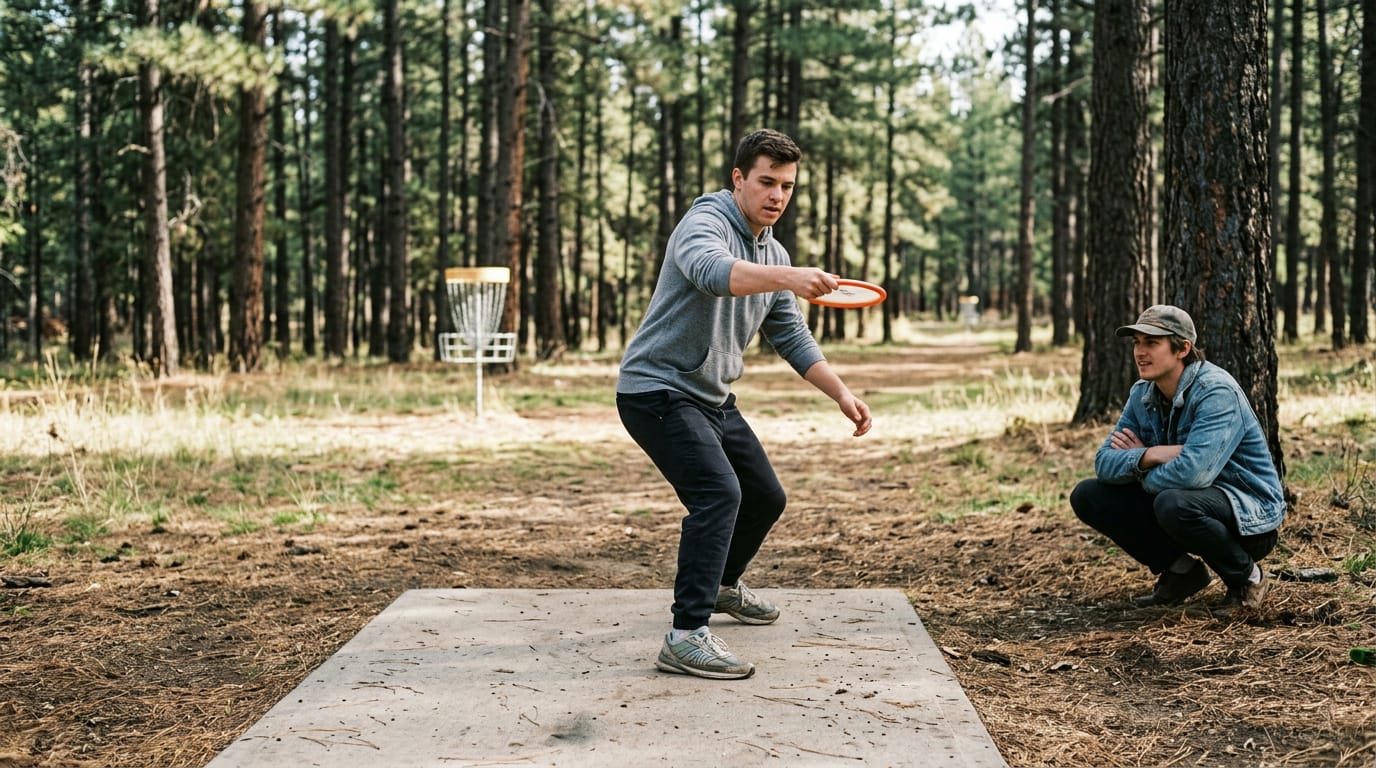
Remember the first time you tossed a frisbee across the backyard and it wobbled into the hedges? Disc golf works the same way: the throw you pick and the disc you hold decide whether it glides toward the basket or dives into the rough.
Your three main options are the backhand, the forehand and the overhand, and each asks something different of your arm and wrist.
Here’s the short version: learn the backhand first, then add the forehand and overhand as you need them. In this post, we’ll walk through each throw, then help you pick a disc that suits yours and keep it in good shape.
Throw a Disc Golf Disc Backhand
The backhand is usually the first throw players learn, and it comes down to five connected moves:
- stance
- grip
- reach
- swing
- follow-through
Here’s how each one works, along with the mistakes that get in the way.
Line up your stance and shoulders
Stand sideways to the target, not square to it, with your dominant shoulder pointing right at it.
Put most of your weight on your back foot to start, and avoid facing the target squarely, since that setup works against the rest of the throw. Get the stance right first.
Find a comfortable grip on the disc
Place your thumb on top of the disc and wrap your fingers underneath its rim. Keep your fingers off the side of the disc. Every hand is different, so experiment until the grip feels comfortable and repeatable.
Consider a dad teaching his nine-year-old to throw. The kid keeps his fingers wrapped around the side of the disc, so every throw feels like a fight.
Moving those fingers underneath gives him a grip he can actually control, and the afternoon goes to throwing instead of troubleshooting.
Reach back with the disc held flat
Bring your arm straight behind you with the disc at waist height. Keep both the disc and your wrist flat rather than tilted up or down, since a flat angle adds distance.
The angle you hold here carries into your release angle, the tilt of the disc as it leaves your hand. That tilt, along with your swing, shapes the flight path the disc follows.
If you catch yourself tipping the disc, pretend it’s a tray you’re carrying and keep it level all the way back.
Swing through and release the disc
Lead the swing with your elbow, driving it toward the target as your arm comes through. Release the disc when your wrist points at the target.
A faster arm means a farther flight, so let your swing build speed as it moves through instead of slowing down early.
Keep your eyes on the target for the whole swing. If you find yourself watching the disc or your hand, bring your gaze back to where you’re throwing.
Shift your weight and follow through
Shift your weight from your back foot onto your front foot as the disc leaves your hand, and bend your front knee to stay balanced. Keep your arm swinging after release. That follow-through matters for more than style.
According to Ultiworld Disc Golf’s backhand breakdown, skipping a proper follow-through costs you distance and raises your chance of injury.
If your arm stops dead at release, let it keep swinging across your body. Finish every throw.
Throwing a Forehand Shot
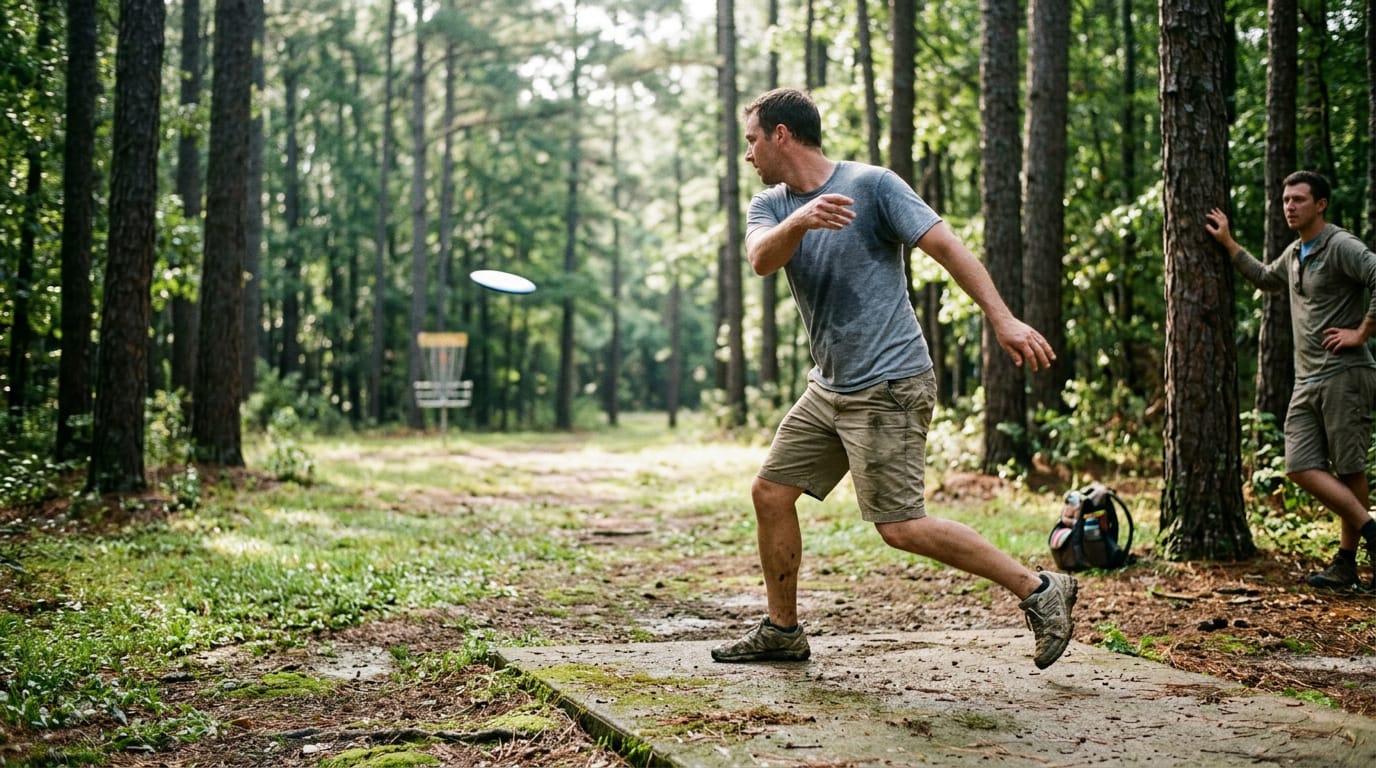
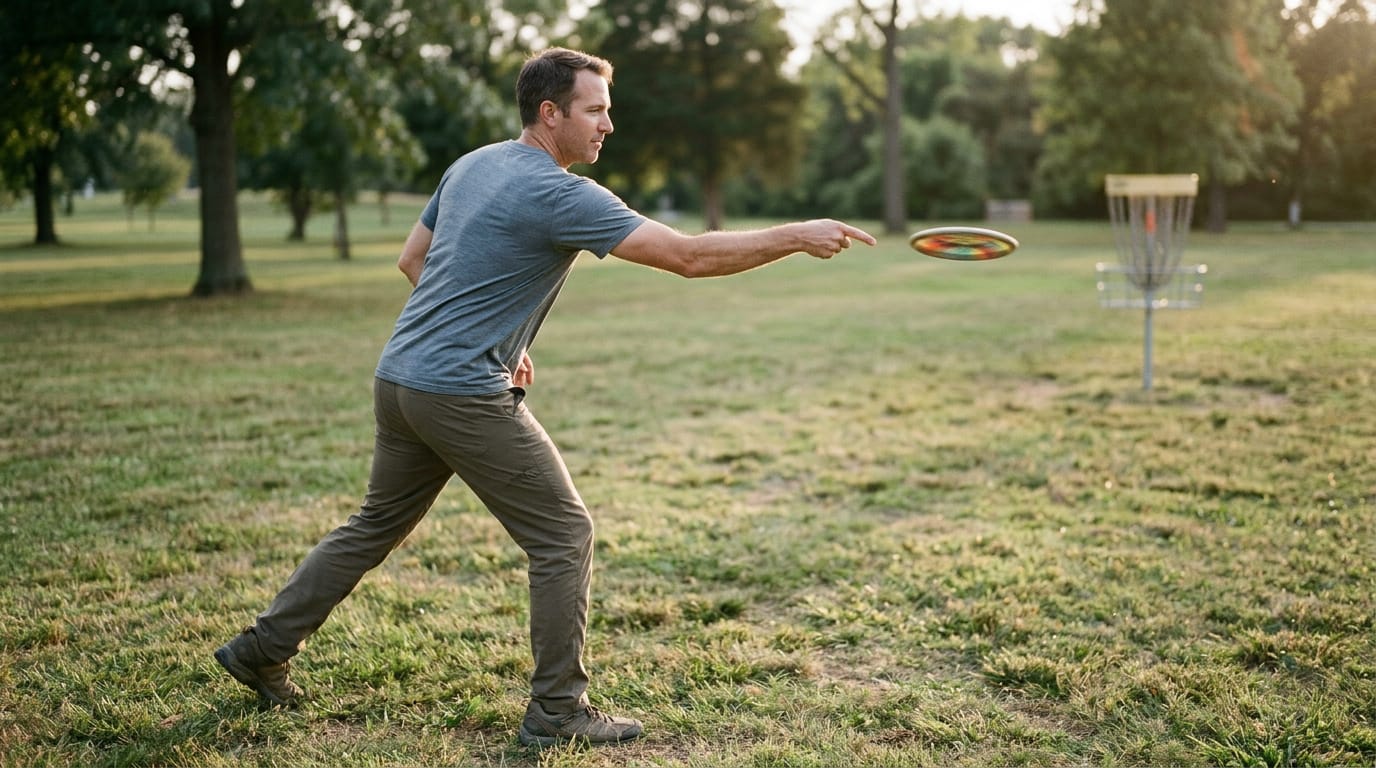
The forehand rests on three pieces: a relaxed grip, a steady stance, and a smooth flick. Here’s how to put them together.
Build a loose, relaxed forehand grip
Your forehand grip starts with three placements:
- Set your middle finger on the inside rim.
- Rest your thumb on top of the disc.
- Let your index finger add a little strength to the hold.
This may feel awkward for beginners at first, and that’s normal. Aim for a loose grip rather than a white-knuckled one, with a relaxed wrist that lets the disc move freely.
Consider a dad who joins his kids for a Saturday round and clutches the disc so hard that his forearm is sore by the sixth hole. Loosening up keeps his arm fresh enough to enjoy the back nine.
Set your feet and shoulders for forehand
Plant your feet shoulder-width apart with your knees slightly bent. Turn your non-throwing shoulder toward the target so your body lines up with your aim.
If your throws keep missing, check that shoulder before you change anything else. Fix the stance first, then adjust your arm.
Wind up, then flick your wrist forward
Bring the disc back with your forearm held horizontally, and pull your throwing arm back comfortably, without forcing it. Let your hips turn slightly as you go.
The power comes from a flick, not a shove. Snap your wrist and forearm forward together. Your release point is the moment your wrist points at the target, so let go right there. Smooth beats strong.
Context and Tips for Practicing Throws
Disc golf has three throw families:
- backhand
- forehand
- overhand
Overhand throws, including the thumber and the tomahawk, are the ones you release from above your shoulder rather than from your side.
What are the main throws to practice?
According to a study on sex differences in disc golf performance, backhand and forehand are the two primary types of throws, much like tennis. Start with those. The backhand is used about 90% of the time, so it deserves most of your reps.
Two habits will speed up your progress:
- Practice slowly first. A smooth, controlled throw teaches your body more than a hard one that flies crooked. Add power only once the disc reliably flies where you aim it.
- Check your position in a mirror. Confirm that your stance, arm path, and follow-through look the way you think they do.
Think of a weekend player who spends her first month throwing at half speed, watching each disc settle where she aimed it. When she finally adds power, her release is already steady, so the extra distance doesn’t cost her accuracy. Patience pays off.
Keep your discs clean, and replace any that are worn, since a worn disc won’t fly the way it did when it was new. Once your throw feels consistent, choosing between a driver, midrange, and putter gets much easier.
Basic play is simple: throw toward the basket and keep going until the disc drops in. On the golden rule question, start with the core rule and etiquette basics, which keep play fair and friendly for everyone in your group.
Each throw earns its place in your game, and the backhand is the foundation to build on. Pair your practice with a disc that matches your arm, and your throws will start to feel less like guesses.
Look after your discs, too. Keep them clean and stored away from dirt, and they’ll keep flying the way you expect.
Find your throw, pick your disc, and then go find the basket.
References
- Sex Differences in Disc Golf Performance: Implications for Eligibility Criteria for Women’s Competitions — pmc.ncbi.nlm.nih.gov (2025)
- Tuesday Tips: Breaking Down The Backhand — discgolf.ultiworld.com
Questions
What is an overhand throw in disc golf?
An overhand throw is a disc golf throw released from above your shoulder rather than from the side. The thumber and tomahawk are common overhand throws.
What is the golden rule of disc golf?
A useful golden rule is to play the disc from where it comes to rest and not improve your lie, except where the rules allow relief. Also wait until the area ahead is clear before throwing, and respect other players and the course.
What are the best techniques for driving disc golf?
For a more reliable drive, start with a balanced stance, a comfortable grip, and a level disc. Build a smooth swing, shift your weight toward your front foot, and follow through after release; practice slowly before adding power.
What are the different types of throws?
The three main throw families are backhand, forehand, and overhand. The overhand family includes throws such as the thumber and tomahawk.
How many calories do 2 hours of disc golf burn?
Two hours of disc golf might burn roughly 400 to 800 calories, but the amount varies with your body size, pace, terrain, and how much you walk. A casual round on flat ground generally burns less than a fast round on hilly terrain.
How do I play a disc?
To play a disc, throw it toward the basket, then make your next throw from where it lands. Keep throwing until it drops into the basket; the goal is to complete each hole in as few throws as possible.
How to grip a disc golf disc forehand?
For a forehand grip, place your middle finger against the inside of the rim, rest your thumb on top, and use your index finger to help support the hold. Keep your grip relaxed so your wrist can flick smoothly at release.
Is disc golf growing or dying?
Disc golf appears to be growing rather than dying, with more courses and organized play in many areas. Its overall popularity can vary by region, but it remains an active recreational and competitive sport.
Sources
- Sex Differences in Disc Golf Performance: Implications for Eligibility Criteria for Women's Competitions, pmc.ncbi.nlm.nih.gov,
- Tuesday Tips: Breaking Down The Backhand - Ultiworld Disc Golf, discgolf.ultiworld.com
Find your level
The Counter