Cable Machine Back Exercises: A Complete Guide
Cable machine back exercises keep tension through every rep. Get form cues for top moves, a safe progression plan, and help choosing a setup.

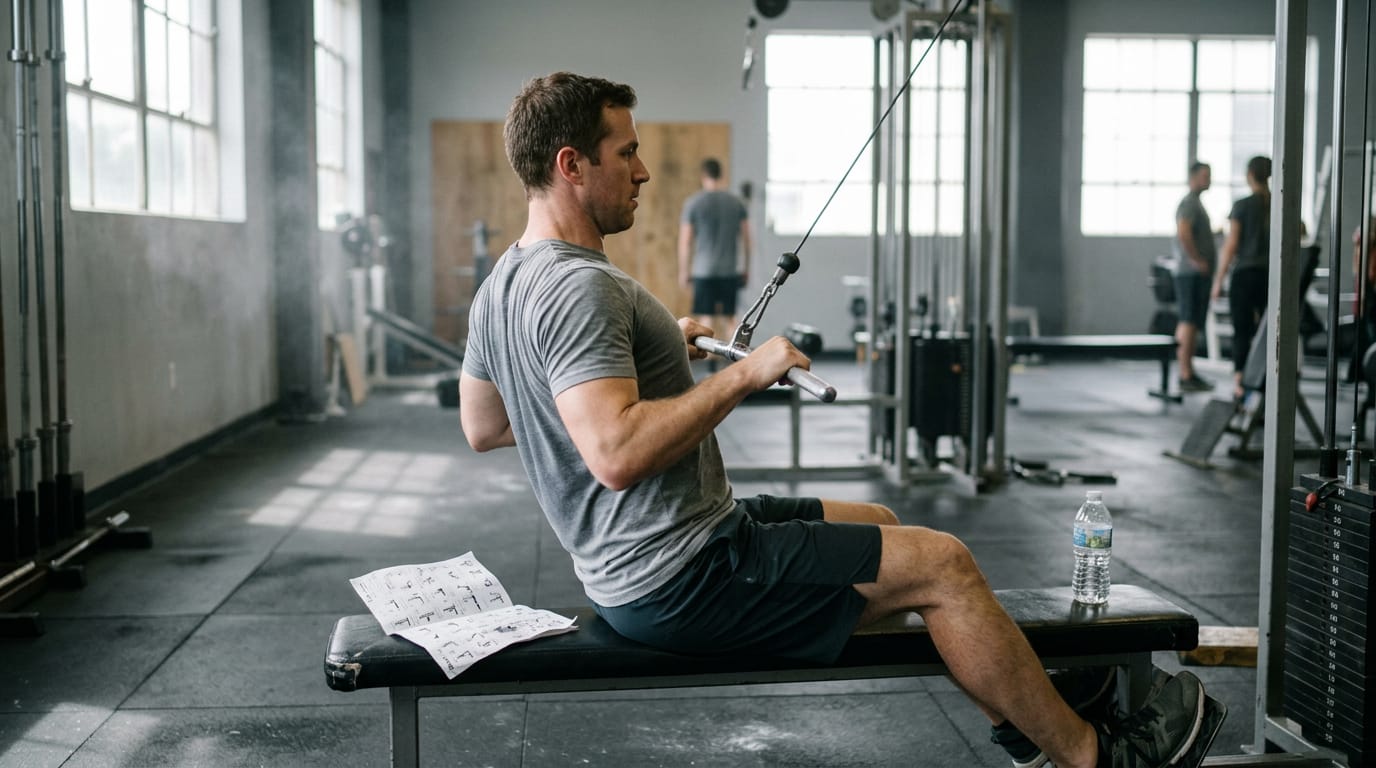
Think of a cable machine as a patient training partner. It pulls back on you exactly as hard as you pull on it, and it never needs a break.
That steady tension is why cable work suits your back so well, since you can keep the load on through the whole movement instead of letting momentum take over.
The short answer: cable back exercises build strength through controlled tension, and the right machine depends on your space, budget and level.
In this post, we’ll cover the best moves, how to perform each one with good form, how to program them over time, and which setup fits your situation.
Why Back Exercises on Cable Machines Help
Cable machines offer a controlled, adjustable back workout with real limits. Here’s where they shine and where they don’t.
Keeping steady tension through every rep
A cable keeps constant tension on your back from the first inch of the pull to the last. Free weights feel heaviest at one point in the lift, while a cable stays more even. The weight stack stays connected at the bottom too, leaving no slack to rest in. Anyone curious about free-weight options can start with dumbbell exercises.
Adjusting the setup to fit your body
Picture a tall club rower and a shorter weekend player sharing one gym. Both train on the same machine because the setup adapts to each:
- Adjustable pulley heights: set high for pulldowns, low for seated rows.
- Swappable handles and attachments: a bar, a V-handle, or a rope changes where your grip lands.
- Customizable angle of pull: moving the pulley or your stance changes how the load reaches your back.
- Fits limb length and body size: you set the height and position, so long arms and compact frames both fit.
Easier on your joints and spine
The weight stack carries the load and you choose where the pull starts, so you’re not bracing a loaded barbell across your back. That keeps spinal load (the stress on your spine) lower, and the smooth path is easier on your joints.
Take a parent whose lower back flared up hauling a toddler all week. A seated cable row keeps them training with the load well under control.
You can also train close to failure, the point where you can’t finish another clean rep, and ease off safely without a spotter. It’s less about how heavy you lift and more about how controlled each rep is. Your back should feel worked, not wrecked.
Where it falls short of free weights
Cables work best as a strong supplement, not the whole plan. Here’s where they fall short:
- Lower max loads: the weight stack caps how much you can move, so very strong lifters may outgrow it sooner than a barbell row.
- Fewer muscles worked at once: free weights recruit stabilizers to hold the load steady, so a cable move usually works fewer muscles together.
- Stack weight limits: the stack moves in fixed steps, so you may need to plan progressions around the jump between plates.
Use cables for steady, controlled volume, and keep barbell work for raw strength.
The Best Cable Exercises for Your Back
Here’s how the moves break down by job.
Pulldown variations for your lats
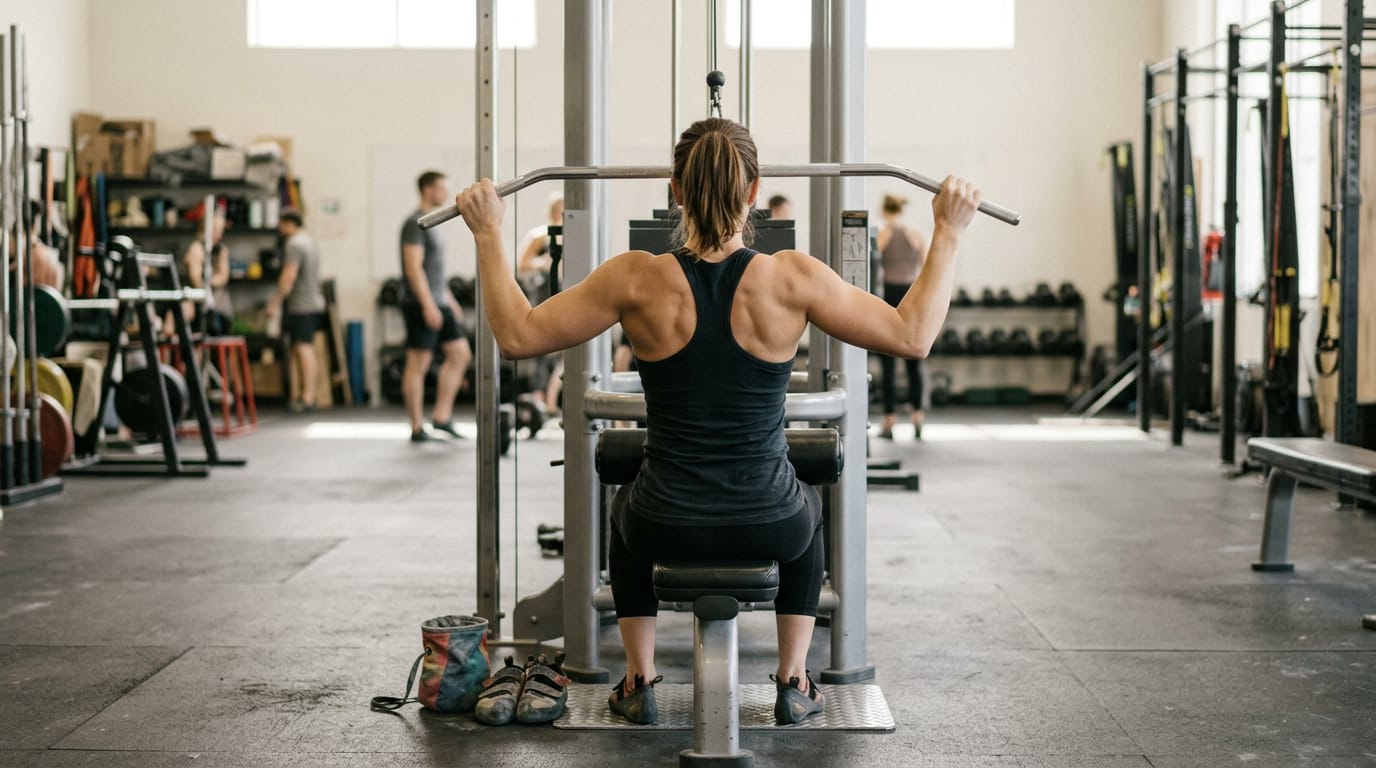
The latissimus dorsi (your lats) drive every pulldown. Pull toward your upper chest and let your elbows drive down, not back. Try wide and close grips, and you’ll feel which pulls smoothest.
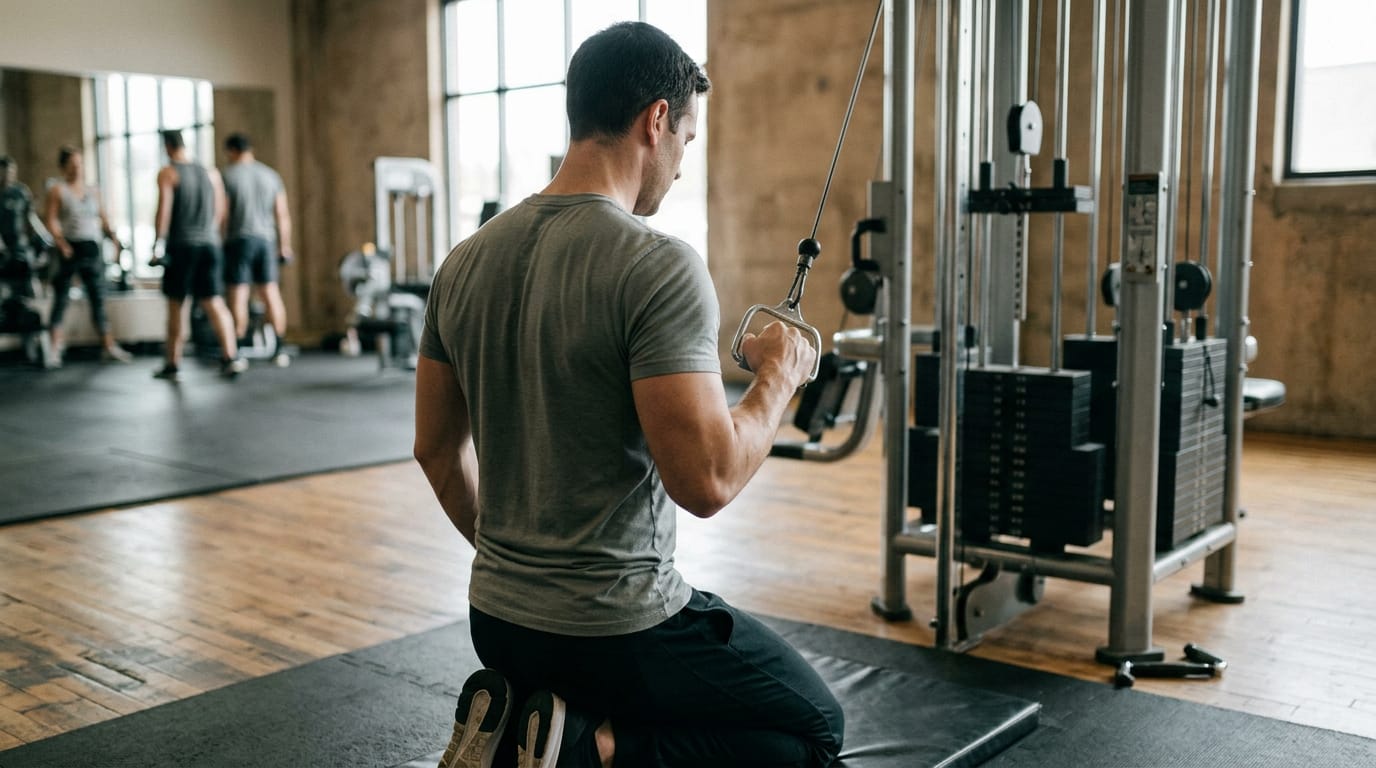
For a kneeling single-arm pulldown, kneel facing the stack and pull one handle down. Grip width and forearm position change the feel, so let your back, not your grip, do the pulling.
Horizontal rowing movements
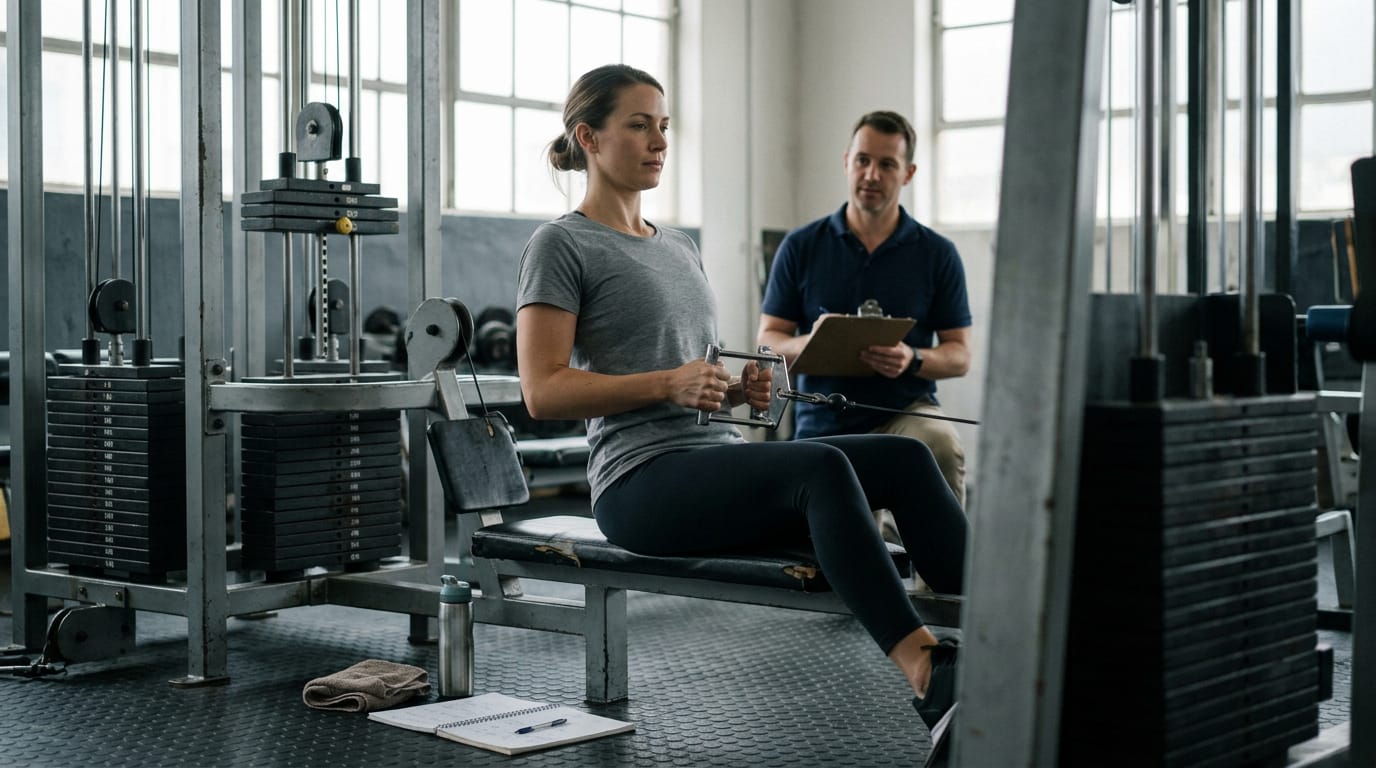
The seated cable row is the classic: sit tall, pull the handle to your belly button, and squeeze your shoulder blades together.
Single-arm rows train one side at a time, which is what unilateral means. Picture a weekend golfer whose left side feels weaker through the backswing. A single-arm row exposes that gap. Start each set on the weaker side and give it the first rep.
The high cable row pulls down and back from a high pulley, hitting your upper back.
Isolating your lats with straight-arm moves
The straight-arm pulldown keeps your arms nearly straight as you sweep a bar from overhead to your thighs. Start overhead to stretch your lats, then pull down under control. Don’t let the weight drop. The cable pullover uses a similar arc.
According to a study comparing barbell pullovers and straight-arm pulldowns, these moves minimize biceps involvement compared with pulling exercises that bend the elbows. This is a lat move, not an arm move.
Working the upper back and rear delts
A face pull draws a rope toward your face at head height, splitting your hands at the finish. It works your rear delts (the back of your shoulders), mid traps (between your shoulder blades), and rotator cuff (small stabilizing shoulder muscles).
The rear delt cable fly starts with crossed handles at chest height and sweeps your arms wide. Think of a club volleyball player whose shoulders ache after a spiking weekend.
Face pulls and flies give those shoulders balancing work, and the high cable row also hits this area. Keep the weight light, since this is a control move, not a heavy one.
Accessory moves for traps and lower back
The cable shrug lifts your shoulders toward your ears from a low pulley, then lowers slowly. The cable upright row pulls a bar or rope up your body to chest height, elbows leading.
Working the lower back with cables comes down to the cable back extension. Attach a rope to a low pulley, step back to light tension, and hinge at your hips with a long spine. Stand tall by squeezing your glutes and lower back, not heaving with your arms. Once that hinge feels natural, a kettlebell swing exercise trains the same pattern with a free weight.
If your back starts to round, the weight is too heavy.
Before you buy, confirm it includes:
- A lat bar
- A close-grip handle
- A straight bar
- A rope
- Single-handle attachments
How to Do Each Move Correctly
Good form decides whether a back move works your back or just your arms, so set up before you add weight.
Setting your pulley and stance first
Pulley height and attachment come first: high for pulldowns, low to mid for rows, with the bar or handle that matches your grip.
Stance and foot placement matter more than most people expect. Plant your feet about hip-width apart, keep a soft bend in your knees, and brace your core.
Think of a weekend climber whose forearms give out long before her back does. She sets the pulley high, sits tall, and drives the bar down with her elbows rather than her hands, so the work lands where it belongs.
Step-by-step execution:
- Grip the handle and sit or stand tall.
- Pull toward your body, keeping your wrists straight and your torso still.
- Pause with the handle at your chest or midsection.
- Let the weight return until your arms are fully straight.
Targeted muscles: your lats, the broad muscles along your sides, do most of the work, with your rhomboids, middle traps, and rear delts assisting and your biceps helping on every pull.
Cues that keep your form clean
- Lead with elbows. Start each pull by driving your elbows, not yanking with your hands.
- Squeeze shoulder blades. Finish each rep by pulling your shoulder blades toward your back pockets.
- Control the return. Let the stack come back slowly rather than letting it slam.
- Full stretch at end. Let your lats lengthen fully at the bottom before the next pull, without shrugging.
Clean reps beat heavy ones.
Planning Cable Back Workouts over Time
Build a back routine you can repeat all season.
Sample workouts to try
Start with a pulldown and a row, then one finisher. Consider a weekend tennis player who trains twice a week: pulldowns and rows on Monday, plus a finisher on Thursday, so the back keeps pace without stealing court time.
| Exercise | Sets | Reps | Rest |
|---|---|---|---|
| Lat pulldown | 3 | 6 to 10 | 2 min |
| Seated cable row | 3 | 8 to 12 | 90 sec |
| Straight-arm pulldown | 2 | 12 to 15 | 60 sec |
Pulldowns and rows are your foundation, and the straight-arm pulldown is an isolation finisher. New to cables? Run each move for two sets.
Choose control over load: newer lifters start lighter than experienced ones, but the last rep should always be hard and clean. Swap variations every 8 to 10 weeks, such as a close-grip pulldown.
Picking moves that keep your back balanced
Make sure your plan includes:
- Vertical pull: at least one, like the lat pulldown.
- Horizontal pull: at least one, like the seated row.
- Isolation work: add a finisher like the straight-arm pulldown.
- Heavy compounds first: start with your heaviest pull while you’re fresh.
Aim for balance over novelty.
Sets, frequency, and how to progress
Set weekly targets by counting hard sets, not warm-ups: aim for two or three per exercise each session. The American College of Sports Medicine’s position stand on resistance training notes that back work can be scheduled once or twice per week.
Double progression means working within your rep range first, then adding a little weight once every set hits the top. Small jumps add up.
Stop each set one to three reps short of failure, and stick to the table’s rep ranges.
Mistakes to Avoid and Staying Safe
Most cable back problems start with small form slips, not heavy weights. Here’s what to watch and how to load and recover safely.
Form mistakes to avoid
Consider a weekend player who leans back to heave a cable row stack. The weight moves, but the lats (the broad back muscles) barely work. Drop a plate and slow the pull, and the back finally takes over.
Watch for these five common slips:
- Pulling with arms. Your arms just hold the handle. Your back should do the pulling.
- Shrugging shoulders. Shoulders creeping up steal tension from your back. Keep them down and set before each rep.
- Excess body swing. Rocking your torso to start the stack turns control into momentum.
- Too much weight. If you can’t control the stack on the way back, it’s too heavy.
- Rounding lower back. Keep your spine neutral and your chest tall through every rep.
Warming up, loading wisely, and recovering
Start with a few light sets for cue calibration, testing reminders like where your elbows travel or whether your chest stays tall. Only add weight once those cues feel automatic.
Heavy weight at the stretched end of a pull is where control disappears first. Don’t overload long ranges. Control first, weight second.
Rest is part of the program, not time off from it. Give your back a lighter session or a full rest day between hard pulls. If pain lingers between workouts, pause and get it checked rather than pushing through.
For lower back pain, the right three exercises depend on the cause, so ask a doctor or physical therapist to pick your big 3 before you load a cable stack.
Who Should Do Cable Back Workouts
Cable back work suits more people than you’d expect. Here’s who benefits most.
Who gets the most out of it
- Beginners. Smooth, adjustable resistance lets you learn the movement first.
- Lower back issues. You control the load and angle, but check with a doctor or physical therapist first.
- Limited equipment gyms. One station covers pulldowns, rows and face pulls when machines are scarce.
- Enjoyment aids consistency. If the work feels good, you’ll keep showing up.
Choosing a cable machine for home use
- Pulley ratio. A 1:1 ratio keeps the stack matching what you feel, while 2:1 makes the same weight feel lighter.
- Low row footplate. A foot platform for seated rows, so you pull with your back, not your legs.
- Multiple pulley heights. Higher and lower positions open up pulldowns, face pulls and rows.
- Included lat bar and handles. Confirm you get a wide lat bar for pulldowns and handles for rows.
- Home rack option. A rack-mounted attachment saves floor space, but check its height range before buying.
Here’s how the types compare:
| Type | Space needed | Best for |
|---|---|---|
| Full-stack tower | Largest | Complete back training |
| Dual-stack crossover | Wide | Two-sided and crossover moves |
| Rack-mounted attachment | Smallest | Tight rooms |
Space and budget fit. Measure your room and set a budget, then pick the setup you’ll use, not the longest feature list.
Cable machine versus bands. Bands are cheap and portable, but they get harder as you stretch them. A stack holds your selected weight across the full range.
Ceiling height and footprint. Consider a weekend golfer in a spare bedroom with a low ceiling. A full tower would hit it on every pulldown, so a rack-mounted attachment covers rows and face pulls.
Supplements and Common Questions
Supplements won’t build a back on their own, but a few come up often in cable training. Here’s what’s worth knowing before you buy.
Supplements that support muscle gain
- Protein powder. It’s a convenience, not a requirement. If meals leave you short on protein, a shake can fill the gap. Check the label for added sugars.
- Creatine. According to a position stand from the International Society of Sports Nutrition (ISSN), creatine can support gains in muscle mass and strength during resistance training. Think of a club rower chasing more reps on her cable pulldowns. Creatine can help her get more out of every set.
- Pre-workout. It’s optional, and most cable back work doesn’t need it. If you’re sensitive to caffeine, check the label and start small.
Quick answers to common questions
The best cable exercises for back are the lat pulldown and the seated cable row, since together they cover pulling down and pulling in. Straight-arm pulldowns and face pulls make useful add-ons.
Cables can build muscle when they’re used as real resistance training. A study comparing cable and barbell preacher curls in young adults found muscle growth was similar with either. Keep adding load over time and cables can do the job.
Rows and pulldowns both train your lats, but in different directions. Rows pull horizontally toward your torso, while pulldowns pull vertically toward your chest. A stack with a high pulley and a low row attachment lets you train both.
Pick a few exercises that cover vertical and horizontal pulling, then focus on quality sets. A parent squeezing in a workout between school pickup and dinner gets more from two solid exercises than six rushed ones. More exercises rarely means more back.
Cable back work pays off when the basics come together: smooth, controlled reps, a plan that progresses over time, and a setup that matches your space, budget and level.
Keep your form honest, watch for the common mistakes, and add weight only when your last reps still look clean.
The best cable setup is the one you’ll actually use, and the best back workout is the one you can keep doing next week.
References
- American College of Sports Medicine Position Stand. Resistance Training Prescription for Muscle Function, Hypertrophy, and Physical Performance in Healthy Adults: An Overview of Reviews — pmc.ncbi.nlm.nih.gov (2026)
- Comparison of Electromyographic Activity during Barbell Pullover and Straight Arm Pulldown Exercises — mdpi.com (2022)
- Placing Greater Torque at Shorter or Longer Muscle Lengths? Effects of Cable vs. Barbell Preacher Curl Training on Muscular Strength and Hypertrophy in Young Adults — mdpi.com (2020)
- International Society of Sports Nutrition position stand: safety and efficacy of creatine supplementation in exercise, sport, and medicine — pmc.ncbi.nlm.nih.gov (2017)
Questions
What is the 3-3-3 rule gym?
The 3-3-3 gym rule has no single standardized definition; it commonly refers to doing three exercises, for three sets each, with three minutes of rest, though some gyms use different versions. Follow the specific routine’s instructions, and adjust sets and rest to your fitness level and goals.
What is the number one exercise for seniors?
There is no single best exercise for every senior. Sit-to-stand or chair squats are often practical choices because they build leg strength used in everyday activities, but the right exercise depends on mobility, health, and balance; ask a clinician or physical therapist if you have pain or health concerns.
What are the big 3 exercises for lower back pain?
There is no universal set of three exercises for lower back pain because the best choices depend on its cause and your condition. A clinician or physical therapist can recommend appropriate movements; exercises sometimes used in rehabilitation include modified bird dogs, side planks, and glute bridges, performed only if they are suitable and do not worsen symptoms.
How to work the lower back with cables?
Use a low pulley with a rope attachment, step back until the cable is lightly taut, and hinge at your hips while keeping your spine long and neutral. Stand tall by squeezing your glutes and lower back, then return under control; reduce the weight if your back rounds, and stop if the movement causes pain.
Sources
- American College of Sports Medicine Position Stand. Resistance Training Prescription for Muscle Function, Hypertrophy, and Physical Performance in Healthy, pmc.ncbi.nlm.nih.gov,
- Placing Greater Torque at Shorter or Longer Muscle Lengths? Effects of Cable vs. Barbell Preacher Curl Training on Muscular Strength and Hypertrophy in Young, mdpi.com,
- International Society of Sports Nutrition position stand: safety and efficacy of creatine supplementation in exercise, sport, and medicine, pmc.ncbi.nlm.nih.gov,
- Comparison of Electromyographic Activity during Barbell Pullover and Straight Arm Pulldown Exercises, mdpi.com,
Find your level
The Counter