What Is Links Golf? A Complete Guide to the Game
What is links golf? See how coastal wind, firm turf, and sandy ground shape play, then prepare for the conditions with smarter club and gear choices.
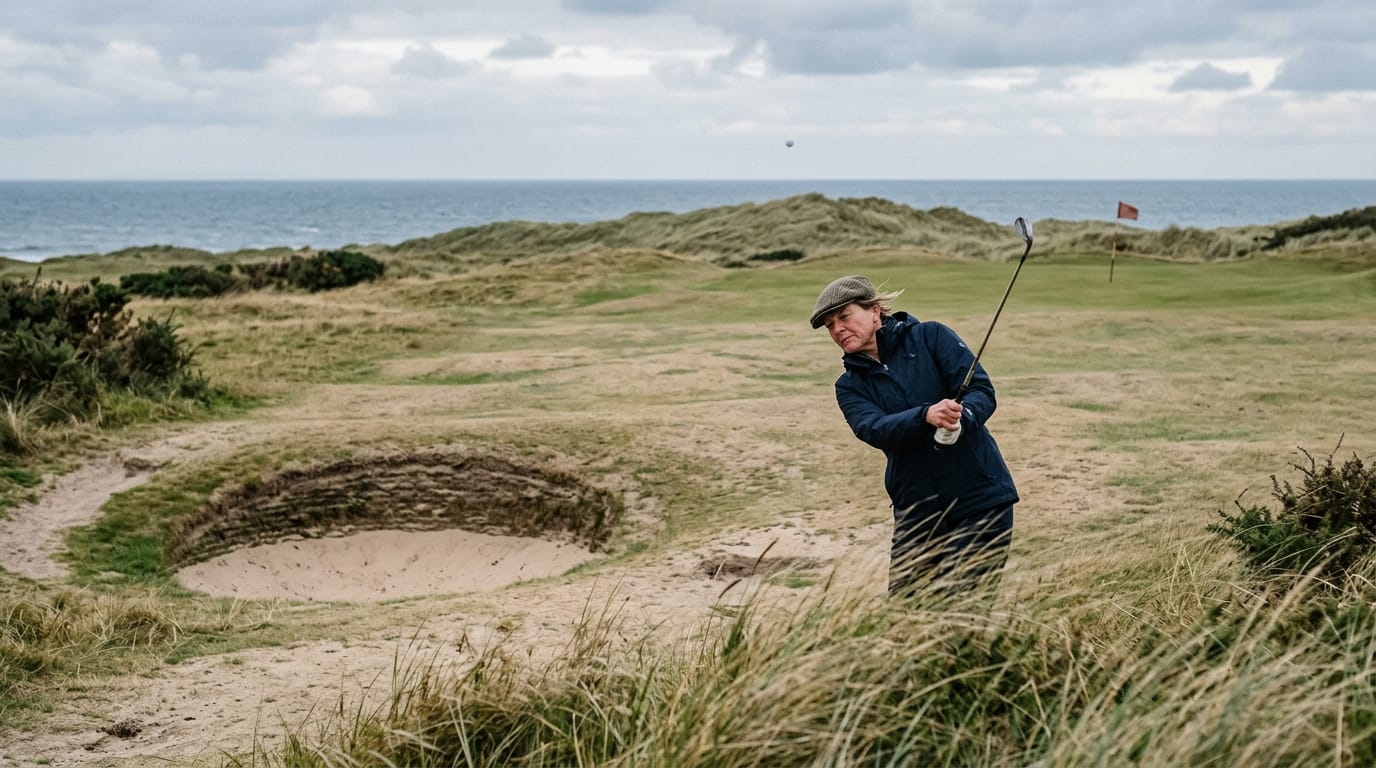
Picture a windy afternoon on a sandy stretch of coast, with firm, wiry grass underfoot and a ball that bounces in directions you didn’t plan. That’s the heart of links golf.
Your gear should follow the same logic: it needs to suit the conditions, not just look good on a lush parkland course.
Links golf is played on natural, sandy ground near the sea, where the land shapes the holes more than any bulldozer does. The turf runs firm and fast, trees are scarce, and the wind does plenty of the work.
Those features change how you think about club choice, ball flight and even your rain gear.
In this post, we’ll cover what makes a course a true links, where the name came from, how wind and weather shape a round, and what to pack so your first round feels fun instead of frustrating.
What Is Links Golf at Its Core
Links golf is a style defined more by its land than its layout. Here’s what we mean by a true links, and what it means once you’re standing on the first tee.
Where true links land sits
A links is a course on linksland, the sandy coastal ground that was too poor for farming. It has to sit on or near the sea, and its terrain has to be natural rather than man-made, with dunes and hollows shaped by wind and sand over time.
Seaside alone isn’t enough. A course with ocean views can still be a parkland layout built on fertile farmland and reshaped by machinery. Look at how the ground was formed, not just where it sits.
Sandy soil and tough grasses
Links ground is sandy and free-draining, so rain soaks away quickly instead of puddling on the fairways. The grass is built for it too. Browntop bent and red fescue are fine grasses that handle lean, sandy soil and keep the turf firm year-round.
Firm turf means the ball keeps rolling after it lands, so a shot that looks short on a parkland course can finish well past the target. Plan for the ball to run, not stop.
Features every true links needs
Every true links shares these four features:
- Few or no trees. Nothing blunts the wind, so it shapes every shot.
- Few water hazards. Trouble tends to come from bunkers and rough instead.
- Natural obstacles. Patches of gorse, a prickly shrub, and other rough punish wayward shots.
- Open to weather changes. With no shelter, wind, rain, and sun can shift within a single round.
Think of a club player used to tree-lined fairways who hits a high approach into the first gusty breeze and watches it balloon off line. Keeping the ball low is the fix, and it’s a skill that pays off long after the trip.
Where links courses exist and how rare
Most links courses sit in Scotland, Ireland, and England. A large share of Scotland’s courses are links, which is why the style is so closely tied to the country’s coast.
Because the criteria are strict, only a small number of courses worldwide qualify as true links. That’s what makes a real one worth the trip.
How the Name Links Got Its Meaning
The word links has a longer history than most golfers realize, and it explains why the term gets used so loosely today.
What the word originally meant
The word traces back to the Old English hlinc, which described rising ground or a ridge. Over time, it came to refer to coastal dunes and the open land beside them, a very different picture from the manicured fairways many golfers know.
Even though it ends in an s, the word is treated as singular, so you’d say a links course rather than links courses when you mean one place.
Loose use versus the strict meaning
Today, the term gets attached to pretty much any course, so a sign or scorecard that says links doesn’t tell you much on its own. It helps to separate two ideas:
- Links-style describes a course that borrows the feel of links ground without sitting on it.
- True links is the strict meaning: a course on the coastal dunes and open land the word has always pointed to.
Putting links in a name doesn’t make a course a true links. The name alone doesn’t qualify.
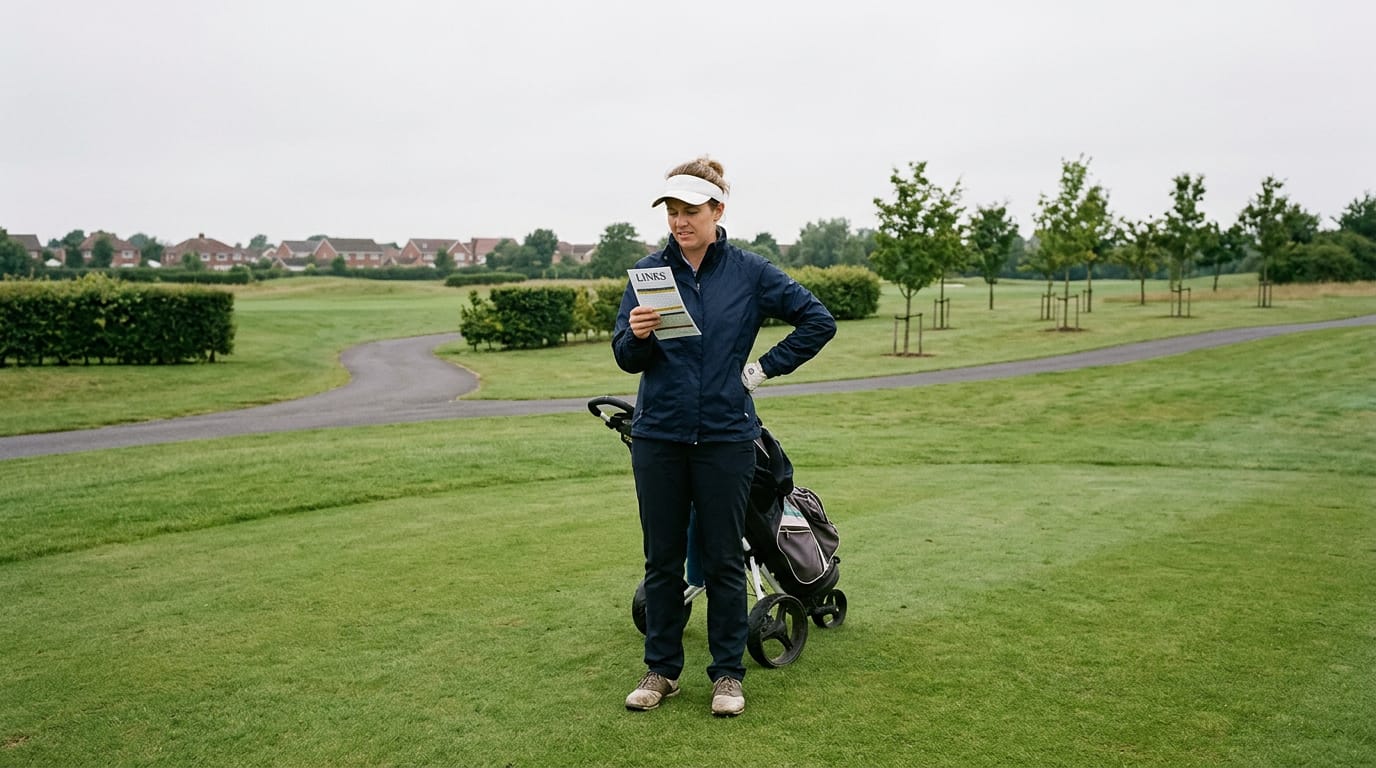
Think of a weekend golfer who books a round at a course with links in its name because the website promises a wild, open layout. She plans her shots for a fast, rolling test, then finds a tidy inland course that asks for a different game.
Her plan was built on the name, not the land, and one quick look at the location would have saved her a frustrating afternoon.
The real question isn’t what a course calls itself, but where it sits and what kind of ground it’s on.
Features and Surfaces That Shape Play
The ground does much of the work on a links course, so read it before you swing.
Rolling ground and natural hazards
Links fairways rarely sit flat, and undulating fairways can hide a slope under a level-looking lie. Pot bunkers are small, deep sand traps, while the thick, wispy rough grabs the clubhead.
Natural dunes block views and funnel balls off target, and blind shots leave you aiming at a landing area you can’t see.
Think of a weekend golfer on a windy spring morning whose drive kicks into a hollow she can’t see from the tee. Instead of forcing a heroic shot out of the rough, she plays a low chip back to the fairway and takes a bogey she can live with.
Here it’s less about how far you hit it and more about where it ends up.
Firm, fast turf that keeps balls rolling
On firm ground, the ball runs out further after it lands, so plan for extra roll. Fast, firm fairways and greens reward a clean strike, but a lofted approach that lands too hard can skip past the target.
Humps and bumps on greens push putts off line, so read the ground as well as the break. Expect the bounce.
Light upkeep and simple course design
Little soil movement goes into building these courses, so the land keeps much of its natural shape. Basic machinery keeps upkeep simple, and in some places grazing animals trim the grass. Less fuss, more golf.
How Links Stacks up Against Other Courses
Plenty of courses get compared to links, so it helps to know how they differ. Here’s how the main look-alikes stack up.
How links compares to parkland
Parkland courses are lush, inland, and tree-lined, with man-made ponds in play. Parkland tends to offer flatter fairways and gentler bounces, while links ground keeps the ball rolling where it lands.
Keeping that lush turf up also costs more than maintaining natural ground.
Think of a weekend golfer expecting soft fairways like her home course. Her drive hits firm ground, kicks hard, and runs into the rough, so she plans for the bounce next time.
Heathland and sandbelt look-alikes
Heathland courses look much like inland links, with wide, natural ground and heather and gorse framing the holes. Melbourne sandbelt courses are another set of look-alikes you’ll hear mentioned alongside links.
Steep-edged bunkers show up on both, so a ball that finds the face is tougher to escape than it looks. They look alike. They don’t always play alike.
Desert, championship, and par-3 courses
Desert courses can look like links with their open ground, but they’re a separate category, so check how a course plays before you assume.
Championship and stadium courses are built to test top players and host big crowds, so they’re set up tougher than a casual round.
Executive and par-3 courses are shorter, so they fit into a busy schedule. Consider a dad with a free evening: a par-3 course gets him a few holes in, while a full layout would take the whole night.
A quick links round is a shorter, faster version of links golf, while regular golf asks for a full round.
How Weather and Wind Shape the Round
On a links course, weather is a hazard that shifts from hole to hole and affects almost every shot you hit.
Why the wind hits so hard
Links courses sit out in the open with little to slow the breeze. That exposure is the core of the challenge: with no trees for protection, the wind reaches you unbroken.
Coastal winds dominate, so the breeze off the water is usually the first thing you’ll feel on the tee.
Think of a weekend golfer, a dad who has only played inland courses, arriving at his first links with a 7-iron he’s hit a hundred times. A steady crosswind pushes his tee shot off line on the first hole.
Once he starts choosing clubs for the wind rather than the yardage on the marker, his ball finds the fairway again.
The breeze that feels like a gift on the way out often becomes a test on the way home. Out-and-back nines change the wind, so the conditions you planned for on the outward holes may not be the ones you face coming back.
Handling rain squalls and shifting weather
Rain on a links course often comes as intermittent squalls: a sharp shower sweeps through, then the sun returns.
Damp ground calls for caution too. Soaked grips and wet turf make shots less predictable, so dry your grip before each shot and keep a towel handy.
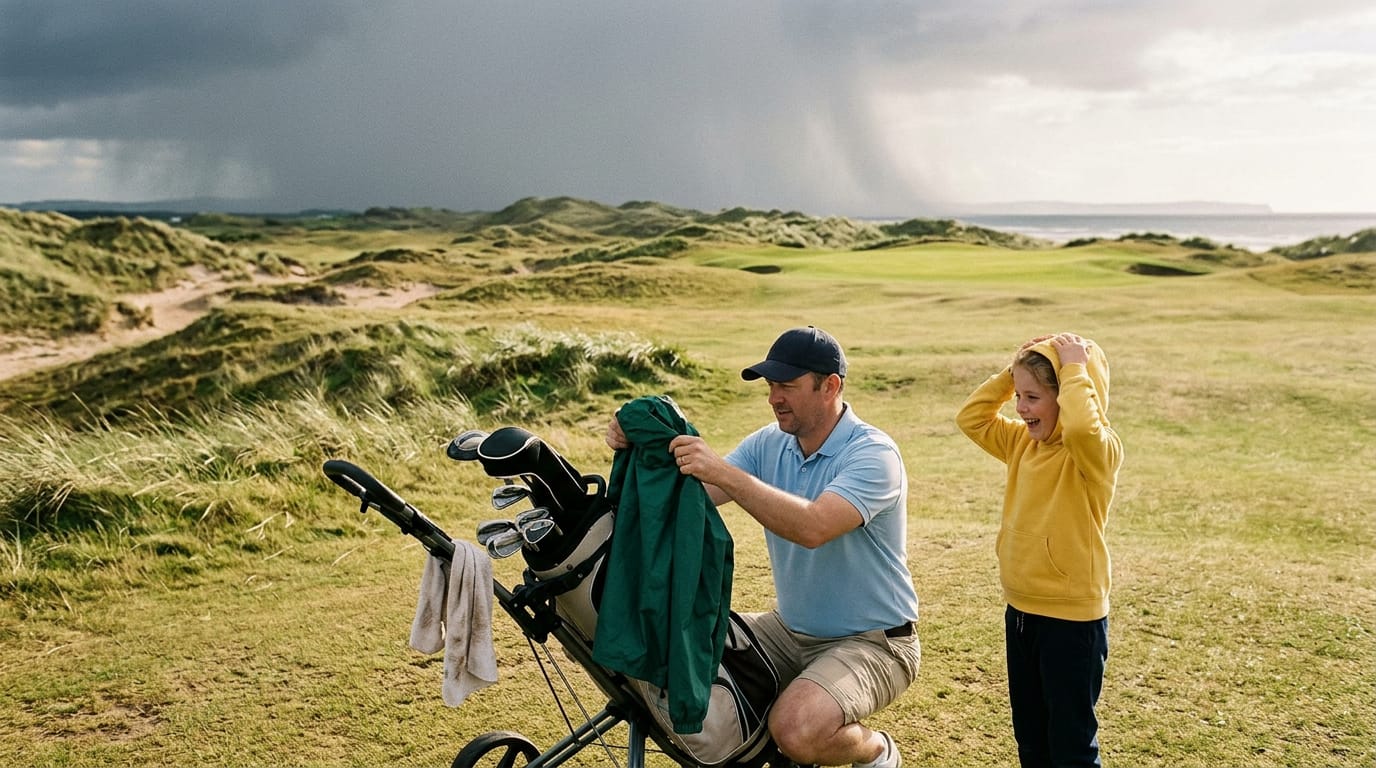
Weather also changes frequently, so the layers you started with may not last the round. Consider a parent on a family golf weekend who sets off in sunshine with the rain jacket left in the car, then gets caught in a squall by the fourth hole.
A packed jacket and a spare towel cost almost nothing to carry.
It’s about preparing for the weather rather than predicting it, and we’d always pack for the round you’ll actually play.
Where Links Golf Got Its Start
Links golf began long before anyone thought about manicured fairways, and that’s the key to how these courses look and play today.
Scotland’s east coast where golf began
Golf took root on the eastern coast of Scotland, and its first courses were links courses: sandy, open ground along the shore. Links are the oldest style of course, and every original course was built on links ground.
Why this land suited early golfers
The land was useless for farming, which made it perfect for play. Sandy soil drained well, so the ground doesn’t turn to mud after a wet spell.
Think of a golfer in a damp season who still gets a round in because the course sheds the rain instead of holding it.
The rolling land gave players natural hills and hollows without anyone having to shape them. It could also hide play from view, which mattered during the bans on golf.
How the first courses took shape
Early builders didn’t have many resources for architecture. The land did most of the work.
According to a Scottish Golf History article on bunkers and water hazards, early links courses used natural features like sand and burns, the small rivers that ran across the course to the sea, as hazards.
At Aberdeen, the routing was defined, meaning the holes followed a clear, set order.
Famous Links Courses to Know
Here’s a starter list of courses worth knowing, grouped by region, so you can see which ones fit your travel plans.
Legendary courses in Scotland
This group is where many golfers start their wish list:
- Old Course at St Andrews
- Royal Troon
- Carnoustie
- Turnberry and Muirfield
Think of a weekend golfer who has wanted one trip abroad for years. She books a round at the Old Course, packs a rain jacket and a spare glove, and comes home with a story she’ll tell for decades.
Top courses in England and Ireland
The list covers England and Ireland, so you can plan a trip that spans both. Choose a course for how it plays, not just for its reputation.
- Royal St George’s, Birkdale
- Royal Portrush
- Ballybunion and Lahinch
- Tralee
A couple planning a golf week might split their days between Ballybunion and Lahinch, then compare notes over dinner about which one they’d rather go back to.
Links courses beyond the UK
Links golf isn’t limited to one country, and these courses show how far the style reaches:
- Bandon Dunes
- Royal Adelaide, Australia
- La Hacienda, Spain
Trips this far from home take planning. Pack light. Pack for weather.
The Open and Other Major Tournaments
The biggest events in golf have long relied on links courses, and a few show why the setting matters. Here’s how it plays out at the Open Championship and two U.S. majors.
Why the Open always stays on links
The Open is always played on links, and that’s no accident, because its story starts on one.
According to Town & Country’s history of the British Open, the first one was held on October 17, 1860, at the Prestwick Golf Club, a traditional links course in Scotland, 30 miles southwest of Glasgow.
Think of a strong amateur who spent a season hitting high, soft shots on inland courses, then reaches a links where the wind pushes the ball sideways and the bounces run farther than expected.
Links golf asks you to roll the ball as much as you fly it, which makes links the ultimate test. The wind gets a vote on every shot.
US majors played on links-style courses
The 2004 PGA Championship at Whistling Straits brought a links-style layout to a major in the United States. Consider a club golfer watching it on TV who wonders why the pros keep working the ball low.
On a links-style setup, shaping a shot can be worth more than launching it high, and that’s a lesson for your own round.
The 2015 U.S. Open was another example. According to the official 2015 U.S. Open fact sheet, the championship ran June 18 to 21 at Chambers Bay in University Place, Washington.
Picture a fan heading there with a rain jacket packed, because a links-style course is no place to count on calm weather. That little bit of prep keeps the day about the golf, not the chill.
Courses Built to Copy Links
Not every course that plays like links sits by the sea, and not every seaside course earns the label without a fight. Here’s how we’d sort them.
Man-made links that feel real
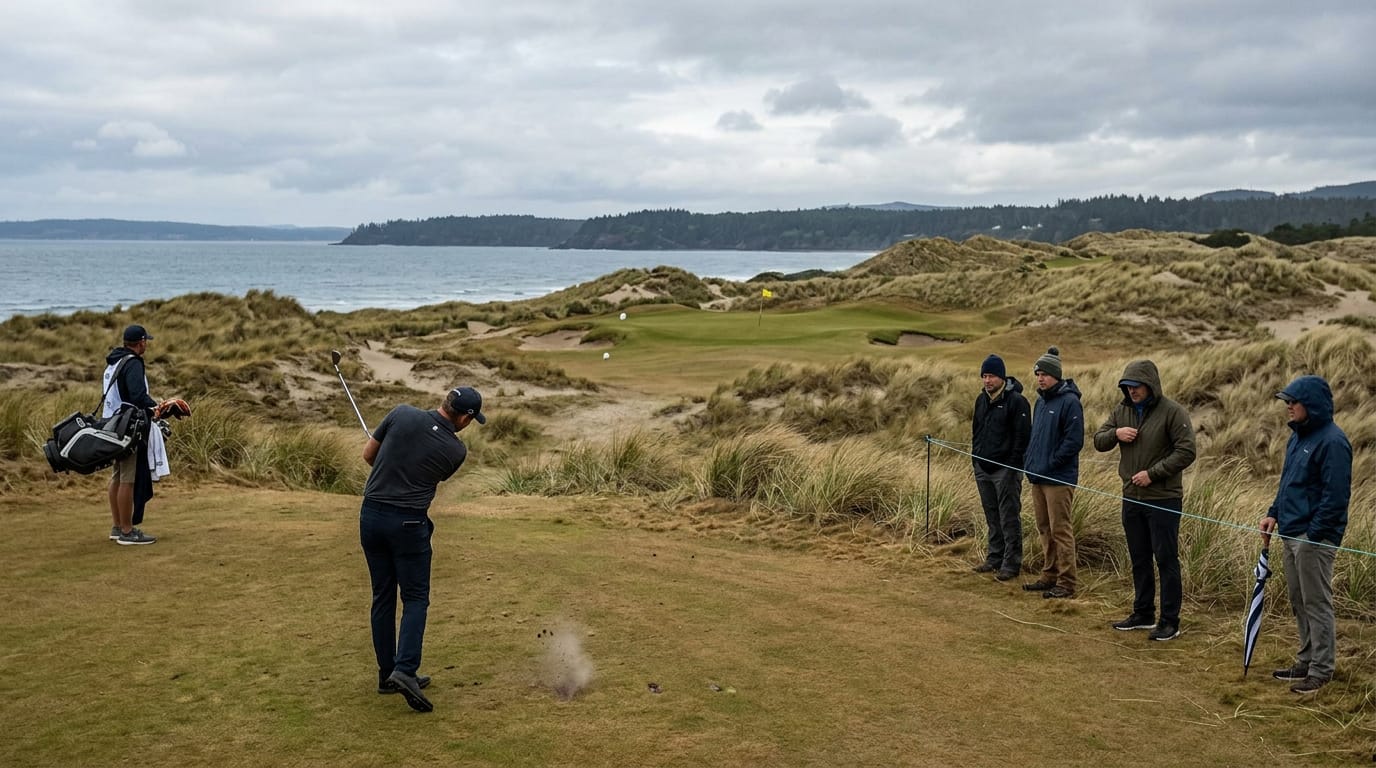
Some man-made links can’t sit on the coast, but they can feel like one. Architects replicate links features by shaping rolling ground, keeping turf firm, and placing bunkers and hazards so the terrain does much of the work.
Whistling Straits and Chambers Bay are two examples of courses designed to play this way.
Think of a weekend golfer who only plays inland parkland courses. On a man-made links, she gets the low, running approach she’s read about, and she can practice that shot before a trip to the real thing. Close enough to practice on.
Coastal courses whose status is debated
Pebble Beach often comes up in conversations about seaside golf, yet whether it qualifies as true links is still debated.
Old Head and the Kiawah Ocean Course sit right on the water and get grouped with links in casual talk, but meeting the criteria is a separate question.
National Links of America shows how little a name settles, since the label alone doesn’t prove the status.
Before you book a round at any of these, check it against the criteria yourself:
- Do the fairways run firm and fast, or are they soft and lush?
- Does wind come into play on most holes?
- Can you play run-up shots along the ground, not just in the air?
How to Play a Links Course
Links golf asks you to think differently from inland golf. Wind, firm ground and odd bounces are part of the game, so plan around them.
Shot choices that keep the ball low
A low, controlled ball flight is often your best friend here, because wind grabs high shots and pushes them around. The bump and run is the classic answer: pitch the ball short of the green and let it roll the rest of the way.
Think of a weekend player whose high wedges balloon into a crosswind. A lower-lofted club for a bump and run keeps the ball under the breeze and rolling toward the flag.
Land short, let it roll. Creative shot-making pays off here too, since a ball that hops and skids can beat a perfect high shot. Plan for roll rather than carry, and you’ll stop fighting the course.
Choosing clubs and accepting bad bounces
Wind changes club choice more than most players expect. Into a headwind, take more club. With the breeze behind you, take less. Bad bounces are part of the deal too: a ball can hop into a bunker or kick into the rough.
Accept unfair bounces, because they happen to everyone. Shrug and play the next shot.
Before your first round, we’d suggest spending time on the range or practice green with low shots and bump-and-run chips. Firm turf makes putting and chipping a big part of your scoring, so roll the ball on a firm surface to learn how it reacts.
Getting Ready for a Links Round
A links round is as much about preparation as swinging the club. Here’s how to plan the trip and pack for the weather you’ll actually face.
Planning a trip to Scotland or Ireland
A golf tour to Scotland or Ireland bundles courses, lodging and transport into one booking. Think of a weekend golfer from Ohio who wants several rounds in one week without spending her evenings on the phone.
A package handles the logistics so she can focus on golf.
Check whether a package includes guaranteed tee times, which lock in your start time before you arrive. Playing in the home of golf also adds a sense of history to every round.
Before you pack, check each club’s dress and etiquette rules, since expectations vary. Bring a collared shirt just in case, and keep pace with the group ahead.
Why it’s harder and what to pack
Links courses are harder because firm ground makes the ball bounce and run unexpectedly, and wind can push a shot off line or change your club choice on any hole. Three items do most of the work:
- Quality gloves. A glove built for wind grip keeps the club from slipping when rain and cold leave your hands damp.
- Waterproofs and layering. Pack a waterproof shell and layers you can add or remove. Without them, a golfer in only a polo can end up shivering through a sudden downpour on the back nine.
- Lower-spin balls. They climb less into the wind and hold a steadier line in a stiff breeze. When it picks up, the goal is less about distance and more about control.
Pack for the wind first.
Links golf asks you to play with the land and the wind instead of fighting them. Once you understand the firm ground, the bounce and the weather, the course starts to make sense and your choices get easier.
Pack for the conditions, expect a few funny bounces, and keep your expectations flexible. Good links golf rewards the players who stop fighting the wind and start playing with it.
References
- 2015 U.S. OPEN CHAMPIONSHIP — usga.org
- Bunker and Water Hazard — scottishgolfhistory.org
- The History of the British Open Championship — townandcountrymag.com
Questions
Why do they call it links?
“Links” comes from the Old English word *hlinc*, meaning rising ground or a ridge. It later described the sandy coastal dunes and open land where early golf courses were built.
Why are jeans not allowed in golf?
Jeans are not universally banned in golf, but many golf clubs prohibit them as part of their dress code. Check the course’s rules before playing; expectations vary from club to club.
What's the difference between links golf and regular golf?
Links golf is played on natural, sandy coastal ground, usually with firm, fast turf, few trees, and strong exposure to wind and changing weather. Regular golf can refer to other course styles, such as parkland, which is often inland, tree-lined, and lusher, with softer ground and gentler bounces.
Sources
- Bunker and Water Hazard - Scottish Golf History, scottishgolfhistory.org
- The History of the British Open Championship, townandcountrymag.com
- 2015 U.S. OPEN CHAMPIONSHIP – FACT SHEET, usga.org
Find your level
The Counter