How to Ride a Bike: A Complete Beginner's Guide
How to ride a bike safely: check fit and controls, build balance and braking, then practice turns and traffic before heading out on the road.
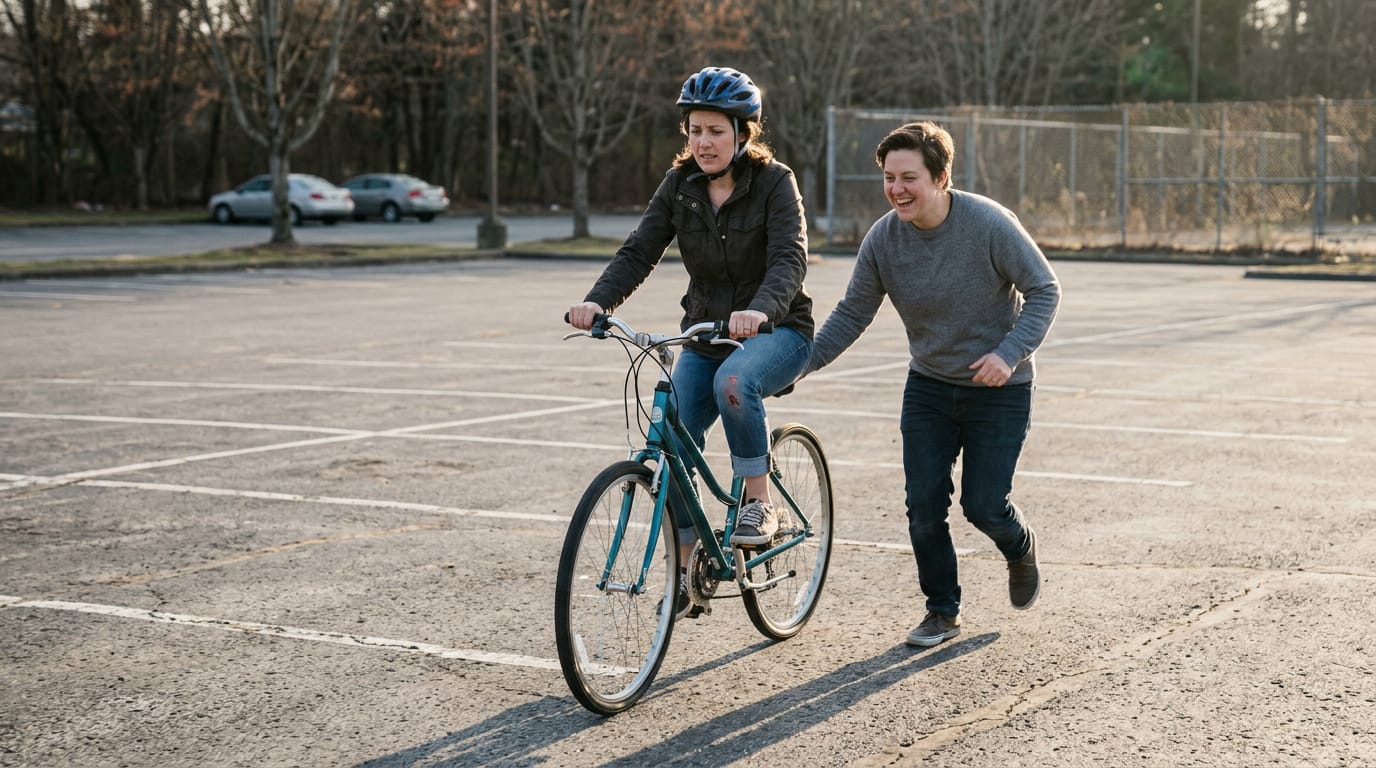
Remember the first time you wobbled down a driveway with someone steadying the seat? Learning to ride a bike feels a lot like that, and it’s easier than you’d think once you know the right order of things.
This guide covers pedal bicycles, the kind you power with your legs, not motorcycles, which run on engines and follow a different set of rules.
We’ll walk through sizing and controls, balance, braking, turning and traffic, then finish with the gear-fit and upkeep checks a good bike shop would run before you head out the door.
How to Ride a Bike Safely
Thirty minutes a day can be enough for many riders if you stick with it. Safe riding is less about speed and more about preparation.
Gear up and check your bike first
Start with your gear. A properly fitted helmet is the one piece you never skip. It should sit level, feel snug, and stay put when you shake your head. Replace it after any crash or if it shows cracks.
Add gloves, a jacket for wet days, and closed-toe shoes that won’t slide off the pedals.
Before every ride, run a quick check:
- Tires: Look for cuts or bulges, then inflate to the tire pressure printed on the sidewall.
- Brakes: Squeeze each lever firmly. The bike should stop without the lever touching the handlebar.
- Chain: Keep it clean and lightly coated with chain lube so it runs smoothly.
- Lights: Test front and rear lights if you’ll ride at dusk or after dark.
Ride defensively and watch for other drivers
Defensive riding is less about being right and more about getting home. Expect the worst from traffic and you’ll rarely be caught off guard.
Be aware of your surroundings: keep your head up, watch for parked cars that might pull out, and listen for traffic you can’t see.
Your blind spots are the areas beside and behind you that you can’t see without turning your head. Glance over your shoulder before you change lanes or turn, because a quick look beats guessing.
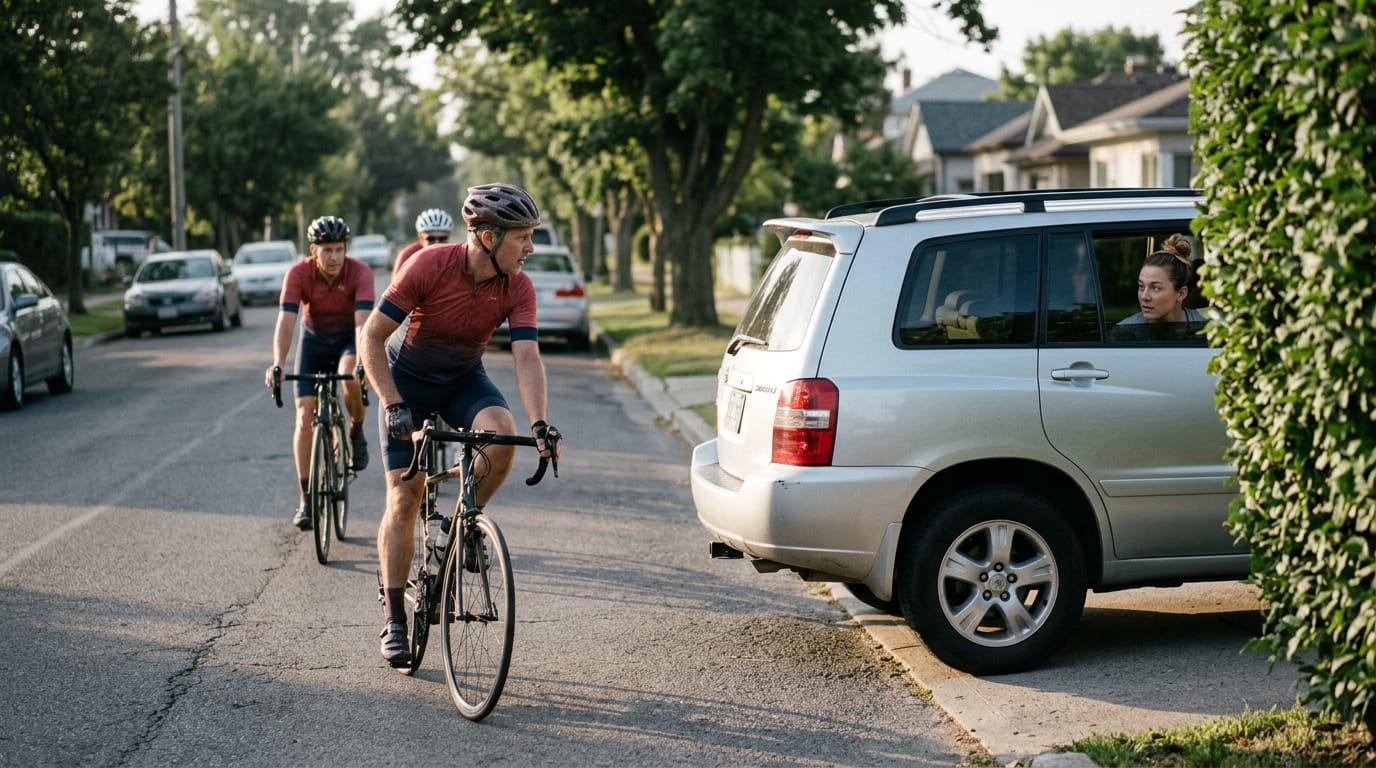
Think of a weekend club rider approaching a driveway where an SUV is backing out. Slowing early and making eye contact gives everyone time to stop, and the group keeps rolling. Eye contact helps. It’s never a guarantee.
Get to Know Your Bike’s Controls
Before you pedal anywhere, you need a bike that fits, since a good fit puts every control within easy reach. What size do you need?
It comes down to your height and inseam (the distance from your crotch to the floor), and a quick test is to straddle the frame with both feet flat and check for a little clearance, not a stretch.
Where to find the main controls
Here’s the catch: the controls below are motorcycle controls, so we’ll flag how a pedal bike handles each one:
- Throttle: On a motorcycle, the twist grip on the right handlebar controls speed. On a pedal bike, your legs are the only power source, so there’s nothing to twist.
- Clutch lever: On a motorcycle, the lever on the left handlebar disconnects the engine from the gears so you can shift. A pedal bike doesn’t have one.
- Front and rear brakes: Both machines have them, with levers on the handlebars. Think of a parent teaching a nine-year-old: walk through both levers in the driveway first, so the first real stop in the street isn’t a surprise.
- Gear shifter: On a motorcycle, you tap it with your left foot. On a pedal bike, the shifter is usually a lever or twist grip on the handlebar, so you reach for it with your hand.
- Ignition and starter: A motorcycle has an ignition and a starter. A pedal bike has neither. Nothing to turn on.
Climbing on and Starting the Engine
This heading borrows motorcycle language, because a pedal bicycle has no engine to start. Here’s how to get on and get moving, and where the motorcycle steps fit in.
Steps for mounting and starting up
- Mount from the left side. Stand at the left side of the bike and swing your right leg over the frame.
- Feet flat for stability. Once you’re straddling the frame, set both feet flat on the ground so the bike stays put.
- Key to ON, press starter. This one belongs to a motorcycle: turn the key to ON, then press the starter.
- Idle briefly to warm up. Also motorcycle-only: let the engine idle for a moment before you pull away.
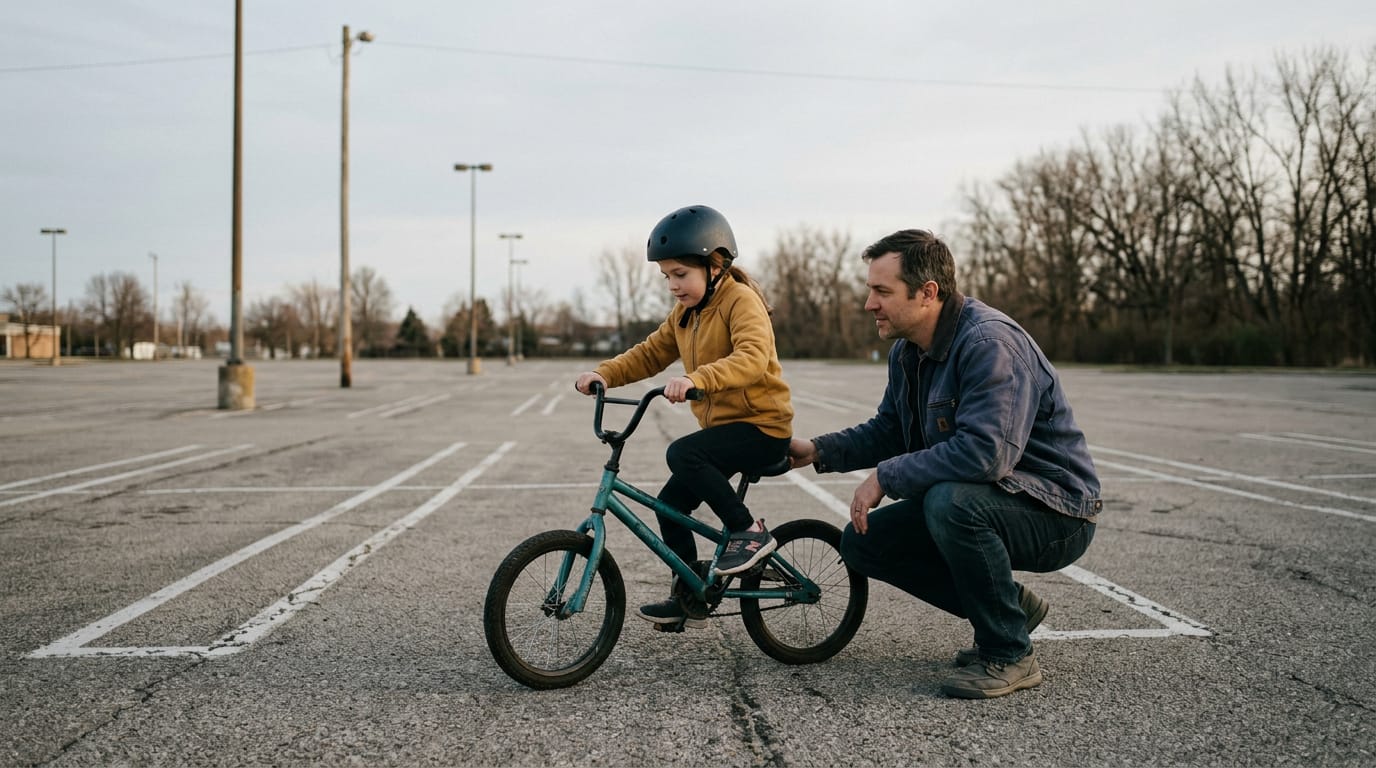
On a motorcycle, a key and a starter do the work. On a pedal bike, you are the engine, so the only start is pushing off and pedaling. Consider a dad steadying his nine-year-old in an empty parking lot.
He holds the bike upright while she sets both feet flat, and when she’s ready she pushes off on her own. She feels in control before the first pedal stroke, and that’s the whole start.
The Skills Every Rider Needs
Riding comes down to balance, shifting, speed control and turning. Each one gets easier with practice in a safe space.
Is balancing on a bike easy to learn?
Is it easy to learn a bike? Yes, more than most people expect, since balance is about trust, not strength. Short, repeated sessions beat one long lesson.
Think of a parent teaching a nervous kid in an empty parking lot: a few short glides, then a longer one, and the kid is riding solo.
Practice in this order:
- Start on a flat, open surface with no traffic.
- Push the bike along with your feet, then lift them to glide.
- Sit upright with a relaxed grip, since a tight grip makes every wobble worse.
Using the clutch to shift gears
Quick clarification: the clutch is a motorcycle part. Its lever disconnects the engine so the rider can change gears, and releasing it slowly keeps the engine from stalling. A pedal bicycle has no clutch and no engine to stall.
You shift with the handlebar shifter, easing off the pedals for a moment, because mashing hard during a shift can make the chain skip. If the chain still skips after you ease off, learning how to clean bike chain is a good next step.
Steady pedaling keeps your rhythm smooth, and coasting, rolling with the pedals still, gives your legs a rest. Low gears help you start and climb, while high gears suit flat ground.
Shift before the hill, not halfway up it, and practice shifts in open space until they feel automatic.
Speeding up and slowing down smoothly
A pedal bike has no throttle, so build speed with steady, even pressure on the pedals rather than stomping. A sudden hard pull with your weight thrown back is also how a wheelie starts. Is it hard to wheelie a bicycle? Yes, more than it looks.
It’s a balance skill rather than a strength one, so practice slowly on flat ground.
Start with the rear brake, then add the front, and use both together for most stops, squeezing gently so the front wheel doesn’t lock. Brake early rather than hard, and shift your weight slightly back as you stop.
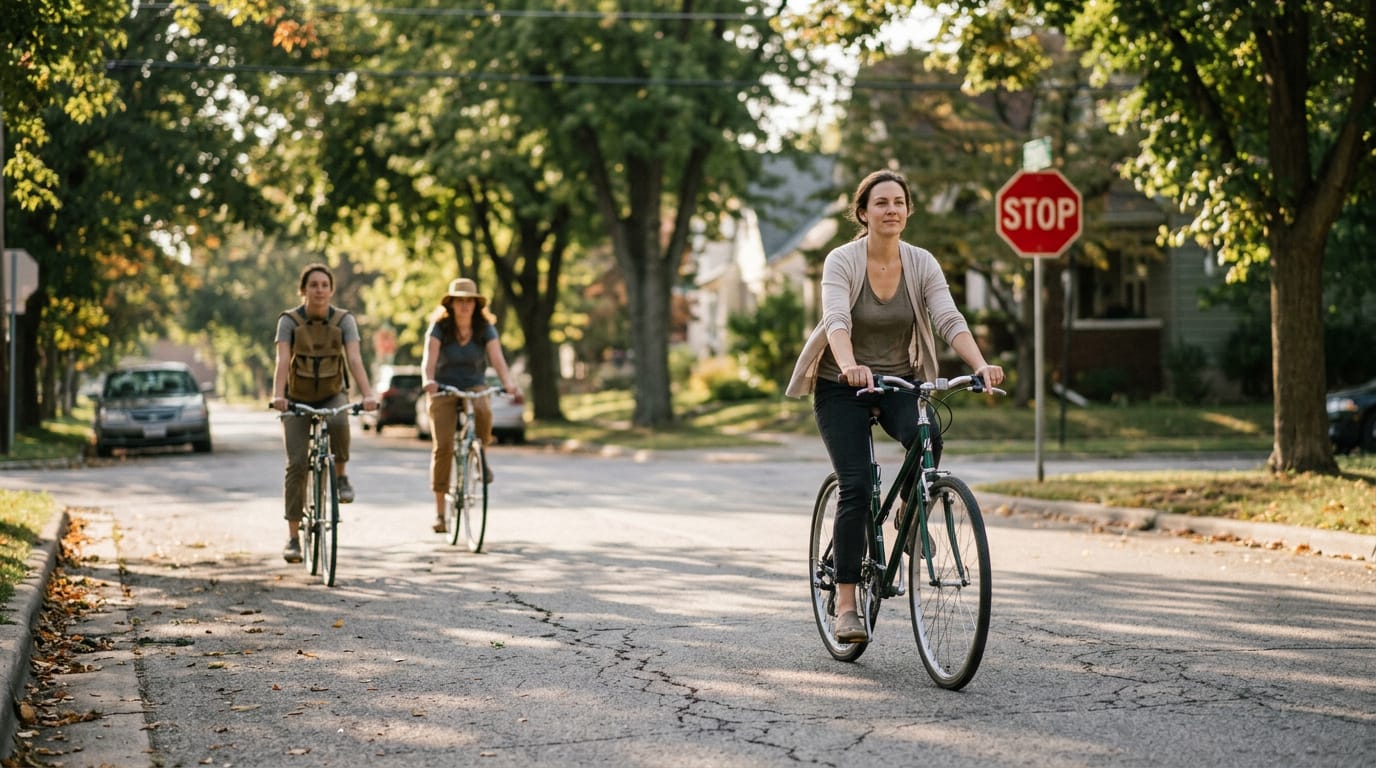
Think of a weekend rider rolling toward a stop sign with friends: she brakes early, feathers both brakes and stops with a steady grip, not a jolt.
Turning corners the right way
A bike turns mostly by leaning, so let it lean while your body stays centered over it. Brake before the curve, not in it, since braking while leaning can make the tires slide.
At higher speed, riders use counter-steering: a brief press forward on the grip on the side you’re turning toward starts the lean, and the bike follows. Practice slow turns in a wide, empty space, weaving around a few markers.
Handling Traffic on the Road
Traffic adds drivers and other riders to the picture, and they won’t always see you coming. You can build these habits on calmer streets first.
Practice in light traffic and stay alert
Consider a parent who just bought a bike to ride with their nine-year-old on Sunday mornings. Their first outings happen on a quiet residential loop, where they can focus on starting, stopping and checking the road without a truck roaring past.
By the time they ride a busier path, the basics feel automatic.
Here’s how to build those habits:
- Start on light-traffic roads. Pick quiet side streets, empty parking lots or bike paths before you tackle busier roads. Every calm ride is practice you’ll carry into harder ones.
- Stay vigilant, look ahead. Scan well in front of you for parked cars, potholes and drivers pulling out. Spotting trouble early gives you time to react instead of scrambling.
- Use hand signals or indicators. Tell drivers and riders around you where you’re headed before you turn or stop. Signaling early gives them time to adjust too.
- Keep adequate following distance. Leave enough space between you and the vehicle ahead so you can stop or swerve without a collision.
Confidence in traffic comes from practice rather than bravado, and it grows one calm ride at a time. Traffic rewards riders who stay a step ahead of it. Start calm, stay sharp.
Riding well comes down to a handful of habits you build one at a time: a bike that fits, controls you know by feel, balance you trust, brakes you can count on, and a steady eye on traffic.
Keep up with quick checks on your tires, brakes and chain, and the bike will keep doing its job. Before long, you’ll stop thinking about the mechanics and start enjoying the ride, which is exactly what a good bike is for.
Questions
Is it easy to learn a bike?
Yes. Most people can learn with short, repeated practice sessions in a flat, open space; start by pushing along with your feet and gliding before trying to pedal.
Can you ride a bike with Parkinson's?
Many people with Parkinson’s can ride a bicycle, but symptoms such as balance problems, slowed movement, or freezing can affect safety. Ask a doctor or physical therapist whether riding is appropriate, and consider a stationary bike or supervised riding if balance or coordination is a concern.
What size bike do I need?
Choose a bike based on your height and inseam, then check the fit by straddling the frame with both feet flat on the ground and a little clearance. A bike shop can help confirm the frame size and adjust the seat and controls.
Is biking for 30 minutes a day enough?
For many riders, 30 minutes of cycling a day can be enough, depending on their goals and effort. Ride at a pace and on routes that feel safe, and build up gradually if you are new to cycling.
Is it hard to wheelie a bicycle?
Yes. A wheelie takes practice because it requires balance and controlled weight shift, not just strength. It is safer to practice slowly in a flat, open area with protective gear.
Is popping a wheelie easy?
A wheelie may look simple, but it is not easy for most beginners. It requires precise balance and control, and practicing on a level surface away from traffic reduces risk.
Can you wheelie on a normal bike?
Yes. You can wheelie a regular pedal bicycle, though the technique and difficulty depend on the bike and rider. Practice at low speed in a clear, open area, wear a helmet, and use caution to avoid falls.
Find your level
The Counter